
Yothin Kanokbanpot Paints the Mind Through Swirling Forms & Bold Brushstrokes
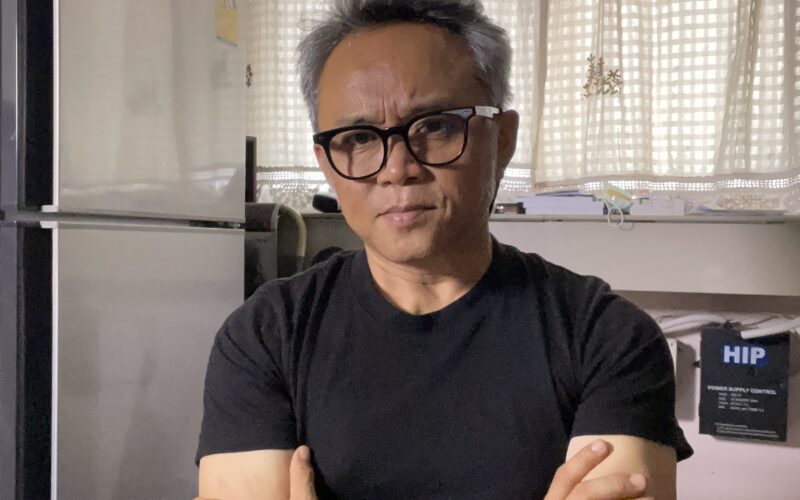
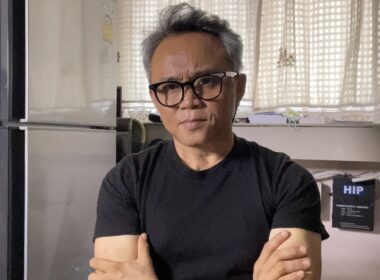
At Arts to Hearts Project, we are always drawn to artists whose work reaches somewhere deeper than the surface, and we were delighted to feature Yothin Kanokbanpot in our 100 Emerging Artworks 2025 book. Yothin is a Thai artist whose paintings are, in the truest sense, explorations of the mind, vibrant and alive with colour and movement on the surface yet born from a deep inner stillness.
Yothin is a Thai artist from the coastal town of Sriracha, and his path to painting was anything but ordinary. Before fine art, he trained in architecture and interior design, studying at the renowned Silpakorn University in Bangkok, and that background has shaped him ever since.
You can feel it in his work, in the strong sense of structure and balance that holds everything together, even when the surface feels loose, spontaneous, and alive. It is as though an architect’s eye and a painter’s hand are quietly working side by side.
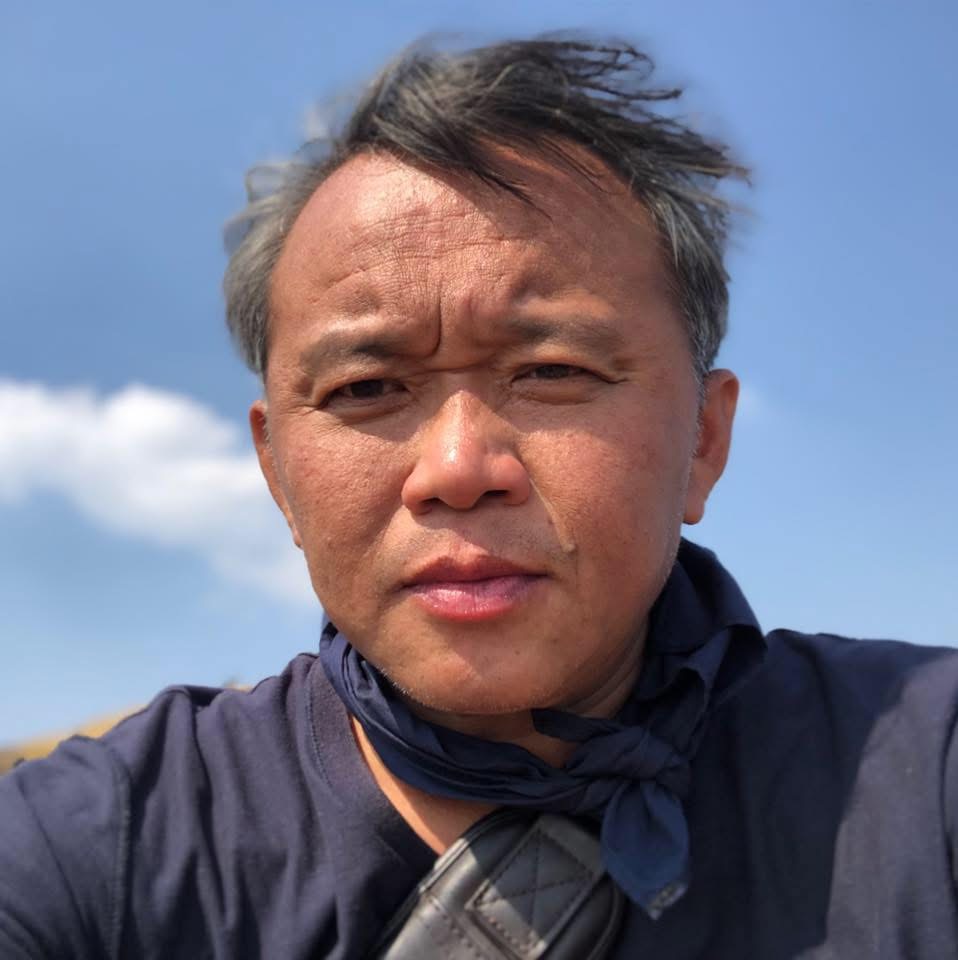
His paintings are bold, textured, and full of energy, vibrant collages of colour and gestural marks that seem to move across the canvas. He works across several mediums, oil, acrylic, pencil, and digital, and chooses whichever one a particular idea seems to call for.
Oil, though, is the one he keeps returning to. He loves the way it lets him build up rich layers, depth, and texture, slowly adding colour until the surface feels alive. And he remains endlessly curious about materials, often letting a medium lead him somewhere he had not planned, so that discovery becomes part of the work itself.
His creative process is intuitive and open. Yothin rarely forces a painting to follow a fixed plan; instead, he begins, responds to what appears, and lets the work develop its own direction as he goes.
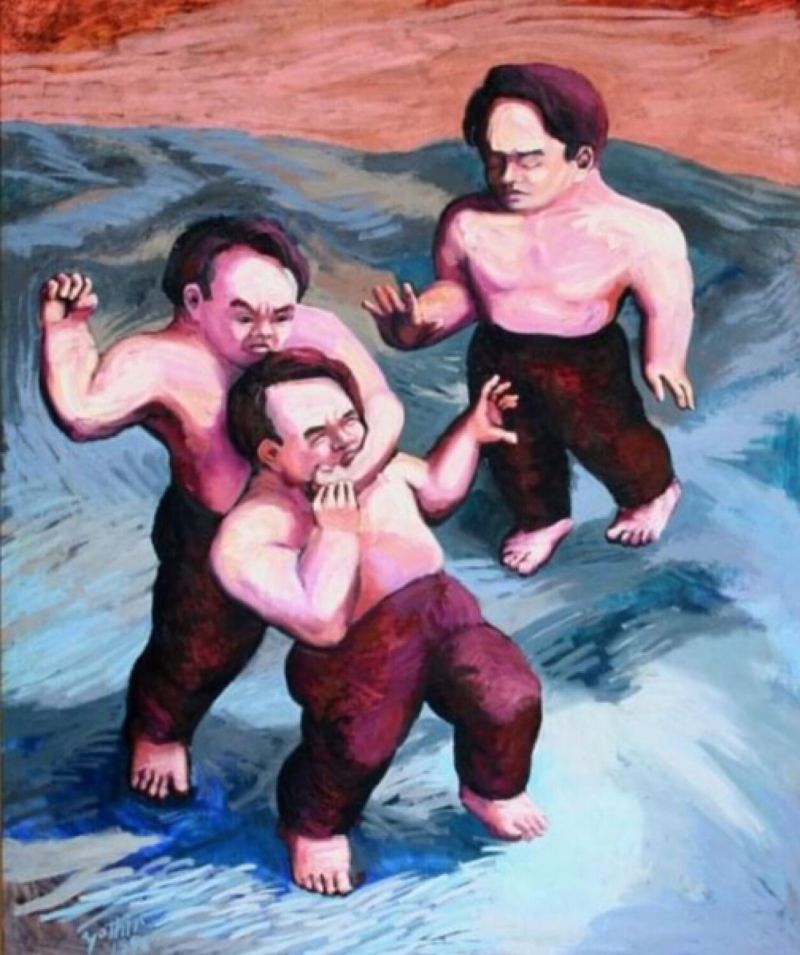
There is real motion and intensity on his canvases, and yet, underneath all that movement, a quiet sense of calm and control. He also refuses to be boxed into a single style, moving freely between abstraction and figuration and treating both as different ways of arriving at the same place. That openness keeps his work fresh, surprising, and unmistakably his own.
Over a long and committed career, Yothin’s work has earned real recognition, including as a finalist in the prestigious Sovereign Asian Art Prize, where his painting was acquired at auction by a senior figure from Sotheby’s Asia. His art has been shown in solo and group exhibitions and has travelled far beyond his studio, reaching audiences across Asia and around the world, both in person and online. Wherever it goes, it seems to connect with people who have never met him and live lives nothing like his own.
Now let’s hear from Yothin about his creative process, the mediums he loves, the balance of energy and stillness in his work, and what continues to keep him curious at the canvas.
Q1. Could you share a little about your background and tell us how art first became part of your life?
I grew up in Sriracha, a coastal town in Thailand, where drawing became part of my life at an early age. My interest in art developed throughout my school years, eventually leading me to study architecture, interior design, and later painting at Silpakorn University in Bangkok. Looking back, I don’t recall a particular moment when I decided to become an artist.
Drawing was simply something I loved doing, and over time, it became an inseparable part of my life.
Painting has accompanied me through different places, experiences, and stages of life. Along the way, my understanding of art and the world around me has continued to change. What began as a childhood interest gradually became a lifelong relationship with painting, one that continues to evolve.
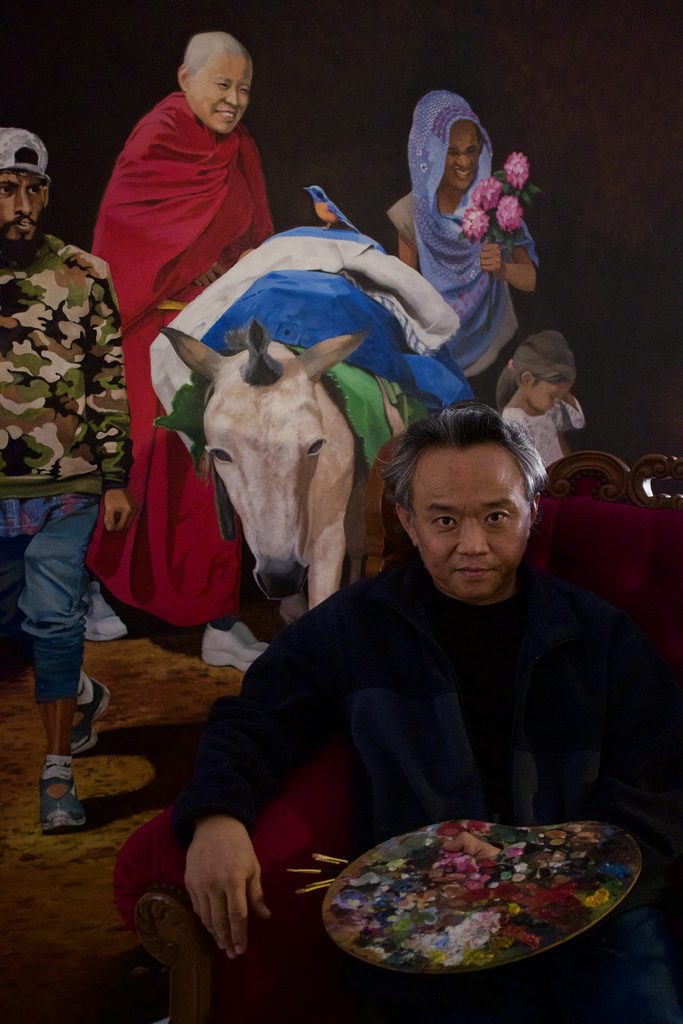
Q2. Your practice has developed over many years. What has remained constant in the way you approach painting?
What has remained constant throughout my practice is an ongoing exploration of the mind. I have deliberately worked with different artistic styles because I don’t believe an artist’s identity needs to be defined by a particular visual language. Forms and styles may change, but the inner process continues. My early paintings explored psychological conflicts.
Over time, my attention shifted toward awareness itself, and more recently, toward a state in which even the effort to be aware begins to fall away. Things are simply as they are. I believe that one of the most important changes awaiting humanity is a shift in how we understand our own existence — from seeking meaning primarily in the external world toward understanding the nature of the mind itself.
For me, painting has been part of this journey, not as a means of arriving at a final answer, but as a way of living through the questions.
Q3. You describe your paintings as capturing “the actions of my mind.” What does this mean to you when you begin a new painting?
When I stand in front of a blank canvas, painting becomes both an expression of what is already within me and a process through which something unexpected can emerge. My thoughts, feelings, and experiences may influence what I create, but the painting also develops its own possibilities as I work.
I respond to what appears, sometimes following my intentions and sometimes moving beyond them. For me, “the actions of my mind” encompass both expression and emergence. They are inseparable parts of the creative process.
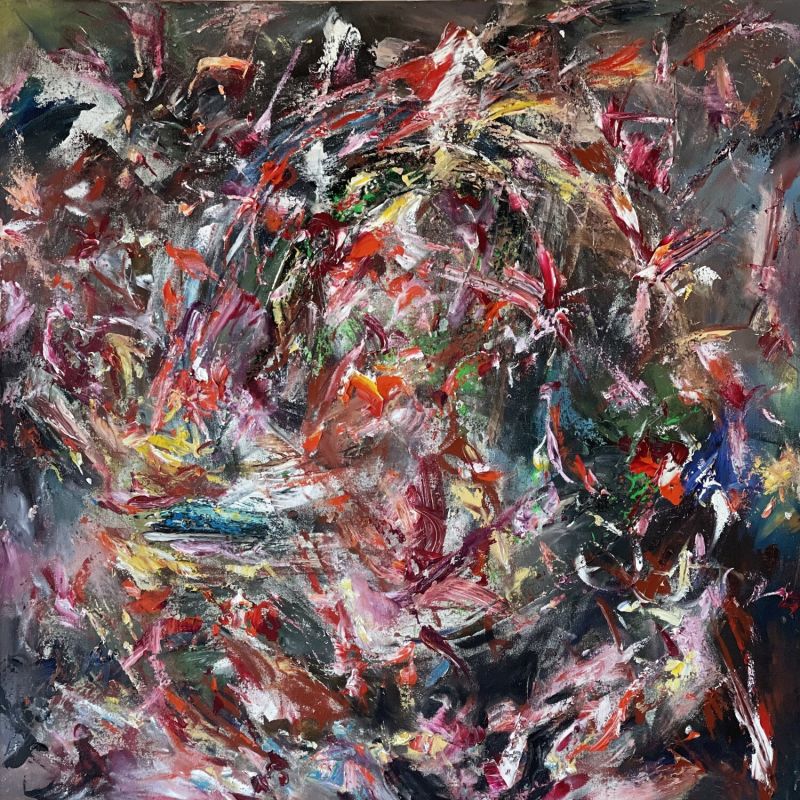
Q4. Your paintings are filled with movement, colour, and energetic marks. Are these elements a reflection of your emotions while painting?
Not necessarily. The movement, colours, and energetic marks in my paintings do not always reflect my emotional state. I can paint with great energy while remaining completely calm inside. That stillness is often already present before I begin painting.
Emotions may play a part in the process, but I don’t see painting as simply an expression of emotion. There can be intense movement on the canvas while the mind remains still.
Q5. You work across oil, acrylic, pencil, and digital processes. What makes you choose one medium over another for a particular idea?
My choice of medium can happen in different ways. Sometimes I begin with an idea and choose the medium that best allows me to express it. At other times, the unique qualities of a particular medium inspire an idea that might not have emerged otherwise. Personal preference and familiarity also play a role. Oil painting, for example, is a medium I feel particularly comfortable with and naturally return to.
For me, the relationship between an idea and a medium works in both directions. Sometimes the idea determines the medium, and sometimes the medium itself gives birth to the idea.
Q6. In Chance of Harmony, you explore the relationship between spontaneity and balance. What does harmony mean to you in abstract painting?
For me, harmony in abstract painting is not necessarily about symmetry, order, or the absence of conflict. It is about how different, even contrasting elements can coexist. Spontaneity, aesthetics, and balance are not separate stages of the creative process.
They interact and exist simultaneously, each influencing the others as the painting develops. Harmony emerges through this interplay. It does not require differences or tensions to disappear, but allows them to become part of a larger whole.
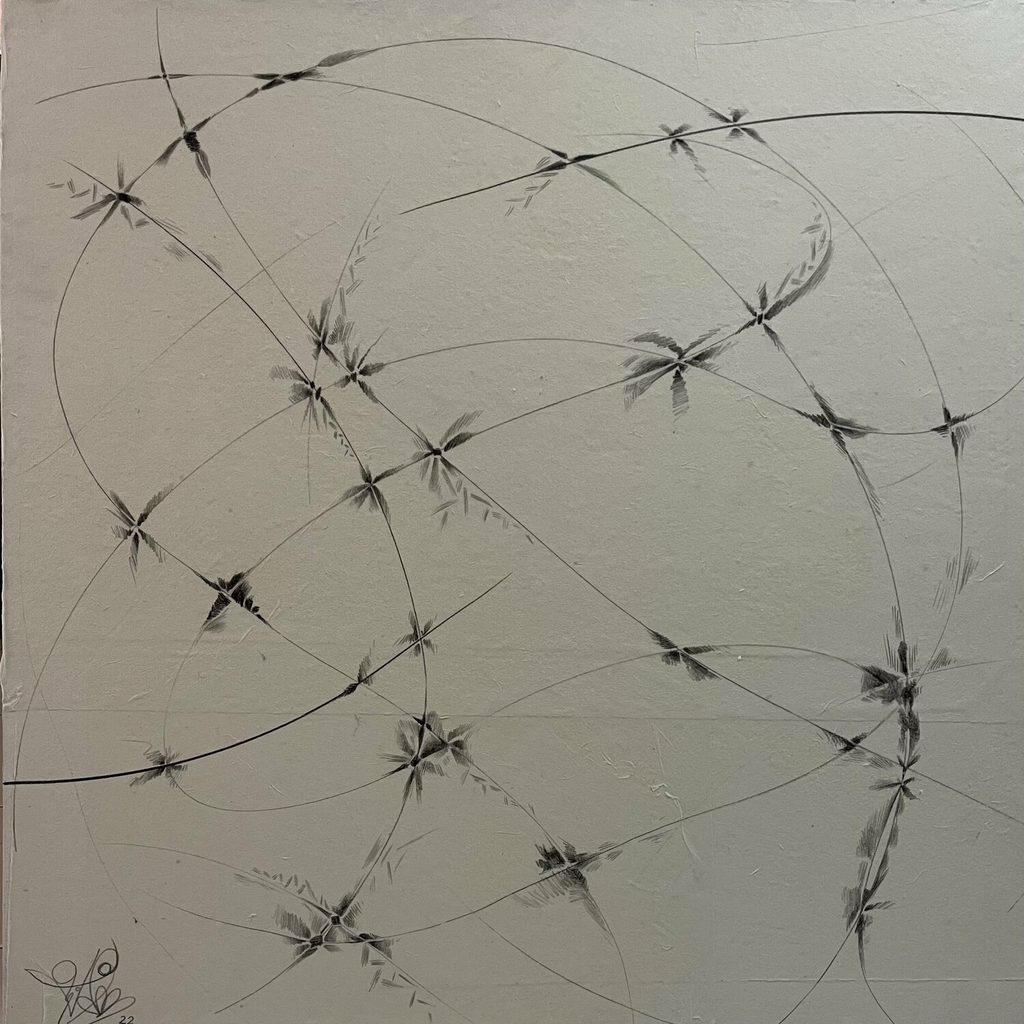
Q7. Your paintings can evoke different emotions in different viewers. Do you welcome these personal interpretations rather than a fixed meaning?
Yes, I welcome different interpretations of my paintings. Each viewer brings their own experiences, memories, and emotions to the work, and I believe this can enrich their encounter with it.
I may have my own intentions and experiences behind a painting, but I don’t expect viewers to understand or experience it exactly as I do. For me, a painting doesn’t need to have only one fixed meaning. It can become something different for each person without losing the meaning it holds for me.
Q8. You were a finalist in the 2006 Sovereign Asian Art Prize. Looking back, what did that early recognition mean for your confidence as an artist?
It was both exciting and an honour to be selected as a finalist. It certainly gave me greater confidence, especially knowing that my painting was acquired at the auction by the Managing Director of Sotheby’s Asia at the time.
However, my commitment to being an artist had already been deeply rooted in me for many years. I had followed this path through difficulties and uncertainties, long before receiving that recognition. Looking back, the experience strengthened my confidence in my work, but it did not define my identity as an artist. That was something I had already carried within me.
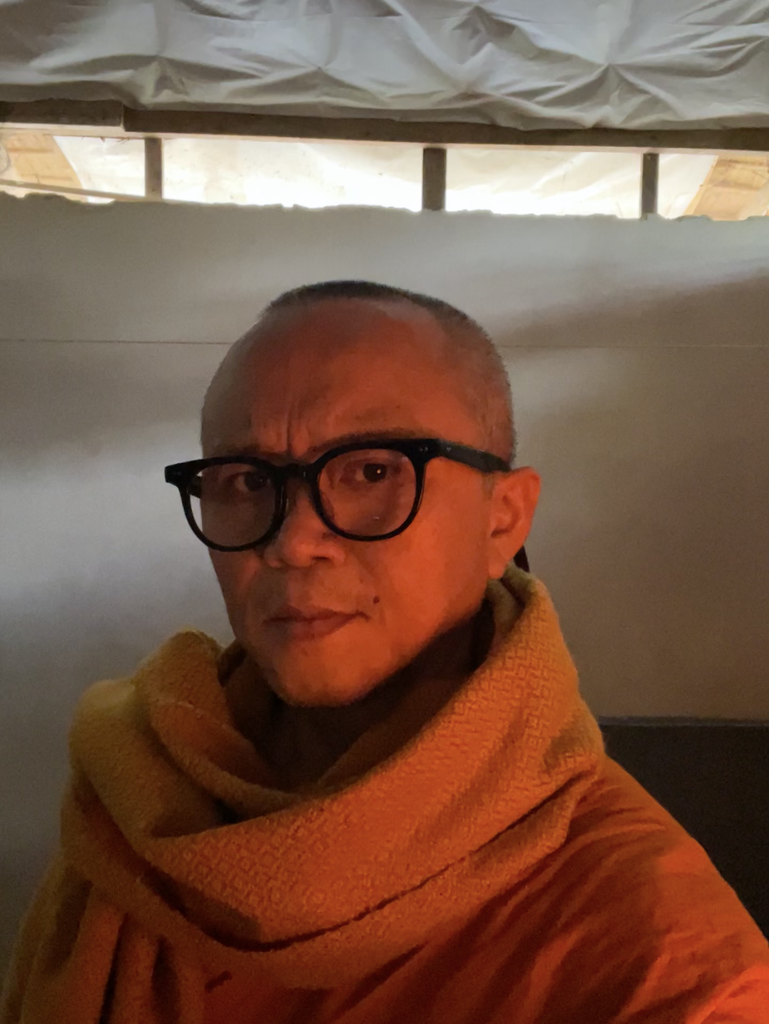
Q9. Having exhibited your work in Thailand and internationally, how has engaging with different audiences shaped your perspective on your art?
I feel that my work is not confined to any particular culture or language. There is something universal in the way painting can communicate, allowing people from different backgrounds to connect with it through their own experiences. For this reason, showing my work to different audiences has not fundamentally changed my understanding of it.
What has changed is my experience of how far a painting can travel. It is fascinating to see something created in my own studio reach people on the other side of the world, both through physical exhibitions and online platforms. The meaning of the work may not have changed much for me, but the world it encounters has become much wider.
Q10. After so many years of creating, what keeps you curious enough to return to the canvas?
Painting is part of my existence. I don’t need a reason to paint. Sometimes curiosity brings me back to the canvas, and sometimes curiosity emerges through the act of painting itself.
I never know exactly what I might discover, and that uncertainty keeps the experience alive. But there are also periods of silence when I feel no desire to paint at all. I accept these moments as naturally as the urge to create. For me, painting is not something that needs to happen continuously. Curiosity, creation, and silence are all part of my life as an artist.
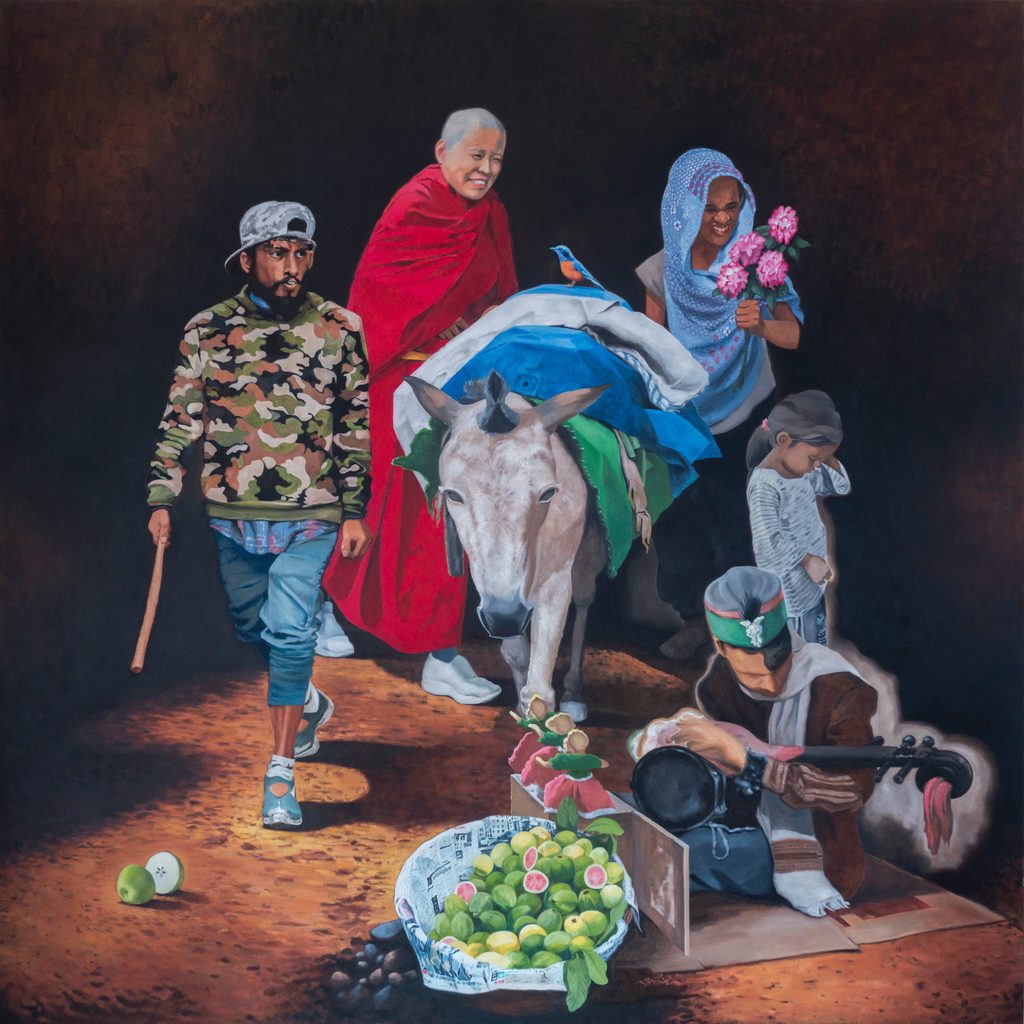
Q11. Do you measure your growth through recognition and exhibitions, or through the changes you see within your own work?
Recognition and exhibitions are meaningful, but I don’t see them as the primary measure of my growth as an artist. For me, growth lies more in the changes within myself — in how I perceive, experience, and understand the world and my own existence.
These changes may eventually find their way into my paintings, but they don’t always become visible in the work immediately. I believe artistic growth can take place even when no new painting is being made. What matters most to me is not simply how my work changes, but how my understanding continues to evolve.
Q12. Looking at your paintings from different periods, what change in yourself do you recognize most clearly?
Looking back at my paintings from different periods, I recognize how much my understanding of myself and the world has changed. I once lived with conflict, confusion, and a sense of fragmentation. Today, something within me is profoundly different. There is stillness. This change is much clearer to me internally than it may be in my paintings.
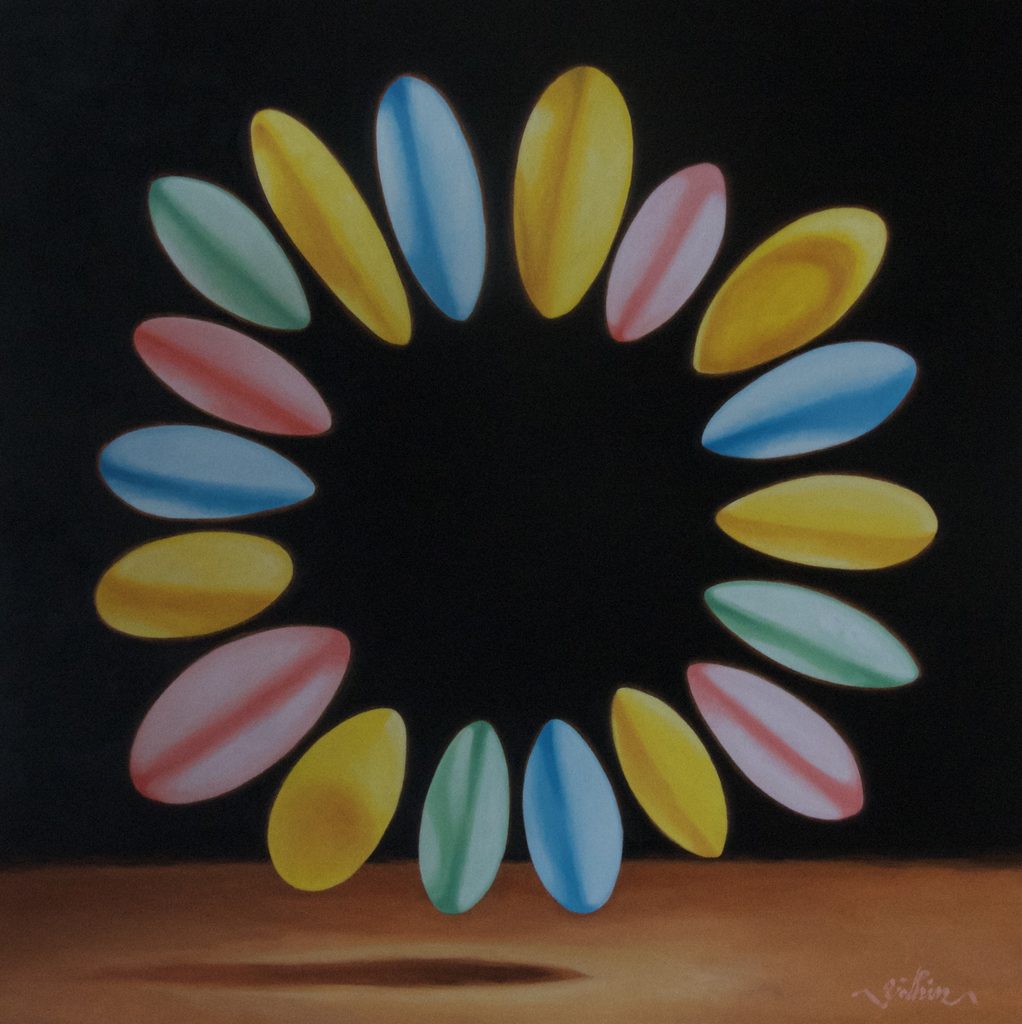
As our conversation with Yothin drew to a close, we found ourselves thinking about an assumption the art world often makes, that energy and calm, feeling and control, cannot really belong in the same painting.
Yothin’s work gently proves otherwise. So much contemporary painting is pushed to pick a lane, to be either wild and expressive or quiet and restrained, as if an artist has to choose one or the other. Yothin holds both at once.
His canvases are full of bold colour and vigorous movement, and yet there is a deep steadiness underneath, the discipline of someone trained to think in structure and space. That balance feels increasingly rare, and increasingly valuable, in a world that tends to reward whatever is loudest.
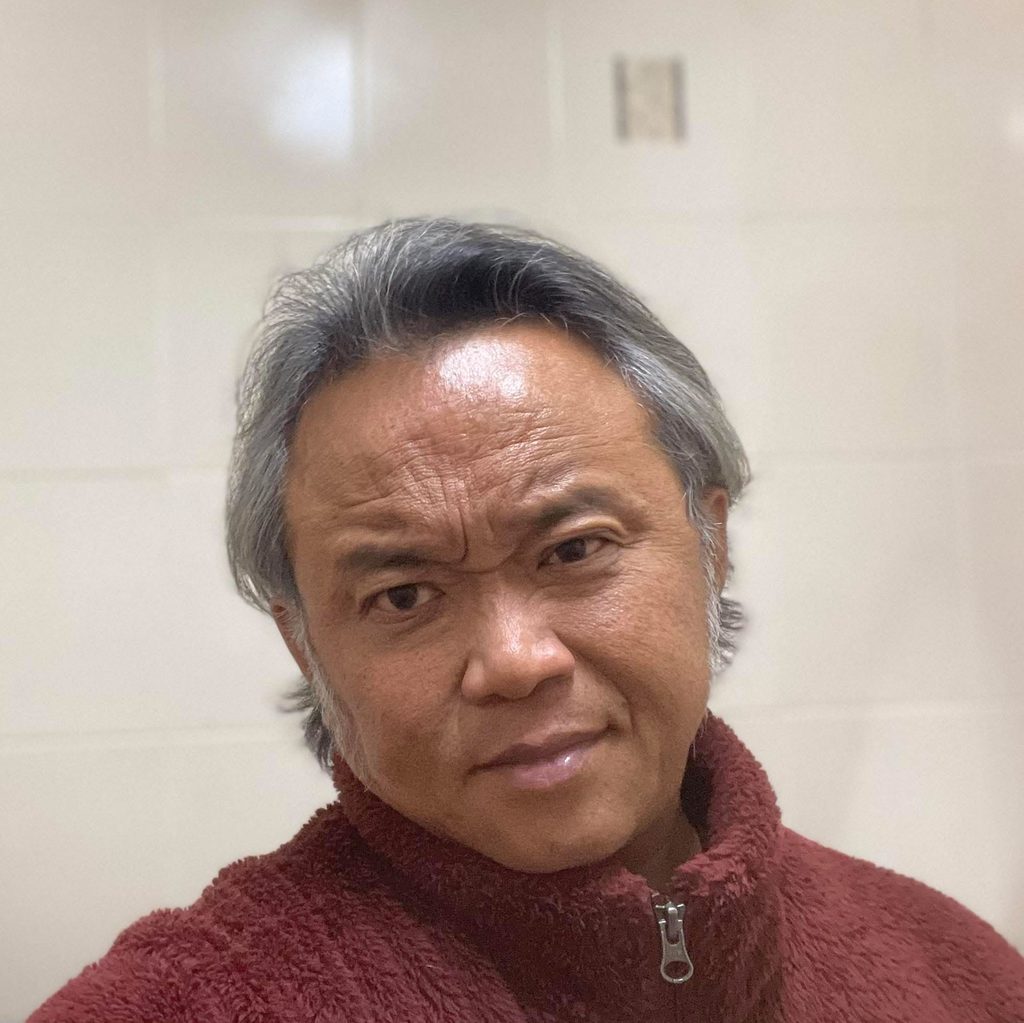
There is something quietly admirable, too, in his refusal to brand himself. The art world often pressures artists to find one recognisable style and repeat it, turning a signature look into a product. Yothin has spent his whole career doing the opposite, moving freely between abstraction and figuration, following his curiosity rather than the market, and letting his work evolve on its own terms.
In an industry that prizes consistency and easy categorisation, choosing to keep exploring, and to grow instead of settle, is its own quiet act of integrity.
For art lovers and collectors, Yothin’s work brings a rare combination of vibrancy and calm into a space. Bold, textured, energetic paintings that pulse with life, and yet carry a grounding stillness beneath the surface. They do not insist on a single meaning, leaving room for each person to bring their own. To live with one of his pieces is to keep that balance close, something alive and moving, and at the very same time, deeply at peace.
Follow Yothin Kanokbanpot through the links below and see his work for yourself.
The deadline is closing in. You have until November 15, 2026 to enter Artist of the Year 2026, and now is the time to make your move.
One artist will be crowned Artist of the Year, winning a $500 cash prize, a trophy, and a dedicated four-page feature. And it goes further than a single winner: 100 artists will appear together in a beautifully crafted hardcover collectible book, selected alongside our Guest Curator, Jennifer Rizzo, a lasting place for their work and a snapshot of the art being created today.
It doesn’t matter what you create, what it’s about, or how long you’ve been doing it, and it doesn’t matter where in the world you are. All that counts is the work itself, and the ideas behind it.
Don’t let this slip into the pile of things you meant to do. Get your work in before November 15, 2026, and claim your place in this year’s edition.