


Artists On Rejection
10 Artists Share What Rejection Has Taught Them About Creativity and Perseverance
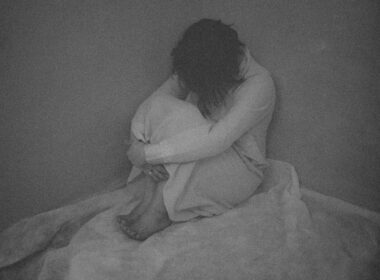
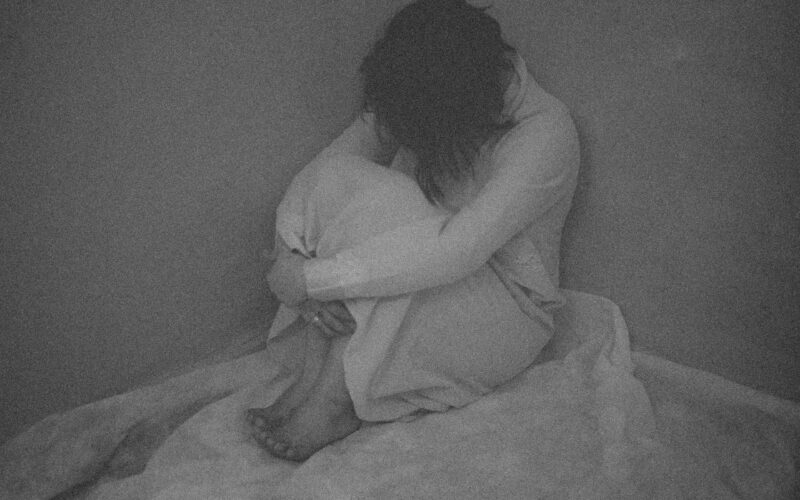
Rejection is one of those experiences that can make an artist question far more than a single piece of work. A painting is not selected for an exhibition, a gallery declines a portfolio, or a manuscript comes back with a no. Suddenly, the disappointment is no longer just about one opportunity. It begins to feel personal.
Creating art takes time, patience, and emotional investment. By the time we share a finished piece, it may carry months of thought, experimentation, and countless decisions. When someone turns it down, separating their response to the work from our feelings about ourselves can be difficult.
Yet rejection has accompanied even the most celebrated creative lives. Painters have struggled to find recognition, writers have faced refusals from publishers, and filmmakers have encountered closed doors. Their experiences remind us that one disappointing outcome does not have to define an entire creative journey.
Rejection does not always mean we need to work harder or change direction. Sometimes, it reflects a mismatch between the work and the opportunity. Other times, it offers feedback worth considering. And occasionally, there is little we can learn from the decision at all.
These ten artists, writers, and filmmakers offer reminders that rejection can be painful without having the final word on our creative lives.
1. Maya Angelou: Finding A New Direction After Rejection
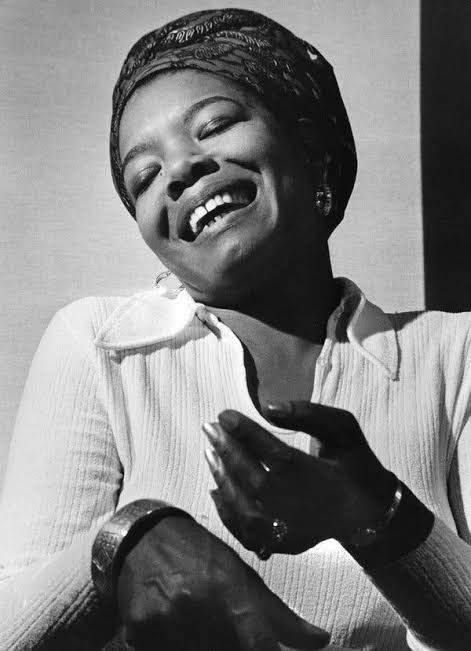
Maya Angelou built an extraordinary career as a poet, memoirist, performer, and writer. Her journey was not a simple, straight line toward success. Before becoming one of the most celebrated literary voices of her generation, she explored different professional paths and faced periods of uncertainty.
One of her most encouraging reminders is:
“You may encounter many defeats, but you must not be defeated.”
Angelou’s words offer a distinction that every artist can benefit from remembering. Experiencing rejection is not the same as becoming a failure. A gallery may not select our work, an editor may not accept our pitch, or a residency may choose another applicant. None of these decisions can tell us everything about what we are capable of creating.
Sometimes, moving forward means trying again. Sometimes, it means exploring a different direction. Either way, one person’s decision does not have to become the final word on our work.
2. Stephen King: Turning Rejection Into A Reason To Keep Writing
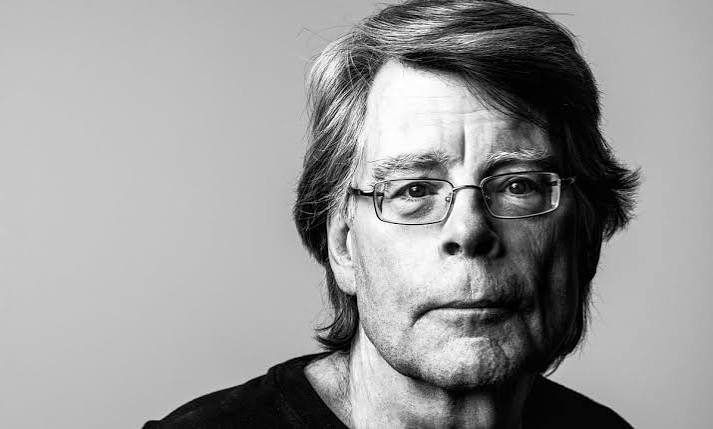
Stephen King is one of the world’s best-known fiction writers, but rejection was part of his early writing life. As he recalls in his memoir, On Writing, he collected rejection slips and pinned them to the wall. Eventually, the nail could no longer support them.
King writes:
“I replaced the nail with a spike and went on writing.”
The story is memorable because of its simplicity. King did not suggest that rejection stopped hurting or that every refusal was secretly a blessing. Instead, he found a way to continue working despite the repeated disappointment.
Artists can become so attached to one opportunity that a rejection makes all the effort leading up to it feel wasted. But preparing a portfolio, completing a painting, or submitting a manuscript still involves learning and practice, even when the result is not what we hoped for. Not every submission will lead to an exhibition, publication, or sale. That is part of sharing creative work with the world.
3. J.K. Rowling: Learning What Failure Can Teach Us

Before the Harry Potter series became a global phenomenon, J.K. Rowling experienced personal hardship, financial insecurity, and uncertainty about her future. In her 2008 Harvard commencement address, she reflected on how failure changed her understanding of success.
She explained:
“Failure meant a stripping away of the inessential.”
Rowling was describing a difficult period in her life when the future she had imagined had fallen apart. Looking back, she recognised that the experience helped her understand what mattered to her and focus her energy on the work she wanted to pursue.
For artists, rejection can reveal how much of our confidence has become attached to external approval. We may begin creating because we love the work, only to find ourselves measuring our progress through exhibition invitations, sales, publication credits, and praise.
When an opportunity falls through, we can ask ourselves what we still want to make, which ideas continue to interest us, and what kind of work we would pursue even if recognition took longer than expected.
Failure does not automatically make us stronger, and not every setback has a hidden benefit. Still, difficult experiences can help us understand our ambitions more clearly and decide what we want to carry forward.
4. Vincent Van Gogh: Returning To The Work Despite Discouragement
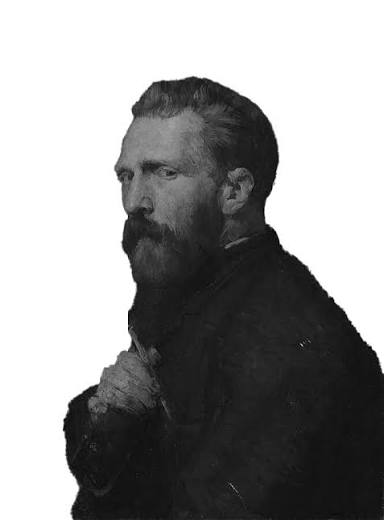
Vincent van Gogh’s paintings are now celebrated around the world, but his artistic life was marked by financial difficulty, uncertainty, and limited commercial success. His letters to his brother Theo offer a glimpse into the effort and self-doubt that accompanied his development as an artist.
In one letter, he wrote:
“If something in you yourself says ‘you aren’t a painter’ … it’s then that you should paint.”
The full passage encourages Van Gogh’s brother to keep working through the voice that questions his abilities. It captures a familiar struggle: the feeling that perhaps we are not good enough to do the very thing we care about most.
Rejection can make that inner voice louder. A declined submission may suddenly become evidence, in our minds, that our work is not worthwhile or that we have misunderstood our own abilities. But a disappointing response is not a complete assessment of our potential. Every artist is still learning, and even experienced creatives have to make decisions, experiment, and develop their skills over time.
Van Gogh’s words remind us that self-doubt does not always have to be resolved before we begin again. Sometimes, returning to the studio and giving ourselves another chance is how we find our footing.
5. Andy Warhol: Staying True To An Unconventional Artistic Vision
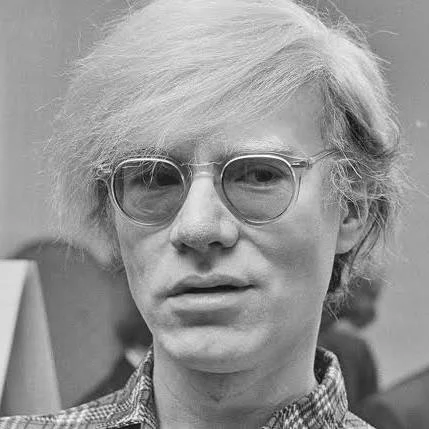
Andy Warhol became one of the defining figures of Pop Art through his exploration of commercial imagery, celebrity, repetition, and mass production. His work challenged established ideas about what subjects and materials belonged in fine art.
His career offers an important perspective for artists whose work does not fit easily into familiar categories. When we experiment with unusual materials, challenge conventions, or approach a subject differently, the response may not always be enthusiastic.
Warhol once observed:
“They always say time changes things, but you actually have to change them yourself.”
Although this quotation is not specifically about rejection, it speaks to the agency artists have over their own creative journeys. We cannot control whether a gallery accepts a proposal or whether an audience immediately understands our work. We can, however, decide how we respond.
This does not mean ignoring every criticism or assuming that all rejected work is ahead of its time. It means remaining open to learning without automatically abandoning the qualities that make our practice distinctive. Artists can listen, reconsider, and grow while still allowing themselves the freedom to experiment.
6. Emily Dickinson: Creating Beyond Immediate Recognition

Emily Dickinson is now regarded as one of the most important poets in American literature, yet only a small number of her poems were published during her lifetime. Much of her work reached readers after her death.
Her poem Success Is Counted Sweetest opens with these lines:
“Success is counted sweetest
By those who ne’er succeed.”
The poem considers how success can mean something different to those who have experienced its absence. Its perspective feels especially relevant when we are facing rejection and watching others receive opportunities we had hoped for ourselves.
Dickinson’s publishing history was complicated. She shared poems with friends and correspondents, and some appeared in newspapers during her lifetime, often anonymously and with editorial changes. Her story is not simply one of an artist rejected by everyone. Rather, it reminds us that creative recognition can be partial, complicated, and different from the legacy that develops later.
When our work fails to connect with one audience, it does not necessarily mean the idea has no value. We may need a different context, a different presentation, or more time to find the people who will appreciate it.
We cannot know whether a particular work will eventually be recognised. But we can continue developing our voice without allowing one immediate response to determine its entire worth.
7. Steven Spielberg: Finding Another Way After A Closed Door
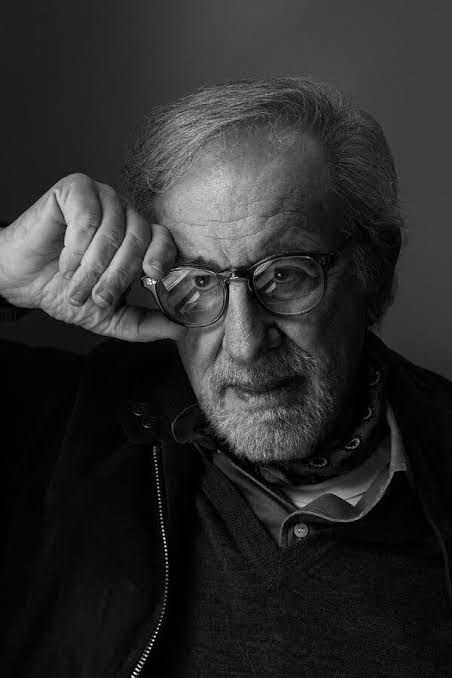
Before becoming one of Hollywood’s most influential filmmakers, Steven Spielberg applied to the University of Southern California’s film school and was rejected. He eventually attended California State University, Long Beach, while continuing to pursue filmmaking.
His journey offers a reminder that the path we imagine for ourselves is not always the one that becomes available. Spielberg has described his relationship with filmmaking in these words:
“I dream for a living.”
The quote captures the imaginative commitment behind his work. A creative career often begins with an idea that exists long before other people can see its potential. Protecting that idea through setbacks requires persistence, but it can also require finding another way forward.
For artists, rejection from a prestigious gallery, residency, film school, or publication can feel particularly discouraging. We may have attached so much hope to one institution that its refusal makes our entire future seem uncertain.
But a single institution is not the only place where a creative career can develop. Artists can learn independently, find mentors elsewhere, pursue smaller projects, and build connections through unexpected opportunities.
8. Maya Lin: Standing By A Vision That Challenges Expectations
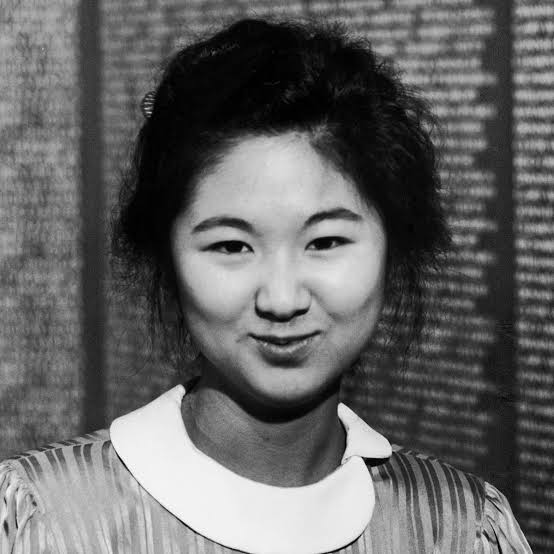
Maya Lin, the artist and architect behind the Vietnam Veterans Memorial in Washington, D.C., experienced a complicated public response to her work.
Her design was selected through a national competition while she was a student at Yale University. However, the memorial’s minimalist form and dark polished stone prompted controversy after its announcement. Some critics felt it departed too sharply from traditional expectations for a war memorial.
Reflecting on the response to her design, Lin explained:
“I felt that everyone’s entitled to their opinion.”
Her account acknowledges how difficult the experience was while showing that she did not allow every negative response to dictate her view of the work. The memorial eventually became one of the most recognised public artworks in the United States.
Lin’s experience reminds us that even selected work can face criticism, and that public responses to art are rarely unanimous.
Artists sometimes interpret negative feedback as proof that a project has failed. But a challenging work may provoke different reactions precisely because it asks people to reconsider familiar ideas. The challenge is learning to remain open without allowing every outside opinion to determine what we create next.
9. Agnès Varda: Following Your Creative Curiosity
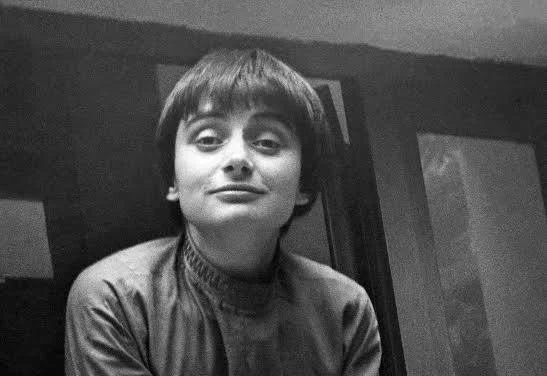
Agnès Varda, the pioneering French filmmaker and visual artist, worked across documentary, fiction, photography, and installation. Her work often focused on ordinary people, overlooked details, and the stories hidden within everyday life.
Varda’s creative philosophy is captured in a line often associated with her film The Gleaners and I:
“I am interested in people, and I am interested in myself.”
Her work repeatedly returned to curiosity, observation, and the freedom to explore subjects that mattered to her. Rather than limiting herself to one established format, she allowed her interests to lead her across different creative forms.
Rejection can make artists afraid to experiment. If one kind of work receives attention, we may feel pressured to repeat it. If an experiment does not succeed, we may decide that trying something different was a mistake.
Over time, this can make a creative practice feel smaller. Varda’s multidisciplinary approach offers another possibility. Artists can follow questions that interest them, explore unfamiliar materials, and allow their work to evolve.
A rejection may tell us that one opportunity was not the right fit, but it does not have to dictate every creative decision that follows. Sometimes, continuing to explore what interests us is how we discover work we could never have planned in advance.
10. Frida Kahlo: Holding On To What Makes Art Meaningful
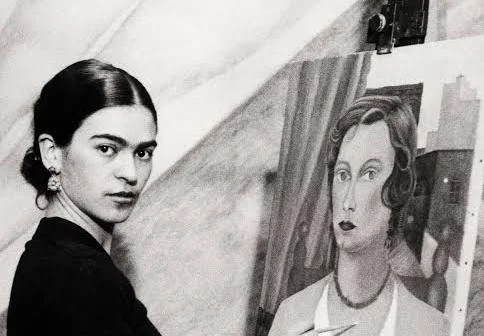
Frida Kahlo’s paintings are remembered for their intimate self-portraits, vivid symbolism, and deeply personal exploration of identity and experience. She developed a distinctive visual language that brought together personal history, Mexican culture, and carefully constructed imagery.
In a contemporary account of her work, Kahlo rejected the idea that her paintings were simply depictions of dreams:
“I never painted dreams. I painted my own reality.”
The statement reflects her commitment to representing her own experiences rather than allowing others to define what her work meant. It also offers a reminder that art can begin with something deeply personal, long before we know how other people will respond.
Rejection can make us question that original impulse. We might wonder whether the work should have been different, whether we chose the wrong subject, or whether we have misunderstood what people want to see.
Sometimes, changing direction is the right decision. Artists learn, revise, and discover new interests throughout their careers. But it is also worth remembering why we began a particular piece in the first place.
Kahlo’s practice reminds us that art can give shape to experiences and feelings that matter to us, regardless of how quickly a work finds an audience.
Rejection Does Not Have To Be The End Of The Story
Perhaps the hardest thing about rejection is that it rarely comes with a complete explanation. We may receive a brief email, a standard refusal, or no response at all. Left to fill in the gaps ourselves, we often imagine the harshest possible reasons.
But creative lives are rarely as straightforward as they appear from the outside. Artists develop at different speeds, follow different routes, and encounter different opportunities. Some find recognition early, while others spend years building their practices.
If you are dealing with rejection right now, give yourself permission to feel disappointed. You do not need to turn it into motivation immediately or pretend that it did not matter. Take the time you need, consider what you can learn, and decide what you want to do next. You might submit your work elsewhere, return to the studio, try a different approach, or simply take a little time before beginning again.
Your creative journey includes more than the opportunities that say yes. It also includes the work you make when nobody is watching, the ideas you keep returning to, and the courage it takes to share something that matters to you. A rejection can close one particular door. It does not get to decide the entire story of your art.
Editor’s Note:
Last two weeks to submit to our Open Call for the latest Artsy x ATH Exhibition are here! Submit your art to Dear Creatures, Big and Small. The exhibition welcomes work featuring domestic animals, wildlife, birds, insects, marine life, reptiles, prehistoric and extinct animals, mythical creatures, and imagined beings. The deadline is November 2, 2026.