


This Artist Uses Geometry, Organic Forms and Texture in Art Jewellery│ Lesley Aine McKeown
At Arts to Hearts Project, the theme of this issue of our magazine was “The Things We Hold Onto,” and the work that arrived touched us more deeply than we’d imagined. Every artist understood the theme differently. For one it was a memory, for another a person, a place, or a belief they reach for when times get hard.
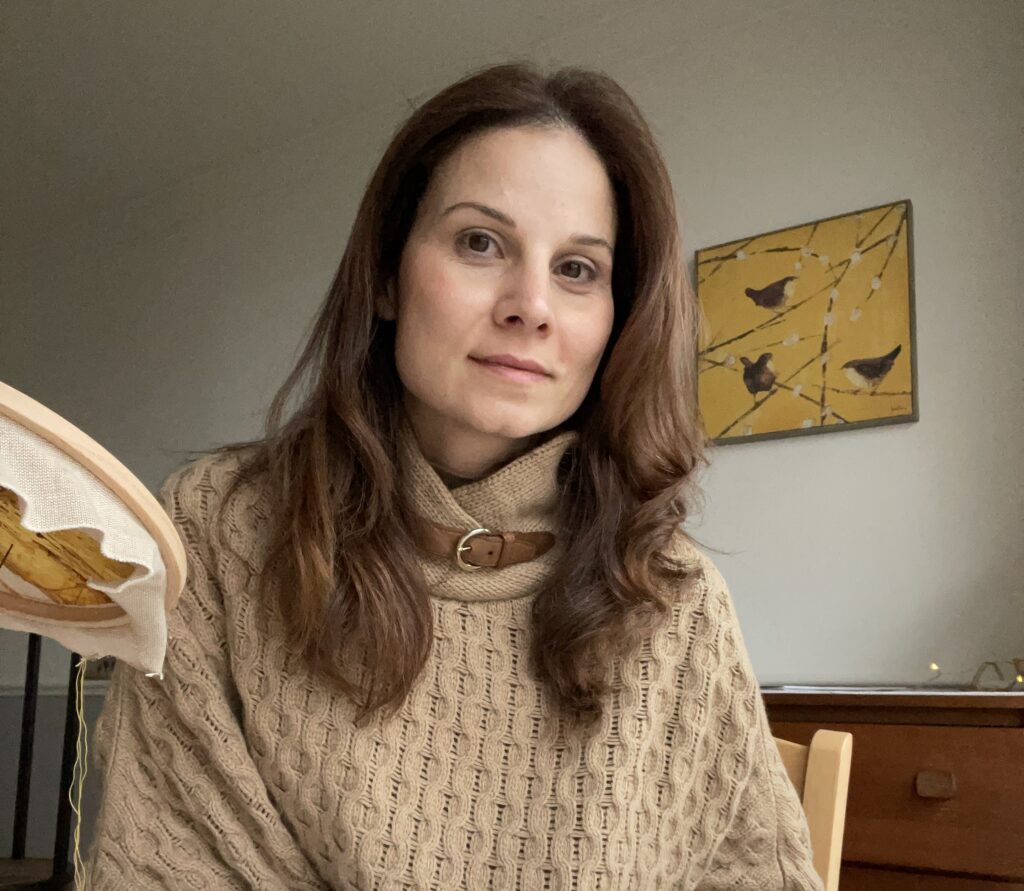
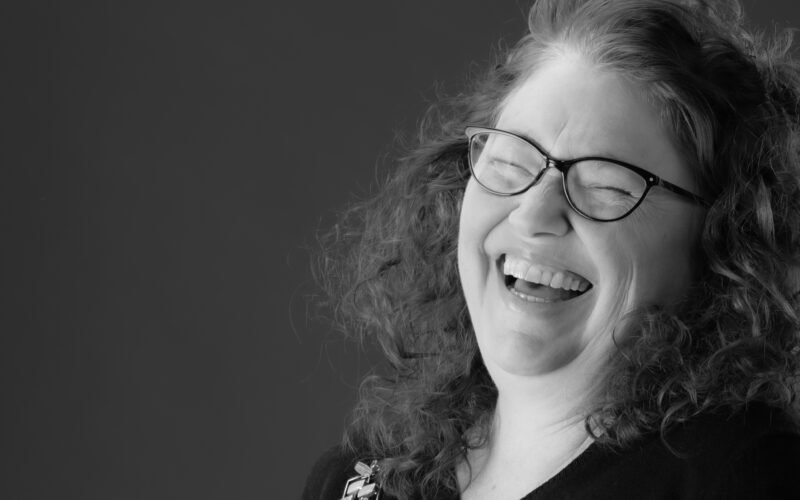
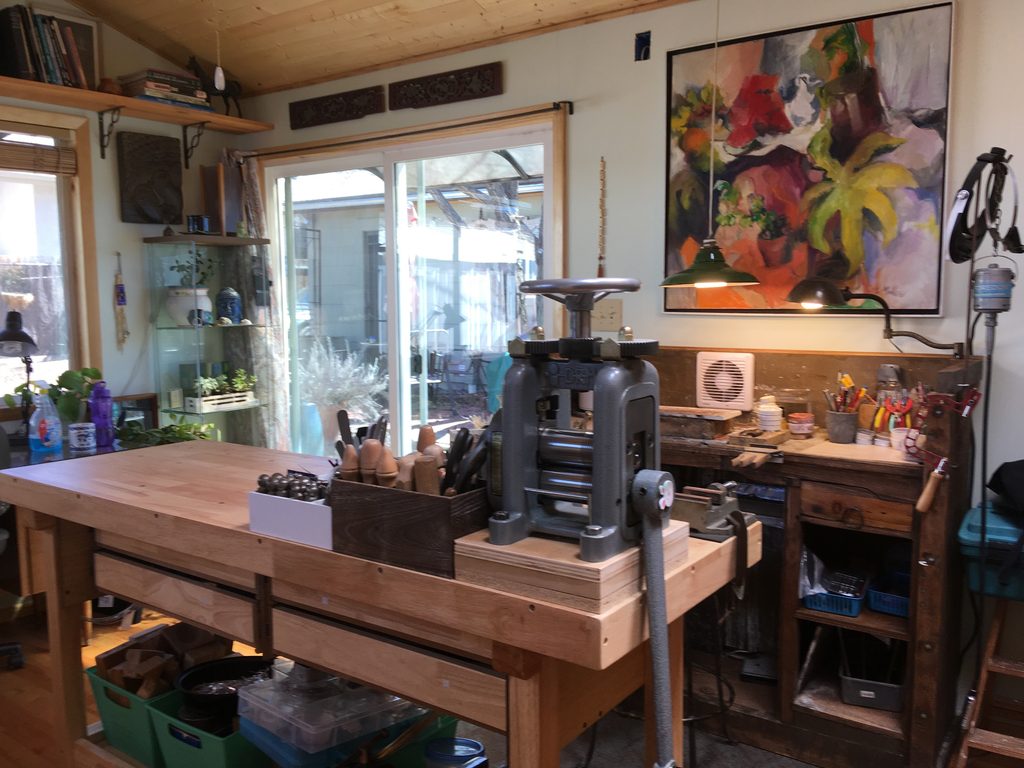
One of the artists we selected is Lesley Aine McKeown, and her answer to the theme is something you can actually hold in your hands: her father’s workbench. Lesley has made her work at that very bench for forty years. Her father built it back in 1965, and she spent her childhood watching him work at it, a piece of furniture woven right into the life of their home.
When she set up her own studio in 1985, he passed it on to her, and every piece she’s made since has been made there. She calls it her touchstone. And since losing her father two years ago, the bench has taken on even greater meaning, a daily, tangible link to him and to all he passed down to her.
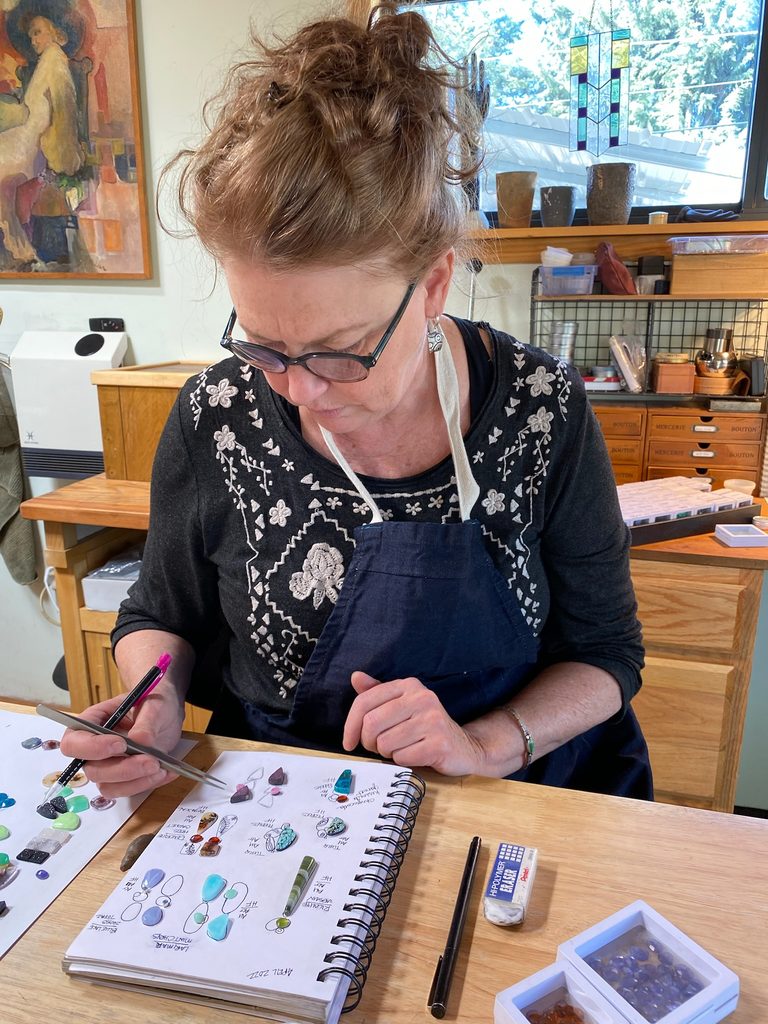
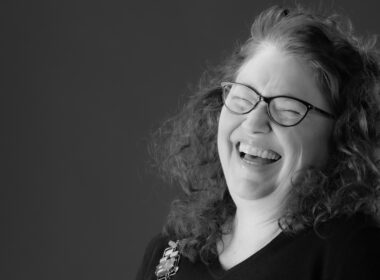
Based in Arizona, Lesley is an American studio art jeweller, though jewellery was never the plan. She’d set out to become a painter, until the chance to apprentice with a jeweller in Sedona quietly redirected her whole life. Metal, as she describes it, became her muse, and she took to it instantly. Four decades on, she loves it as much as ever.
The real magic, though, is in how she works. Lesley makes everything by hand, using simple tools and traditional metalsmithing techniques, some of them with vintage tools. In an age full of AI and high-tech shortcuts, she has held firmly to the slow way of doing things, and she treasures it.
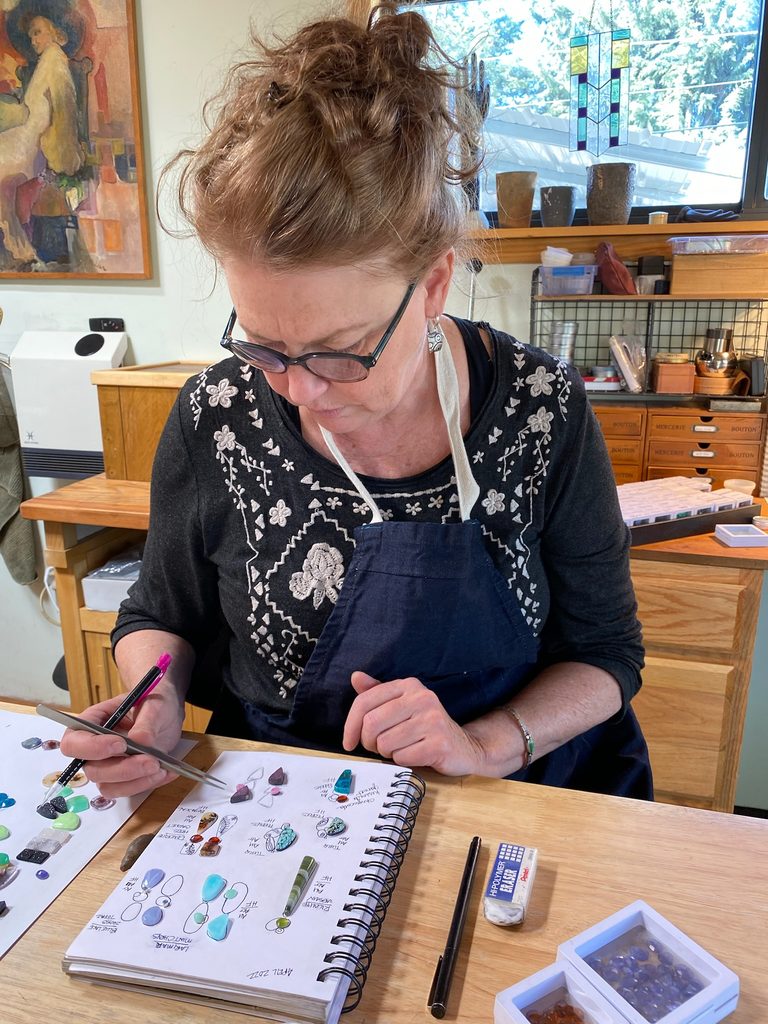
There’s a deep satisfaction, she says, in shaping something from metal with nothing more than a few hammers and a block of wood. She calls it very Zen. And nothing reaches her tools before it reaches her sketchbook, she draws each design in full, working the whole idea out on paper until it’s ready to take form in metal.
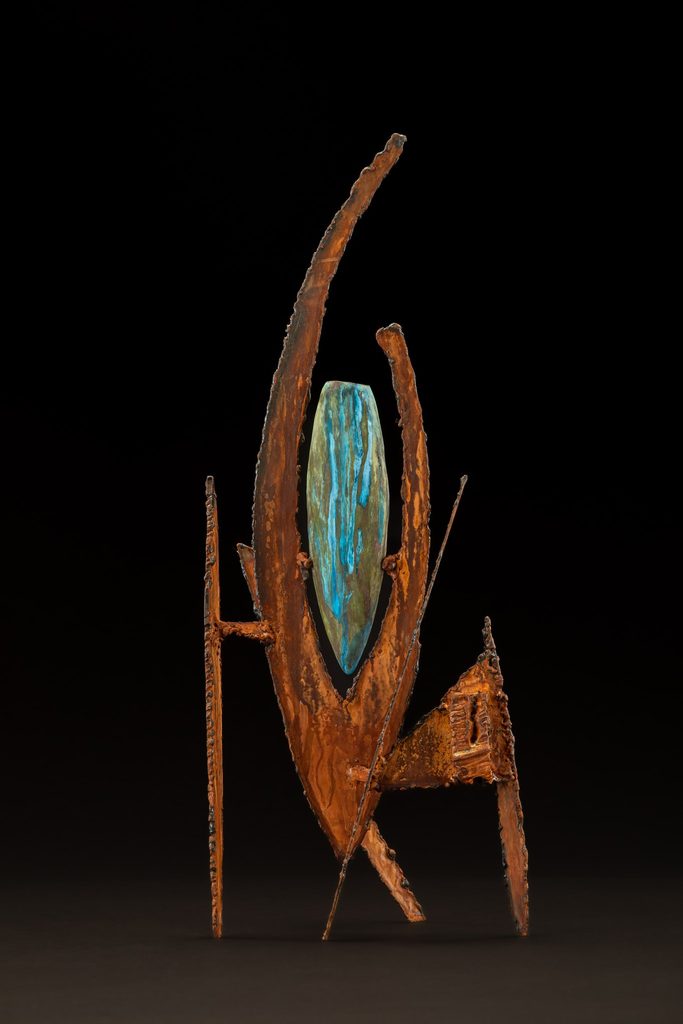
To Lesley, jewellery is so much more than something pretty to wear. Each piece is one of a kind, never repeated, and each one holds a meaning beneath the surface. She wants her work to make you pause, look closer, and stay with it a while.
Her care for the planet runs just as deep. She works with recycled metals and responsibly sourced gemstones, choosing to support small, independent suppliers she knows and trusts. For Lesley, protecting the earth isn’t an afterthought, it’s a responsibility she takes seriously in everything she makes.
And after decades of quiet dedication, real recognition has followed, through respected publications, selective exhibitions, and a growing circle of collectors who treasure her one-of-a-kind pieces.
Now let’s hear from Lesley about her father’s bench, her love of working by hand, and the story inside each piece.
Q1. Lesley, could you share a little about your background and what first inspired you to become a jewellery artist?
I came to jewellery a accident, I had intended to be painter but an offer to apprentice with a jeweler in Sedona led to a lifelong career. Metal was my muse and I took to it easily.
Q2. Your father’s workbench has remained part of your studio for decades. How has working at that bench influenced your creative process?
I grew up watching my father work at that bench, it was an integral part of our home. He made it in 1965. He gave it to me in 1985 when I started my won studio and I have worked it it ever since. It is my touchstone and with the my father’s passing two years ago it’s importance in my artistic life has only deepened.
Q3. You describe each piece as carrying a meaning beyond its appearance. How do you develop that narrative while designing a new work?
Finding a narrative can be an elusive thing. Often for me it is feeling that I sit with and allow to mature into images and or words. Occasionally the narrative is driven by a stone. Sometimes I am moved to work through a series of pieces in a narrative, that is very exciting!
Q4. You still use traditional metalsmithing techniques and even vintage tools. What do those older methods give you that modern technology cannot?
Simple tool provide a intimate relationship with the process. Using simple tools and low tech techniques provide a slow approach to smithing that using AI or fancy tools cannot.
I take immense pleasure in creating something from metal, a few hammers and a piece of wood. It is very Zen.
Q5. You mention drawing every design before making it. At what point does a sketch become something you’re excited to bring into metal?
I draw every single thing I make. I rarely leave a drawing unmanifest in metal. When I draw I work through the whole design and by the time I’m finished I am ready to bring it to metal.
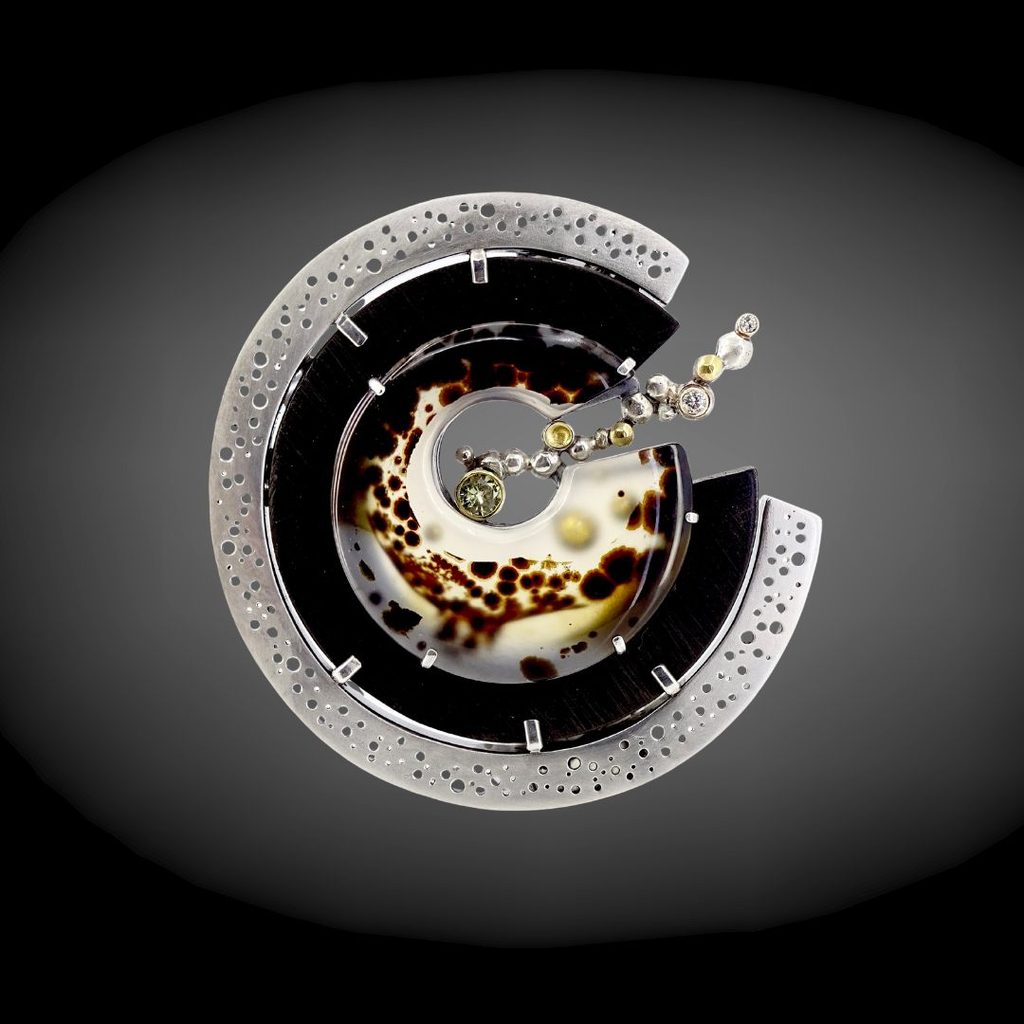
Q6. Contrast appears throughout your work, from smooth and textured surfaces to unexpected materials. What draws you to these relationships?
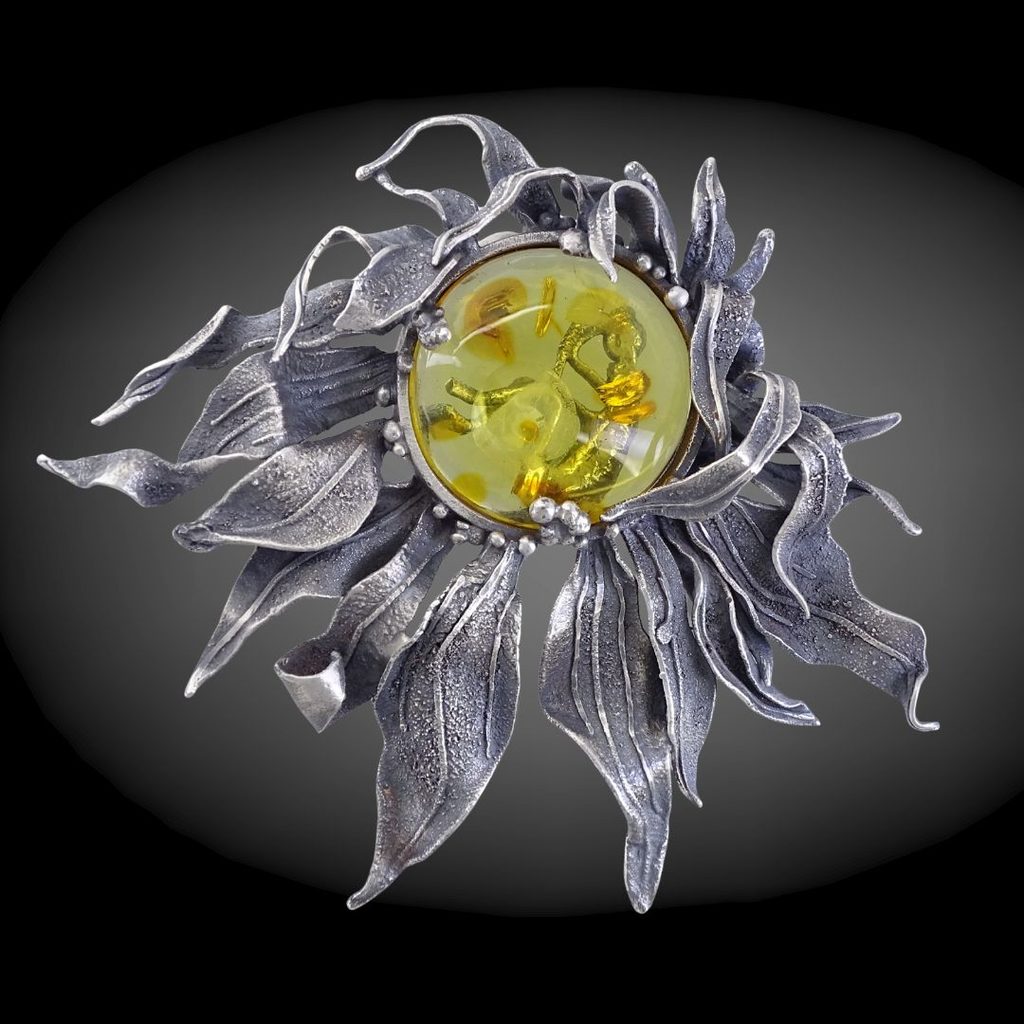
This is essence of what drives my work right now. I am very interested in the stark geometry of abstract sculpture, organic shapes offset with feral textures. A recent review coined my work “Neo Nouveau”, I like that!
Q7. Many of your pieces are one of a kind. What do you enjoy most about creating unique works instead of editions?
All of my work is one of a kind. I never duplicate anything. I may revisit a design and explore variations but I am not interested in making multiples of anything. For me each thought is unique, so to is creating a piece.
Q8. Your jewelry is designed to be worn but also appreciated as art. How do you balance those two purposes?
I leave presentation of my work to the wearer , but I always keep function in my mind when I work. It must be worn.
The sculptural aspect of jewelry makes it wearable art and I find this is the beautiful balance it provokes.
Q9. You work with recycled metals and ethically sourced gemstones. Why has sustainability become an important part of your practice?
I feel very strongly about ecology and stewardship of the planet. There is no plan B. In the US 99% of all precious metals are recycled now. AS for gems, I like to buy from cutters and dealers with no less the 1% separation from the source if I can. It is important that I support small family owned businesses and I have built relationships with the stone cutters I buy from.
Q10. Contemporary jewelry is increasingly being exhibited alongside sculpture and fine art. How have you seen the field evolve during your career?
This is an exciting time for art jewelry. Around the world art jewelry is seen not just as something to be worn but as piece of art. I am currently in two shows that have taken this approach. I find these opportunities very inspiring and I am increasingly looking for exhibitions that embrace this philosophy.
Q11. Jewelry is often seen as decorative. How do you hope your work challenges that view?
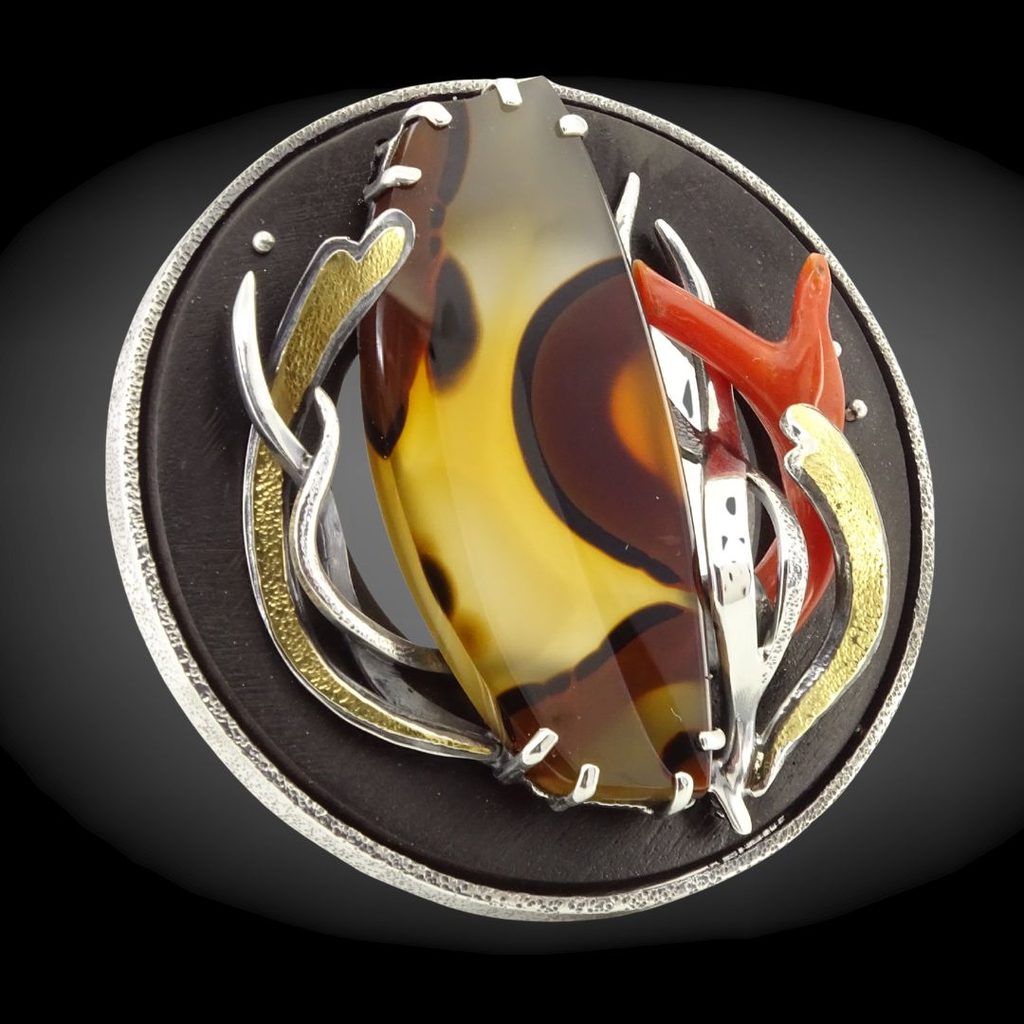
I primarily interesting making work that causes the viewer to think.
My work is contemplative and often abstract so it encourages the viewer to take a closer look. I find doing work like this very satisfying.
Q12. You’ve exhibited with organizations such as the Society of North American Goldsmiths. How have those experiences influenced your practice
Being a part of organizations that promote and support the work you do is extremely important, it connects you to a community and constantly pushes you creatively and allows share with your peers. At this point in my career I conscientious my legacy so I’m carefully planning my goals towards that.
Q13. Looking back over four decades of making, what do you think has changed the most about the way you approach your work?
I rarely have access to the people who buy my work. But I have noticed a increase of buyers who are becoming collectors. This is exciting to think someone loved my work enough to collect it and that somewhere out there is thoughtfully collected body of work.
Q14. After years of exhibiting and being featured in Ornament Magazine, what milestone has meant the most to you?
Well an article in Ornament magazine was a huge milestone. Very few jewelers make the cut. The past two years have been very exciting. I was juried into The Atlanta Contemporary Jewelry Show, only 35 art jewelers are exhibited and it is very exclusive, that was a biggie. I have won a few awards as well.
Q15. Many of your pieces begin with an unusual gemstone. How do you design around a stone without letting it dominate the final work?
That if the challenge in designing art jewelry. If the piece is stone-centric I always try to balance and compliment the stone.
Q16. You’re continuing to explore larger sculptural forms. What excites you most about where your work is heading next?
Exploring narrative in sculpture is incredibly exciting, it allows expression in dimensions.
For me working in metal, creating forms that are fluid in a media that is perceived as rigid brings immense gratification and endless possibilities.
I find the anticipation of movement more intriguing than action itself: a sculpture not in a state of movement, but one that is about to move. It is my hope that my work sparks Inquisitiveness in the viewer.
Q17. What advice would you give to emerging jewelry artists who are trying to develop a style that feels both personal and timeless?
Work hard, polish your technical skills. Take classes from Master metalsmiths, education is very important and will save a lot of time. Never settle of less than the best you can do. Mostly leave fear at the door.
As our conversation with Lesley came to an end, we found ourselves thinking about how easily we mistake the beautiful for the shallow, and how often real depth hides in the smallest things.
Jewellery, more than almost any art form, gets written off as merely decorative, something lovely to wear and little more. Work like Lesley’s gureflyently overturns that idea. Her pieces are made to make you think, to look closer and stay a while, each one carrying a story beneath its surface. In a world that tends to judge art by its scale or its price tag, she is a reminder that meaning has nothing to do with size, and that something small enough to wear can hold a whole world inside it.
The art world is slowly catching up to this, too. The old line between “fine art” and “craft” is finally beginning to blur, and art jewellery is increasingly shown beside sculpture and painting, taken seriously as the expressive art form it has always been. Artists like Lesley are part of why that wall is coming down, quietly insisting that thought, skill, and story matter far more than category.
And there is something moving in watching people move from buying to truly collecting, treasuring a one-of-a-kind, handmade piece as the small work of art it is. To choose her work is to value not just how it looks, but everything it holds, and to keep a little of that craft and care alive.
Follow Lesley Aine McKeown through the links below and see her work for yourself.
Ask an artist “where are you?” and the honest answer is rarely just a city. It’s a feeling, a season of life, a place you’re still finding your way through. That’s the heart of Issue 15 of Arts to Hearts Magazine, now open for submissions under the theme “Where I Am.” Whatever that phrase stirs in you, belonging, change, distance, hope, we’re inviting you to answer it with your work. New or already made, in any medium, from anywhere. Your answer is the only one that matters, so show us where you are.