
The Art Business — Part 05: How to Use Instagram as an Artist
For an artist, Instagram can sometimes feel like another thing on an already very long to-do list. You make the work. You photograph it. You write about it. You apply to open calls, answer emails, prepare for exhibitions, package orders, update your website, and somewhere in between all of that, you are apparently supposed to remember to post a Reel.
But Instagram can be much more than another place where your artwork appears. Used thoughtfully, it can become a studio window, a portfolio, a way to meet collectors, a place to share your exhibitions, and sometimes, a direct path to a sale.
The numbers show that collectors are already using it this way. The 2025 Art Basel and UBS Survey of Global Collecting, which surveyed 3,100 high-net-worth collectors across 10 markets, found that 51% of collectors had purchased art through Instagram, up from 43% in 2023. Among those who bought from galleries or dealers, 51% had made at least one purchase through Instagram without seeing the work in person first.
That does not mean Instagram has replaced galleries, art fairs, websites, or studio visits. It simply means that the journey from seeing an artwork to wanting to own it can now begin with a scroll.
So, how can artists make that scroll count?
Think Of Instagram As Your Studio Door
The first mistake is treating Instagram like a catalogue that only needs to show finished paintings. Of course, your finished work should be there. But collectors and potential buyers are often interested in the person and practice behind the work too. Think about what someone would see if they walked into your studio for the first time.
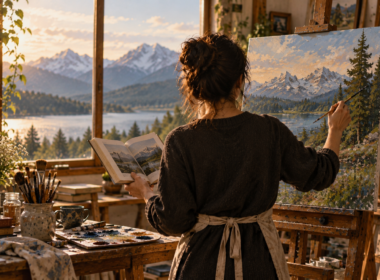
They would see the paintings leaning against walls. Brushes covered in paint. Sketches that never became finished works. Half-completed pieces. Materials. Books. Notes. Perhaps a cup of tea sitting dangerously close to a canvas.
Your Instagram can offer that same feeling. Share the finished work, but also let people see how it came to exist. You might share:
- A close-up showing texture, brushwork or detail
- A work in progress
- A sketch beside the finished artwork
- Your studio table at the end of a working day
- A short video of you painting
- The story behind a particular series
- An exhibition installation
- A packed artwork ready to leave the studio
- A collector receiving their piece
- Your thoughts about a material, subject or recurring idea
This kind of content gives people something to remember. And that is important because a person who discovers your work today may not buy anything today. They might follow you, watch your process for six months, see your next exhibition, save a painting, and eventually become a collector. Instagram is often the beginning of the relationship rather than the end of it.
Your Profile Should Answer Three Questions
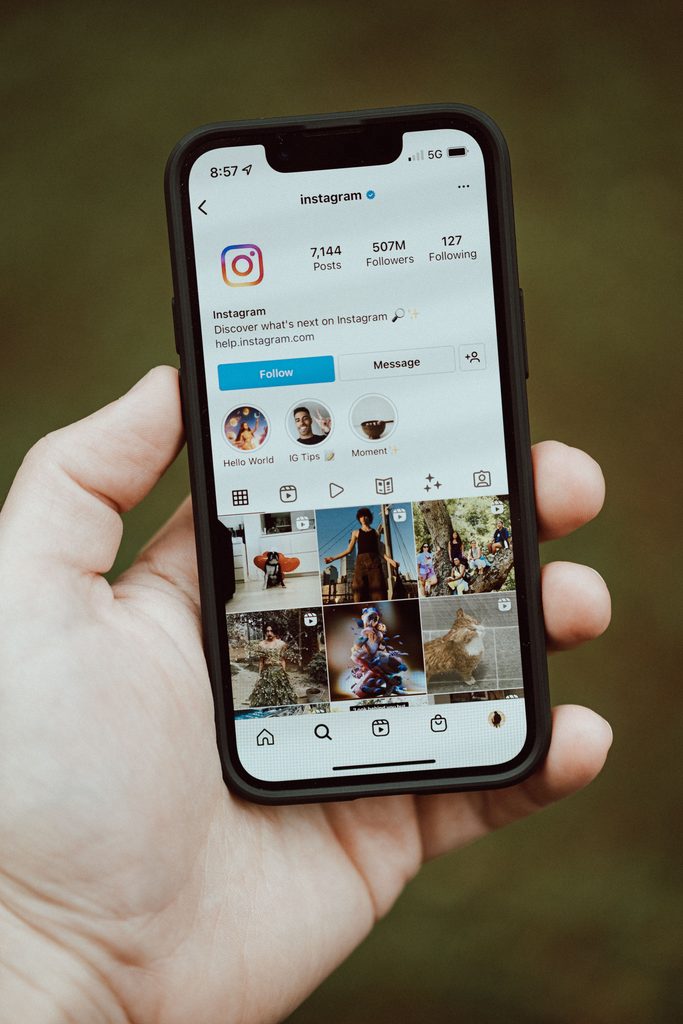
Before thinking about hashtags or Reels, look at your profile as a stranger would. Someone has just discovered one of your artworks. They click your name. Can they immediately understand who you are, what you make and where they can find more? Your profile should make three things clear:
Who are you?
Your name and what kind of artist you are should be easy to understand.
What do you make?
Your artwork should be the obvious centre of the page. If you work across several mediums, make that clear without turning your bio into a long list.
What can someone do next?
If your work is available to purchase, link to your website, shop, gallery page, exhibition or enquiry form.
This is particularly important when Instagram is bringing people to you who have never heard your name before. You do not want someone to fall in love with a painting and then spend ten minutes trying to work out whether it is available.
Make Your Feed Feel Like You
Not every post needs to look identical. In fact, an artist’s page can feel much more alive when it moves between finished work, studio moments, details, exhibitions and everyday glimpses of the practice.
But there should still be a sense of consistency. That could come from your photography, the way you write captions, the colours that appear repeatedly, the kinds of details you photograph or simply the feeling of the page.
Think less about making every square “Instagrammable” and more about creating a visual world around your work. If you paint quiet interiors, for example, a photograph of your paint-stained hands, the corner of your studio or morning light falling across your worktable can become part of that world. If you make sculpture, show the material before it becomes the finished object.
If you are a photographer, let people see the locations, contact sheets or preparation behind a shoot. Your page should not hide the practice in an attempt to make everything look polished. The practice is the interesting part.
Don’t Just Post The Artwork. Tell Us Something About It.
A photograph of a painting with “New work” as the caption does very little. You don’t need to write an essay every time, but give people a reason to pause. Tell us what inspired the work. Tell us why you chose that colour. Tell us what changed while you were making it. Tell us about the person, place or memory that appears in it.
Even a few thoughtful lines can make the artwork feel more accessible. Instead of: New painting. Oil on canvas. Available. You could say something closer to:
I started this painting thinking about the feeling of coming home after a long day, when the room is familiar but the light has completely changed it. I kept returning to that quiet blue in the corner until the whole painting began to revolve around it.
Suddenly, there is a reason to look again. And if the artwork is available, you can add the practical information underneath.
Use Different Formats For Different Parts Of Your Story
You do not have to turn yourself into a full-time content creator. But Instagram gives artists several ways to communicate, and each can serve a slightly different purpose. Posts can hold finished artworks, exhibitions and important announcements.
Carousels are wonderful for showing details. Start with the full artwork, then bring the viewer closer to texture, layers, edges or small elements they might miss in person. Stories are ideal for the everyday. A studio morning, a quick update, a poll, a new sketch or a reminder that an exhibition closes tomorrow. Reels can show movement and process. A painting developing from blank canvas to finished work can tell a story that a single photograph cannot.
You don’t need to use every format every day. The goal is not to fill the feed. The goal is to keep the door open.
Make It Easy To Buy
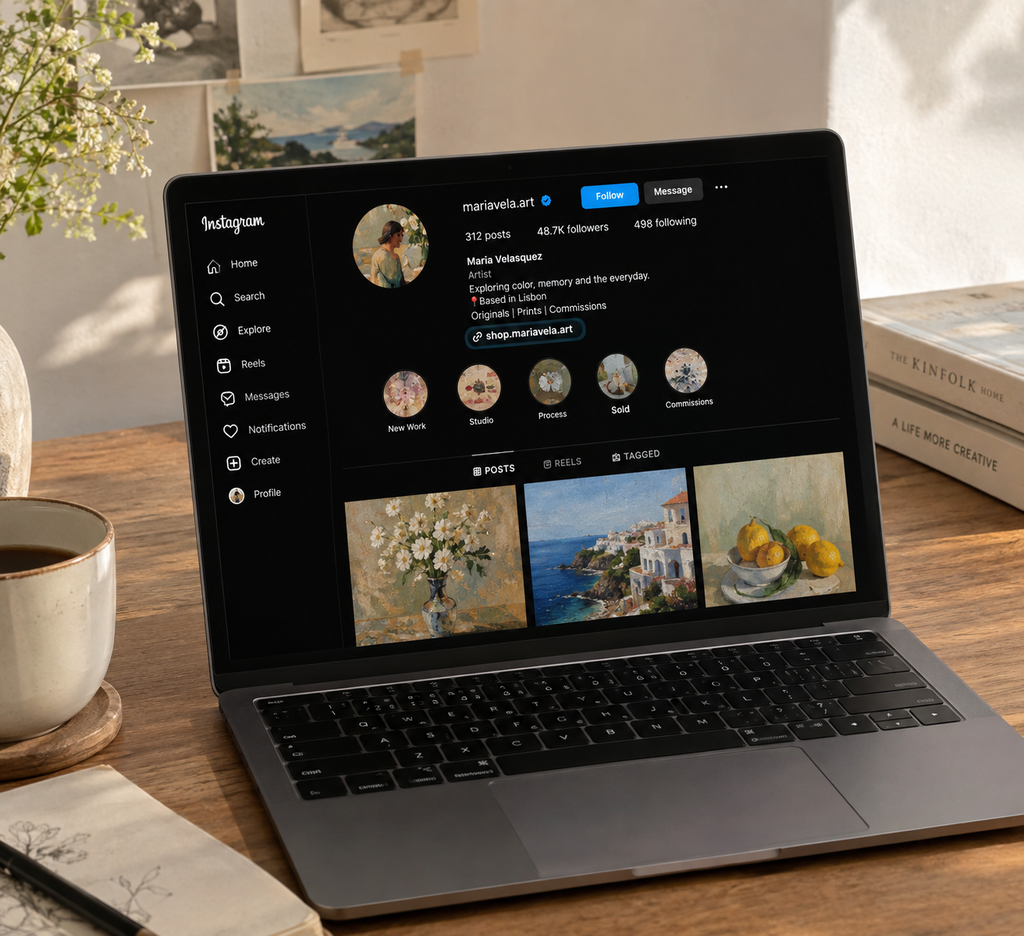
This is where Instagram becomes part of the business rather than simply part of the portfolio. If an artwork is available, say so. Include the title, medium, dimensions and price where appropriate, or clearly explain how someone can enquire.
If the work is sold, mark it as sold. If it is available through a gallery, direct people to the gallery. If you accept commissions, explain what that process looks like. And make sure the link in your bio actually leads somewhere useful. A potential collector should not have to send three messages simply to find out where they can purchase your work.
This matters because online art buying is already a significant part of the market. The Art Basel and UBS Global Art Market Report found that online sales across the global art market reached $9.2 billion in 2025, even after falling from the pandemic-era peak. Instagram is only one part of that online ecosystem, but it can be the place where someone discovers the work and begins the journey towards buying it.
So, How Much Can Instagram Actually Sell?
This is where the numbers need a little context. There is no reliable industry figure saying, “Artists sold X billion dollars of art on Instagram last year.” Art purchases often begin on Instagram and are completed through a gallery, an artist’s website, email, a studio visit or another payment channel.
But we do have some very useful evidence.
In the 2025 Art Basel and UBS collector survey, 35% of high-net-worth collectors said they had purchased art through Instagram links. Direct purchases from artists were also becoming significantly more important, with 63% of surveyed collectors having purchased directly from an artist through channels including studio sales, commissions and Instagram. Direct-from-artist sales represented 20% of their spending in 2024/2025.
And sometimes the effect can be much more dramatic. In September 2026, Business Insider reported on artist and designer Oskar Flodstrom, whose Instagram content helped one of his pieces go viral. Following tens of millions of views, he generated more than $250,000 in sales over 90 days.
That is not a promise of what Instagram can do for every artist. Viral success is unpredictable, and Flodstrom’s experience is an exceptional example rather than an average. But it does demonstrate something important: an artist no longer necessarily needs a traditional physical storefront for a piece of work to travel far.
Don’t Chase Followers. Build Familiarity.
It is tempting to look at artists with 50,000 or 500,000 followers and think that is the goal. It doesn’t have to be. A smaller audience that genuinely cares about your work can be much more meaningful than a huge audience that scrolls past it.
Someone who saves your paintings, replies to your studio Stories, visits your exhibition, shares your work with a friend or asks about purchasing a piece is more valuable to your art business than an empty follower count.
This is also why engagement matters. Reply to thoughtful comments. Answer questions. Thank people who share your work. Visit the pages of artists, galleries, curators and collectors whose work genuinely interests you. Instagram can be a networking space, but it should still feel human.
A Simple Instagram Routine For Artists
If posting constantly sounds exhausting, keep it simple. A sustainable week could look something like this:
One finished artwork:
Share a strong photograph with a thoughtful caption.
One process post:
Show the work being made, a detail, sketch or studio moment.
One personal or practice-related post:
Share something that gives people a little more insight into your artistic world.
Stories throughout the week:
They don’t have to be polished. A few glimpses from the studio are enough.
One clear sales or opportunity reminder:
If you have available work, a commission opening, exhibition, print release or upcoming event, tell people.
The exact number matters much less than being consistent enough that people remember you.
Let Instagram Lead Somewhere
Perhaps the most useful way to think about Instagram is this: Instagram should open the door, not become the entire house.
Your website can hold your full portfolio. Your mailing list can keep collectors connected to you. Your gallery can represent your work. Your studio can offer a deeper experience. Exhibitions can let people encounter the work in person.
Instagram can connect all of these things. It can introduce someone to your practice at 11 p.m. from another country. It can remind an old follower about a new series. It can put your work in front of a collector who would never have walked into your local gallery.
And sometimes, it can lead directly to a sale. The Art Basel and UBS research makes one thing particularly clear: collectors are discovering new artists through more routes than ever before. In 2025, 66% of surveyed HNW collectors said they had bought work by artists they had newly discovered, up from 43% in 2022.
That is where Instagram can become genuinely exciting for an artist. Not because every post will sell something. Not because you need to become an influencer. But because your work can be discovered by someone who was never looking for you in the first place. And sometimes, that is exactly how a collector begins.
Editor’s Note:
Only 3 days left to submit to the Big Book of Mixed Media Artists open call! If you work across mixed media and would love to see your art featured, now is the time to send in your submission. Don’t miss the deadline!