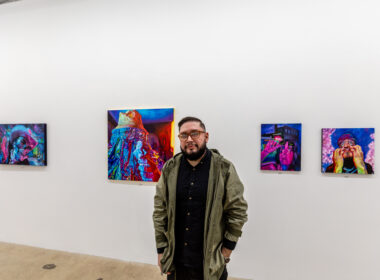

How Growing Up Between Mexico City & McAllen Shaped Manuel Zamudio’s Dystopian Cinematic Oil Paintings
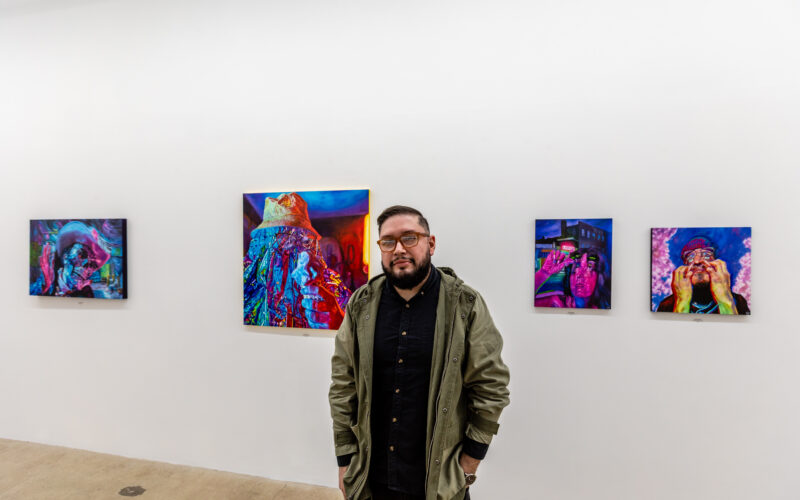
At Arts to Hearts project, we have always believed that the most important art education is the kind you give yourself. Our Best of the Art World editorial exists to celebrate exactly those artists the ones who did not wait for permission, who learned by doing, who built their practice from the ground up through sheer curiosity and determination and an absolute refusal to stop. And this week we are so excited to bring you one such artist.
Manuel Zamudio gave himself that education on walls, in the dark, with spray cans and built something that no classroom could have produced.
Born in Mexico City and raised in McAllen, South Texas from the age of five, Manuel grew up straddling two worlds. The energy and scale of a city built on centuries of history and murals and culture on one side. The quieter, slower pace of South Texas on the other.
That duality never left him. And if you look at his paintings long enough, you feel it the cinematic scale of vast imagined environments, and somewhere inside them, a quiet intimate human moment that asks you to slow down and stay a while.
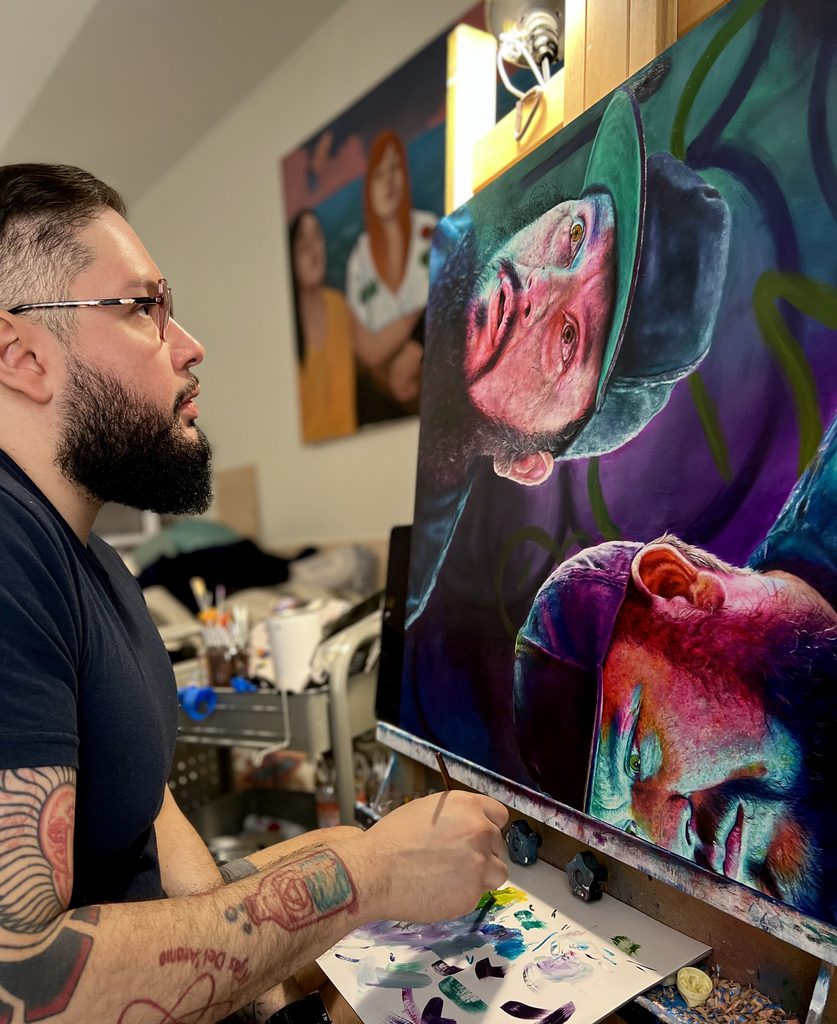
He found his way to art not through a gallery or a school but through graffiti. Through friends who were writers. Through magazines like Juxtapoz and Hi-Fructose that showed him a world of art that had more energy and more imagination than anything he had encountered before.
Through cans of Ironlak and Montana and whatever spray paint he could find at a local hardware store learning colour relationship, contrast, composition, and how light behaves, all before he ever picked up a paintbrush. Graffiti gave him the confidence to create. And then oil painting gave him the space to discover his voice.
The turning point came when he walked out of a cinema after watching Blade Runner 2049. He left feeling inspired and frustrated at the same time because the cinematography, the atmosphere, the emotional weight of that film made him realise he was not yet making work that came close to saying what he wanted to say. That feeling became a turning point. He stopped chasing individual paintings and started building a world.
That world is called Neon. A fictional city atmospheric, cinematic, neon-lit that began as a backdrop and has since become a living character in its own right. A place full of people experiencing hope, fear, loss, and quiet moments of revelation.
A place that has evolved across three solo exhibitions Neon at Arch Enemy Arts, Return to Neon, and the upcoming Neon Memory each one expanding the city, deepening its stories, and asking new questions about memory, reality, and what it means to carry a version of a place inside you long after you have left it.
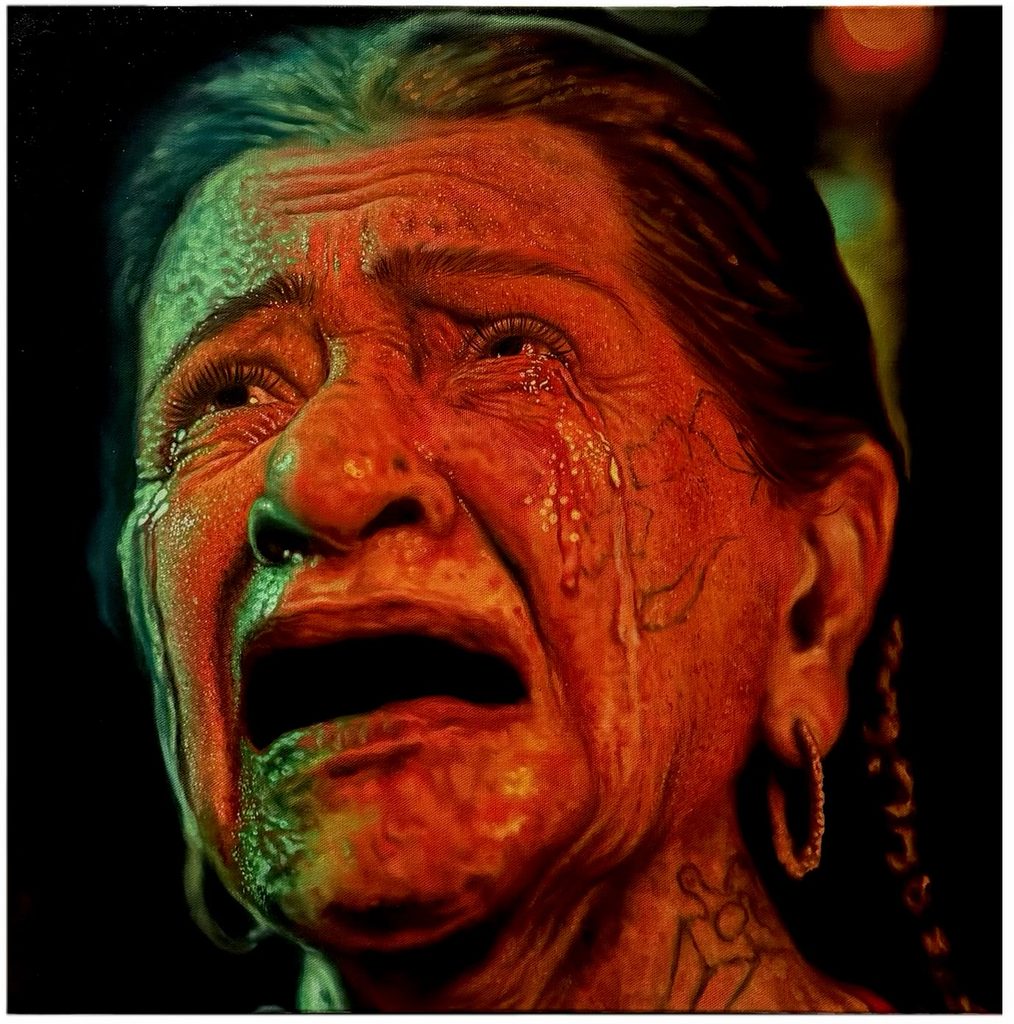
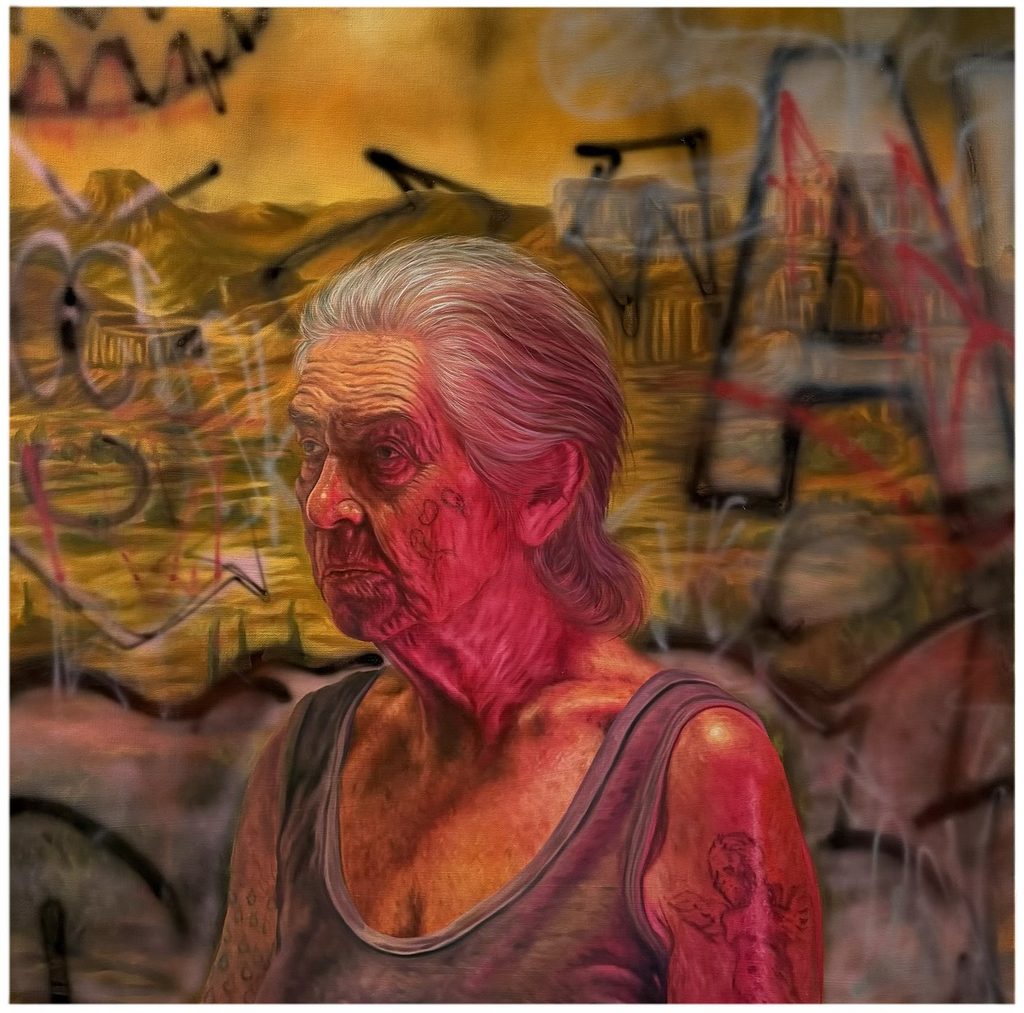
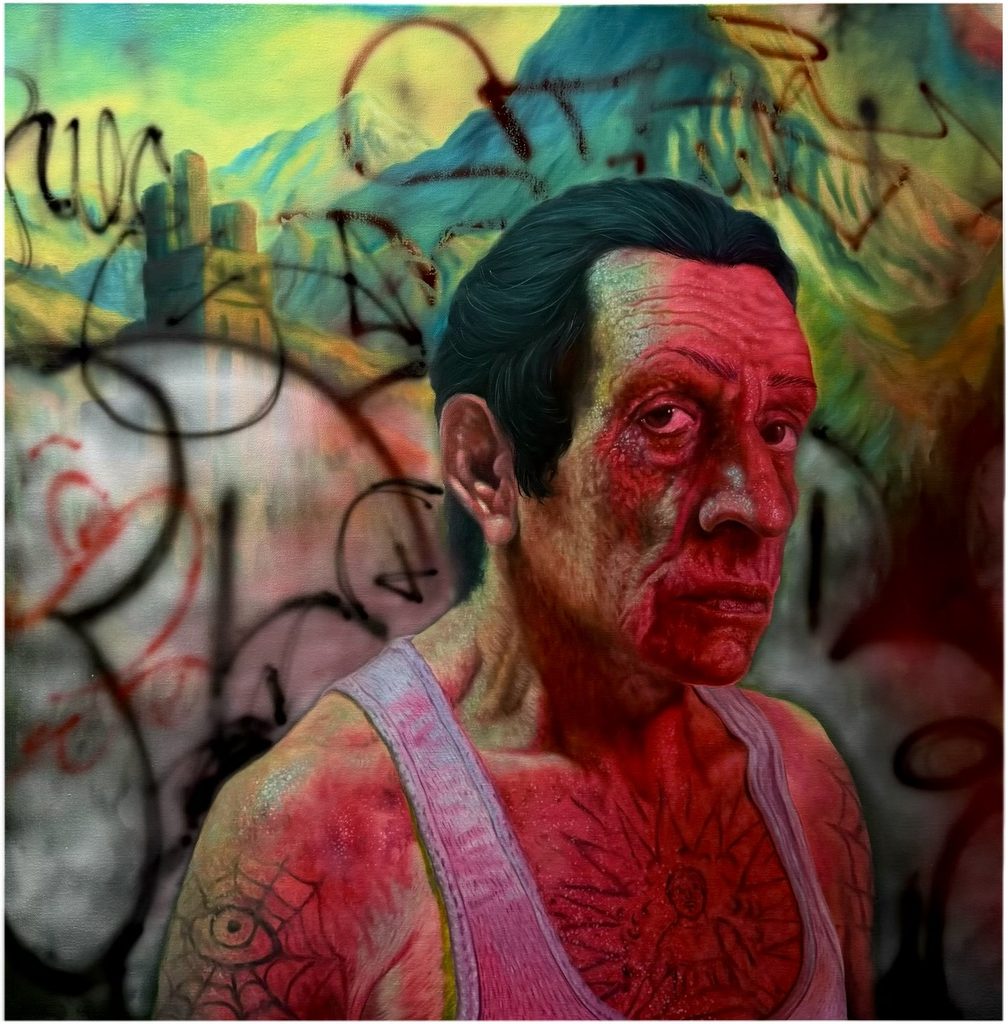
His technique is extraordinary. The neon glow that defines his work is not a filter or a trick it is a philosophy of light built across layers, colour temperature, and the same principles he learned painting letters on walls years ago. His portraits are grounded in a startling realism. The worlds that surround his figures grow increasingly surreal and symbolic. And the tension between those two things the human and the imagined, the real and the psychological is where all of his most interesting work lives.
He has shown with Arch Enemy Arts, built a dedicated international collector base, and developed one of the most immediately recognisable visual languages in contemporary narrative painting. And the most exciting part is that the work is still evolving still building, still becoming, still surprising even him.
Let’s get to know Manuel through our conversation with him and step into the city he has been building, one painting at a time.
Q1. Can you share your journey from graffiti to fine art, and how that transition shaped your creative voice?
Graffiti was my introduction to making art in a serious way.
Growing up in South Texas, I was searching for an outlet that gave me creative freedom, even if I didn’t yet know where it would lead. At the time, there wasn’t much of a gallery scene around me, but I was constantly inspired by magazines like Juxtapoz and Hi-Fructose. Once I met friends who were graffiti writers, I jumped right in. What I appreciate most is that many of them didn’t come from formal art backgrounds, yet they taught me lessons I still use today.
Through graffiti I learned about color relationships, composition, contrast, framing, and how different paint behaved from Ironlak and Montana cans to whatever spray paint you could find at a local hardware store. Those experiences trained my eye long before I ever picked up a paintbrush. As I grew, I realized I wanted to do more than create individual pieces.
I wanted to build a body of work that could tell stories and communicate something deeper over time. That curiosity led me to oil painting, where I had to start over learning how to mix color, understand light, and develop my own visual language. Graffiti gave me the confidence to create, but painting gave me the space to discover my voice.
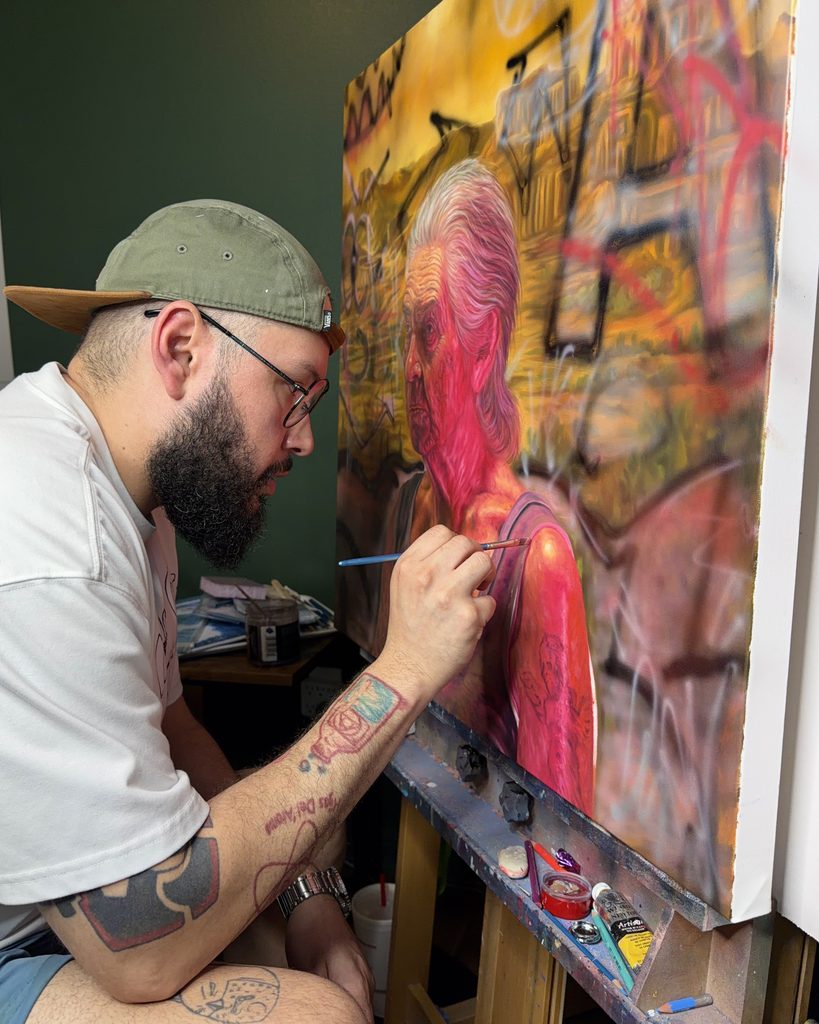
Q2. You were born in Mexico City and moved to McAllen, Texas at age five how did straddling those two cultures shape the way you see and make images?
Moving to South Texas at such a young age had a profound impact on me. For a long time, I felt like an outsider, and I don’t think I fully understood that feeling until I was older. I found comfort in my imagination. As a kid, I was constantly drawing, creating my own comic books, and building worlds that felt more like home than the one I was trying to navigate.
Looking back, I think solitude became an important part of my creative life. At the same time, I carry memories of being born in Mexico City a place full of energy, history, murals, architecture, and an overwhelming sense of life. Moving to the quieter pace of South Texas created a contrast that I still see reflected in my work today.
Many of my paintings are built around that same duality. There are large, cinematic environments, but within them are quiet, intimate moments that ask the viewer to slow down. I think that’s a reflection of my own experience: being drawn to the scale and energy of a great city while living a quieter life, and trying to reconcile those two worlds through painting.
Q3. Was there a specific artist, film, or moment that drew you toward the New Contemporary and Pop Surrealist world?
I don’t think there was one defining moment. It was really a series of realizations over time. When I was in high school, I was surrounded by what I understood as traditional fine art. At least in my environment, it felt restrained. The color palettes were muted, the work didn’t feel very imaginative to me, and I remember thinking that it wasn’t the kind of artist I wanted to become. I didn’t have the vocabulary to explain it at the time I just knew I was searching for something with more energy, more storytelling, and more visual impact.
That search eventually led me to graffiti, where I found a creative freedom that I hadn’t experienced before. Years later, film became just as influential as painting. Movies like 2001: A Space Odyssey planted the seed, but Blade Runner 2049 completely changed the trajectory of my work. I remember walking out of the theater feeling inspired, but also frustrated.
The cinematography, the atmosphere, the use of color, the scale, and the emotional weight of that film made me realize that I wasn’t creating work that came close to expressing what I wanted to say. That experience became a turning point. It pushed me to stop chasing individual paintings and instead begin building a world one where narrative, symbolism, light, and emotion all work together. I still think about that feeling today every time I begin a new body of work.
Q4. Your work is described as “neon lit.” How do you achieve that glow in oil paint?
The foundation for that glow actually comes from my years painting graffiti. When we were painting walls, we were constantly creating highlights, halos, and glowing effects around letters and characters to make them feel illuminated. Without realizing it at the time, I was learning lessons about color relationships, contrast, and how light behaves. When I transitioned to oil painting, I simply carried those ideas with me. In oil, the process became more refined.
I build light gradually through layering, blending, and carefully controlling value and color temperature.
Rather than relying on a single bright color, I create transitions that move from saturated color into lighter values and, finally, into small areas of white or near-white highlights. For me, the illusion of glow comes from those relationships between colors rather than any one specific pigment.
Over time, those neon palettes became more than just a visual technique they evolved into part of the narrative itself. What began as a way of painting light eventually grew into the fictional city that my characters inhabit, return to, or leave behind. Neon became both a place and a visual language, and the two have continued to evolve together over the years.
Q5. Your painting Gehenna references a place with powerful historical and spiritual associations. What drew you to the title, and how did it shape the painting?
The title Gehenna came after I had already spent time living with the painting. As I reflected on what it was really about, I realized it wasn’t simply depicting suffering it was exploring the emotional and spiritual weight of the moment we’re living through. It felt as though the world was entering a period of collective reckoning. No matter where we stand politically, socially, or personally, there seems to be a shared awareness that something is shifting.
Truth often feels close to the surface, but the possibility of confronting it can be both hopeful and unsettling. I wanted the painting to exist within that tension. The figure isn’t experiencing only physical or emotional pain. To me, she’s carrying something more existential, the burden of witnessing imbalance, division, and the darker aspects of humanity while still choosing to endure.
The dismantled serpent across her face symbolizes the breaking apart of old systems and beliefs, while the dagger at her neck reminds us that change doesn’t arrive from somewhere else. It begins with our own willingness to confront ourselves. Ultimately, Gehenna wasn’t meant to be a comfortable painting. It was created out of a need to respond honestly to the world around me. Rather than offering answers, I wanted it to ask whether we’re willing to look inward with the same intensity that we look outward. I think meaningful change begins there.
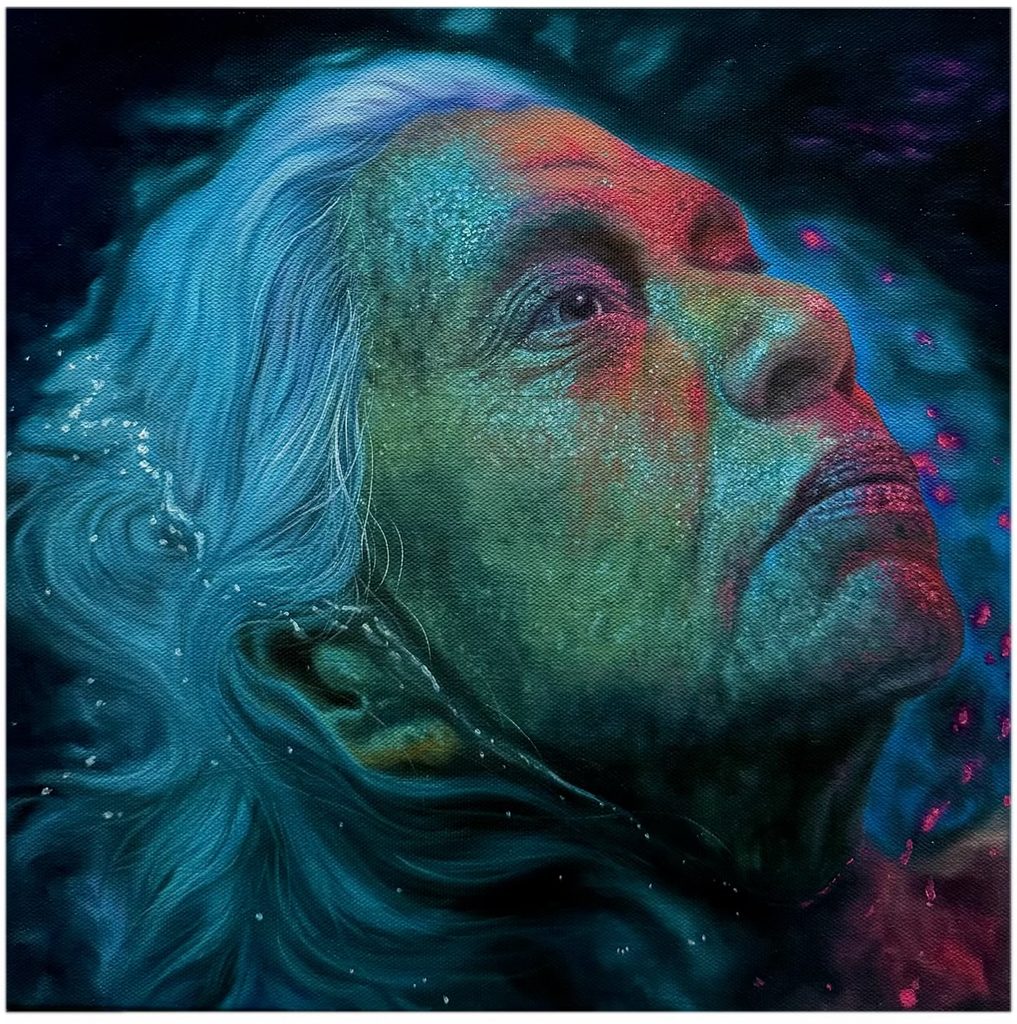
Q6. Your exhibition Return to Neon expands the world introduced in Neon. What inspired you to return to that universe?
When I first created Neon for my solo exhibition at Arch Enemy Arts, the city was more of an atmosphere than a fully realized place. It served as the backdrop for the paintings, but I hadn’t yet explored what it truly represented. As I spent more time with that world, I realized there were still stories I wanted to tell, and returning to it felt like a natural progression. Return to Neon gave me the opportunity to develop the city into something much more than a setting.
It became a character in its own right a living place filled with people experiencing hope, fear, loss, discovery, and quiet moments of revelation. I became increasingly interested in the intimate human experiences unfolding within this vast, imagined metropolis. Now, as I’m creating my third solo exhibition, Neon Memory, the city has evolved once again.
It’s no longer just a physical place; it’s become an emotional and psychological one. The city exists as a space where people live with memories of what could have been. Whether those memories become a source of torment or liberation is left for each viewer to decide. I want Neon to remain open enough that people can find parts of themselves within it.
Q7. Your paintings often feel like scenes from a film. How do you build that cinematic quality into a composition?
I wish I could say I spent years formally studying film, but honestly, I think I’ve just spent years being inspired by it. Directors like Christopher Nolan, Ridley Scott, Denis Villeneuve, Stanley Kubrick, and many others have had a profound influence on the way I think about composition, atmosphere, and storytelling.
One thing I’ve always admired is that a great film frame rarely feels like a perfectly composed photograph.
Subjects are often pushed to one side, partially cropped, interrupted by architecture, or surrounded by negative space. Those choices create tension and give you the feeling that the story extends beyond what you’re seeing. I’ve tried to bring that same philosophy into my paintings. I rarely want a composition to feel static or overly posed.
Sometimes cropping part of a figure or allowing the environment to dominate the image creates a stronger emotional response than showing everything perfectly centered. It gives the impression that you’re witnessing a single moment within a much larger story that something happened just before this scene, and something else is about to happen afterward. Ultimately, I want my paintings to feel less like standalone images and more like stills from a film that exists in the viewer’s imagination. If someone walks away wondering what happened before that moment or what comes next, then I feel the painting has done its job.
Q8. Your portraits are highly realistic, while the worlds around them become increasingly surreal. How do you decide where reality ends and imagination begins?
I think one of the biggest questions we can ask ourselves is, what is reality? It’s a question that has fascinated philosophers, writers, filmmakers, and artists for centuries, and it’s one that continually finds its way into my own work. I often question not only my own perception of reality but also the reality we all seem to share. That curiosity naturally influences the way I paint. Just as I use contrast to create the illusion of neon light, I also use contrast between realism and imagination. The portraits are grounded in a recognizable human presence, while the worlds surrounding them become increasingly symbolic and surreal.
That balance allows me to explore ideas that feel difficult to express through realism alone. The surreal elements aren’t there simply to create fantasy they’re a way of visualizing memory, emotion, belief, and the unseen psychological landscapes that shape our lives. As I’ve continued developing my work, especially for my upcoming exhibition Neon Memory, that relationship between reality and imagination has become even more important. I don’t see them as opposites. Instead, I think they exist alongside one another, and my paintings try to inhabit the space where the two begin to blur. I imagine that idea will continue to evolve with my work for years to come.
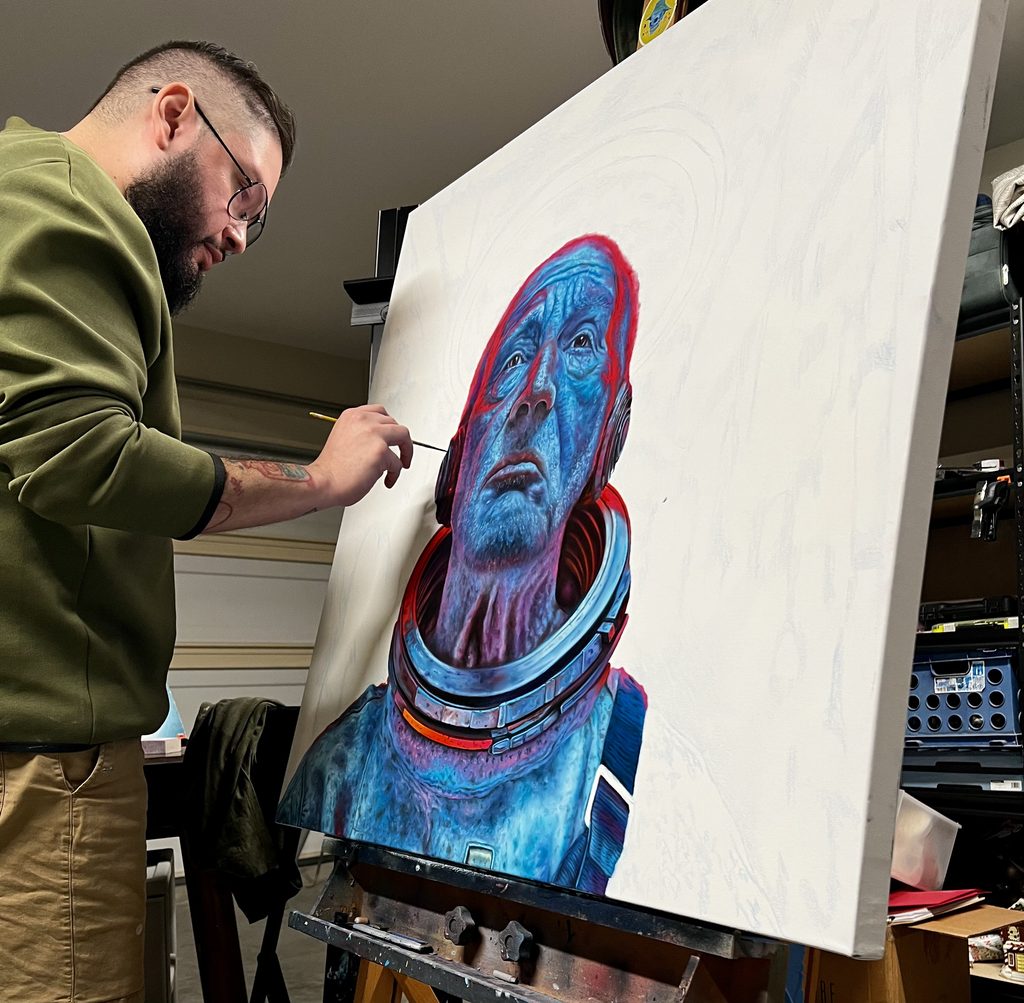
Q9. The faces in your paintings often feel illuminated from within. How do you use light to shape their mood?
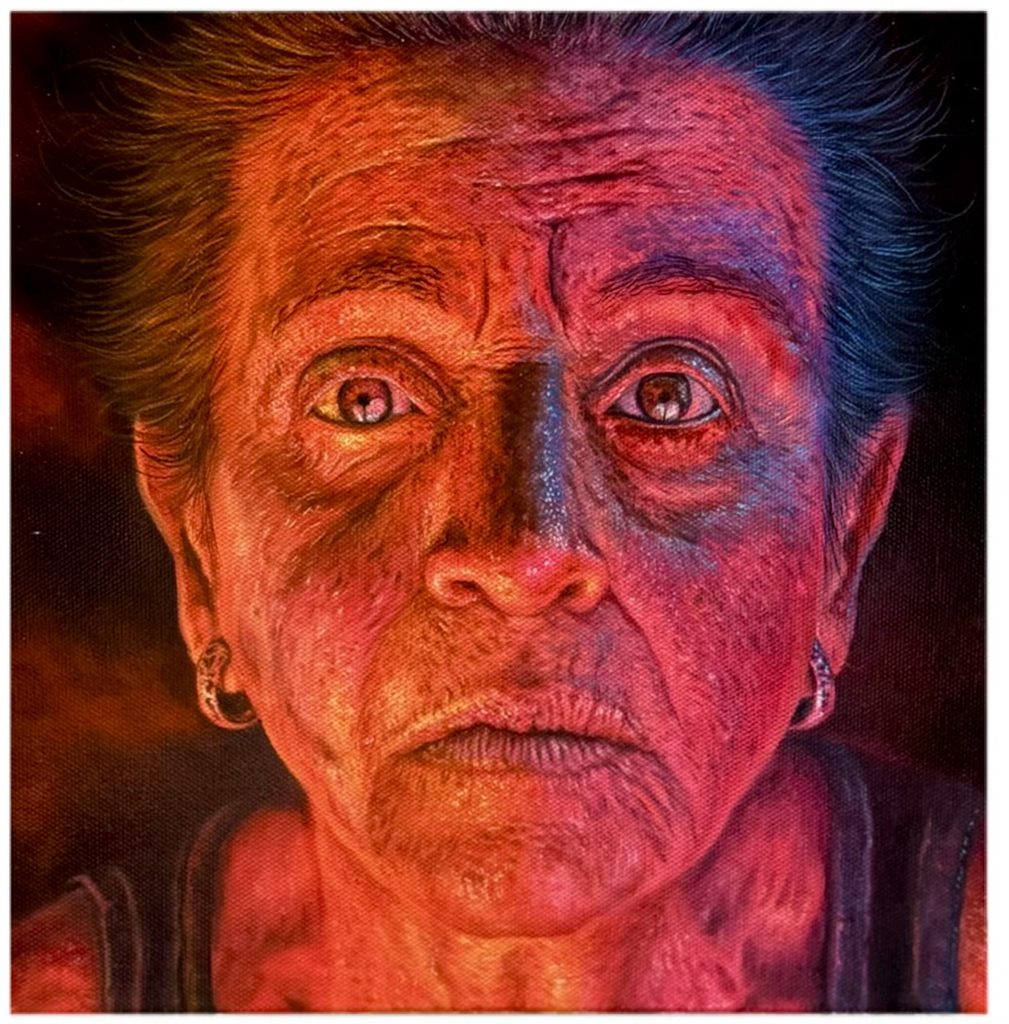
Light is probably the most important tool I have as a painter. It’s one of my biggest creative weapons because it has the ability to shape not only the mood of a figure, but the emotional experience of the entire painting. I tend to use light in a dramatic and highly saturated way. Sometimes it’s there to reflect what a figure is feeling internally, and other times it’s meant to contrast with that emotion or even tell a story that exists beyond the figure itself.
Depending on the painting, the light can feel as though it’s coming from within the subject or from the world surrounding them. It always serves the narrative first. Color temperature plays an equally important role. Small shifts between warm and cool light can completely change how a viewer experiences a painting emotionally. It’s also become an important way of connecting my work. Rather than treating each painting as an isolated image with its own completely different palette, I’ve become much more interested in developing bodies of work that share related color relationships.
That continuity helps tie the paintings together visually while reinforcing the larger story I’m trying to tell. At the same time, light is incredibly fragile. Even though it’s one of my favorite tools, it’s also one of the hardest things to get right. There are times when I have a very specific quality of light in mind, and it takes multiple attempts before it finally feels believable. When it does, though, it has the power to transform an image in ways that drawing or composition alone never could.
Q10. How has your perspective on The Giants and your early post-apocalyptic paintings changed over time?
Absolutely. If I were to revisit those early paintings especially The Giants and some of my post-apocalyptic work from 2015 and 2016 I would approach them very differently today. I still think the core ideas were strong, but technically I simply wasn’t there yet. At that point in my career, I hadn’t spent enough time understanding light, color, contrast, or form. I was still heavily influenced by my background in graffiti, and while that gave the work energy, it also meant I wasn’t yet creating the depth or atmosphere I was searching for.
Even when I began painting portraits around 2019, it felt like starting over. I had spent years painting stylized characters and graffiti, so learning to paint the human figure was almost like becoming a beginner again. Looking back, I realize that those moments of restarting have been some of the most important parts of my development.
That process has continued throughout my career. Every few years, I find myself questioning what I know, letting go of old habits, and learning new ways of seeing. More recently, one of the biggest shifts has been moving away from relying primarily on reference images. References are still an important part of my process, but they’re no longer leading the work.
Imagination has taken on that role, and I think that’s allowed the paintings to become more personal and more authentic.
Looking back, I wouldn’t erase those early paintings because they represent an important stage of the journey. They remind me that every body of work, successful or not, becomes the foundation for whatever comes next.
Q11. Many collectors are drawn to the cinematic quality of your work. What does narrative add to contemporary painting?
I don’t think narrative is necessary for contemporary painting. There are countless artists creating extraordinary work without telling a traditional story. For me, though, narrative has become an important part of my practice because it’s another way of exploring ideas that are difficult to express through a single image alone. I also think narrative inevitably reveals something about the artist.
Even when a story is entirely fictional or fantastical, there are always small moments where the artist’s own experiences, beliefs, fears, or hopes begin to emerge. Those spaces between imagination and reality are often where the most honest parts of the work exist. I find that fascinating, both as an artist and as someone who admires the work of others. When I learn about an artist’s body of work, I’m not only interested in the paintings themselves I’m interested in what those recurring stories reveal about the person who created them.
For collectors, I think narrative can create a deeper connection to the work. It invites people to spend more time with a painting, to imagine what came before or what comes after, and to discover new meanings over time. Beyond storytelling, narrative also allows me to build a world that feels interconnected, where each painting contributes to something larger than itself.
Q12. Your paintings bring together realism, street art, and speculative fiction. Do artists today have more freedom to move between genres?
I do think artists have more freedom today, but I also think collectors have changed just as much. Over the past couple of decades, collectors have become increasingly open to supporting work that blends influences and doesn’t fit neatly into a single category. That’s been just as important as the freedom artists have to experiment. Artists have been borrowing from different genres for a very long time. What’s changed is that those combinations are now more widely embraced. Today, a painting can draw from realism, street art, speculative fiction, illustration, or cinema without being dismissed simply because it doesn’t fit within a traditional definition of fine art. I think that’s healthy for the art world. It allows artists to build a more personal visual language instead of feeling pressured to stay within established boundaries. At the same time, it gives collectors the freedom to connect with work based on its ideas and emotional impact rather than whether it belongs to a particular movement. Ultimately, I think it’s been a two-way evolution.
Artists have become more willing to take creative risks, and collectors have become more willing to embrace those risks.
That relationship has opened the door for a much broader and more diverse conversation about what contemporary painting can be.
Q13. Looking back at your journey from graffiti artist to painter, what has surprised you most about your creative evolution?
Looking back, I think I’m actually more thankful than surprised. When I first started painting graffiti, the idea that I would one day make a living as an artist, exhibit with galleries across the United States, and build a career around my work felt almost impossible. Coming from a self-taught background, every stage of the journey felt like starting over. I learned through graffiti, then had to relearn everything when I began painting portraits, and I’ve continued challenging myself every time I feel too comfortable.
That willingness to keep questioning what I know has probably been the biggest constant throughout my career. What surprises me most isn’t any single accomplishment. It’s realizing that I never stopped pushing myself. Every time I reached a point where I thought I understood painting, I found another layer to explore.
That’s kept the work exciting and has allowed me to continue growing, both technically and creatively. More than anything, I’m grateful. I know how unlikely this path once seemed, and I don’t take it for granted. Every opportunity, every exhibition, and every chance to continue making paintings feels like something I had to earn. Looking back, I think that sense of gratitude has become just as important to my work as the ambition that first pushed me to pursue it.
Q14. What advice would you give self-taught artists who want to build a sustainable career while staying true to their vision?
The best advice I can give is simple: don’t stop. There will be moments when you feel like you’re not making enough work, improving fast enough, or getting the opportunities you hoped for. Those feelings are part of the process. What matters is continuing to show up not only in the studio, but in your imagination. Some of the most important work happens away from the canvas. Learn to cultivate your curiosity. Pay attention to the things that move you emotionally, the ideas you keep returning to, and the worlds that begin forming in your mind.
Creativity doesn’t begin the moment you pick up a brush; it’s something you carry with you every day.
There will also be people who don’t understand your vision. Sometimes they’ll try to protect you by encouraging a safer path, and other times they’ll simply be unable to see what you see. Don’t let that discourage you. Stay true to the work that feels honest to you, and keep moving forward. Above all, work hard, stay persistent, and believe in your own vision. Building a career takes time, and there are no guarantees, but if you continue learning, keep creating, and refuse to give up, you’ll give yourself every opportunity to build something meaningful. I truly believe that we’re capable of far more than we often allow ourselves to imagine.
By the time our conversation with Manuel came to a close, one thing had become completely clear to us. That this is an artist who has never once stopped pushing not because what he has built is not extraordinary, but because he genuinely believes the work can always go further.
And honestly? That is one of the most exciting things you can say about a painter right now.
Because the contemporary art world has a complicated relationship with ambition. It tends to reward consistency over growth. The artist who has found their lane and stays in it. The recognisable style delivered reliably to a market that knows what it is buying. And there is a logic to that. But it produces a very different kind of career and a very different kind of work than the one Manuel is building.
He is not interested in delivering the same painting twice. He is interested in building something that keeps expanding. A city with its own light and its own stories and its own people and its own ongoing evolution. A body of work that is more alive today than it was two years ago and will be more alive two years from now than it is today.
That is genuinely rare. And collectors who have been paying attention already know it. Because what Manuel is building is not just a collection of individual paintings it is a world. And owning a work from that world at this stage of its development is the kind of decision that collectors look back on years later and feel quietly proud of. Not because the market told them to buy it.
Because something in the work stopped them and would not let go. Because the light felt different. Because the figure in the painting felt like someone they had seen before somewhere they could not quite place. Because the city felt real.
That is what great narrative painting does. And Manuel Zamudio is building something within it that is entirely and unmistakably his own.
And the next chapter of that world is almost here. Manuel’s upcoming solo exhibition Neon Memory opens this November at Arch Enemy Arts in Philadelphia and if his previous shows are anything to go by, it is not something you will want to miss.
Follow Manuel Zamudio through the links below and see for yourself.