
Ivana Babic’s Mixed-Media Paintings Explore Identity, Memory & Transformation
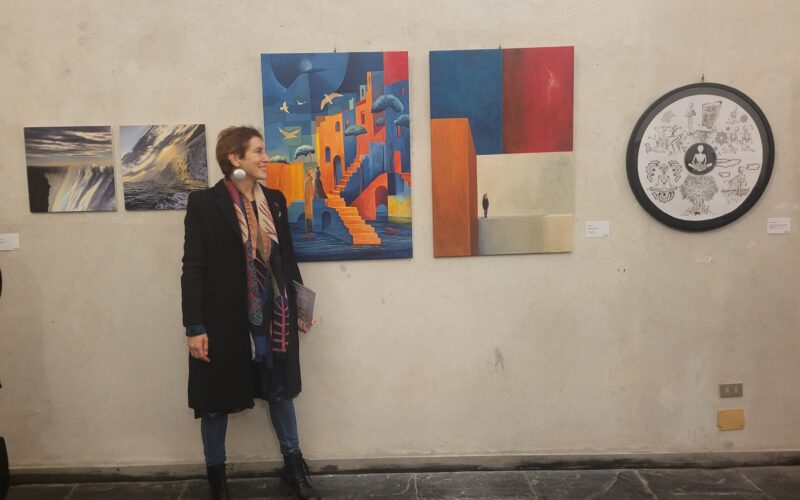
At Arts to Hearts Project, Women Artists on the Rise Edition 4 brought us one hundred women working across every medium and every stage of a creative life. But Ivana Babic’s practice made us pause, because it refuses the single lane most artists are told to choose and stay inside. She is one of our selected artists for this edition.
Ivana is an Italian Serbian artist based in Milan who moves between painting, illustration, and poetry, and, quietly beneath all of it, a longstanding practice as a designer. Born in Belgrade and trained in Applied Arts and Design, she spent more than two decades as a product designer, shaping objects around function, ergonomics, and the way people live with the things around them.
That discipline never left her. It shows in the structure of her canvases and the balance of her compositions, in the way even her most dreamlike images feel built on solid ground.
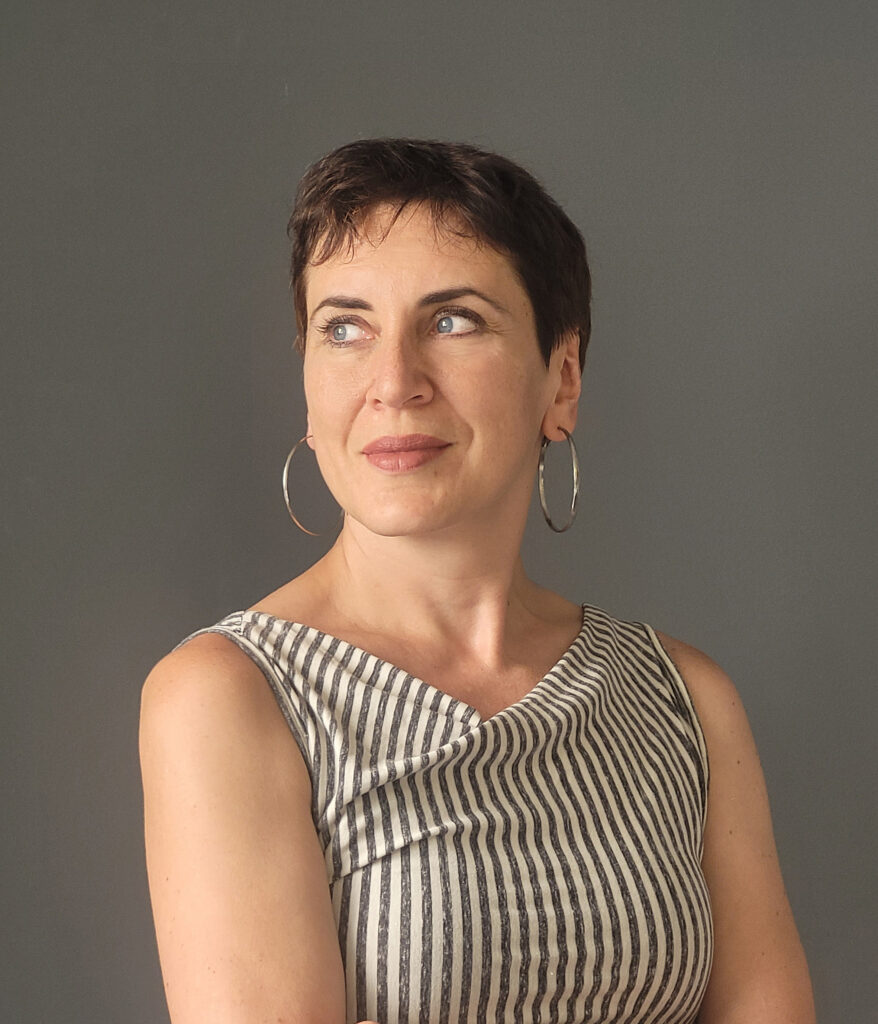
But design could only answer so much. It taught her to observe the world analytically, to understand why a thing takes the form it does. What it could not hold was the more intuitive, emotional material she needed somewhere to put, and painting and illustration became that place. The questions she carries into them are always the same: identity, memory, transformation, and the invisible connections between people, nature, and inherited myth.
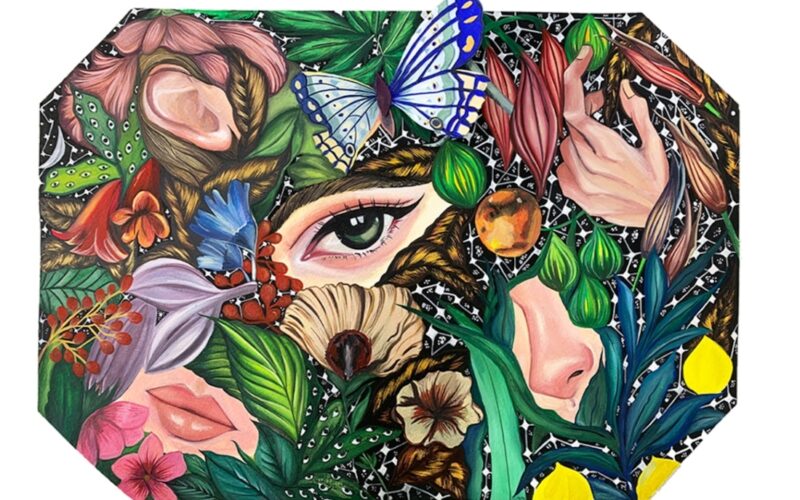
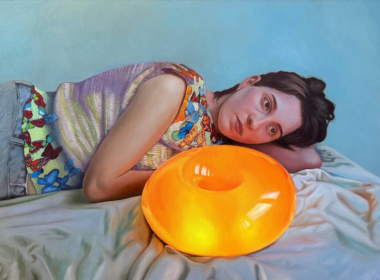
Her paintings are symbolic and layered, built in acrylic and mixed media and often worked with sand and textile thread, so the surface itself carries memory and time. Birds, portals, staircases, figures caught between human and something else.
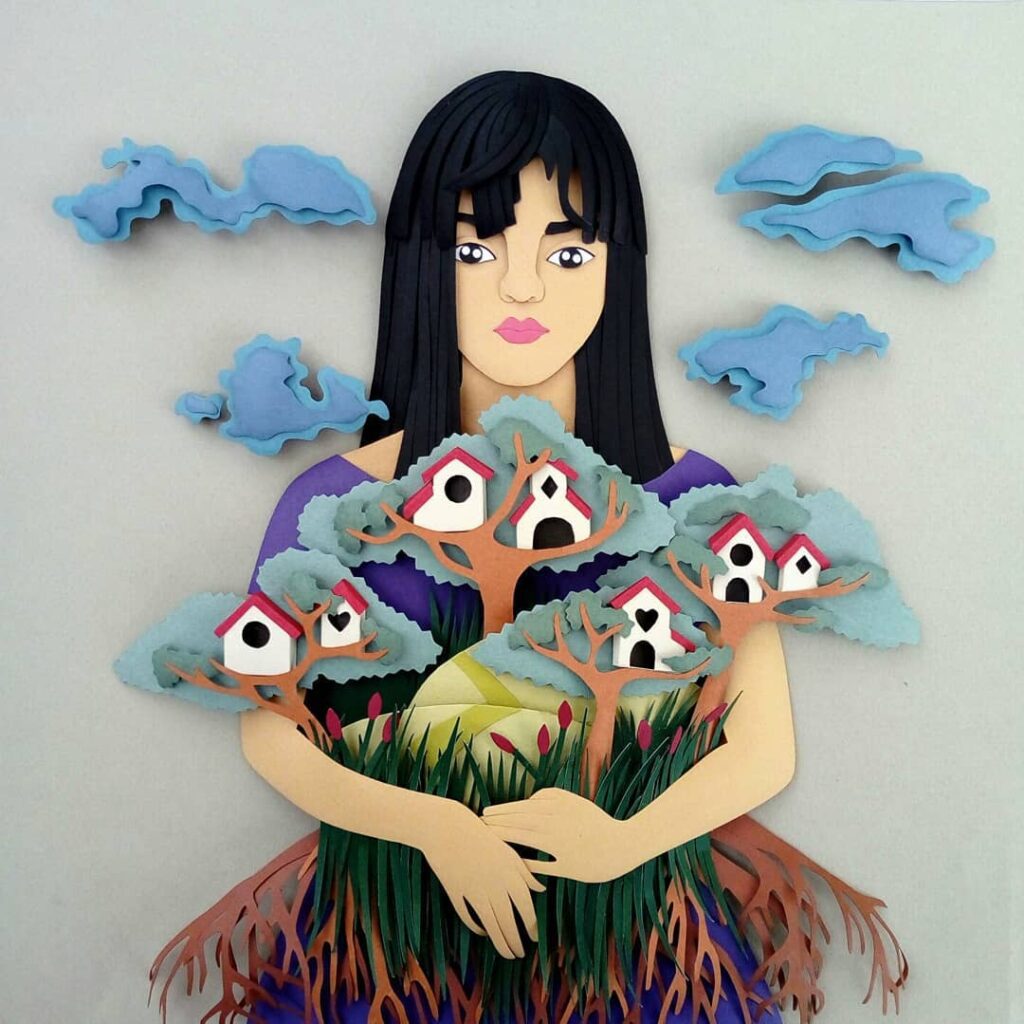
Her illustrations move somewhere else entirely, into black-and-white ink and the deep well of Slavic folklore, houses that wander and creatures reaching across worlds. Her poetry sits alongside both. She does not treat these as separate visual languages, but as different voices in the same conversation, each revealing a different face of the same inner world.
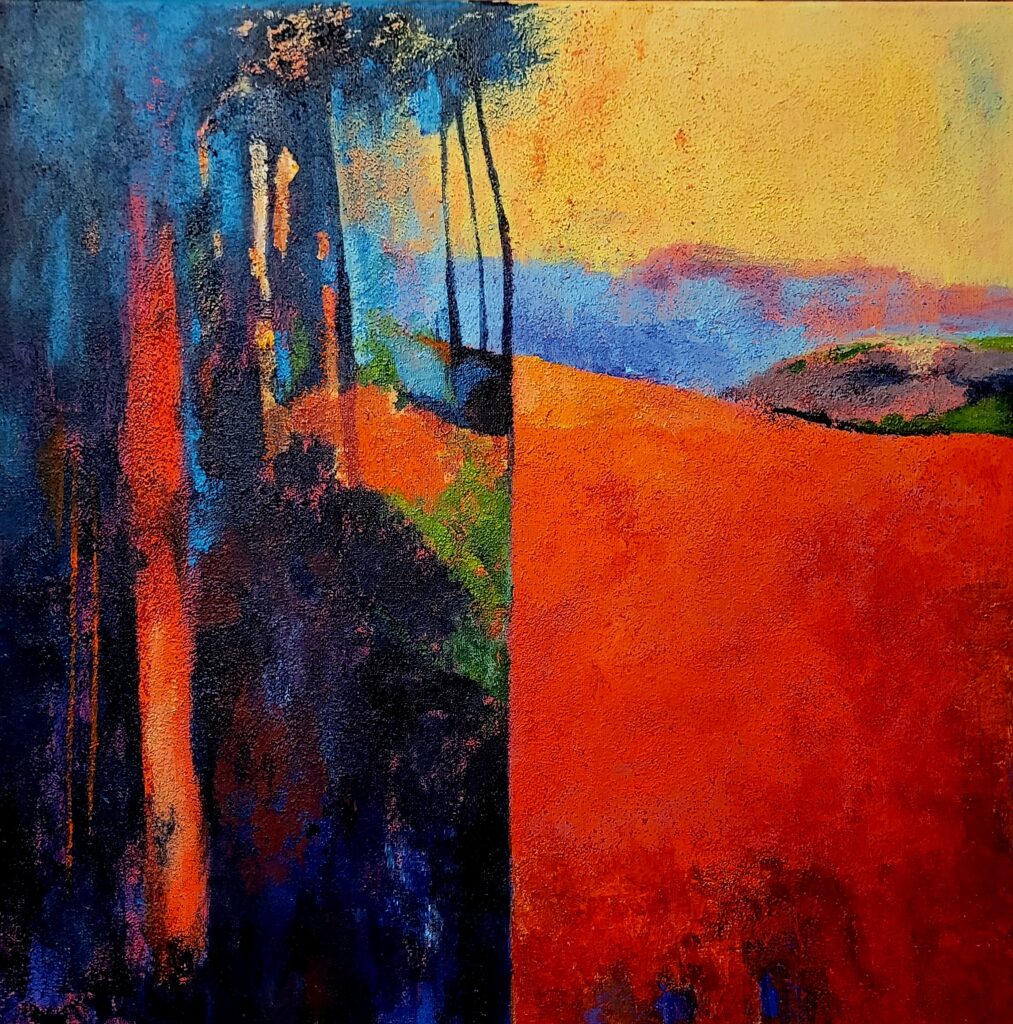
That is the thread that ties everything together. Not a technique but a purpose, the desire to make visible what usually stays hidden. And the way she moves between disciplines mirrors something she clearly believes about being a person.
That the rational and the intuitive are not opposites. That structure and feeling need each other, and that the analytical eye of the designer and the dreaming hand of the painter, held together, see more than either could alone.
Her work has been exhibited internationally and featured in publications dedicated to contemporary art, and she continues to develop all of these practices side by side, letting each one shape the others.
Let’s get to know Ivana through our conversation with her about design, intuition, folklore, and finding a visual language that is truly your own.
Q1.Can you tell us a little about your background and how your journey as an artist began?
I was born in Belgrade, Serbia, and have been living in Milan for more than twenty years. My creative journey has always developed along two parallel paths: art and design. I studied Product Design at the University of Applied Arts in Belgrade, and for more than two decades I have worked as a product designer, creating objects that combine functionality, ergonomics, and aesthetics.
At the same time, I have continued to paint and draw, allowing both practices to evolve together. Design taught me to observe the world analytically, to understand why things exist in a certain form and how people interact with them. But alongside that rational side, I always felt the need for a more intuitive and emotional form of expression. Painting and illustration gradually became that space.
They allowed me to explore questions that design couldn’t answer: identity, memory, transformation, and the invisible connections between people, nature, and mythology. Rather than solving practical problems, my artworks invite viewers to reflect and interpret. Today, I see my background in design as an important part of my artistic language. It gives my work a strong sense of composition and structure, while art gives me the freedom to express emotions, symbols, and stories that go beyond function. I don’t see these disciplines as separate: they constantly enrich one another.
Q2. Your practice moves between abstraction, figurative painting, and illustration. What connects these different approaches?
For me, these are not separate visual languages but different ways of exploring the same ideas. Whether I’m creating an abstract painting, a figurative work, or an illustration, I’m always investigating themes such as identity, memory, transformation, and the invisible connections between human beings and nature. The language changes, but the underlying questions remain the same. Abstraction allows me to express emotions and inner states that cannot easily be described in words.
Figurative painting gives those emotions a symbolic presence through human figures, animals, and archetypal imagery. Illustration, on the other hand, introduces a stronger narrative dimension. It often tells a story more directly while still leaving space for metaphor and interpretation. My background in industrial design has also influenced this approach. It taught me to think in terms of structure, balance, and visual relationships, regardless of the medium.
Because of that, I don’t feel constrained by stylistic categories. I choose the visual language that best serves the idea I want to communicate. Ultimately, I see my work as one continuous practice. Painting, abstraction, and illustration are simply different voices within the same conversation, each allowing me to reveal a different aspect of the same inner world.
Q3. What is your pre-creating ritual before you begin working in the studio?
My process begins long before I enter the studio. It usually starts with an idea I want to communicate: sometimes an emotion, sometimes a philosophical question or reflection. The challenge is finding the visual language that can express something that cannot be said with words. I collect inspiration constantly. It can come from nature, architecture, a photograph I take while walking, or simply an unexpected relationship between colors or proportions that catches my attention. I don’t copy what I see; instead, I use it as raw material.
I make sketches, experiment with different color combinations, and explore compositions until I discover the visual structure that best conveys the idea. Only then do I begin painting. Even at that stage, the work remains open to change. I build it gradually, layer by layer, allowing intuition to guide me alongside conscious decisions. For me, every element matters.
Color, shape, rhythm, texture, and composition are never purely aesthetic choices: they all contribute to expressing meaning. My goal is not simply to create an image, but to create a visual experience that invites the viewer to feel something first and then discover their own interpretation.
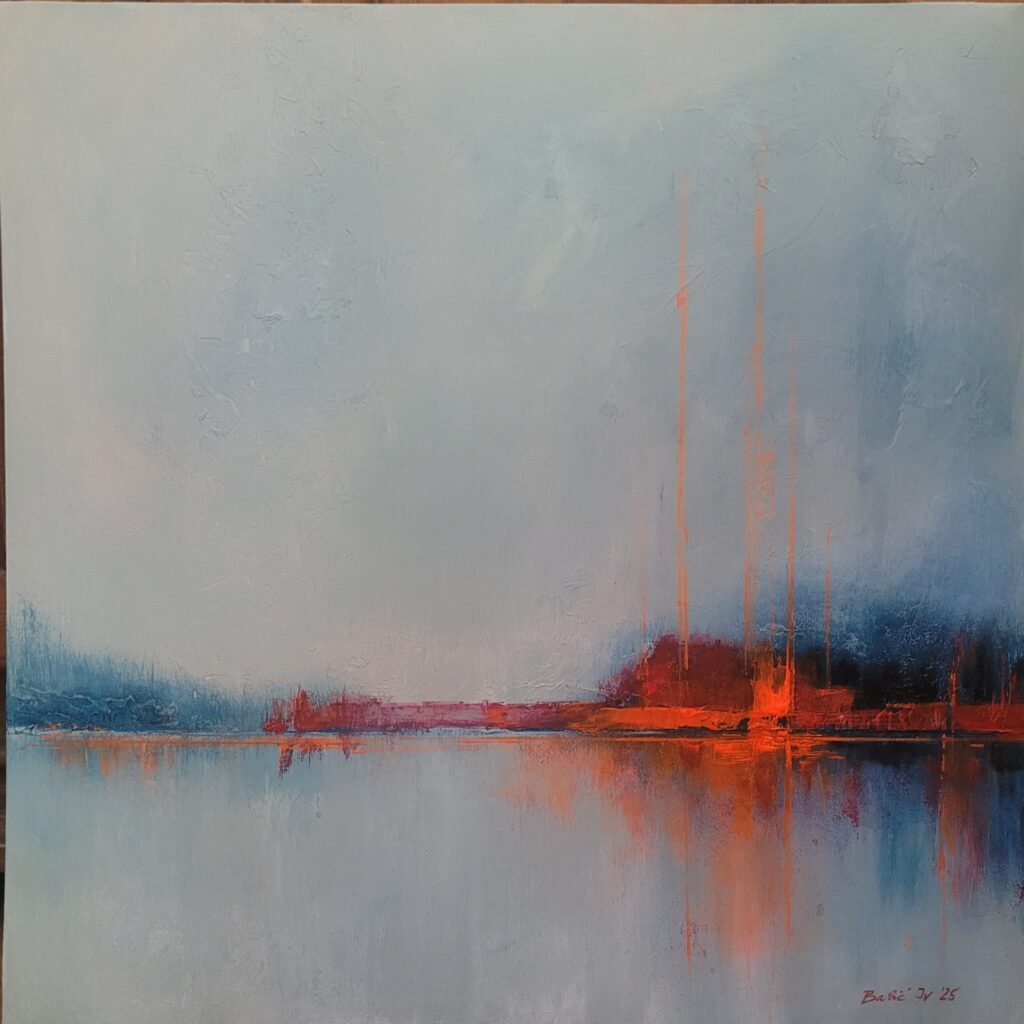
Q4. How much room do you give yourself to experiment and make mistakes in the studio?
I think experimentation is essential because it is often through unexpected discoveries that a work finds its strongest form. I never expect my first idea to be the final one. Sketches, color studies, and compositional variations are all part of the process, and they allow me to explore different possibilities before the painting begins. Once I’m painting, I also give myself permission to change direction. If something isn’t communicating what I intended, I’m not afraid to paint over it, remove elements, or completely rethink the composition.
I don’t see those moments as mistakes, they’re part of the dialogue with the work. As long as the original idea remains clear, the visual language can evolve. At the same time, I don’t experiment without purpose. Every decision ultimately has to serve the concept behind the painting. For me, color, shape, texture, and composition are not decorative choices; they are tools for expressing an emotion or a philosophical idea.
If an unexpected solution communicates that idea more powerfully, I embrace it. In that sense, I would say that mistakes are often invitations to look at the work from a different perspective. Some of my favorite passages in a painting exist because something didn’t go according to plan. Those moments remind me that creativity is not about controlling every step, but about remaining open to discovery.
Q5. Color changes a lot across the works around us. How do you choose the colors you want to work with on a particular day?
The colors emerge from the idea behind the painting. Every work starts with something I want to communicate: an emotion, a philosophical reflection, or a particular inner state. Once I understand what I want to express, I begin searching for the colors that can best translate that feeling into a visual language. I think of color as having its own emotional voice.
The same composition can communicate something entirely different simply by changing the palette. That’s why I spend a lot of time exploring different possibilities before committing to the painting. For me, color, composition, rhythm, and form all work together: they’re not separate elements, but different aspects of the same visual language. The goal is always the same: to make the painting communicate something beyond the image itself.
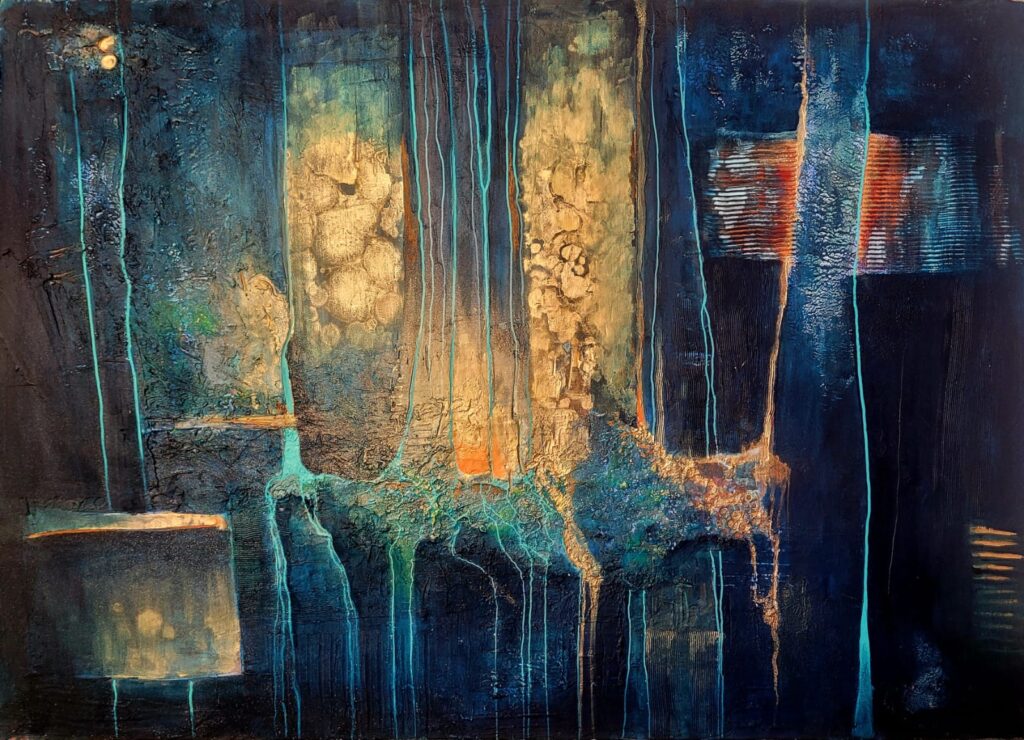
Q6. Is there a particular material, tool, or object in your studio that has become an important part of your practice?
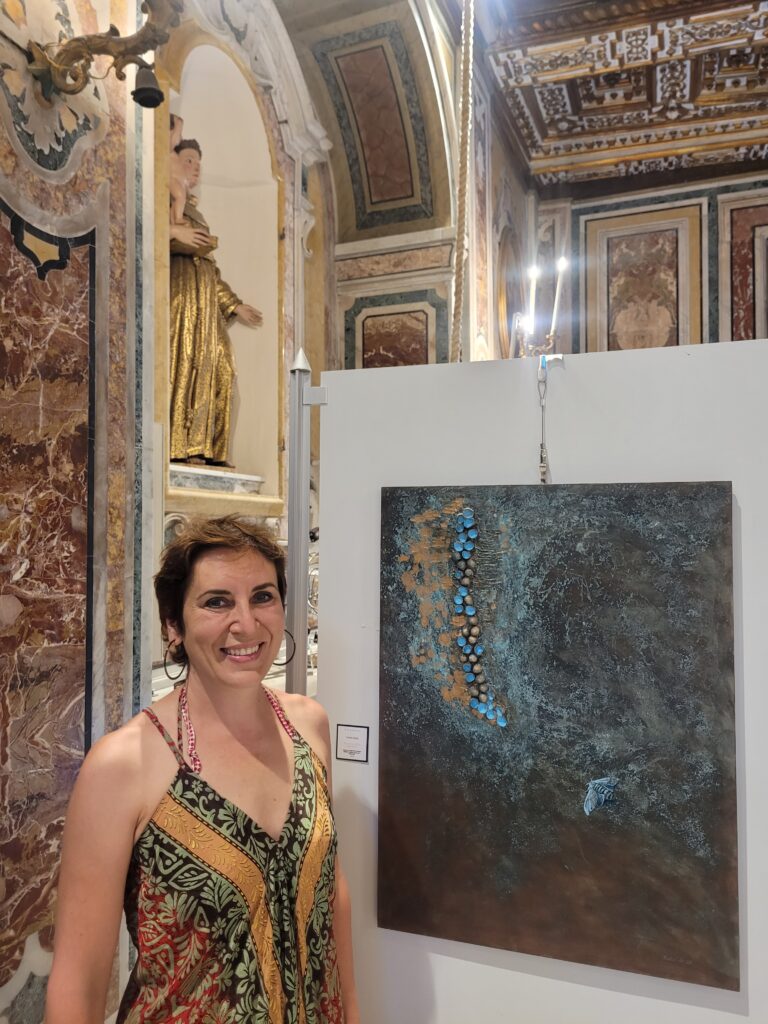
I’m fascinated by texture because it adds another layer of meaning to a painting. I often work with materials such as sand or textile threads, creating surfaces that invite the viewer to experience the work not only visually but almost physically. I use conventional tools like palette knives and small spatulas, but some of my favorite tools were never intended for painting. For example, I still use a notched trowel that I originally bought while renovating my bathroom to lay tiles. I’m constantly collecting objects that catch my attention.
Whenever I come across something with an interesting surface or shape, I ask myself, What kind of mark could this make? It might be a piece of plastic, a piece of cardboard, a comb, a construction tool, or something completely ordinary. I keep these objects in my studio and experiment with them, often discovering textures I couldn’t have imagined beforehand. I enjoy giving everyday objects a second life through art.
It’s a reminder that creativity isn’t only about inventing new materials – it’s also about looking at familiar things with fresh eyes. For me, the tool itself is never the goal. What matters is whether it helps me find the right visual language for the idea I want to express. Sometimes the most unexpected object turns out to be exactly what a painting needs.
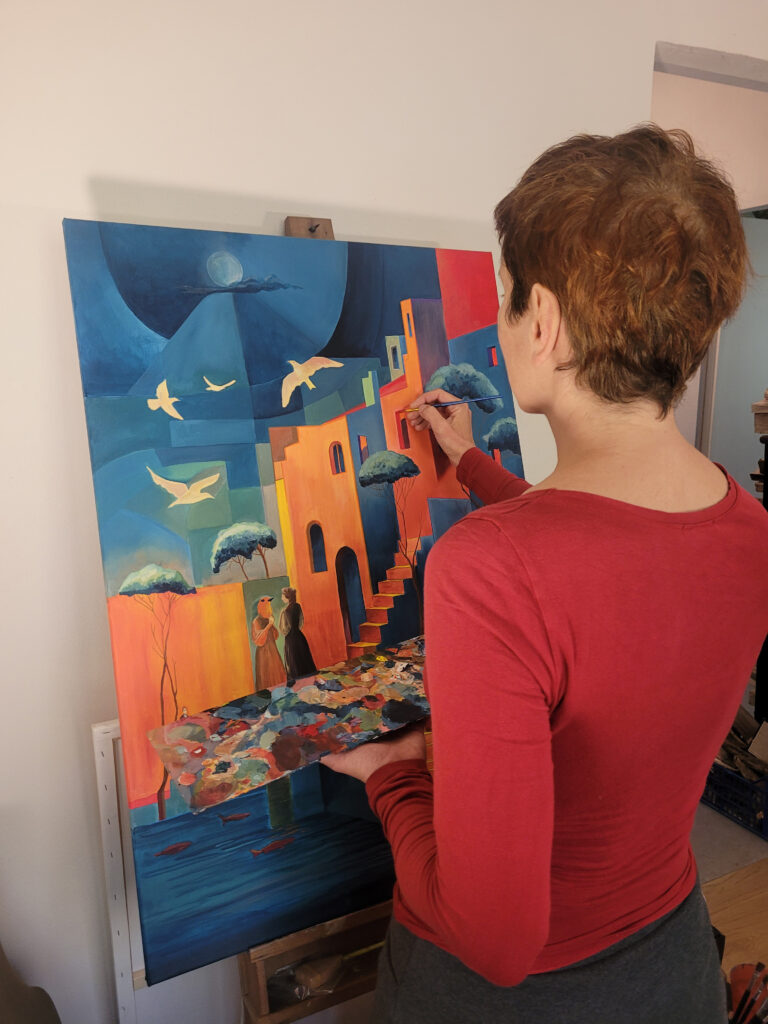
Q7. Is there a work in the studio right now that represents the direction your practice is moving in?
Yes. It brings together many of the elements I’ve been exploring over the past few years: symbolic figurative imagery, abstraction, and a stronger emphasis on materiality. I’m becoming increasingly interested in the relationship between image and surface. By combining paint with materials such as sand and textile threads, I’m creating surfaces that carry memory, time, and traces of transformation.
Conceptually, my work continues to explore identity, memory, and the invisible forces that shape our inner lives. But I’m moving toward a more distilled visual language. Rather than explaining an idea, I want the painting to evoke it through the relationship between color, texture, composition, and symbol. I feel that my current work is becoming quieter but also more layered.
I’m less interested in describing a story and more interested in creating a space where viewers can bring their own experiences and interpretations. If my earlier works invited viewers into a narrative, these newer paintings invite them into a dialogue. I don’t think this is a radical departure from my previous work. It’s more of a natural evolution one that feels more authentic and closer to the kind of visual language I’ve been searching for all along.
Q8. Do you think seeing art online has changed the way people connect with paintings in person?
I think it has changed the way people discover art, but not the way they truly experience it. Online platforms have made art much more accessible. Today, someone on the other side of the world can discover an artist’s work within seconds. As an artist, I’m grateful for that because it creates opportunities for dialogue that simply weren’t possible before. At the same time, a screen can only communicate part of a painting. It flattens texture, alters scale, and changes the relationship between the viewer and the work.
Many of my paintings include textured surfaces and layered materials, and those physical qualities are an essential part of their meaning. You can see them online, but you can’t fully experience them. Seeing a painting in person is also a slower experience. You can move closer, step back, notice how the light changes the surface, and spend time discovering details that often disappear in a digital image.
For me, the online world is not a substitute for the physical encounter—it’s an invitation to it. If someone discovers my work on a screen and then feels the desire to stand in front of the original painting, I think the digital image has fulfilled its purpose.
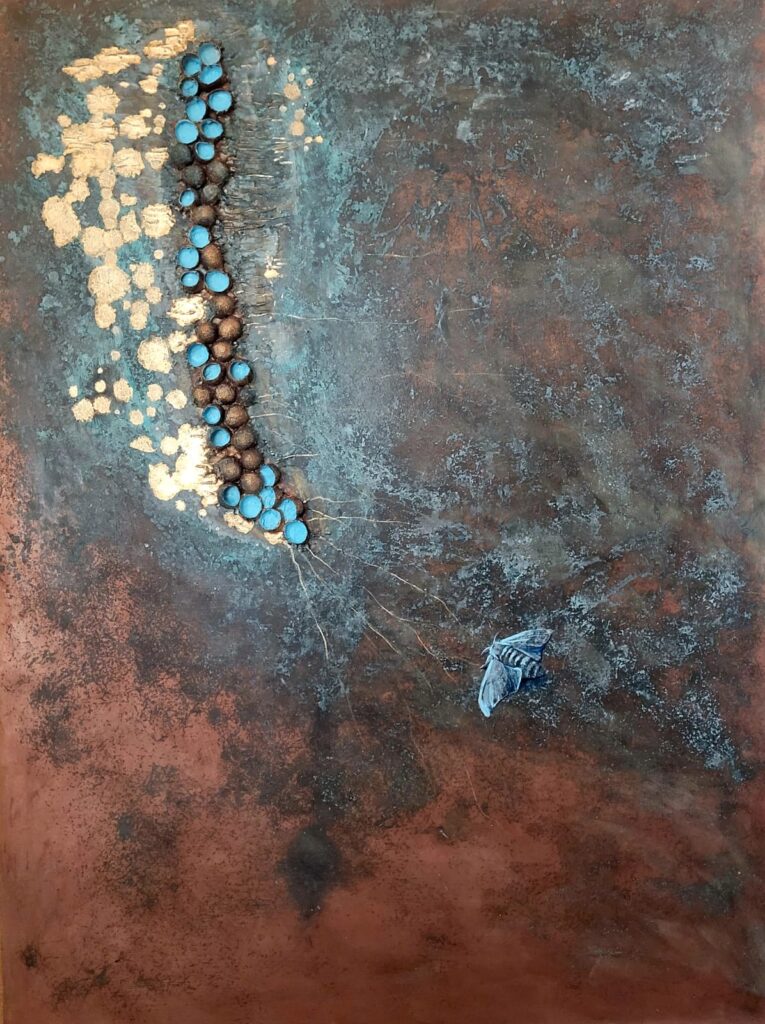
Q9. What do you think emerging artists often misunderstand about building a long-term career in the art world?
I think one of the biggest misconceptions is that success happens because of talent alone, or that a single exhibition, gallery, or social media post will suddenly change everything. Talent is essential, but it’s only the starting point. Building a career in the art world requires consistency, patience, and a willingness to keep working even when recognition comes slowly. Career guidance for visual artists consistently emphasizes that sustainable careers are built over time through continued practice, exhibitions, networking, and professional development rather than a single breakthrough.
I also think many emerging artists underestimate the importance of developing an authentic visual language. It’s tempting to follow trends or create work that seems more likely to sell, especially in the age of social media. But trends change quickly. What remains is a body of work that genuinely reflects who you are and what you want to say. Another important lesson is that being an artist also means being a professional.
Making the work is only one part of the job. You also need to communicate your ideas, build relationships, apply for exhibitions and grants, document your work carefully, and learn how the art world functions. None of these activities diminish the creative process: they allow it to continue.
Finally, I think it’s important to understand that an artistic career is not a straight line. There are periods of visibility and periods of silence, moments of success and moments of doubt. I’ve learned that those quieter phases are often where the most meaningful growth happens. If you stay curious, continue making work, and remain true to your own voice, you’re building something much more valuable than quick recognition: you’re building a practice that can last a lifetime.
Q10. What advice would you give to artists who are still trying to develop a visual language that feels like their own?
I think the first step is to stop searching for a style and start searching for what genuinely matters to you. A visual language is not something you invent overnight—it develops naturally as you keep returning to the same questions, emotions, and ideas. Over time, you begin to recognize patterns in your work that are uniquely your own. I would also encourage artists to be curious and to experiment without worrying too much about immediate results.
Try different materials, techniques, and ways of working. Allow yourself to make mistakes. Not every experiment will succeed, but every one will teach you something about what feels authentic, and what doesn’t. At the same time, don’t isolate yourself within the art world. Inspiration doesn’t come only from other artists. Read philosophy, observe nature, listen to music, study architecture, travel, or simply pay attention to everyday life. The world is a much richer source than social media alone.
Finally, be patient. A personal visual language isn’t a destination; it’s something that continues to evolve throughout your life. I don’t think an artist ever truly “arrives.” Every new body of work teaches you something new about yourself, and that ongoing evolution is one of the most rewarding parts of being an artist.
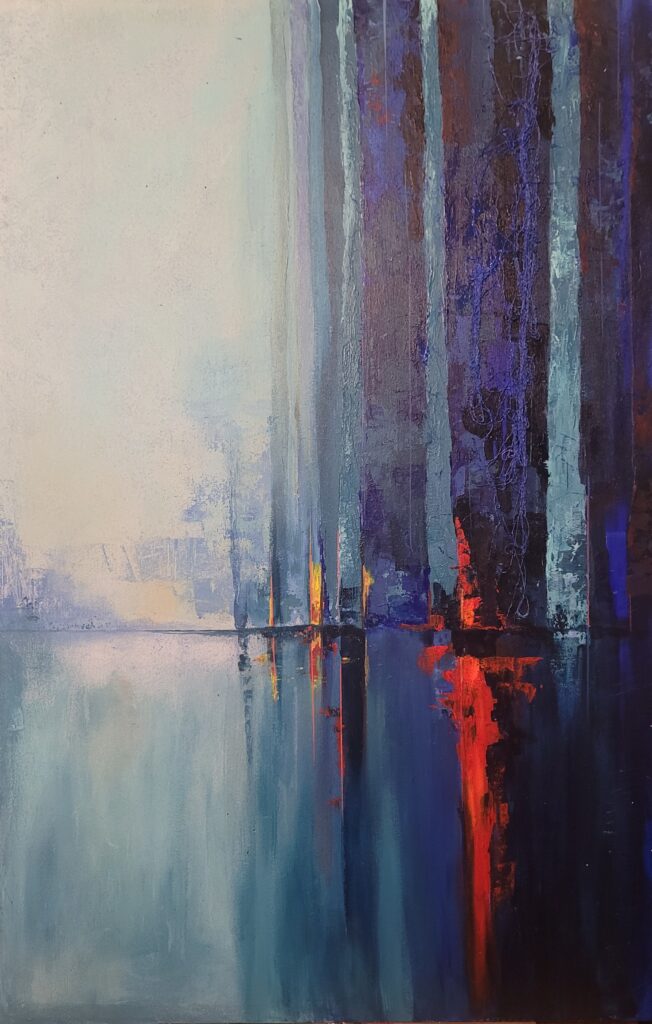
Talking to Ivana left us thinking about everything we can’t see. The things that quietly shape a life without ever showing themselves. What we remember. Who we are. The pull of a city she left more than twenty years ago but clearly still carries.
The ties between people that stay real even when there’s nothing to point to. The old myths we grow up inside without ever choosing them.
So much of what matters most is invisible, and yet we spend most of our time on the surface of things, treating what we can see as the whole story. Ivana’s work quietly argues the opposite. She goes looking for those hidden parts and tries to give them a shape, not to spell them out, but to let you feel them.
Her paintings make a space where something reaches you before you’ve worked out what it is. Her newer work is getting slower and more layered for that very reason. It doesn’t tell you a story so much as leave a room open for you to walk into and fill with your own.
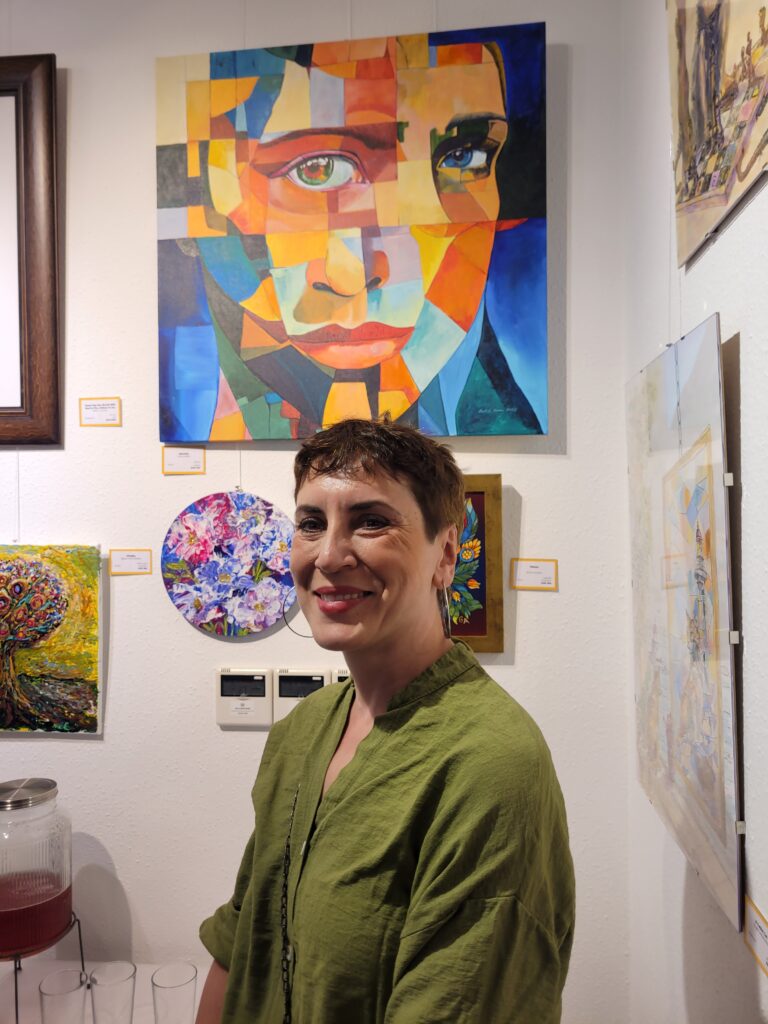
There’s something else in her work that we think every artist needs to hear. You don’t have to pick one thing. Ivana is a designer, a painter, an illustrator, and a poet, and she has held onto all of it. The designer keeps her paintings grounded. The painter gives the design its feeling.
The folklore lives in her illustrations, and whatever won’t fit into a picture ends up in her poems. None of these pull against each other. They make each other better, which is what can happen when an artist is willing to keep every part of herself instead of giving pieces away.
For collectors, her work brings something you don’t often find. A painting you have to sit with. One that changes as the light moves across its sand and thread, and doesn’t give itself away all at once. Her figures and dreamlike scenes hold identity, memory, and change in a single frame, and her folklore drawings open a door onto older, stranger worlds. To live with her work is to be reminded, every day, that the most important things in a room are usually the ones you don’t notice right away.
Follow Ivana Babic through the links below and see her work for yourself.
Only 14 days left to submit to our Art and Woman edition. And we are looking for women artists who understand that the art is never the whole story. It is a doorway. Into a life — the victories and the struggles, the dreams and the doubts, the quiet years nobody witnessed and the moments that changed everything.
If you paint, draw, photograph, sculpt, stitch, or build in ways nobody else would think to, and if your work carries the truth of the life behind it, we want to see what you are doing. Medium does not matter. Geography does not matter. Career stage does not matter. What matters is that there is a real woman, and a real story, inside the work.
The window is closing. Every artist featured in our publications was once someone who took a breath and submitted before the deadline passed. This could be your edition, but only if you don’t wait.