
The Most Radical Thing Marina Abramović Did Was Look at You
When was the last time someone looked at you for a full minute without checking something?
When was the last time somebody just looked at you without waiting for their turn to talk or deciding what to make of you?
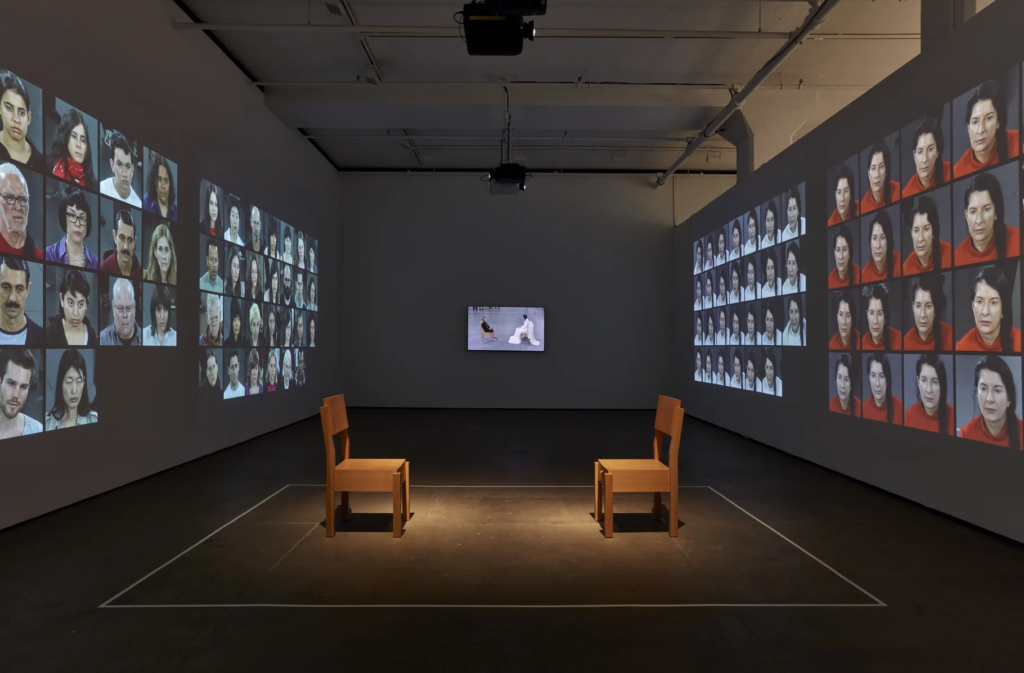
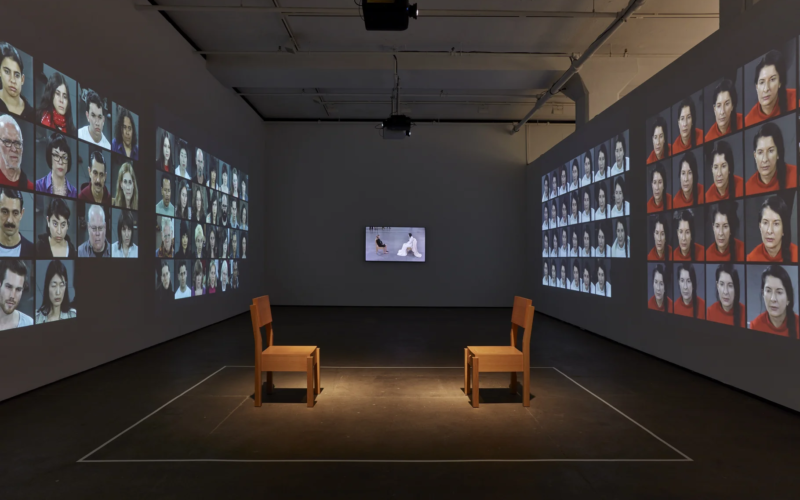
If nothing comes to mind, you are the audience for this piece, and so were the fifteen hundred people who sat down opposite Marina Abramović at MoMA in the spring of 2010.
Marina Abramović Is Present: 736 Hours, Two Chairs, No Words
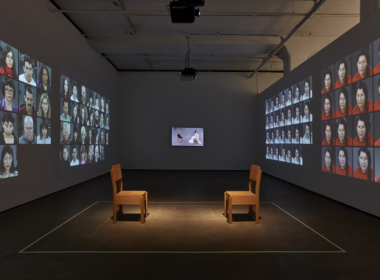
This Serbian performance artist sat in the Museum of Modern Art (MoMA) for 736 hours. Marina Abramović sat silently in a wooden chair across a wooden table from an empty second chair. Museum visitors were invited to sit in the opposite chair in silence and lock eyes with the artist for as long as they wanted. The only rules were no speaking, no touching, no looking at phones, and no physical contact between the artist and the public. This was the famous The Artist Is Present in 2010.
The tears from the participants are not an aesthetic response. They are a response to years of deprivation we built around ourselves. All of us have an invisible wall around us, and with every disappointment, we keep adding another brick to that until we can no longer climb out of it. We long to be seen, and Marina Abramović saw you. For 736 hours. She removed every layer that normally interrupts being seen (no talking, no phone, no task, no time limit, no reciprocal obligation), and what was left underneath was unbearable for a lot of people.

What caught my eye was that one of the participants was Björk. I still remember her famous saying, “There are certain emotions in your body that not even your best friend can sympathize with, but you will find the right film or the right book, and it will understand you.” It was comforting to see her take the chair, as it reminded me again that it is okay to take refuge in art when human connections fall short.
Two Strangers, Two Minutes, and a Stopwatch
In 1989, Joan Kellerman and two colleagues sat strangers down in pairs and asked them to hold unbroken eye contact for two minutes. Only two minutes. The pairs who actually looked at each other, instead of at hands or at blinks, came away reporting more affection and more liking than anyone else in the study. The researchers filed it under passionate love because that was the scale they had. But don’t you think love seems like the wrong word for something two minutes can manufacture? Recognition is closer. And if a lab and stopwatch could do that much, it was worth sitting down in front of Marina Abramović at MoMA.

Being witnessed without being evaluated is a rare commodity. Marina Abramović gave people her full attention with zero agenda and zero requirement to perform. That is probably why the tears look more like grief than joy. People were not overwhelmed to be at the receiving end of such recognition. They wondered how they had ever gone so long without it.
Read More: Abramović needed a living body and 736 hours to hold your gaze. Painters have been attempting the same thing with pigment for centuries. A few even got close enough to be unsettling. Look at The 8 Most Haunting Stares Ever Captured in Art
What Ninety Seconds of Instagram Could Not Carry
On opening night, Ulay sat down in the chair.
Marina Abramović and Ulay had been partners in life and work since 1976. They ended it quite dramatically as well. They walked three months on opposite ends of the Great Wall of China, meeting in the middle to say goodbye.
Twenty-two years later, he was sitting across the table from her. Marina Abramović broke her own rule. She wept, and she reached across the table. He took her hands. The clip has tens of millions of views. For most people, these moments are the only piece of the 736 hours they have seen from this art.
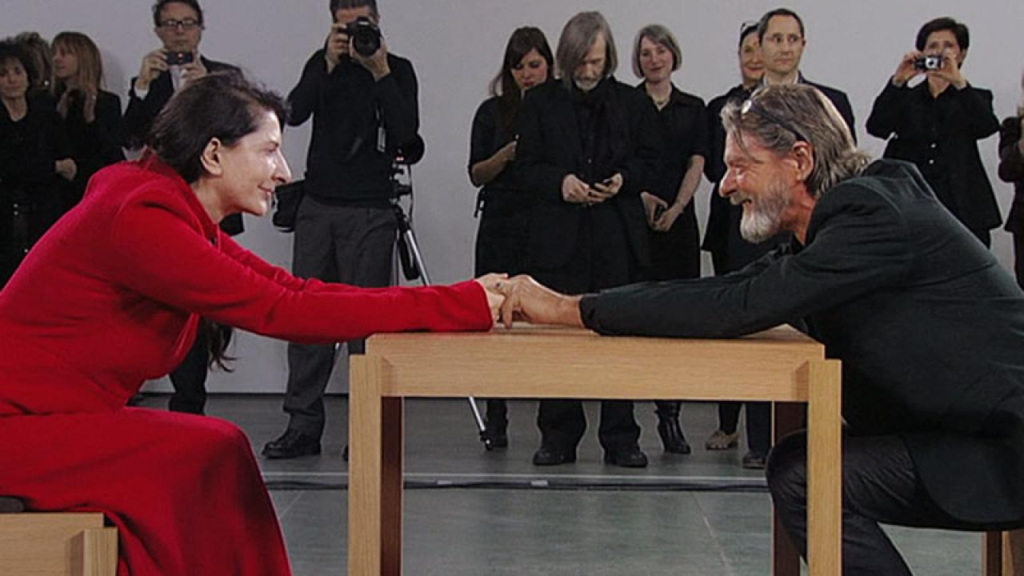
Here is what the clip does not carry. In 2015, Ulay sued her over royalties from the work they made together, and in 2016 an Amsterdam court ruled in his favor. None of this fits inside 90 seconds of Instagram, so none of it survived. This tells you exactly the appetite it was feeding.
Read More: Ulay took her hands, and then he let go. If that moment stayed with you, these paintings also live in the same place of the specific ache of someone who used to sit across the table.
We are so hungry for human connection and the feeling of being seen, being known, that we would quietly edit a lawsuit out of a real-life story to keep the image that people can cry just from being looked at properly. It is the same hunger that filled the chair. And it is the same hunger that turned a complicated relationship into a romance to admire.
Who Is Sitting Across From You Right Now?
We humans have forgotten to take notice of each other. It should not require a museum and a world-famous artist to receive something that costs nothing and takes no training. So, the question I leave you with is who is sitting across from you right now, and how long it has been since you looked at them long enough to find out who they really are.
Postscript:
If you make things and nobody has stopped long enough to look, that is not a verdict on the work. It usually just means the right pair of eyes has not found it yet. We built the Arts to Hearts Project to shorten that wait. Art and Woman Edition 4 and Magazine Issue 14 are all open.