







Why Dana Rosu uses blue & turquoise to create meditative art
At Arts to Hearts Project, our 100 Emerging Artists of 2026 keeps proving that the most compelling creative journeys are rarely the ones that follow a straight line. Dana Rosu is one of our selected artists in this edition, and her practice caught our attention immediately.
There is something unusual about the space her work occupies, somewhere between structure and intuition, sacred geometry and raw emotional honesty, the mathematical and the deeply personal.
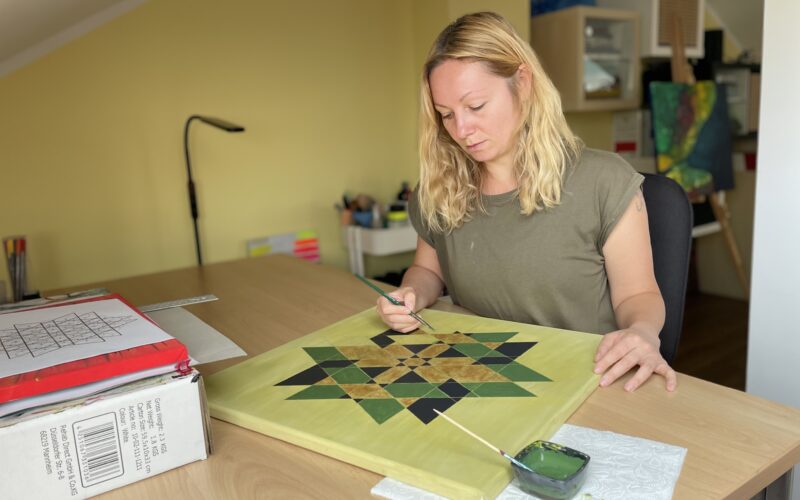
Dana is a self-taught artist based in Cologne, Germany. She works in acrylic and mixed media, creating paintings inspired by nature, sacred geometry, and personal transformation.
Her practice explores the invisible connections that unite us through mandala-inspired forms, layered textures, and vibrant colours that hold both precision and organic energy in the same surface.
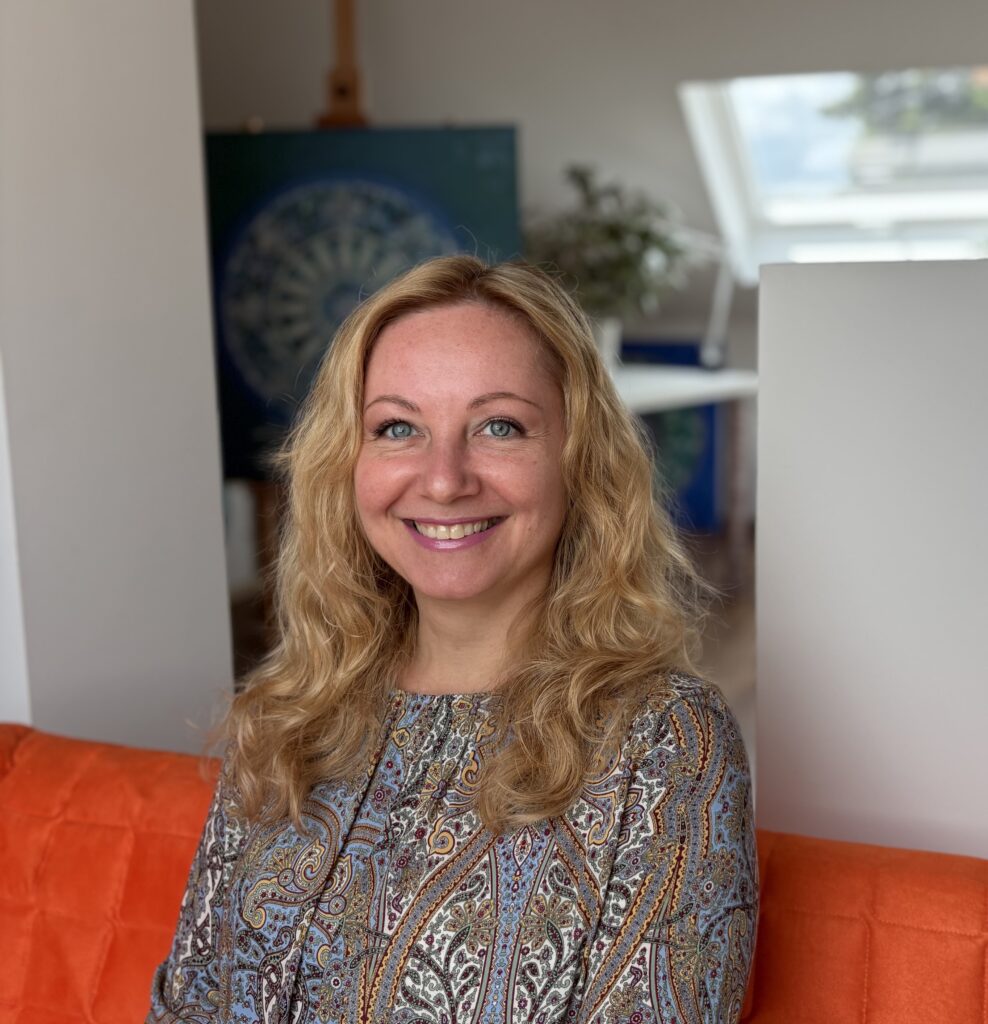
She describes her work as creating spaces for reflection and stillness and that description is accurate in a way that most artist statements are not. Her paintings actually do that. You stand in front of one and something in you settles.
Her body of work spans multiple series, Interconnected, Hope, Freedom, The Wheel, Nelumbo Mandala, Common Ground, Humanity, Imperfection, Harmony, Enjoy the Ride, Deep Dive, and a Trinity Series. The range of those titles alone tells you something about the scope of what she is exploring.
These are not variations on a single theme. They are different facets of a larger ongoing inquiry into what connects human beings to each other, to nature, and to themselves. She has an upcoming group exhibition at SwissArtExpo in Zurich this September under the sculpture of Niki de Saint Phalle, which feels like the right kind of company for her work.
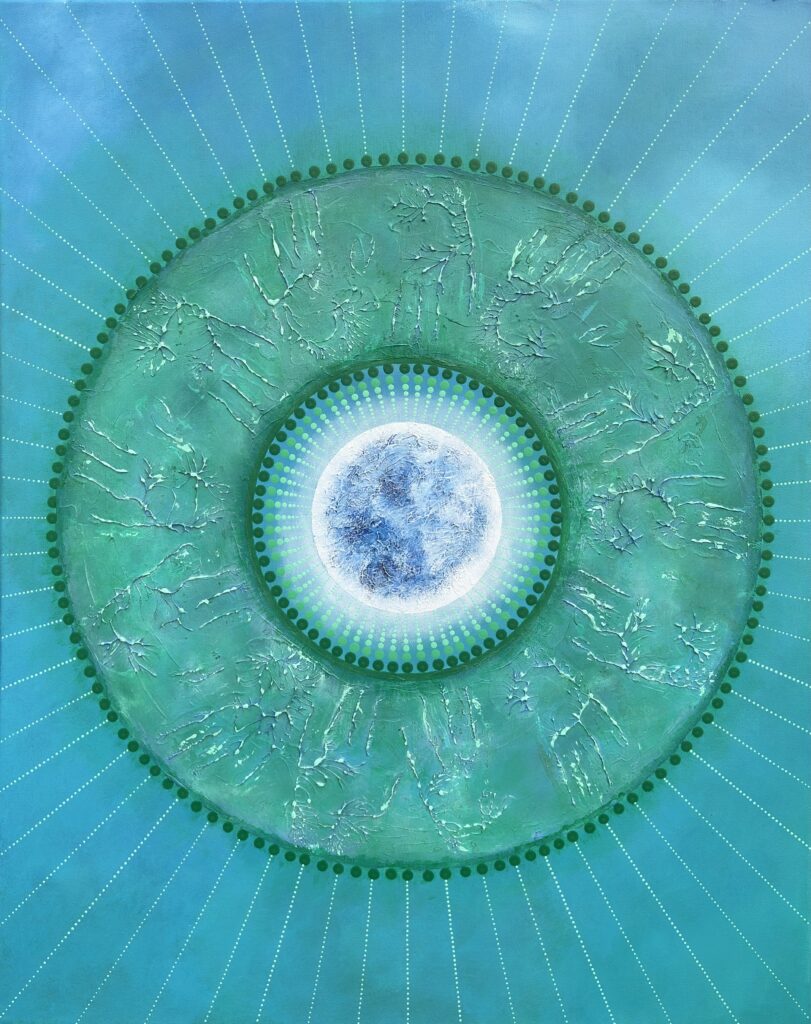
She came to painting later in life and the story of how that happened is one of those ones where what looked like the worst thing that could happen turned out to be the beginning of everything. We are leaving that story for the interview because the way she tells it carries a weight that a summary would lose.
Her relationship with nature goes deeper than inspiration. She treats it as a teacher. What nature has taught her about patience, resilience, and interconnectedness runs through every painting she makes and through the way she lives her creative life.
Let’s get to know Dana through our conversation with her about how stillness became the beginning, what nature keeps teaching her, and why imperfection might be the most honest thing about us.
Q1. Can you share a little about your background and what first led you to become an artist?
Honestly, I think painting found me at exactly the right moment. For years, I was focused on work, responsibilities, and doing what I thought I was supposed to do. Creativity was always somewhere in the background, but I never really gave it space. Then life forced me to slow down. A series of accidents and surgeries brought unexpected periods of rest and reflection.
What initially felt like a difficult chapter became an opportunity to look inward and reconnect with parts of myself that I had neglected for a long time. During that period, I found myself asking deeper questions about who I was and what truly brought me joy. Painting started as simple curiosity, but very quickly it became much more.
It gave me a sense of freedom, presence, and connection that I hadn’t experienced before. Looking back, I don’t think I consciously gave myself permission to become an artist. It happened gradually, one painting at a time. What I do know is that my passion for painting emerged in divine timing. Those challenges created the space for me to rediscover my creative spirit, and in many ways, painting became a path back to myself.
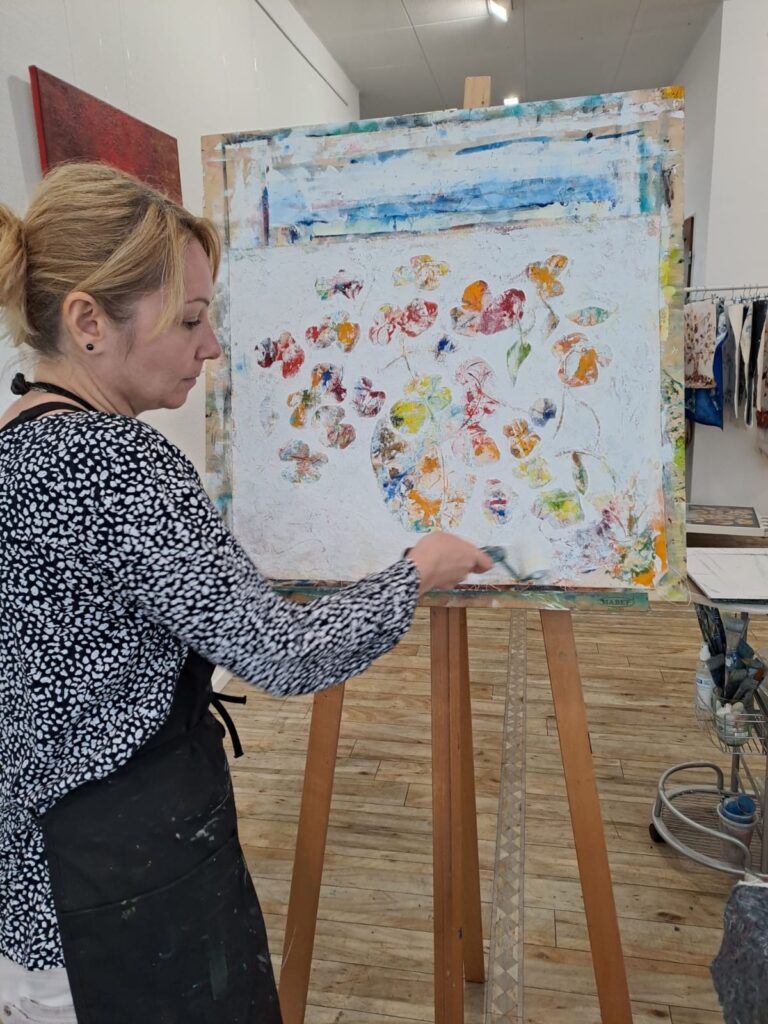
Q2. You often describe nature as a teacher. What are the most important lessons it has taught you?
Nature has taught me that growth cannot be rushed. For a long time, I wanted clarity, answers, and results as quickly as possible. But when I started paying closer attention to nature, I realized that everything unfolds in its own time. A seed doesn’t question whether it’s growing fast enough.
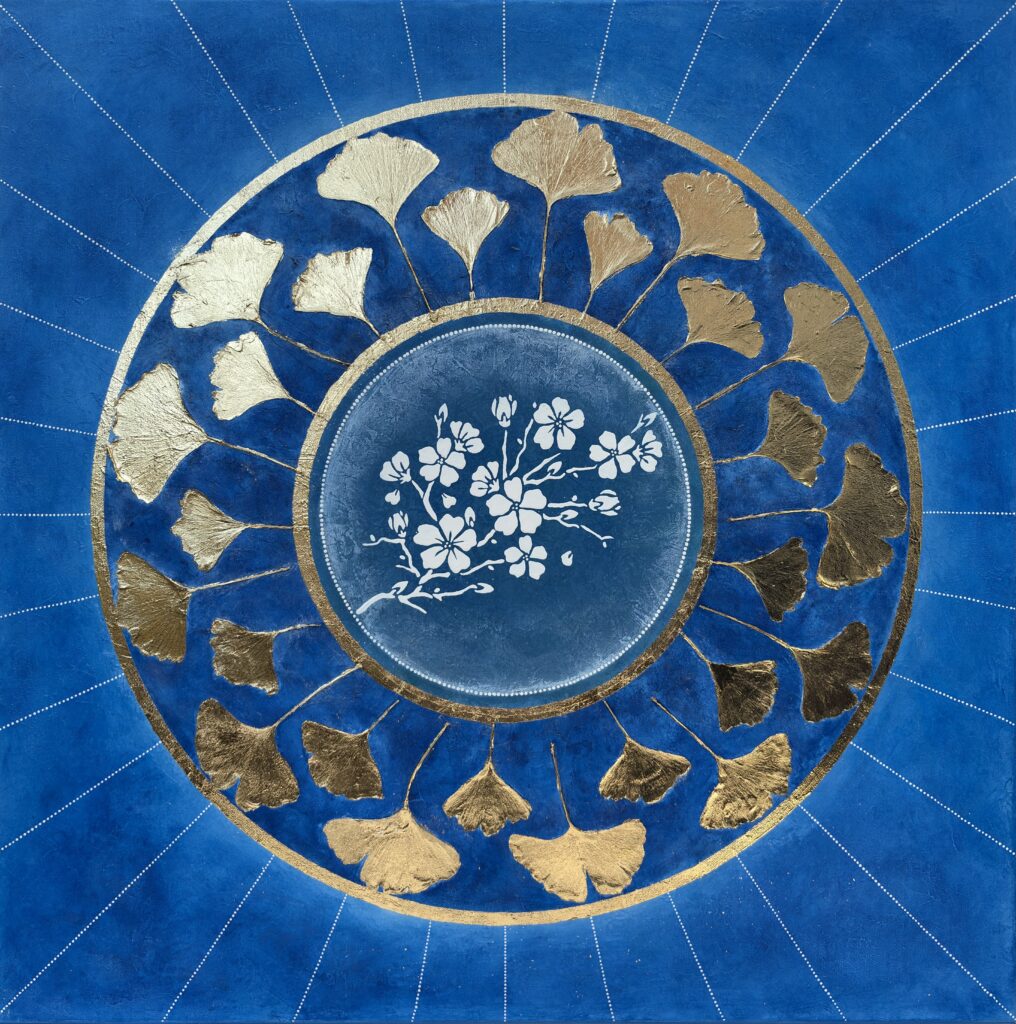
A tree doesn’t force itself to bloom in winter. There is a quiet trust in the natural world that I find deeply inspiring. Nature has also taught me about resilience. The ginkgo tree, for example, survived Hiroshima and continued to grow. That reminds me that life can move through unimaginable challenges and still find a way forward. Perhaps the most important lesson, though, is interconnectedness.
The more I observe nature, the more I see that nothing exists in isolation. Every living thing is part of a larger system, influencing and supporting everything around it. That has changed the way I see myself, other people, and my place in the world. Nature constantly reminds me to trust the process, embrace change, and remember that we are all part of something much bigger than ourselves.
Q3. What first drew you to mandalas as a way to explore deeper ideas?
I think what first attracted me to mandalas was the feeling they created rather than their appearance. The first time I really connected with a mandala, I noticed how naturally it drew my attention inward. There was something calming about the repetition, the balance, and the sense that every element belonged exactly where it was. It felt less like looking at an image and more like entering a space.
As I started creating my own work, I realized that mandalas offered a way to explore ideas that are difficult to express with words. They naturally reflect concepts that I keep returning to: connection, cycles, transformation, and the relationship between the individual and the whole. What fascinates me most is that a mandala begins from a center and expands outward, much like personal growth.
The more I worked with these forms, the more I saw them as a visual language for exploring both inner and outer worlds. So for me, they were never purely decorative. They became a way of making visible things that are often invisible: energy, interconnectedness, belonging, and the continuous process of becoming.
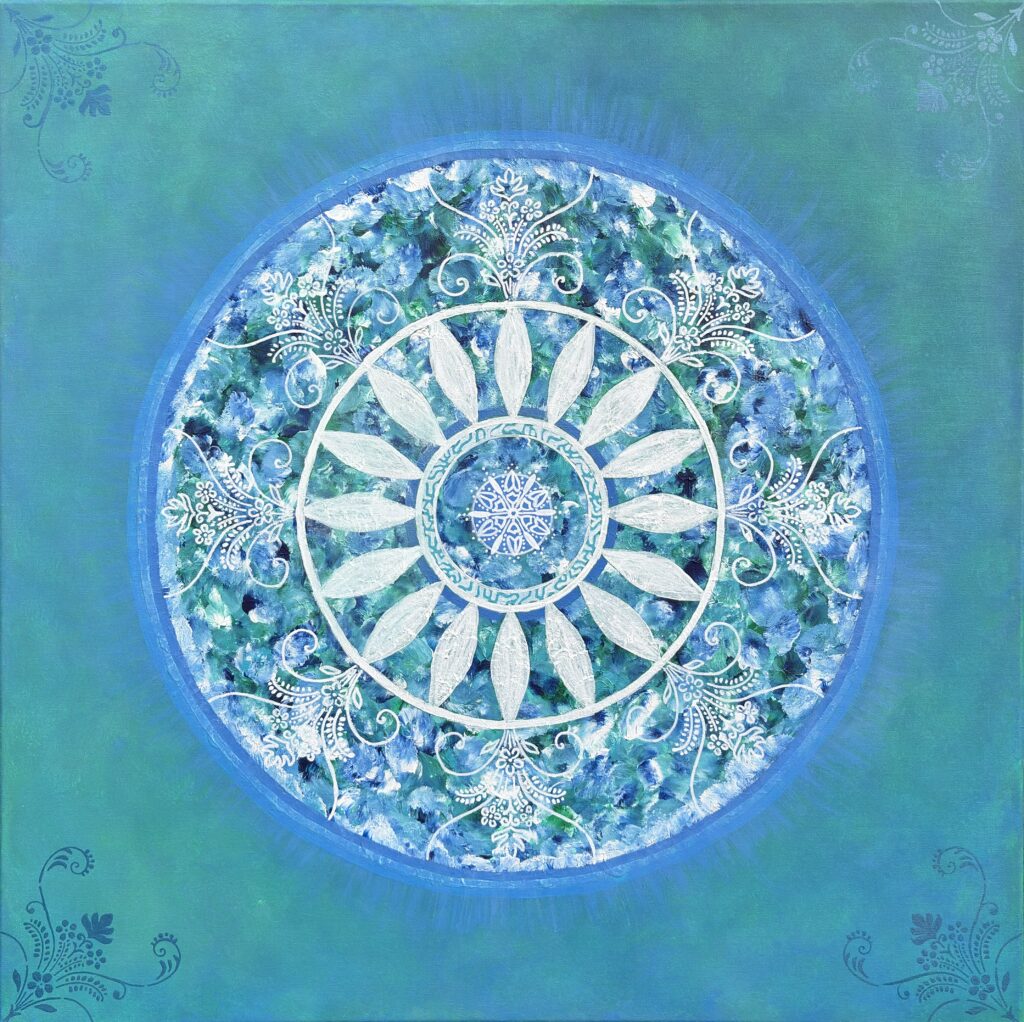
Q4. Sacred geometry appears throughout your work. What does it mean to you?
I think people continue to be drawn to sacred geometry because, on some level, it feels familiar. Even before I understood anything about its history or symbolism, I found myself responding to these patterns. There is something deeply calming about them. They seem to reflect an order that already exists in nature, in the spiral of a shell, the structure of a flower, the movement of galaxies, even within our own bodies.
For me, sacred geometry isn’t really about mathematics or perfection. It’s about connection. These patterns remind us that we are part of something larger than ourselves. In a world that often feels fragmented and fast-moving, they offer a sense of harmony and belonging.
I think people are searching for that more than ever today. Not necessarily answers, but a feeling. A reminder that beneath the complexity of life, there is still an underlying order, beauty, and interconnectedness.
Sacred geometry has a unique way of communicating that without using words.
Q5. Your paintings are created through many layers. What do those layers represent for you?
I think working in layers mirrors the way we move through life. None of us is just one thing. We are shaped by experiences, memories, challenges, relationships, and moments of growth. Over time, these layers build on one another and become part of who we are. My paintings develop in much the same way. When I start a piece, I rarely know exactly what it will become.
One layer responds to the previous one, and the painting gradually reveals itself. Sometimes parts are hidden, sometimes they reappear later in unexpected ways. I love that process because it feels honest. It reflects how transformation actually happens—not all at once, but slowly, through accumulation. The layers also allow me to express things that are difficult to capture in a single image or gesture.
They create depth, texture, and traces of what came before. For me, the finished painting is not just the final surface; it’s the story of everything that happened underneath it. And in many ways, that’s what makes it feel alive.
Q6. Your work blends structure with intuition. How do you find that balance while creating?
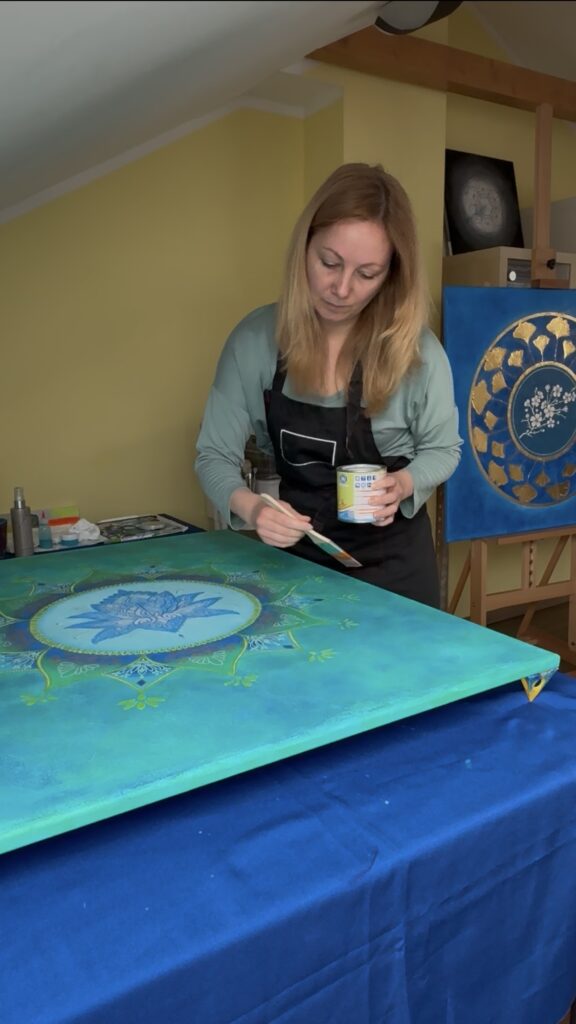
That’s actually very similar to how I experience life. I often begin with structure. A circle, a mandala, a geometric framework. It gives me a sense of direction and creates a foundation for the painting. But once I start working with paint, texture, and colour, something else begins to happen.
The materials have their own voice, and I’ve learned that if I listen carefully, the work becomes much more interesting than if I try to control every detail. So while the structure remains present, the painting gradually takes on a life of its own. Texture creates unexpected paths, colours interact in ways I didn’t plan, and small imperfections start to shape the final piece. I think that’s why the work feels both structured and organic.
The geometry provides order, while the intuitive marks, layers, and textures bring in movement and unpredictability. For me, the most beautiful moments happen where those two worlds meet. It’s a balance between intention and surrender, between knowing and discovering.
Q7. What inspired your Imperfection series, and what does it say about your outlook on life?
For a long time, I thought that growth meant getting things right or close to perfection. Not just in painting, but in life. I wanted things to be clear, balanced, and under control. Whenever something didn’t go according to plan, I saw it as something that needed to be fixed. But painting kept teaching me a different lesson.
The more I worked, the more I noticed that the parts that moved me most were often the unexpected ones. A texture that wasn’t planned, a line that wasn’t perfectly straight, a layer that revealed something I hadn’t intended. Those moments felt alive. They had character and honesty.
At the same time, I was learning something similar about myself. The qualities I once saw as flaws or weaknesses were often the things that made me human and allowed me to connect more deeply with others. Imperfection came from that realization. It’s less about accepting mistakes and more about embracing authenticity. For me, the painting is a reminder that beauty isn’t found in perfection. It’s found in the things that are real, unique, and authentic.
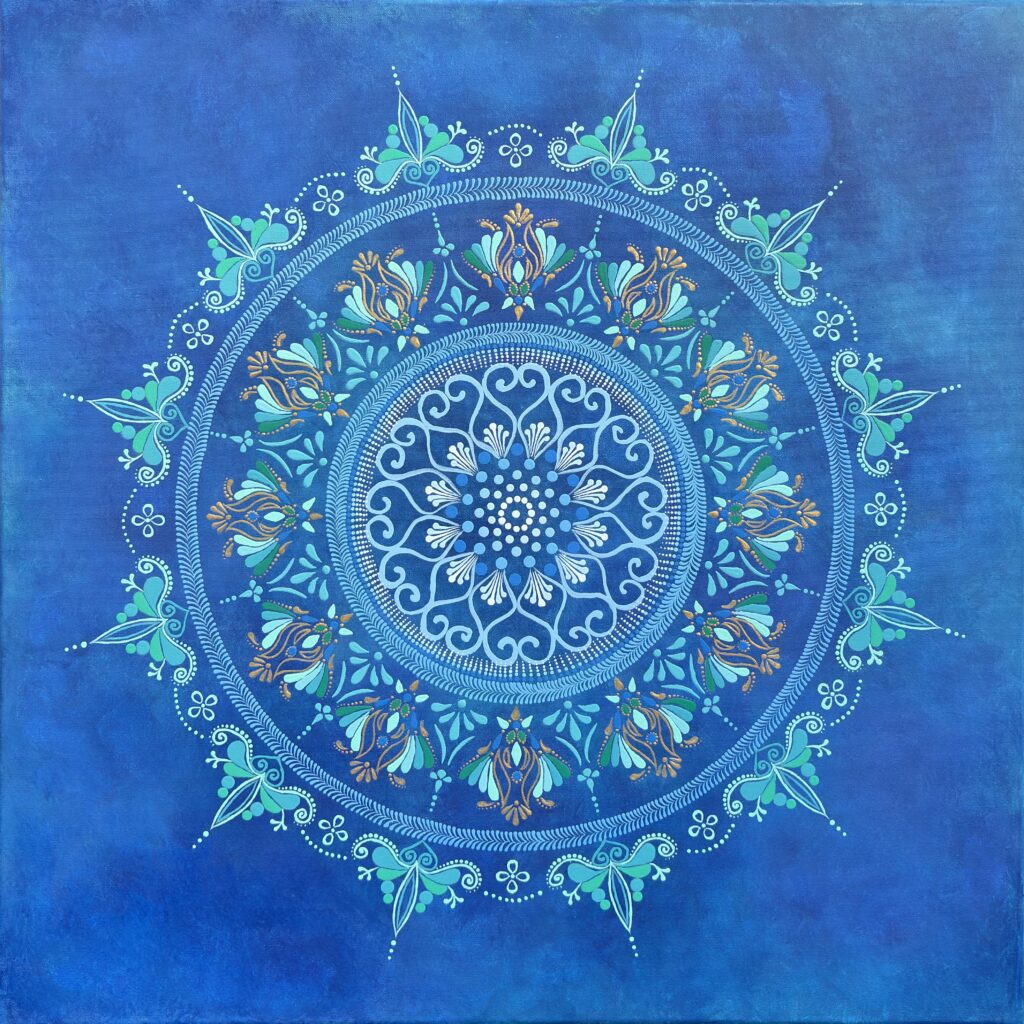
Q8. While creating Humanity and Common Ground, what ideas were you hoping to explore?
The main question I kept coming back to was surprisingly simple: what connects us? We live in a time where it’s easy to focus on differences and feel separated from one another. Yet my own experience has often shown me the opposite. Whenever I have meaningful conversations with people, I am reminded that beneath our different stories, backgrounds, and beliefs, we share many of the same hopes, fears, struggles, and desires.
While creating Humanity and Common Ground, I found myself reflecting on belonging, connection, and what it means to be part of something larger than ourselves. I wasn’t trying to provide answers. I was exploring questions like: Where do we find common ground? What happens when we look beyond labels? How much more connects us than separates us? The paintings became a way of exploring those ideas visually. More than anything, they are an invitation to pause and remember that we are not as separate as we sometimes think we are.
Q9. How has becoming an artist changed the way you see yourself?
When I first started painting, I thought I was learning how to create art. What I didn’t expect was how much I would learn about myself in the process. Painting has taught me to trust parts of myself that I used to question, especially my intuition. Before, I often felt the need to have a clear plan and know where things were going.
Through painting, I’ve become more comfortable with uncertainty and with allowing things to unfold in their own time. It has also made me more attentive. I notice details more, both in myself and in the world around me. I pay closer attention to quiet feelings, subtle changes, and the small moments that I might have overlooked before.
Perhaps most importantly, painting has helped me understand that growth isn’t something I need to force. It happens gradually, layer by layer. In many ways, my paintings have become a reflection of that process. They remind me that I don’t need to have everything figured out. I just need to stay curious, stay open, and trust myself and the journey.
Q10. In today’s fast-paced world, how do you make space for a slower and more thoughtful creative process?
There is definitely a pressure today to be constantly visible, constantly sharing, constantly producing. And while I understand the importance of that, I’ve realized that my best work comes from the quieter moments, not from rushing to keep up. For me, protecting that slower side means giving myself permission to step away from social media when I need to. It means spending time in nature, sitting with a painting before knowing exactly what it wants to become, and allowing ideas to develop at their own pace.
I’ve learned that creativity and visibility are not the same thing. Visibility is important, but creativity is the source of everything else. If I neglect that inner space, there is eventually nothing meaningful left to share. So I try to remind myself that slowing down isn’t falling behind. In many ways, it’s where the real work happens. The paintings might take shape in the studio, but they often begin long before that, in moments of observation, reflection, and simply being present.
Q11. What have you gained by starting your creative journey later in life?
For me, the biggest advantage is perspective. By the time I discovered painting, I had already lived through different chapters of life, including challenges that forced me to slow down, reflect, and rethink what truly mattered to me. I wasn’t coming to art trying to become an artist.
I was coming to it because I genuinely needed a creative space to explore, heal, and reconnect with myself. I think that changes the relationship you have with your work. There is less pressure to prove something and more curiosity about what wants to emerge. Starting later has also made me less afraid of taking my own path.
I’ve learned that there isn’t a single timeline for creativity or success. Some things arrive exactly when we’re ready for them. Looking back, I wouldn’t change the timing. Every experience that came before painting became part of what I bring to the canvas today. In many ways, I feel that I didn’t find art late—it found me exactly when I needed it.
Q12. Has your definition of success changed since becoming an artist?
Before becoming an artist, I think success was much more connected to achievement, reaching goals, and having a clear sense of progress. There was always a tendency to look ahead to the next milestone.
Art has changed that for me. Of course, exhibitions, sales, and recognition are meaningful, and I’m grateful for every opportunity my work receives. But over time, success has become less about external validation and more about staying connected to the reason I create in the first place.
Today, I feel most successful when I’m able to show up honestly in the studio, trust my intuition, and create work that feels true to me. If a painting teaches me something, helps me grow, or creates a genuine connection with another person, that feels like success. Ironically, the less I’ve focused on chasing success, the more fulfilled I’ve become. Success now feels less like a destination and more like being aligned with what I love doing and having the courage to keep following it.
Q13. If you could speak to your younger self before you picked up a paintbrush, what would you say?
I think I would tell her: stop waiting for the perfect moment. For a long time, I thought I needed more certainty, more experience, or a clearer plan before I could begin. But looking back, none of those things were necessary.
The answers came through doing, not through waiting. I would also tell her to trust herself more. There were parts of me that already knew what I needed, but I wasn’t always listening. Painting eventually became a way of reconnecting with that inner voice. And I would tell her not to worry so much about where the path will lead.
Some of the most meaningful things in my life happened when I followed curiosity without knowing the destination. Most of all, I would tell her that the challenges she is facing are not taking her away from herself. They are quietly leading her back. One day she will pick up a paintbrush, and it will open a door she didn’t even know was waiting for her.
As our conversation with Dana drew to a close, we kept thinking about a question that most of us avoid. What happens when life takes away everything you were using to stay busy?
Because that is what happened to Dana. The career, the routine, the forward momentum, all of it stopped. And inside that stop, inside the silence that most of us fill as quickly as possible with noise and plans and distractions, something was waiting. Something creative and honest and completely hers that had been there the whole time but could not be heard over the sound of a life moving too fast to notice it.
We think about how many people right now are running from that silence. Filling every gap with scrolling and scheduling and productivity and never once sitting still long enough to ask what would I actually do if I had nothing to do. Dana sat with that question. Not by choice at first. But she stayed with it. And what grew from that staying is a practice that now reaches people in other countries and hangs on walls in homes she has never visited.
That is worth thinking about for anyone who feels like they need to keep moving to keep mattering. That sometimes the most productive thing you can do is stop. And that what finds you in the stillness might be bigger than anything you were chasing while you were running.
The other thing we carried away from this conversation is about imperfection. And how differently Dana sees it now compared to how she used to. Most of us spend enormous energy trying to smooth out our rough edges, in our work and in ourselves. Fixing, polishing, correcting, editing until everything looks right.
Dana did that too until her paintings taught her that the rough edges were the interesting parts. The unplanned texture, the line that went somewhere she did not intend, the layer that refused to behave, those turned out to be the moments where the painting came alive. And she started wondering if the same was true about herself. If the things she had spent years trying to correct were actually the things that made her most real and most connectable and most worth knowing.
We think the answer to that is yes. For Dana and for all of us.
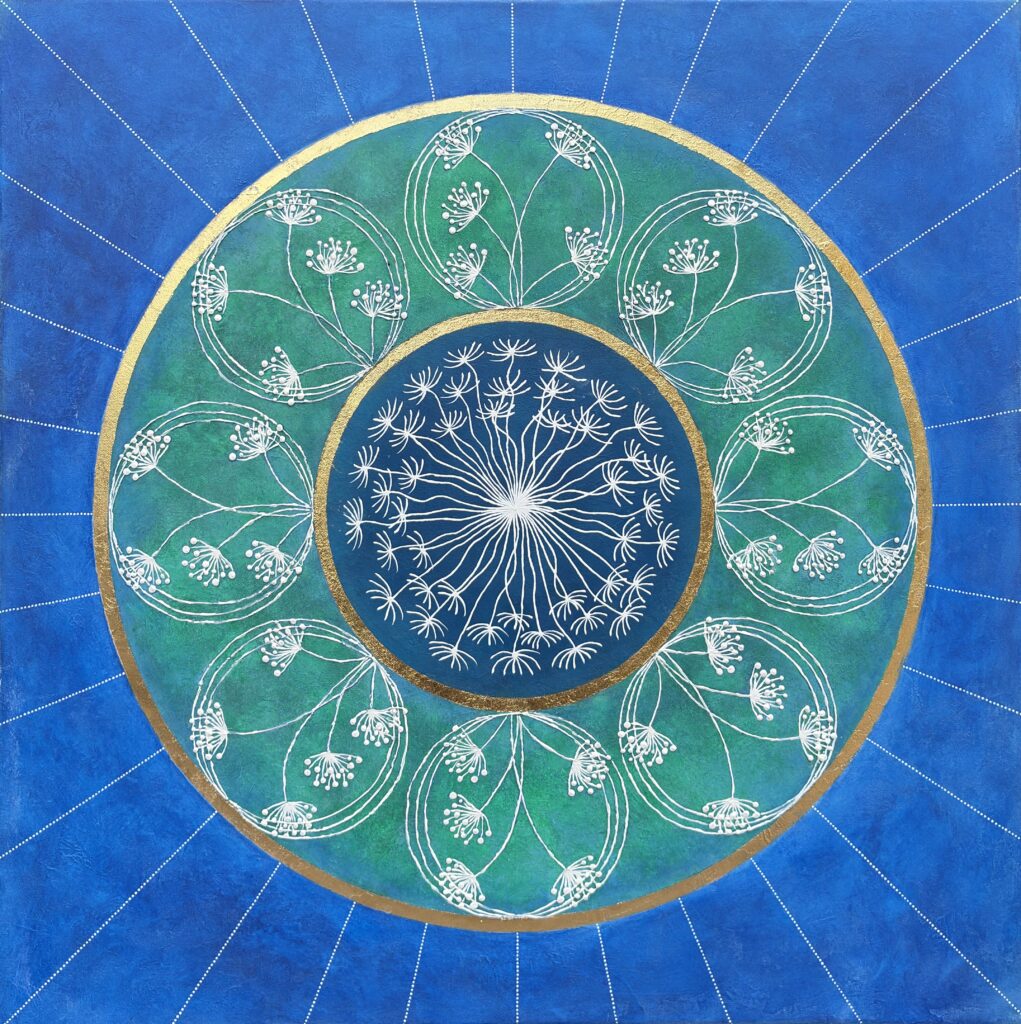
For art lovers and collectors, Dana’s paintings bring a grounding energy into a space that feels both intentional and warm. The mandala-inspired forms create natural focal points that draw you in and the layered surfaces reward close looking with textures and details you did not catch the first time. These are paintings made by someone who genuinely believes that art should create a moment of pause in a world that rarely offers one. And they do exactly that.
Follow Dana Rosu through the links below and see her work for yourself.
Comments 1