
The unseen hours that shape every artist’s creative practice

At Arts to Hearts Project, we have always believed that the women shaping contemporary art today deserve more than a moment of recognition. They deserve to be known. Their work, their vision, their stories, and the quiet, unglamorous, deeply personal process behind every piece they make.
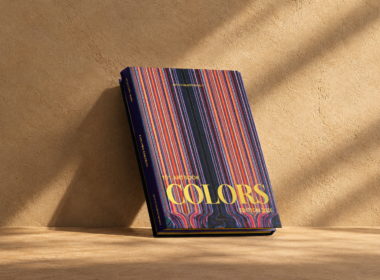
That belief is at the heart of Women Artists on the Rise Edition 4. A luxurious 232-page hardcover collector’s book featuring 100 exceptional women artists from around the world, wrapped in a gold-foiled die-cut jacket and filled with exclusive interviews, award-winning artworks, and contemporary practices across painting, sculpture, photography, mixed media, and more. It is a book built not just to be looked at, but to be returned to. A lasting keepsake for anyone who believes that art deserves a permanent place in the world.
Inside these pages are 100 women from different countries, different cultures, and different stages of their careers. United by one thing. A commitment to making work that is honest, intentional, and entirely their own.
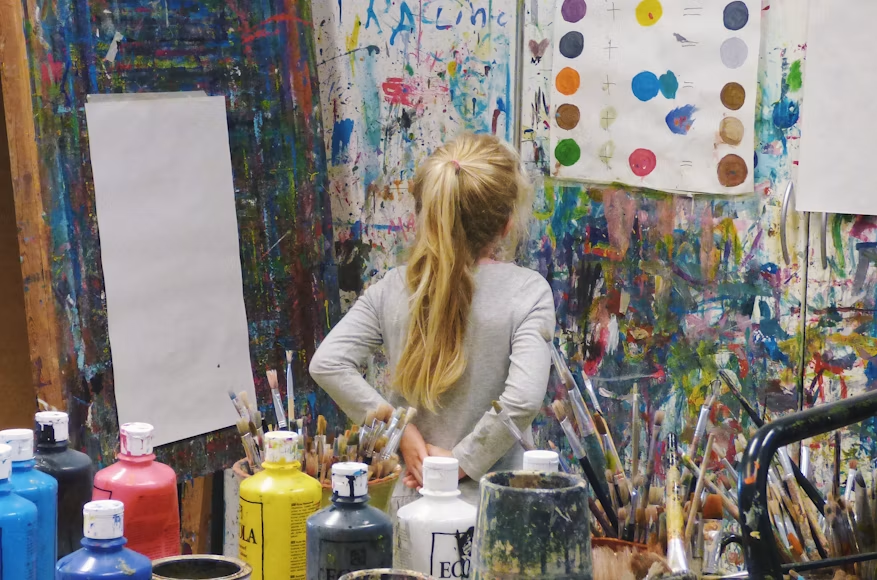
And we wanted to know how they do it. So we asked them one simple question. What does your creative process look like on a typical day? Not the ideal version. The real one. The one that starts before the studio is ready and the coffee is finished and the world has any idea what is about to be made.
And they told us.
Research days, studio days, experiment days. Every kind of day is a creative day
There is a version of the creative process that looks very tidy from the outside. You wake up, you go to the studio, you make something. But most artists will tell you it is rarely that simple. Because the work does not only happen when you are holding a brush. It happens in the gathering, the searching, the sketching of ideas that may not become anything for months.
Our featured artist Oxana Kovalchuk @oxanakovalchuk_artist says:
My creative process changes depending on the project and its stage. Some days are dedicated to research, gathering visual references, and collecting materials; others are spent in the studio. I usually work on several pieces at once, sketching, painting, experimenting with mixed media, or creating layered glass collages
Oxana Kovalchuk
And we think that is one of the most honest descriptions of a working creative practice we have heard. Because the research is not separate from the art. The gathering is not separate from the making. For Oxana it is all one continuous conversation with the work. And that kind of practice does not just produce art. It produces artists who never run out of things to say.
Before the world starts asking things of you, the work gets your best.
Most people talk about finding time to create. The artists who actually do it every day stopped looking for time a long time ago. They claimed it. Specifically and deliberately. Usually before anyone else is awake to ask anything of them. The early morning hours have a quality that nothing else in the day can replicate. A stillness. A clarity. A sense that the work can breathe without interruption.
Here is how Aleksandra Yasinowski @art_by_aleksandra_yasinowski describes it:
My creative process usually begins early in the morning, when my mind feels the most productive. I am planning, sketching, designing. Sometimes I paint for four hours, and other days I can spend twelve hours in the studio. Creating is a daily practice that keeps my mind engaged and inspired
Aleksandra Yasinowski
Four hours or twelve. The number shifts depending on the day and the project and everything life brings with it. But the start time does not. And we think there is something deeply intentional about that. About protecting the best hours for the thing that matters most. About making creativity not the thing you get to when everything else is done but the thing everything else is built around.
Cooking, cutting, stitching. When the process is this intentional, every finished piece carries the weight of every hour
We talk a lot about creative process as if it always involves a canvas and a brush. But some of the most remarkable art being made today begins somewhere entirely different. In a kitchen. In the slow transformation of raw materials into something that did not exist before. In a process so hands-on and so time-consuming that every finished piece carries the memory of every single hour that went into making it.
For Janine Brown @janinebrownstudio the studio begins in the kitchen. In her own words:
On a typical day, I am either cooking new batches of bioplastic; cutting out pieces from the bioplastic; or spending several hours hand-stitching them together. I also spend a lot of time researching different topics as inspiration for my work
Janine Brown
Cook. Cut. Stitch. Three words that contain dozens of hours. And somewhere inside all of those hours is the work itself, slowly becoming what it was always meant to be. Janine’s process does not just produce art. It produces art that could not have been made any other way. By anyone else. In any less time. And that kind of irreplaceability is exactly what makes it worth every single hour.
The hardest part is not picking up the brush. It is knowing when to put it down
Every artist knows the feeling of starting. The fresh canvas, the first mark, the momentum of beginning. But the harder skill, the one that takes years to develop, is knowing when to stop. When the work has what it needs. When adding more would only take something away. That kind of restraint does not come naturally. It has to be earned. Through hundreds of hours of looking honestly at your own work and learning to trust what you see.
Robyn Palescandolo @r.palesca describes her process and honestly every artist reading this will feel it
Every studio day is different, depending on the work and what I discover along the way. I usually begin by mixing paint, then looking honestly at the piece: what needs attention, what should be left alone. The process is a rhythm of action, pause, evaluation, and refinement
Robyn Palescandolo
Action, pause, evaluation, refinement. There’s something very honest about describing the process as a rhythm. Making art isn’t always a straight line from an idea to a finished piece. It involves working, stopping, questioning, changing your mind, and sometimes starting over.
A big part of that process is learning to be honest with yourself. To step back from the expectations you had for a piece and really look at what’s in front of you. Sometimes the work takes you somewhere you hadn’t planned, and being open to that can change everything.
The best creative processes start with imagination and work backwards from there.
Most people think of a creative process as something that builds forward. You gather materials, you learn a technique, and then you make something with what you have. But some of the most interesting artists work in exactly the opposite direction. They start with the image in their mind. The finished thing that does not exist yet. And then they work backwards, finding the techniques, the forms, the materials that will get them there. The idea is never in service of the process. The process is always in service of the idea.
Here is how Fiona Cowell @fionacowelldesigns describes it:
I am a visual sponge, words become images, textures suggest forms, ideas simply arrive. Design always comes first: imagine the piece, choose my palette and form, then find the embroidery techniques to build it. I am always learning something new. The stitch serves the idea, never the other way around
Fiona Cowell
It was that final thought that really stood out to us: the stitch serves the idea, never the other way around. It’s such a simple sentence, but it changes the way you think about making art. Instead of fitting an idea into techniques you already know, you let the idea decide where to go. If that means learning something new, then that’s part of the process. The imagination comes first, and everything else follows.
The body sets the pace. The artist decides what to do with it.
We often picture the artist’s life as endless hours in the studio, with nothing to interrupt the flow of making. But for so many artists, that’s simply not the reality. Their practice is shaped by pain, changing energy, caregiving, work, or the everyday limits of being human. And the artists who find a way to keep making anyway, who build a practice that bends around what they are given rather than breaking against it, those are the ones doing something quietly extraordinary.
This is what a typical creative day looks like for Narmin Kassam @narminkassamart:
My days often begin by arranging papers, colours, and sketches. Because I live with chronic pain, I work in short, focused intervals, returning to pieces throughout the day. The process is slow and intuitive, allowing layers, relationships, and emotions to emerge over time
Narmin Kassam
Slow and intuitive. We think those two words together contain something important. Because the slowness is not just a response to the pain. It is also what allows the layers to build. What gives the relationships between colours and forms the time they need to develop. What lets the emotion emerge rather than forcing it. Narmin’s practice did not become what it is despite her circumstances. In some ways it became what it is because of how honestly, she has worked within them.
Art that lives inside real life is the most real art of all
We are taught to think of creative work as something that happens apart from everything else. In a dedicated space, at a dedicated time, with the door closed and the distractions managed. And for some artists that works. But for others the separation itself is the problem. Because the life is not getting in the way of the work. The life is the work. And the practice that honours that, that weaves itself into the cooking and the chaos and the everyday rhythm of things, is often the most honest practice of all.
Here is how Alexandra Navas @alexandranavas.studio describes it:
My creative process is not linear. I weave, I stop, I let it breathe, I return. It is organic and intertwined with my daily life and tasks. I don’t work in a closed studio, but in an open space, surrounded by everyday rhythms, my kids, cooking, the pulse of life itself
Alexandra Navas
The pulse of life itself. We love that phrase. Because it captures something that no tidy studio setup ever could. The idea that creativity does not need to be protected from living. That it can exist right in the middle of it. Loud and open and surrounded by everything. Alexandra’s process is not linear because life is not linear. And we think that kind of honesty about how art actually gets made is something every artist needs to hear.
Somewhere between the first answer and the last, we stopped taking notes and just started reading.
Some begin before sunrise. Some work in fragments stolen from pain. Some cook their materials from scratch. Some leave the studio door wide open and let life pour in. Some follow the idea wherever it leads and learn whatever they need to get there. And some simply show up every single day and trust that the practice knows what to do next.
There is no single right way to make art. These answers prove that more clearly than anything we could have said ourselves.
If you want to read more about the artists featured in Women Artists on the Rise Edition 4, you can find the book at the link below. One hundred women. One hundred practices. One hundred ways of showing up for the work.
And if you are an artist with a practice of your own, we want to hear from you. Arts to Hearts Magazine Issue 14 is currently open for submissions. A chance to be featured in one of the most celebrated publications for contemporary artists in the world. To have your work seen, your story told, and your practice celebrated the way it deserves to be.
If that sounds like something you have been waiting for, do not wait any longer.