
How Anna Taraman went from St. Petersburg Streets to Boomer Gallery London

At Arts to Hearts Project, our Magazine Issue 12 with the theme This Is Me brought us artists who see the world in ways that are hard to put into words. Which is probably why they paint instead. Anna Taraman is one of those artists.
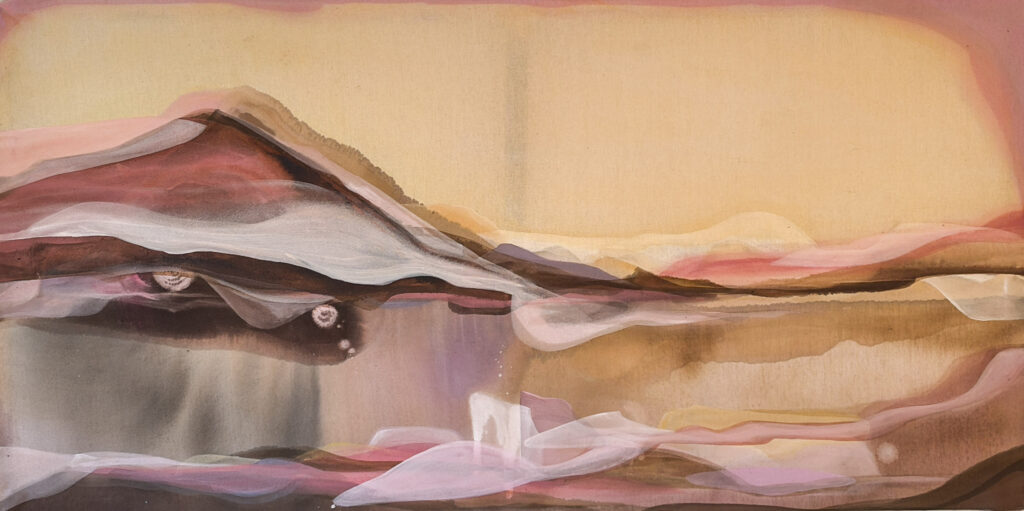
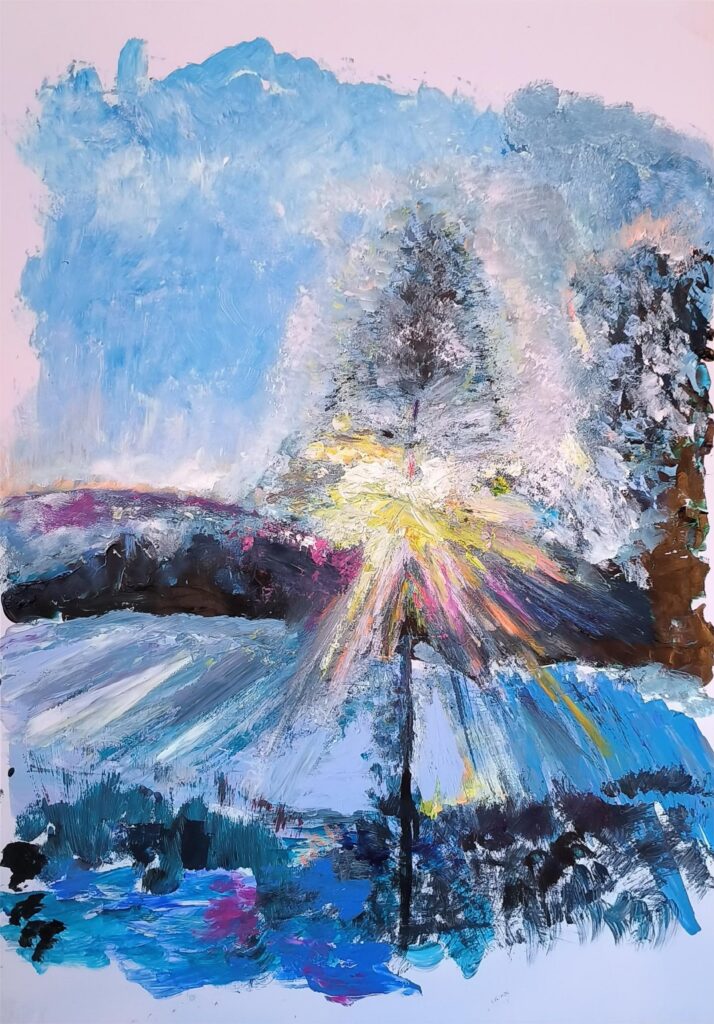
She is one of our selected artists for this issue and her work does something that we genuinely struggled to describe to each other when we first saw it. The colour in her paintings is not sitting on the canvas. It is moving. Breathing. Like it has its own life and its own agenda and Anna is simply the person who gave it permission to exist.
Anna is a Russian artist who also writes poetry and those two parts of her creative life are tangled together in a way that she clearly could not undo even if she wanted to. The poetry is in the paintings and the paintings are in the poetry and somewhere between the two Anna has built a creative language that is entirely her own.
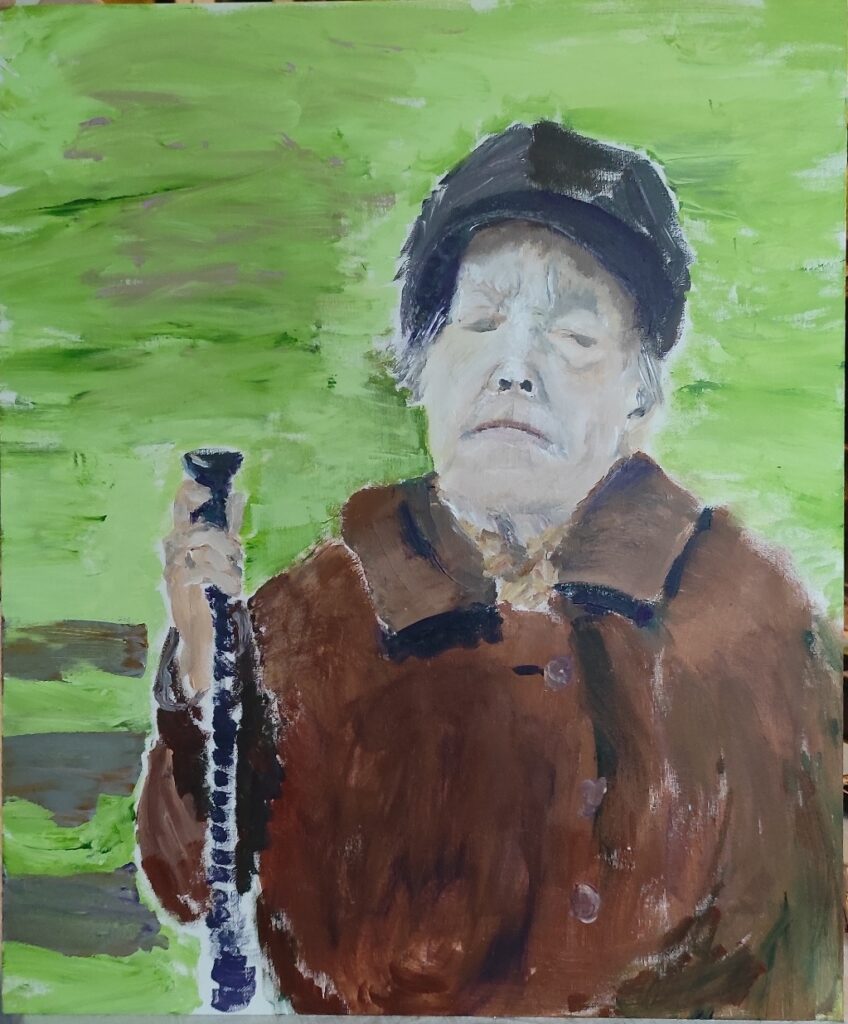
She works across landscape, portraiture, and symbolic composition but those are just the surface categories. What is actually happening in her paintings is something much more personal and much more layered. The subjects she chooses are never just what they appear to be. An evening in a small town is not a scene.
A tree in sunlight is not a tree in sunlight. Everything is a doorway into something emotional and private that she has found a way to keep open enough for strangers to walk through. We find that really rare. Most artists who paint from personal experience either close the door completely or swing it so wide open that the intimacy disappears. Anna finds the exact middle.
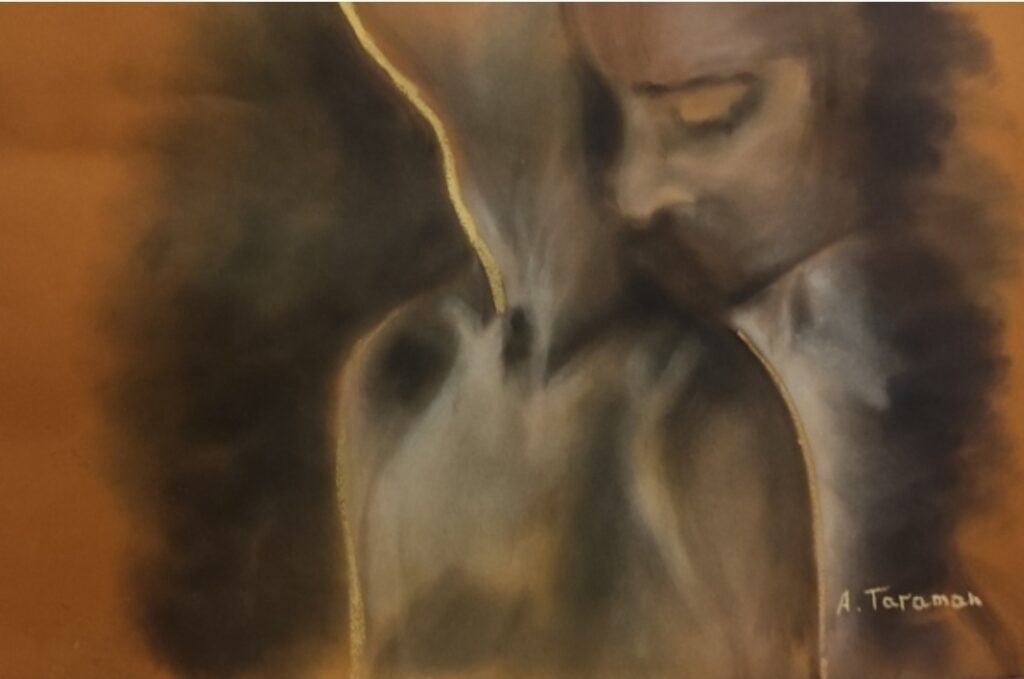
Anna works intuitively, on canvas and paper and wood, letting the surfaces surprise her and treating those surprises as opportunities rather than problems. There is a confidence in her process that comes from trusting her own instincts completely and you can feel that trust in the finished paintings.
Nothing looks forced or overdone; instead, everything looks like it arrived exactly when it was supposed to.
Let’s get to know Anna through our conversation with her about why colour has a life of its own in her paintings, how a landscape becomes a mirror for what is happening inside you, why poetry and painting cannot be separated in her practice, and what it means to paint with a barefoot soul.
Q1. Could you share a bit about your journey as an artist and how you developed your distinctive approach to color, landscape, and portraiture
I am grateful that you see something special in my work., For me, color is not just a pigment on a canvas. It is a language that can speak without words, convey the subtlest nuances of mood, create a feeling of movement, warmth, cold, joy or melancholy. I let the color guide me, not the other way around. So that he could live, breathe, and pulse.
The transition from landscape to portrait and symbolic storytelling was a natural development. Landscape for me is not just an image of nature. It is a reflection of my inner state, my experiences related to this place or moment. I’ve given up trying to convey the real look of what I’m portraying.
It’s important for me to focus the viewer’s attention on something most important, what I saw and what it was about this landscape or portrait that excited me. Art should not only please the eye, but also make you think, feel, and look for answers. I use symbols, metaphors, and allegories to tell stories that go beyond the immediate. I tell stories where there is a past and the future is guessed.
Q2. How do you balance guiding color with allowing the painting to unfold naturally?
My work is the freedom of intuitive development of the canvas, based on my own emotions and dialogue with the material. I experiment with different ways of applying paints, observing their interaction with the surface: canvas, paper, wood – each surface has its own texture and absorbency.
This affects how the paint is applied and how it “breathes”. For me, working on a painting, like writing a poem, is always a process with an open ending. Paint or string can behave “in their own way,” and this is not a mistake, but an opportunity. My main goal is to convey a certain mood or emotion. This requires inner freedom.
Q3. What keeps drawing you back to landscapes and observing the natural world?
There are so many people, so many worlds that change every second according to our thoughts and feelings. And nature is given to us as a clue confirming this postulate. Therefore, we feel in it an attunement to what is happening in our soul now. Nature makes our inner experiences more tangible so that we are in ourselves in ourselves! – we have found the answers we have been looking for so long.
Q4. Do you approach these works as observations of nature, or as spaces for emotional and symbolic reflection?
Many artists draw inspiration from the world around them. And I’m no exception. But art cannot be a simple fixation of reality. My works deliberately move away from the literal image, switching to the language of symbols, metaphors, and allegories.
A lilac bush agitated by the wind symbolizes an inner storm, a storm of emotions, a man in love, frosts our spiritual semitones and ambiguities, and a lonely tree, as if cut in half by the sun, is the pain of late love. The most valuable thing about art is its ability to open up new facets of reality and us.
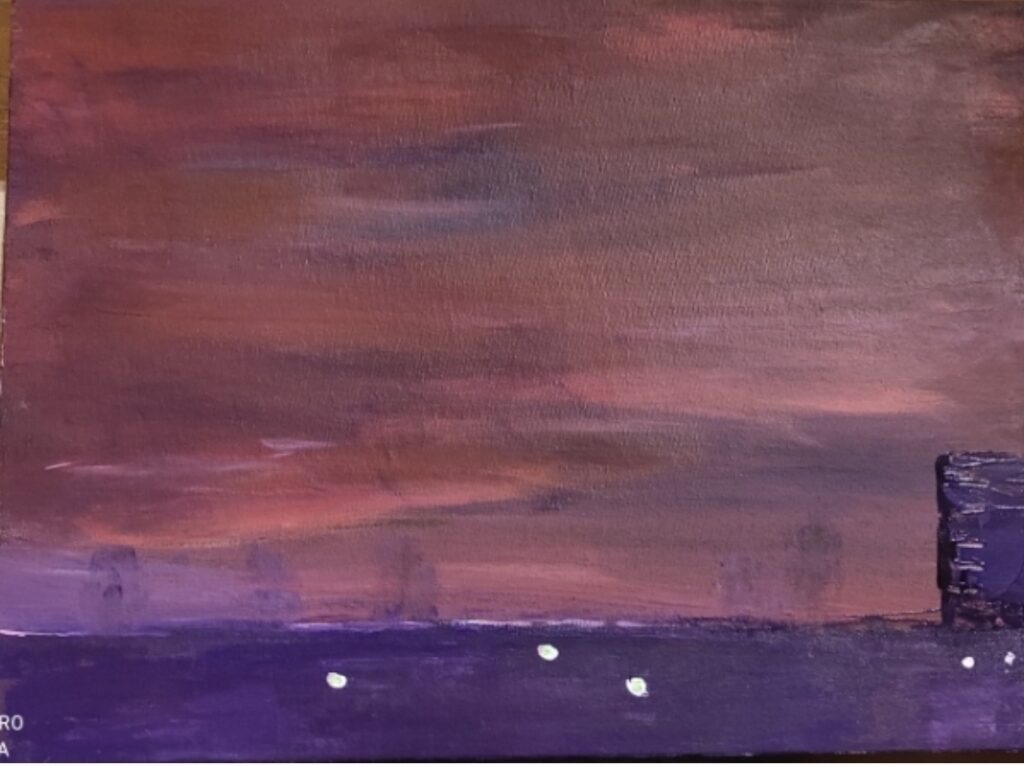
Q5. How did Evening in a Small Town begin, and how did memory and imagination shape the piece?
There are moments when reality and dreams intertwine so subtly that it is difficult to distinguish one from the other. And most often this happens when we remember our home, where you fell asleep to the roll call of trains on the outskirts of the town and woke up to the clink of your mother’s dishes, heralding breakfast and a new day.
It’s the sound of peace, the sound of everything being okay, that you’re safe. This painting is a portal to the past, to the place where they always wait and love.
Q6. You are also a poet, and your works often include written text, how do poetry and painting interact in your practice?
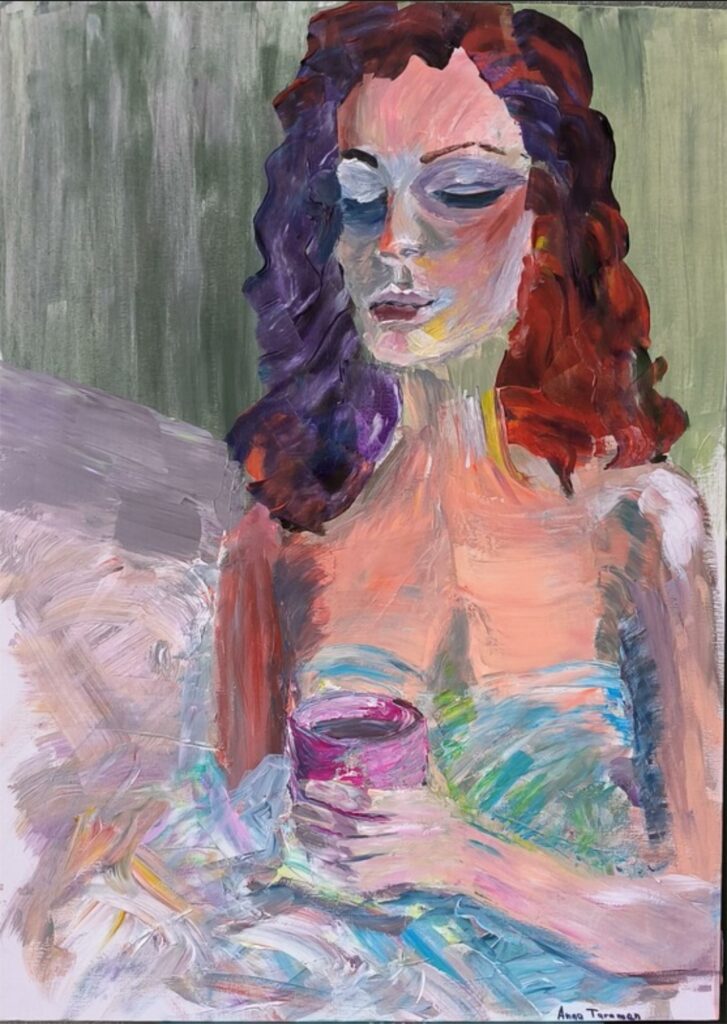
Poetry and painting are inseparable for me, they are of the same nature — they come from above. Words are like a brush, colors are like a rhyme.I sometimes refer to a painting as a line from my poem (https://disk.yandex.ru/i/KMgCscWioM1MZw). But at the same time, the painting does not illustrate the poem, they each live their own lives.
The viewer in my work can first see the image, and then read the words that complement or even reverse his initial impression. It is an invitation to active co-creation, to search for one’s own meanings, to play with associations, with memory, with our common cultural code.
Q7. What do you think makes a painting resonate beyond what we simply see?
We often talk about technique, composition, and color. But what makes a painting truly alive, capable of touching the soul and remaining in memory? I am convinced that this is the spark, the elusive “something” that can stir the viewer’s heart. Without this element, even the most masterfully executed work risks remaining only a set of paints on canvas – insincere, insensitive, and therefore unsuccessful.
This “something” does not require grandiose plots or dramatic events. It can lurk in the most mundane things, in fleeting moments that we often miss in the rush of days.
Q8. Has external recognition changed the way you approach your work, or do you try to remain independent from it?
The recognition just shows that I am on the right track, that the language of my art finds its tribesmen. I am very glad that many people share my views and feelings.
Q9. At this stage in your journey, what does success mean to you as an artist and as a storyteller?
The feeling of peace from a job well done
Q10. What advice would you give artists trying to build a practice that feels both conceptual and deeply personal?
I share Vladimir Vysotsky’s opinion about poets: the soul of an artist should be barefoot.
As our conversation with Anna came to a close, something kept sitting with us that goes beyond painting. The idea that you do not have to limit yourself to one creative language.
Anna writes and she paints and she does not see those as separate activities. They come from the same source inside her and they arrive through whichever medium can carry what she needs to express at that moment. She does not choose between them. She uses both. And her work is deeper because of it.
We think a lot of artists put themselves in boxes unnecessarily. I am a painter. I am a writer. I am a photographer. And then they stay inside that box even when the thing they are trying to say would be better expressed through something else.
Anna’s practice is a reminder that creativity does not respect the boundaries we draw around it. If you need words one day and paint the next and both are serving the same emotional truth then both are your practice. You do not need permission to work in more than one language. You just need the honesty to follow wherever the impulse leads.
The other thing we took from Anna is about surfaces. Not just canvas surfaces, though she works on those too, but the surfaces we present to the world. Most of us live on the surface.
We see a tree and think tree. We see a sunset and think pretty. We move through our environments processing the visible and never stopping long enough to ask what it is underneath. Anna stops. Every time. And what she finds underneath the ordinary things she sees is rich enough to build an entire painting practice on.
That is available to all of us. Not Anna’s specific vision obviously, that belongs to her. But the practice of looking past the surface of things and asking what is really happening here is something any artist can develop. It does not require special talent. It requires slowing down and paying attention and being willing to feel what is actually in front of you instead of just labelling it and moving on.
For anyone interested in collecting Anna’s work, her paintings carry a quality of aliveness that most art does not have. The colour moves through the composition in ways that feel responsive to light and mood and time of day.
And because every piece holds personal meaning that she has left open enough for interpretation, these are paintings that grow alongside whoever is living with them. What they show you today will not be the same as what they show you in a year. And that ongoing conversation between the painting and the viewer is what makes them worth having.
Follow Anna Taraman through the links below and see her work for yourself.