

The 7 Art Films That Every Artist and Art Lover Should Watch
Most of us experience art at its final destination: perfectly lit museum walls, prestigious galleries, or beautifully curated exhibitions. We admire the finished masterpiece, read the small wall label, and move on, rarely stopping to wonder about everything that happened before that moment. The countless failed experiments, creative breakthroughs, personal sacrifices, political influences, and moments of doubt that shaped the work often remain invisible.
That’s exactly where the best art films come in.
The right documentary, or even a cleverly written fictional story, does far more than introduce famous artists. It takes you inside their studios, follows them through moments of uncertainty, reveals the relationships between artists, collectors, museums, and critics, and uncovers the surprising ways history, power, and culture shape what eventually hangs on gallery walls. Some of these films immerse you in the creative process itself, while others expose the politics behind major exhibitions or remind us that art can become a powerful force for social change.
Whether you’re an artist looking for inspiration, a collector eager to understand the stories behind great works, or simply someone fascinated by creativity, these films offer something museums alone cannot: a front-row seat to the making of the art world itself.
From Andy Warhol’s revolutionary vision and Gerhard Richter’s mesmerizing studio practice to Nan Goldin’s fearless activism and the political drama behind the Venice Biennale, these seven films don’t just celebrate art, they reveal the people, ideas, and unexpected stories that transformed it. Once you’ve watched them, you’ll never look at a painting, sculpture, or exhibition in quite the same way again.
1. Gerhard Richter Painting (2011): The Documentary That Lets You Watch a Master at Work
Artwork: Ifrit (2010) by Gerhard Richter
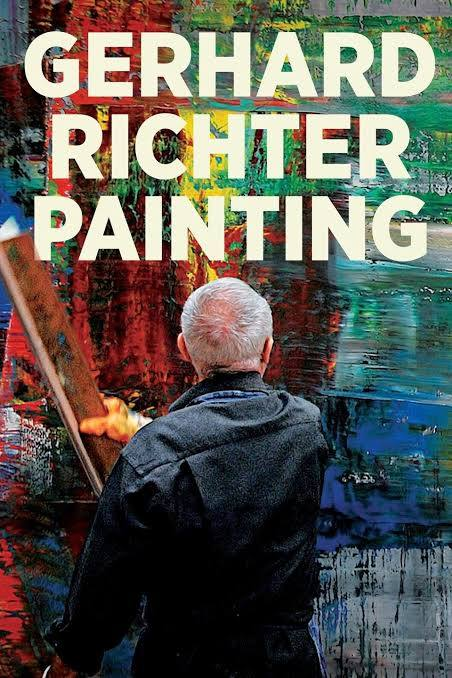
Most people imagine artists creating masterpieces in flashes of inspiration, as though every brushstroke arrives with complete certainty. Gerhard Richter Painting (2011) quietly dismantles that myth. Directed by Corinna Belz, this remarkable documentary offers something almost never seen in the art world: uninterrupted access to one of the most influential living painters as he works. Rather than relying on dramatic storytelling or a chronological biography, the film invites viewers into Richter’s studio, where the real story unfolds through observation. Every pause, every adjustment, and every difficult decision becomes part of the creative process.
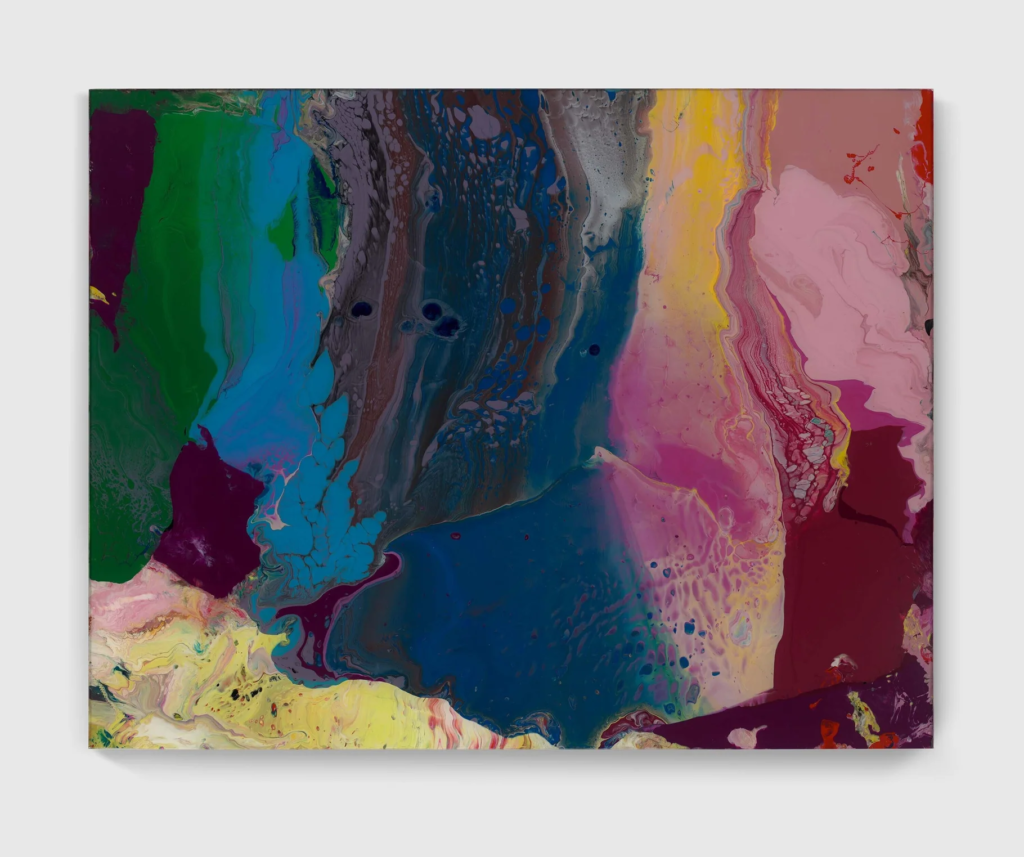
What makes the documentary so captivating is that it transforms painting into an act of suspense. Richter’s large abstract canvases evolve through layers of paint pulled across the surface with his signature oversized squeegee. One deliberate movement can completely reshape a composition, revealing unexpected textures while simultaneously covering sections that took hours, or even days, to create. Watching him hesitate before making the next pass is surprisingly tense because there is no guarantee the painting will improve. In Richter’s world, uncertainty isn’t an obstacle to creativity; it’s an essential part of it.
The film also reveals the hidden rhythms of a professional artist’s studio. Assistants carefully prepare materials, move enormous canvases, and help maintain the environment that allows the work to continue. These quiet moments remind viewers that creating art at this level requires discipline, routine, and collaboration as much as talent. It strips away the romantic image of the solitary genius and replaces it with a more honest portrait of sustained creative practice.
Richter himself remains characteristically reserved throughout the film, rarely offering definitive explanations for his work. Instead of telling viewers what his paintings mean, he lets the process speak for itself. This restraint is precisely what makes the documentary so compelling. Rather than solving the mystery behind his paintings, it deepens your appreciation for them by revealing how much experimentation, patience, and risk lie beneath every finished canvas.
Whether you’re an artist searching for insight, a collector curious about what happens before a painting reaches a gallery, or simply someone who loves contemporary art, Gerhard Richter Painting offers an experience unlike any other. It reminds us that great art is rarely born from certainty. Instead, it emerges through revision, persistence, and the courage to embrace the unexpected, making this one of the finest documentaries ever made about the creative process.
2. Anselm (2023): The Film That Turns an Artist’s World Into an Immersive Experience
Artwork: The Orders of the Night (1983) by Anselm Kiefer
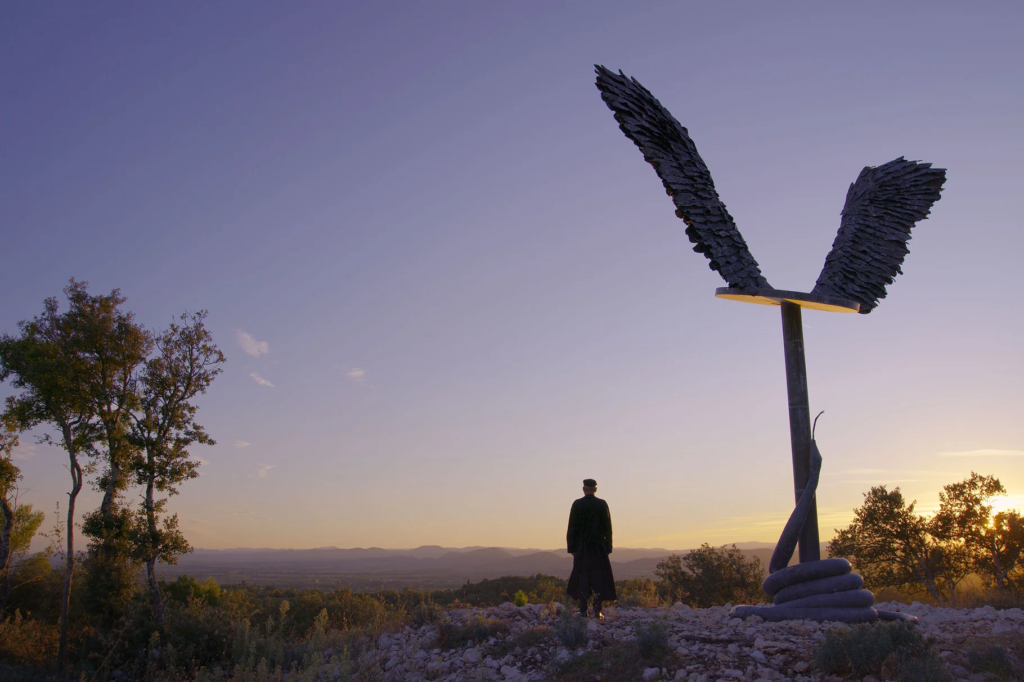
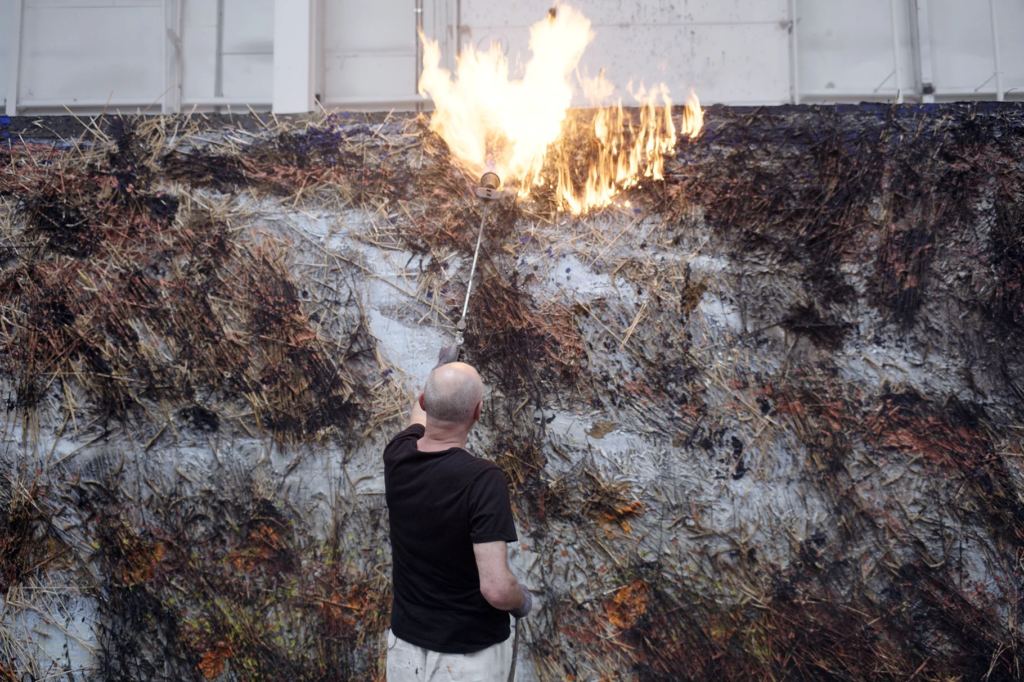
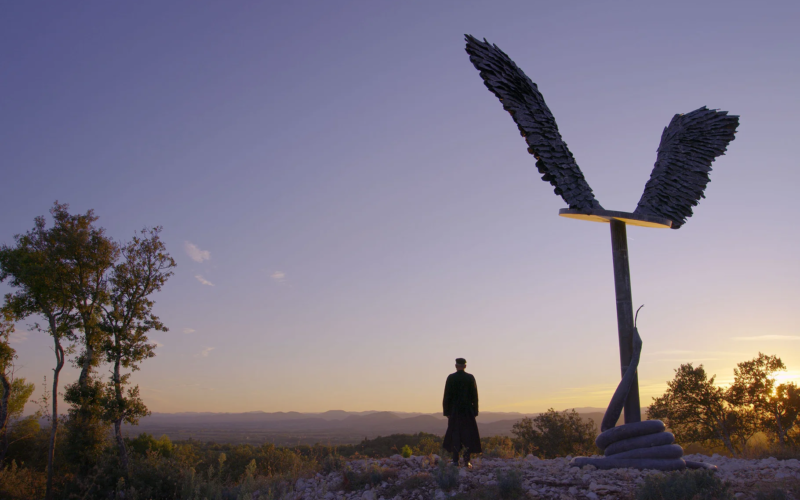
Some documentaries tell you about an artist. Anselm (2023) makes you feel as though you’ve stepped inside one. Directed by acclaimed filmmaker Wim Wenders, this visually stunning documentary explores the life and work of German artist Anselm Kiefer, whose monumental paintings and sculptures grapple with memory, mythology, history, and the lingering scars of war. Rather than following the familiar formula of interviews and archival footage, Wenders creates an immersive cinematic experience that mirrors the scale and ambition of Kiefer’s art itself.
Kiefer has spent decades confronting subjects many artists have avoided, particularly Germany’s relationship with its past after the Second World War. His works are layered with references to literature, philosophy, religion, and ancient myths, often incorporating unconventional materials such as straw, ash, lead, clay, and dried flowers. These weathered surfaces aren’t simply aesthetic choices; they become symbols of destruction, renewal, and the fragile process of remembering. The film allows viewers to witness how these monumental works come into being, revealing the physical labor behind creations that can tower over entire gallery walls.
One of the documentary’s greatest achievements is its use of 3D cinematography. Instead of functioning as a visual gimmick, the format enhances the experience of moving through Kiefer’s sprawling studios, warehouses, and installations. Vast concrete towers, cavernous workspaces, and landscapes filled with colossal sculptures begin to feel almost dreamlike, drawing viewers into environments that are as much a part of the artwork as the finished pieces themselves. It becomes clear that Kiefer isn’t simply making paintings, he is building entire worlds.
The film also explores the connection between biography and artistic vision without reducing Kiefer’s work to personal history alone. His childhood in postwar Germany shaped his lifelong fascination with collective memory, but Anselm resists offering easy explanations. Instead, it encourages viewers to engage with the complexity of his ideas, allowing history, imagination, and material experimentation to exist side by side.
Even if contemporary art feels intimidating, Anselm serves as an inviting entry point into one of its most influential figures. It demonstrates that great art isn’t always meant to provide straightforward answers. Sometimes, its greatest power lies in asking difficult questions and creating spaces where viewers can confront history, memory, and humanity from entirely new perspectives. Long after the credits roll, the sheer scale of Kiefer’s creative vision, and the immersive way Wenders brings it to life, continues to linger in the mind.
3. All the Beauty and the Bloodshed (2022): The Documentary That Proves Art Can Spark Real-World Change
Artwork: The Ballad of Sexual Dependency (1986) by Nan Goldin
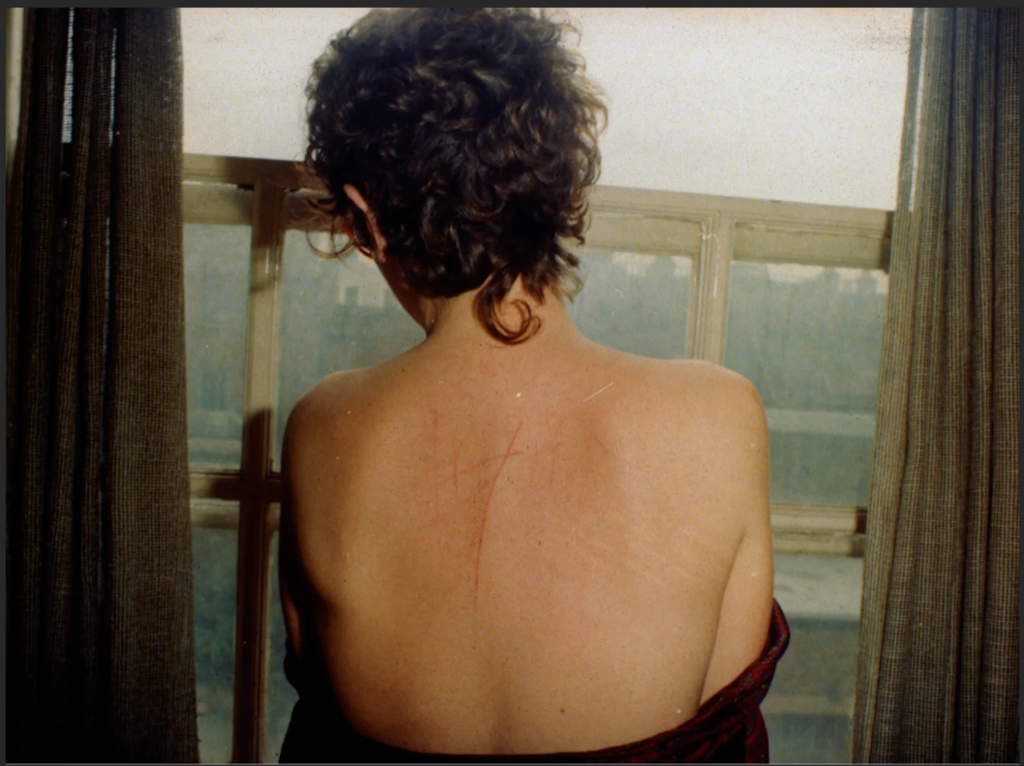
What happens when one of the world’s most influential photographers decides that making powerful images is no longer enough? All the Beauty and the Bloodshed (2022) answers that question with extraordinary depth, revealing how art can become a force for activism without losing its emotional power. Directed by Academy Award-winning filmmaker Laura Poitras, the documentary follows celebrated photographer Nan Goldin as she reflects on her life, her groundbreaking work, and her campaign to hold the Sackler family accountable for their role in the opioid crisis.
At the heart of the film is Goldin’s iconic photographic series, The Ballad of Sexual Dependency, an intimate visual diary documenting friendships, love, addiction, identity, and loss. Created over several decades, the work challenged traditional ideas of portraiture by presenting deeply personal moments with unflinching honesty. Her photographs captured communities that were often overlooked or misunderstood, particularly during the AIDS epidemic, preserving stories that might otherwise have been forgotten. The documentary beautifully weaves these images into Goldin’s own narration, allowing viewers to experience not only the photographs themselves but also the lives behind them.
The film gradually shifts from artistic legacy to political action, following Goldin’s organization, P.A.I.N. (Prescription Addiction Intervention Now), as it stages highly visible protests inside some of the world’s most prestigious museums. These demonstrations questioned whether cultural institutions should continue accepting donations from members of the Sackler family, whose wealth was closely linked to Purdue Pharma and the marketing of OxyContin. Rather than separating art from society, the documentary shows how museums, philanthropy, public health, and ethics are deeply interconnected.
What makes All the Beauty and the Bloodshed so compelling is its refusal to present Goldin as either a flawless activist or simply a celebrated artist. Instead, it portrays someone whose personal experiences with addiction, grief, and survival became inseparable from her creative practice. Her photographs document vulnerability, while her activism demonstrates the courage to challenge powerful institutions using the visibility her art had already earned.
For anyone who believes art exists only inside galleries or museum walls, this documentary offers a powerful correction. It reminds us that artists don’t just reflect the world around them, they can influence it. All the Beauty and the Bloodshed is ultimately a story about memory, resilience, and the enduring belief that creative voices have the power to demand accountability and inspire lasting change.
4. Taking Venice (2023): The Film That Reveals the Politics Behind the Art World’s Biggest Prize
Artwork: Express (1964) by Robert Rauschenberg
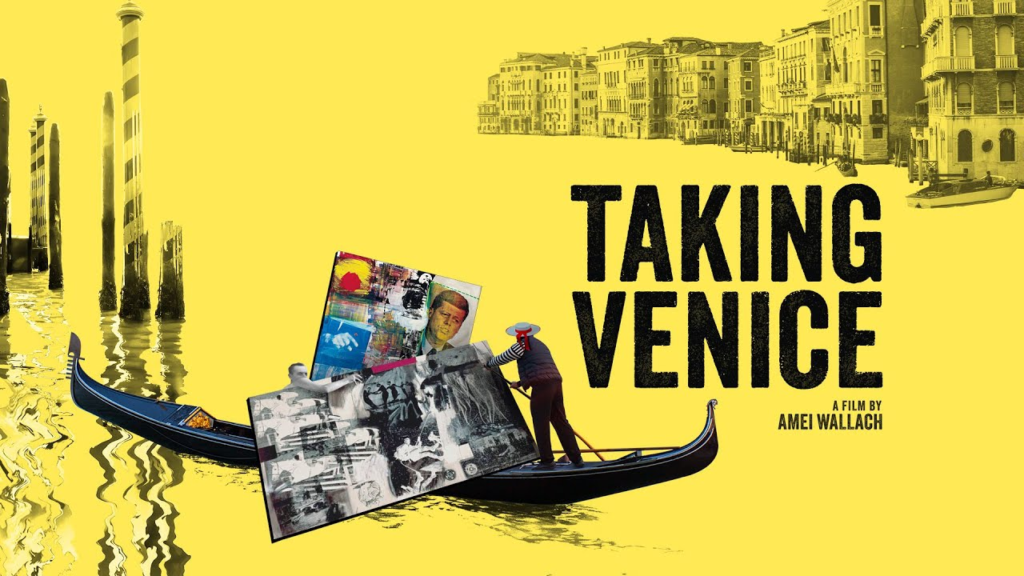
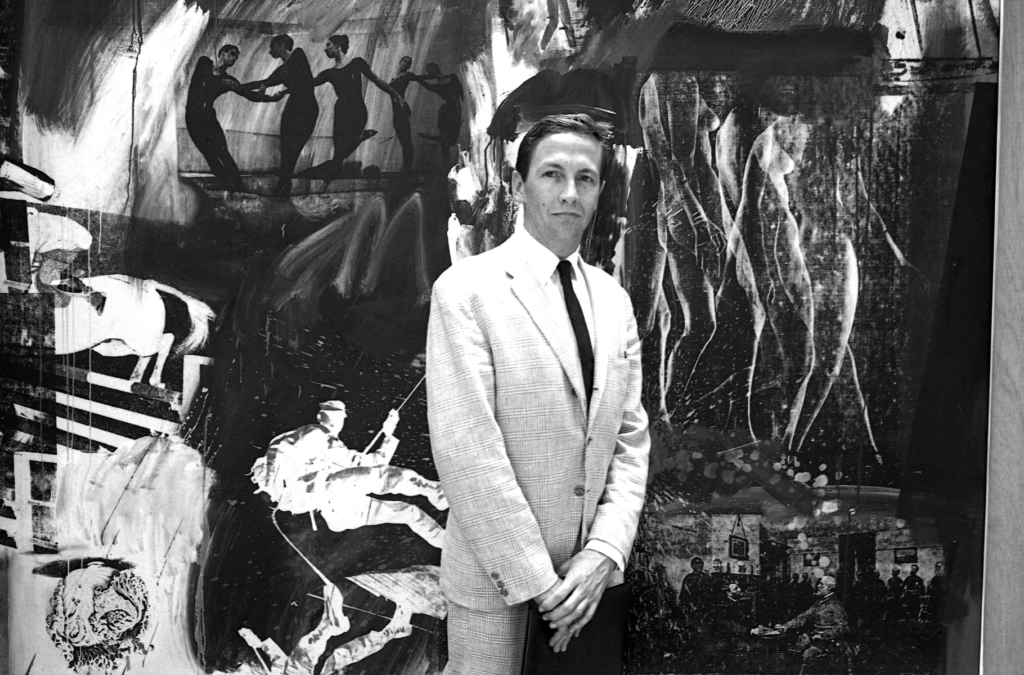
Winning one of the art world’s highest honors might seem like the result of talent alone, but Taking Venice (2023) reveals a far more complicated story. This gripping documentary revisits one of the most controversial moments in modern art history: the 1964 Venice Biennale, where American artist Robert Rauschenberg became the first artist from the United States to win the prestigious Golden Lion. What initially appears to be a landmark artistic achievement gradually unfolds into a fascinating tale of politics, diplomacy, cultural influence, and the growing power of the American art world.
Directed by Amei Wallach, the film transports viewers to a time when the Cold War extended far beyond military and political arenas. Art had become another battleground where nations competed to demonstrate cultural leadership. Through archival footage, historical records, and expert interviews, Taking Venice explores how governments, museums, collectors, critics, and dealers all played a role in shaping international artistic reputation. The documentary raises an intriguing question: can an art prize ever be entirely separate from the political climate surrounding it?
Central to the story is Robert Rauschenberg, whose bold experiments blurred the boundaries between painting, sculpture, photography, and found objects. Works like Express reflected his willingness to challenge artistic conventions, making him one of the defining figures of postwar American art. Yet the documentary suggests that his victory wasn’t solely about innovation. It also symbolized America’s growing cultural influence at a moment when Abstract Expressionism and Pop Art were reshaping the global art scene.
What makes Taking Venice especially compelling is that it doesn’t diminish Rauschenberg’s artistic achievements. Instead, it expands the conversation by showing how artistic recognition often exists within a larger network of institutions, diplomacy, and public perception. Biennales, museums, and international exhibitions aren’t just places where great art is celebrated, they’re also spaces where cultural narratives are negotiated and history is written.
For artists, collectors, and anyone fascinated by the inner workings of the art world, this documentary offers a rare look behind the curtain. It reminds us that every celebrated exhibition and prestigious award carries stories that extend far beyond the gallery walls. Taking Venice transforms a single moment in art history into a compelling exploration of ambition, influence, and the complex relationship between creativity and power, proving that sometimes the biggest drama in the art world happens long before the applause begins.
5. Eva Hesse (2016): The Film That Shows How Vulnerability Can Become Revolutionary Art
Artwork: Sans II (1968) by Eva Hesse
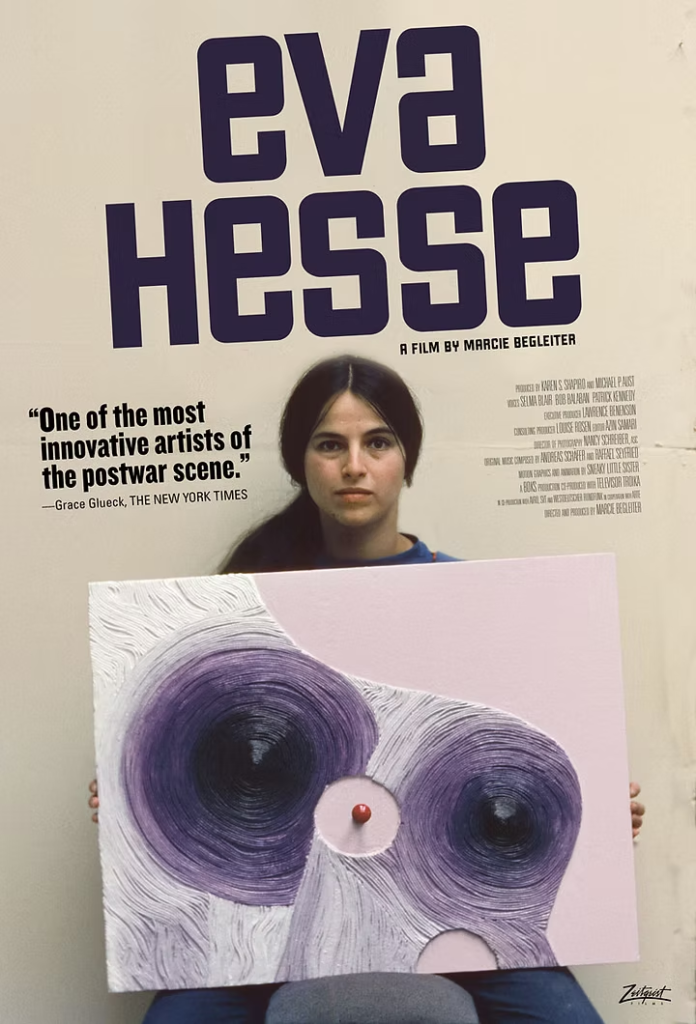
Some artists change the course of art history through grand gestures. Eva Hesse did it by embracing uncertainty. Eva Hesse (2016), directed by Marcie Begleiter, is an intimate documentary that explores the life of one of the most influential sculptors of the 20th century, revealing how deeply personal experiences became the foundation of a radically original artistic practice. Rather than presenting Hesse as a distant icon, the film introduces her as a curious, resilient, and fearless artist who continually pushed against the boundaries of what sculpture could be.
Born in Germany in 1936, Hesse fled the Nazi regime with her family as a child before building her career in New York decades later. Although her life was marked by profound personal loss and emotional hardship, the documentary avoids reducing her work to biography alone. Instead, it shows how those experiences informed an artistic language that was unlike anything seen at the time. While many Minimalist artists embraced rigid geometry and industrial precision, Hesse introduced softness, irregularity, and imperfection into sculpture, creating works that felt unexpectedly human.
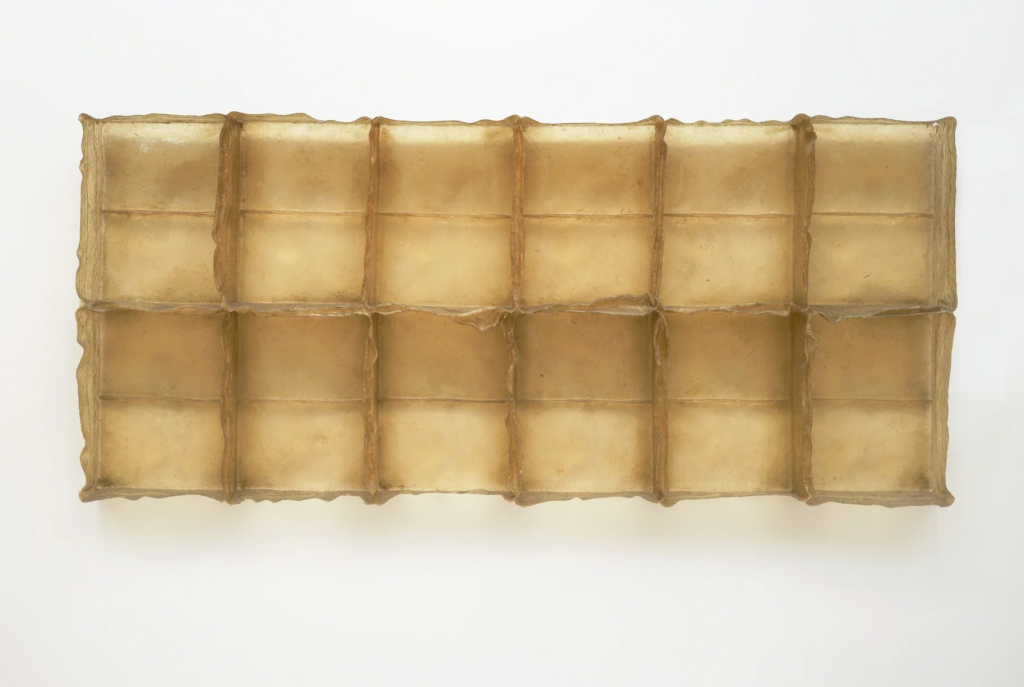
Using unconventional materials such as latex, fiberglass, rope, resin, and cheesecloth, Hesse challenged traditional expectations of permanence in art. Many of these materials naturally deteriorate over time, making change and fragility an intentional part of the artwork itself. Pieces like Sans II demonstrate her fascination with repetition, texture, and organic forms, inviting viewers to see beauty in vulnerability rather than perfection. The documentary captures this spirit beautifully, combining archival footage, personal letters, diary entries, and interviews with friends, fellow artists, and historians to build a portrait of someone whose ideas continue to shape contemporary art.
One of the film’s greatest strengths is its ability to reveal the determination behind Hesse’s quiet brilliance. She wasn’t interested in following artistic trends or creating work that fit neatly into existing movements. Instead, she trusted experimentation, allowing intuition and curiosity to guide her practice even when the results felt uncertain. That willingness to take risks became one of her greatest contributions to modern sculpture.
Although Eva Hesse’s career was tragically cut short when she died of a brain tumor at just 34 years old, her influence extends far beyond the brief years she spent making art. Eva Hesse reminds us that an artist’s legacy isn’t measured by the length of their career but by the originality of their vision. It’s a moving portrait of creativity, resilience, and the courage to embrace imperfection, qualities that continue to inspire generations of artists today.
6. Art School Confidential (2006): The Film That Exposes the Beautiful Chaos of Becoming an Artist
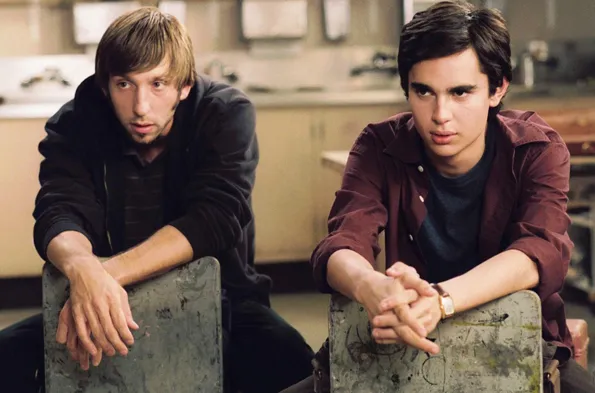
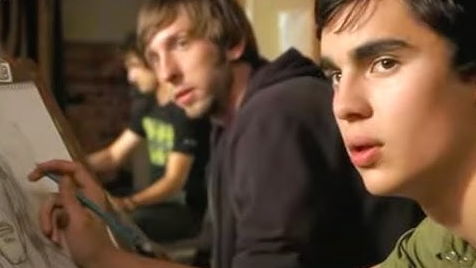
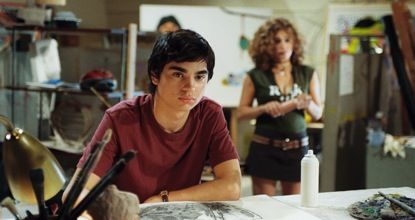
Unlike the documentaries on this list, Art School Confidential (2006) doesn’t introduce viewers to a legendary painter or revisit a defining moment in art history. Instead, it takes aim at the culture surrounding art itself. Directed by Terry Zwigoff and based on a comic by Daniel Clowes, this dark comedy follows Jerome Platz, an ambitious young artist who enrolls in art school believing talent alone will lead him to greatness. What he discovers instead is a world filled with eccentric professors, inflated egos, fierce competition, and the constant pressure to stand out.
Beneath its humor, the film offers a surprisingly sharp critique of the myths that surround artistic success. Students obsess over originality while desperately seeking validation. Critics and professors become gatekeepers whose opinions can shape careers overnight. Trends change faster than artists can keep up, and the line between genuine creativity and performance often becomes blurred. Through exaggerated characters and absurd situations, the film captures anxieties that many artists quietly recognize: the fear of not being good enough, the temptation to chase recognition, and the uncertainty of building a creative career.
One of the reasons Art School Confidential has become a cult favorite is because its satire often feels uncomfortably familiar. Anyone who has spent time in an art school, gallery, or creative community will recognize elements of its world. While the characters are intentionally exaggerated, the questions they raise are surprisingly real. Is technical skill enough to succeed? Does originality still matter in a market driven by trends? And how much of an artist’s career depends on talent versus timing, networking, or simple luck?
The film also pokes fun at the romantic image of the “misunderstood genius.” Rather than portraying artists as endlessly inspired visionaries, it shows them as insecure, competitive, ambitious, and deeply human. In doing so, it reminds viewers that creativity is rarely glamorous. It often involves rejection, self-doubt, and countless failed attempts before recognition ever arrives.
Although Art School Confidential is filled with humor and exaggerated situations, its observations about the creative world remain surprisingly relevant. It’s less a film about art school than it is about the universal desire to create something meaningful while searching for a place in an often unpredictable art world. For aspiring artists especially, it’s an entertaining reminder that the path to success is rarely as straightforward, or as serious, as it first appears.
7. Andy Warhol: A Documentary Film (2006): The Story of the Artist Who Changed the Way We See Art and Fame
Artwork: Marilyn Diptych (1962) by Andy Warhol
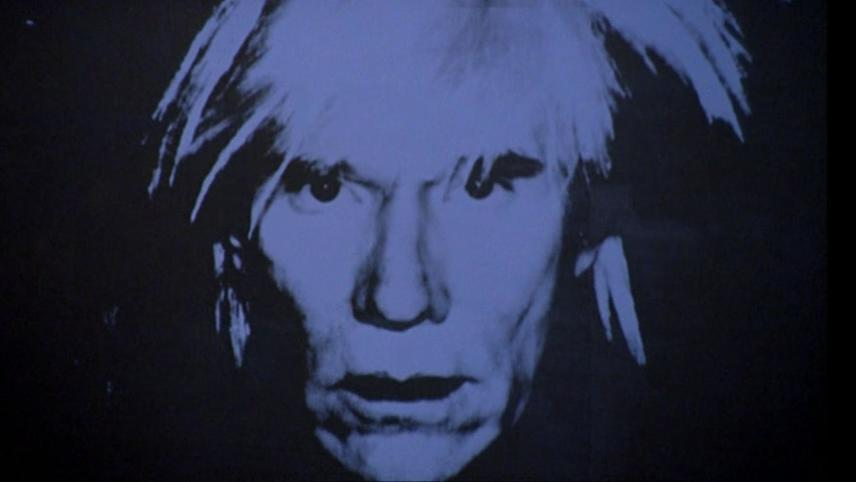
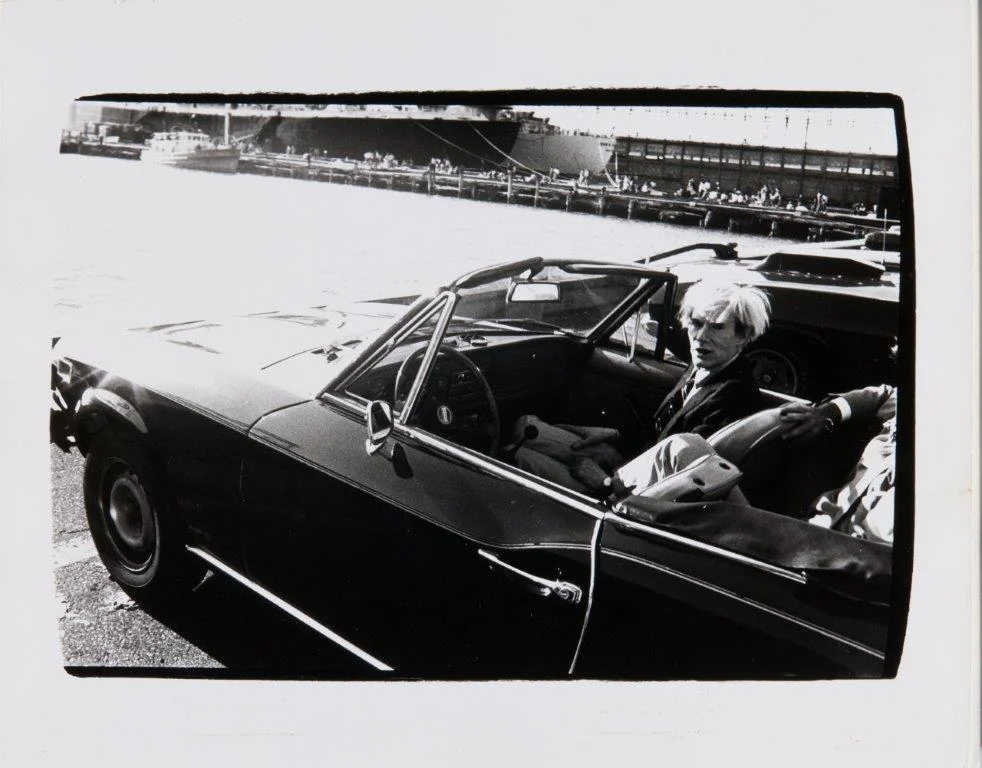
Few artists have blurred the boundaries between art, celebrity, commerce, and popular culture as completely as Andy Warhol. More than half a century after the rise of Pop Art, his influence can still be seen everywhere, from museum walls and fashion campaigns to social media culture and contemporary branding. Andy Warhol: A Documentary Film (2006), directed by Ric Burns, offers one of the most comprehensive portraits of the artist, tracing his journey from a commercial illustrator in Pittsburgh to one of the most recognizable and influential figures in modern art.
Rather than focusing only on Warhol’s iconic works, the documentary paints a fuller picture of the person behind them. It explores his early struggles, his fascination with mass media, and his belief that everyday consumer products could become subjects worthy of fine art. Familiar images like Campbell’s soup cans, Coca-Cola bottles, and the Marilyn Diptych weren’t simply bold visual experiments, they challenged traditional ideas about originality, celebrity, and what society chooses to value. Through archival footage, interviews, and historical context, the film reveals how Warhol transformed ordinary objects into cultural symbols that continue to shape artistic conversations today.
The documentary also takes viewers inside The Factory, Warhol’s legendary New York studio, where artists, musicians, filmmakers, writers, and celebrities gathered throughout the 1960s and 1970s. More than a workspace, The Factory became a creative laboratory where artistic disciplines collided, influencing everything from experimental film to music and performance art. It was here that Warhol redefined what it meant to be an artist, not just as a painter, but as a cultural producer who understood the growing relationship between creativity, media, and public image.
What makes Andy Warhol: A Documentary Film especially compelling is that it refuses to reduce Warhol to the silver-wigged public persona the world came to know. Behind the carefully constructed image was an intensely observant artist whose work explored consumerism, identity, mortality, and the growing influence of mass production. His ideas often anticipated the image-driven culture we live in today, making the documentary feel surprisingly contemporary despite focusing on events from decades ago.
For anyone interested in understanding contemporary art, this film is essential viewing. Warhol didn’t simply create memorable artworks, he fundamentally changed how artists think about culture, fame, reproduction, and the marketplace. Andy Warhol: A Documentary Film reminds us that his greatest masterpiece may not have been a single painting at all, but an entirely new way of understanding what art could be in the modern world.
The best art films don’t simply explain paintings or introduce famous artists, they reveal everything that happens before a masterpiece reaches a gallery wall. They show the relentless experimentation behind every brushstroke, the personal struggles that shape creative vision, the politics influencing major exhibitions, and the social movements artists help ignite. Together, these seven films offer a rare opportunity to experience the art world from the inside, uncovering the stories that are often hidden behind museum labels and auction headlines.
Whether it’s watching Gerhard Richter wrestle with uncertainty in his studio, stepping into Anselm Kiefer’s monumental creative universe, following Nan Goldin as she transforms photography into activism, or discovering how Andy Warhol forever blurred the line between art and popular culture, each film captures a different truth about what it means to create. Some celebrate artistic brilliance, while others expose the pressures, contradictions, and systems that shape the creative world. Collectively, they remind us that art is never made in isolation, it’s influenced by history, society, ambition, and deeply personal experiences.
If you’ve ever wanted to understand the art world beyond its exhibitions and headlines, these films are an excellent place to begin. They won’t just introduce you to remarkable artists, they’ll change the way you look at art itself.
Which of these films or documentaries would you watch first?
Still in the mood for more art? Continue the journey with Perfect Summer Day, an editorial exploring eight unforgettable paintings that celebrate the warmth, light, and quiet beauty of summer. It’s the perfect companion read after this cinematic journey through the art world.