


The 10 Most Expensive Artworks Ever Sold at Auction
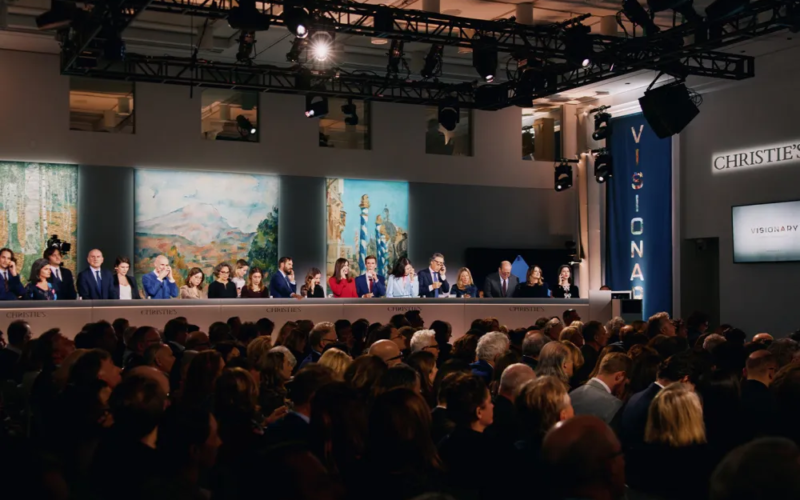
The room is silent except for the voice of the auctioneer.
A bidder raises a paddle. Another joins over the phone. The numbers climb higher and higher, $50 million, $100 million, $200 million, until applause erupts somewhere in the crowd. Within minutes, a painting becomes one of the most expensive artworks ever sold at auction, and headlines race across the world before the hammer has even fully fallen.
But moments like these are about far more than money.
Behind every record-breaking sale is a story filled with obsession, ambition, rivalry, mystery, and cultural power. Some of these artworks were once considered scandalous. Some disappeared for decades before reemerging into the spotlight. Others sparked debates so intense they transformed the art world itself. Yet all of them crossed an invisible threshold where paintings stopped being mere objects and became myths.
That transformation is part of what makes the auction world so endlessly fascinating. Auctions turn art into spectacle. They transform collectors into competitors and masterpieces into global events watched by millions. In these rooms, value becomes performance, shaped not only by artistic brilliance, but by rarity, history, status, and the irresistible desire to own something the rest of the world cannot.
And yet, the strangest thing about these astronomical sales is that the price is rarely the most interesting part.
Because long after the headlines fade and the bidding wars end, the artworks themselves remain. The Scream still captures human anxiety with terrifying precision. Shot Sage Blue Marilyn still reflects our obsession with celebrity and image. Salvator Mundi continues to provoke questions about authenticity, power, and mythmaking. Their prices may shock the world, but their cultural grip is what truly gives them lasting value.
From surreal dreamscapes and revolutionary abstractions to portraits that changed modern art forever, these are the artworks that transformed auctions into theater, and became some of the most desired cultural objects on Earth.
10. Empire of Light by René Magritte
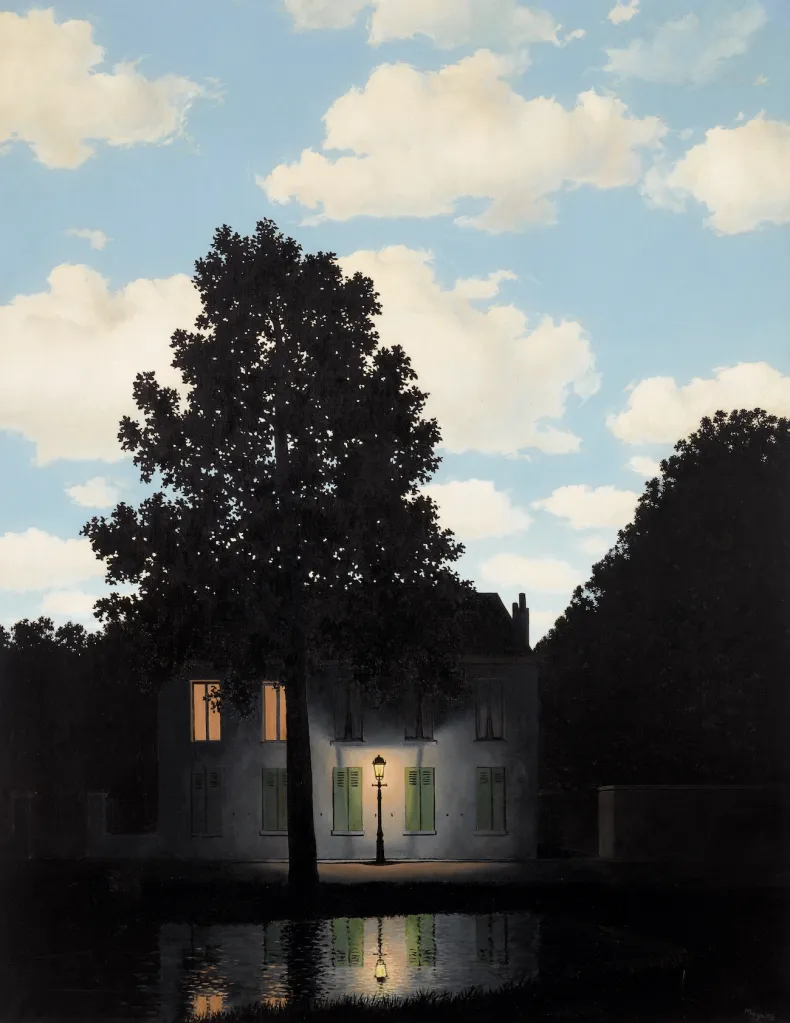
There are paintings that impress you instantly, and then there are paintings that quietly unsettle you long after you’ve looked away. Empire of Light belongs firmly to the second category. At first glance, it seems almost calm: a quiet street, a house hidden beneath trees, a glowing streetlamp cutting through the darkness. But above it all hangs a bright daytime sky filled with soft clouds, impossibly blue and impossibly wrong. The contradiction feels subtle at first, until your brain begins resisting what your eyes are seeing.
That tension is exactly what made collectors fight for it.
In November 2024, the 1954 version of Empire of Light sold for a staggering $121 million at Christie’s in New York, becoming the most expensive work by René Magritte ever sold at auction. But the sale felt bigger than a record-breaking number. It marked the moment surrealism fully entered the ultra-billion-dollar arena usually dominated by names like Picasso, Warhol, and Leonardo da Vinci.
Unlike explosive or dramatic masterpieces, Magritte’s power comes from restraint. He didn’t paint chaos; he painted certainty with tiny fractures hidden inside it. Empire of Light feels almost cinematic, like a frame from a dream where reality has been carefully rearranged. That unsettling elegance has made the series endlessly influential, inspiring filmmakers, photographers, fashion campaigns, and even psychological thrillers for decades.
Part of the painting’s appeal is also its mystery. Magritte returned to the Empire of Light theme more than 25 times throughout his career, almost obsessively, as though he himself couldn’t fully solve the image. Why does it feel comforting and eerie at the same time? Why does something so visually quiet feel emotionally loud?
At auction, those questions become part of the spectacle. Wealthy collectors are not simply buying paint on canvas, they are buying atmosphere, myth, and cultural immortality. And few artists understood the seductive power of mystery better than Magritte.
Even now, long after the auction headlines faded, Empire of Light continues to do what the greatest surrealist art always does: it leaves you suspended somewhere between reality and dream, unable to fully trust either.
9. The Scream by Edvard Munch
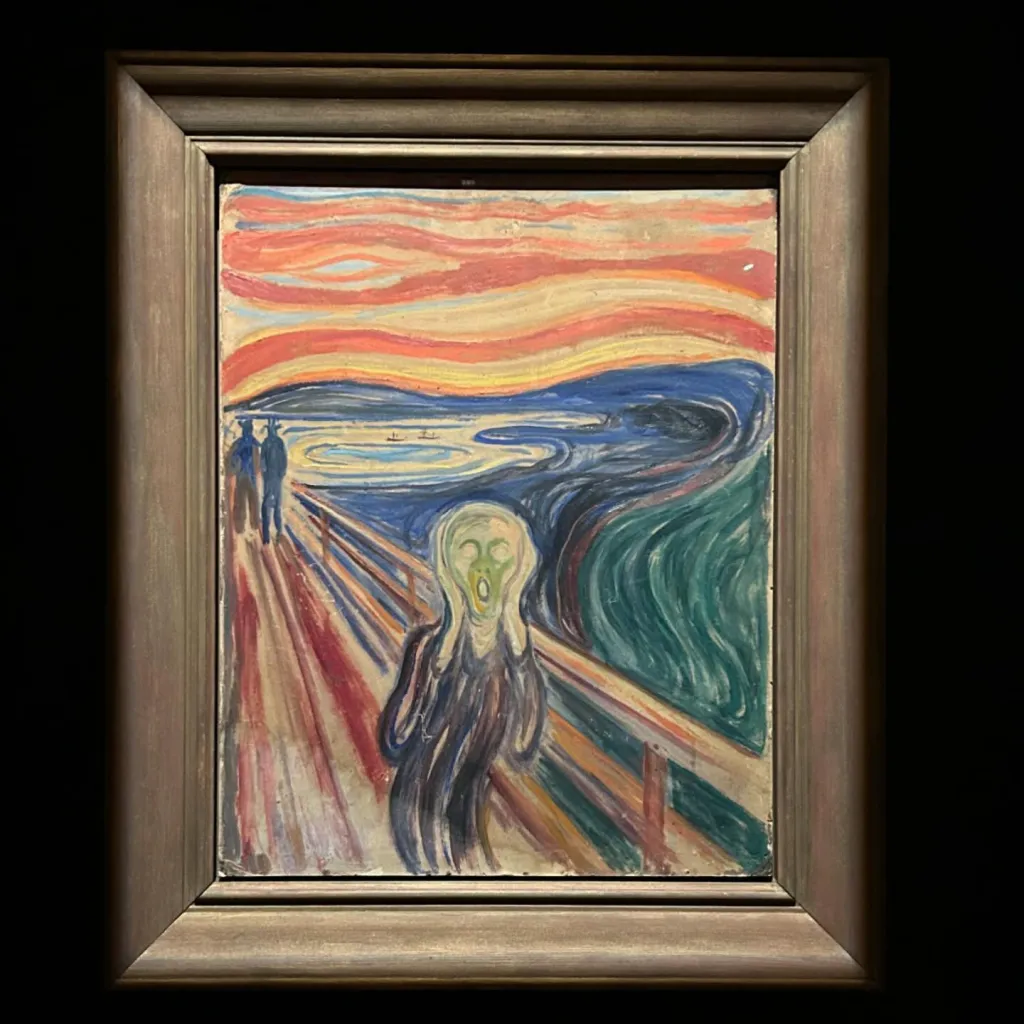
Few artworks have escaped the museum and entered global culture quite like The Scream. Today, it exists everywhere, on posters, memes, T-shirts, emojis, Halloween masks. But somewhere beneath all that reproduction, the image still retains its original force: pure psychological terror. The hollow face, the blood-orange sky, the sensation that the world itself has become unstable. More than a painting, The Scream feels like anxiety made visible.
That emotional power is part of what made its 2012 auction sale feel almost historic.
When the pastel version of The Scream sold at Sotheby’s New York for nearly $120 million, it became the most expensive artwork ever sold at auction at the time. The bidding war reportedly lasted around twelve intense minutes, with collectors battling over what was then the only version still held privately. For the art world, it wasn’t just another sale. It was the moment one of the most recognizable images in modern history officially entered the realm of financial mythology.
But unlike many blue-chip masterpieces associated with luxury and prestige, The Scream has always been rooted in fear. Edvard Munch once described the inspiration behind the work as a moment during a walk at sunset when he suddenly felt “an infinite scream passing through nature.” The painting emerged from loneliness, dread, and emotional instability, themes that would define much of modern art in the decades that followed.
That contradiction is what makes the auction result so fascinating. One of history’s most vulnerable artworks became one of its most expensive status symbols. Collectors weren’t simply buying a masterpiece; they were buying an image that had already embedded itself into the collective subconscious.
And perhaps that’s why The Scream still feels strangely contemporary. More than a century later, in an age defined by overstimulation, uncertainty, and emotional exhaustion, Munch’s figure standing beneath that violent sky still looks painfully familiar. The auction price may have stunned the world, but the real reason the painting endures is simpler: few artworks have ever captured human panic so completely.
8. Pointing Man by Alberto Giacometti
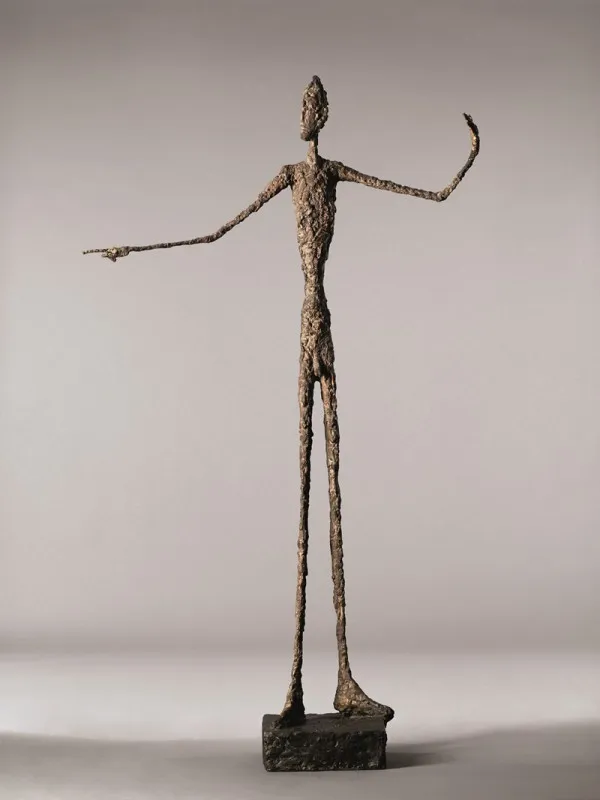
Long before minimalism became fashionable, Alberto Giacometti was already stripping the human figure down to something raw, fragile, and almost ghostlike. His sculptures don’t feel monumental in the traditional sense. They feel isolated. Nervous. Haunted. And yet somehow, they dominate every room they enter.
That paradox reached its peak with Pointing Man.
When the bronze sculpture sold at Christie’s New York in 2015 for more than $141 million, it became the most expensive sculpture ever sold at auction. Standing over five feet tall, the figure appears impossibly thin, almost as though it has been worn down by time itself. One arm stretches outward in a sharp gesture, while the other hangs rigidly at its side. The body looks fragile enough to collapse, yet emotionally, it feels overwhelming.
Unlike many record-breaking auction works drenched in color and spectacle, Pointing Man is severe and stripped bare. There is no background, no narrative, no decorative beauty to soften it. Giacometti reduced the human form to pure existence, a lonely figure standing in space, confronting the void. Created shortly after World War II, the sculpture carries the psychological weight of an era trying to rebuild itself after unimaginable destruction.
That emotional intensity is part of why collectors covet Giacometti so obsessively. His sculptures are not merely objects of luxury; they are existential symbols. Owning one feels less like possessing art and more like possessing a philosophical statement about humanity itself.
The auction also carried an air of rarity. Only a handful of casts of Pointing Man exist, and most already belong to major museums, making this one of the few opportunities private buyers would ever have to acquire it. In the high-stakes world of elite auctions, rarity creates urgency, and urgency creates astronomical prices.
But what makes Pointing Man unforgettable has little to do with its record-breaking sale. Even now, the sculpture feels startlingly modern. In its elongated limbs and uneasy stillness, Giacometti captured something timeless about being human: the tension between fragility and survival, isolation and presence. And perhaps that is why the figure continues to command attention decades later, still pointing somewhere, still refusing to let us look away.
7. Three Studies of Lucian Freud by Francis Bacon
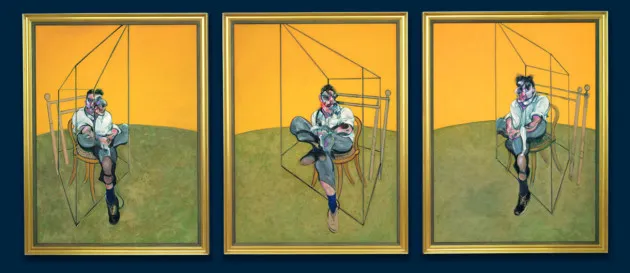
There is something almost confrontational about standing in front of a painting by Francis Bacon. His figures don’t simply occupy space, they seem to twist, distort, and psychologically unravel inside it. Faces melt into smears, bodies collapse into tension, and every brushstroke feels charged with emotional violence. Bacon never painted people as they appeared. He painted them as they felt.
That intensity reached its most famous form in Three Studies of Lucian Freud, the monumental triptych that sold for more than $142 million at Christie’s New York in 2013. At the time, it briefly became the most expensive artwork ever sold at auction, transforming the evening sale into a cultural event far bigger than the art market itself.
The painting depicts fellow artist Lucian Freud, Bacon’s longtime friend, rival, and occasional adversary. But these are not traditional portraits. Freud’s body appears contorted and restless, trapped within strange geometric interiors that feel simultaneously theatrical and claustrophobic. Looking at the work feels less like observing a person and more like witnessing a psychological exposure.
Part of the fascination surrounding the triptych came from its dramatic history. For years, the three panels had been separated after a dealer sold them individually in the 1970s. They remained apart for over a decade before eventually being reunited by a collector in the late 1980s. By the time the work arrived at auction, it already carried the aura of something nearly mythical, a masterpiece broken apart and restored to wholeness.
And then there is the relationship at its center. Bacon and Freud were two giants of postwar British art, bound together by admiration, competition, and tension. Their friendship eventually collapsed, which only deepened the mythology surrounding works like Three Studies of Lucian Freud. Collectors weren’t merely bidding on a painting; they were bidding on one of modern art’s most legendary creative relationships.
Even now, the work remains deeply unsettling. There is no comfort in Bacon’s paintings, no attempt to flatter either the sitter or the viewer. Instead, he forces us to confront the instability of identity itself. That may explain why the triptych continues to feel so contemporary decades later. In an era obsessed with curated appearances and controlled images, Bacon’s work still dares to show something messier, darker, and far more human underneath.
6. Reclining Nude by Amedeo Modigliani
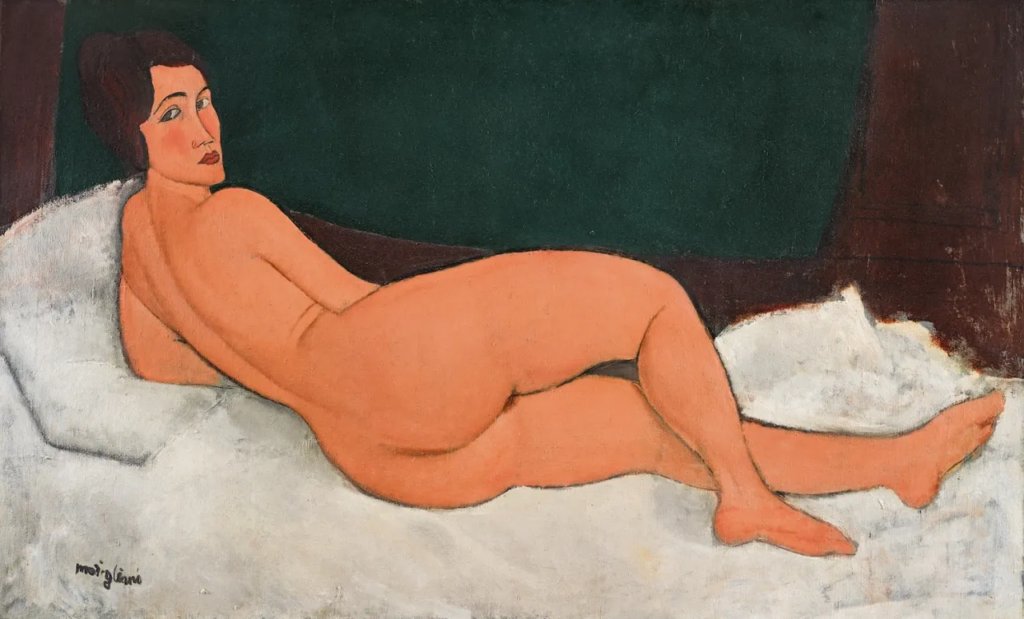
Some paintings become famous because they are beautiful. Others become famous because they once shocked the world. Reclining Nude managed to do both.
When the painting sold for more than $170 million at Christie’s New York in 2015, it instantly became one of the most expensive artworks ever sold at auction. But the fascination surrounding the work stretches far beyond its staggering price. Long before billionaires competed to own it, Modigliani’s nudes were considered scandalous enough to provoke outrage in Paris.
Painted between 1917 and 1918, Reclining Nude belongs to the artist’s legendary series of sensual portraits that radically transformed the tradition of the female nude. Unlike the polished mythological figures that dominated classical European painting, Modigliani’s women felt unapologetically modern. Their bodies were elongated, their gazes direct, their sensuality impossible to disguise. When these paintings were first exhibited in Paris in 1917, police reportedly shut the exhibition down within days after crowds gathered outside the gallery windows.
Today, that scandal feels almost impossible to imagine. The painting now hangs within the rarefied atmosphere of ultra-wealthy collecting, admired as both a masterpiece and a cultural trophy. Yet part of its power comes from the fact that it still feels intimate rather than distant. The figure stretches across the canvas with a kind of calm confidence, meeting the viewer without embarrassment or performance. There is vulnerability in the painting, but also control.
Modigliani himself became part of the mythology surrounding the work. The artist lived a famously tragic life marked by poverty, illness, addiction, and early death. He died at just thirty-five, never witnessing the astronomical value his paintings would eventually command. That tension, between the struggling artist and the unimaginable fortunes attached to his work decades later, continues to haunt the art market.
And perhaps that is why Reclining Nude still captivates audiences today. Beneath the auction headlines and record-breaking numbers lies something far more enduring: a painting that once challenged society’s boundaries and, more than a century later, still possesses the confidence to hold the viewer completely still.
5. Women of Algiers (Version O) by Pablo Picasso
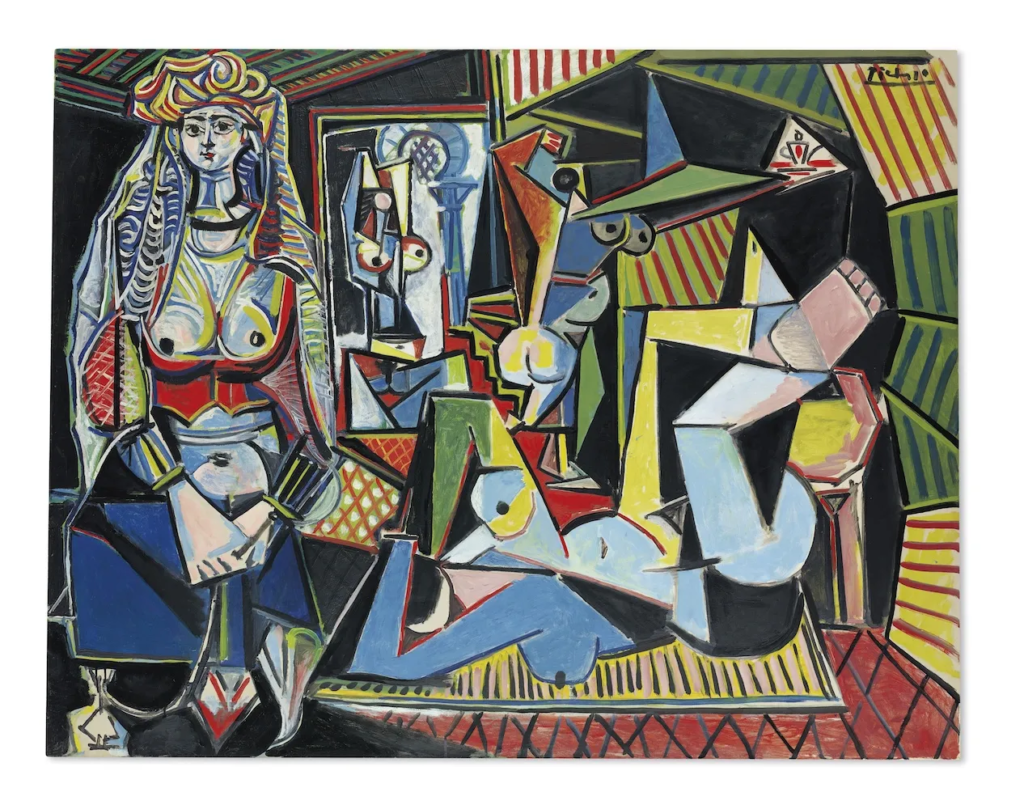
Few artists have dominated the art market quite like Pablo Picasso. Even decades after his death, his paintings still carry the aura of inevitability, as though every major auction house eventually circles back to Picasso whenever it wants to create history. But among all the masterpieces attached to his name, Women of Algiers (Version O) occupies a category of its own.
When the painting sold at Christie’s New York in 2015 for nearly $180 million, it became the most expensive artwork ever sold at auction at the time. The sale unfolded like a theater. Bidders competed entirely over the phone while the room watched the numbers rise into territory that still felt almost surreal. By the time the hammer fell, the audience reportedly erupted into applause, less like spectators at an auction and more like witnesses to a cultural event.
Part of the painting’s mystique comes from its scale and complexity. Completed in 1955, Women of Algiers (Version O) was the grand finale of Picasso’s 15-part series inspired by Eugène Delacroix’s nineteenth-century masterpiece of the same name. But Picasso transformed Delacroix’s Orientalist scene into something fractured, electric, and unmistakably modern. Bodies dissolve into sharp angles and explosive color, creating a composition that feels simultaneously luxurious and chaotic.
The painting also arrived at auction with extraordinary provenance. It once belonged to legendary collectors Victor and Sally Ganz, who purchased it directly from Picasso’s dealer in the 1950s. When the work returned to the market decades later, it carried not only artistic significance but also the mythology of elite collecting itself.
Yet beneath all the spectacle lies a deeper reason the painting continues to fascinate audiences. Picasso created the series during a period of political unrest surrounding Algeria’s struggle against French colonial rule, giving the work an undercurrent of tension often overshadowed by its auction record. Like many of Picasso’s greatest paintings, beauty and instability exist side by side.
That contradiction may explain why Women of Algiers (Version O) still feels so powerful today. It is dazzling, excessive, and deeply restless, a painting that refuses stillness. And in the hyper-competitive world of high-end auctions, restlessness has a way of becoming irresistible.
4. Number 7A, 1948 by Jackson Pollock
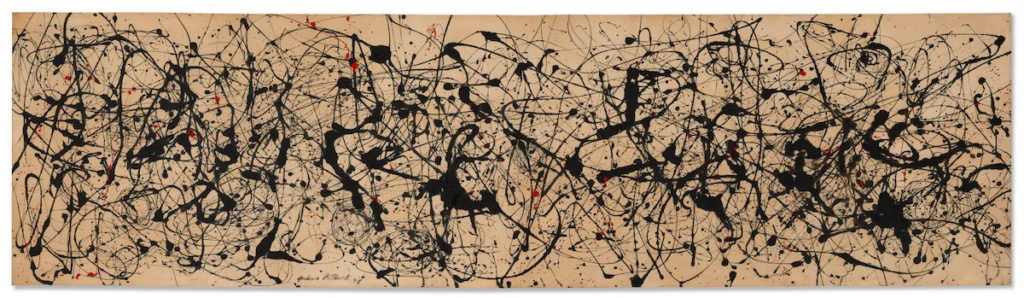
At first glance, Number 7A, 1948 can look almost impossible to understand. There is no recognizable figure, no landscape, no obvious focal point, only violent tangles of black paint stretched across a massive canvas. To some viewers, it feels chaotic. To others, revolutionary. But that tension has always been central to the mythology of Jackson Pollock himself: the artist who transformed paint into performance and turned abstraction into spectacle.
When Number 7A, 1948 sold at Christie’s New York in 2026 for more than $181 million, it became one of the most expensive artworks ever sold at auction. The result stunned even seasoned market watchers. The painting had entered the sale with a $100 million estimate, already an enormous figure, but the bidding quickly spiraled far beyond expectations. After dozens of bids and several tense minutes inside Christie’s salesroom, the final number landed deep into record-breaking territory.
Part of the frenzy surrounding the work came from timing. Pollock painted Number 7A in 1948, just after inventing the drip technique that would permanently change modern art. Rather than carefully applying paint with a brush, he flung, poured, and splattered it across canvases laid on the floor, allowing gravity, movement, and chance to become collaborators in the process. The result was radical. Painting no longer documented reality; it became an event in itself.
That idea helped elevate Pollock into a cultural icon. He embodied the image of the tortured American genius, brilliant, self-destructive, and endlessly mythologized. His chaotic working process became almost as famous as the paintings themselves, transforming him into one of the defining artistic figures of the twentieth century.
And yet, what makes Number 7A fascinating today is not simply its place in art history. It is the way the painting still feels alive. The looping black lines vibrate with movement, as though the energy of Pollock’s gestures remains trapped inside the canvas decades later. In a world increasingly obsessed with control and precision, Pollock’s work still carries the thrill of unpredictability.
That may ultimately explain the astronomical auction result. Collectors were not just bidding on abstraction. They were bidding on the moment modern art broke free from convention entirely, and on the artist who turned chaos into one of the most valuable visual languages in history.
3. Shot Sage Blue Marilyn by Andy Warhol
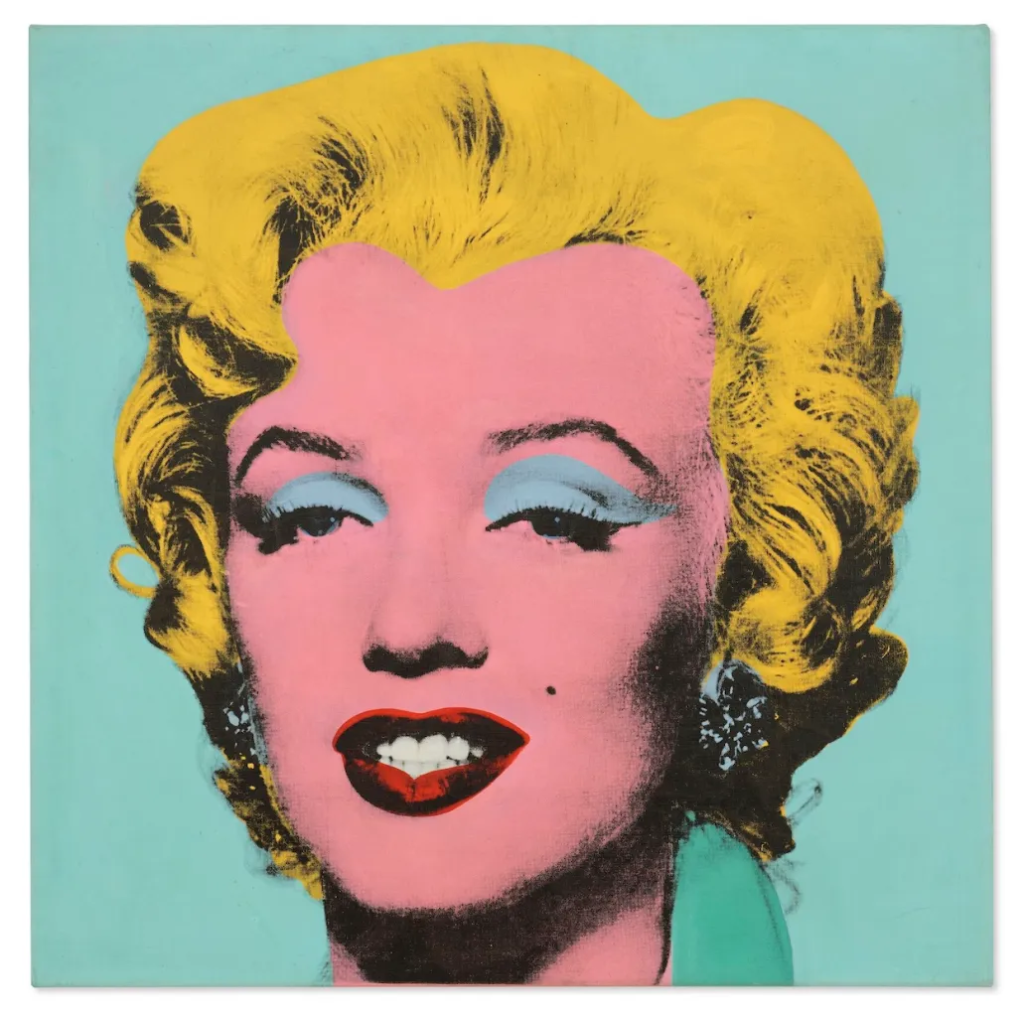
Few artworks capture the strange collision between celebrity, beauty, tragedy, and commerce quite like Shot Sage Blue Marilyn. The image is instantly recognizable: Marilyn Monroe’s face floating against a vivid turquoise background, her features flattened into bold blocks of color that feel both glamorous and strangely artificial. It is one of the defining images of modern culture, and perhaps one of the clearest examples of how fame itself became a form of art in the twentieth century.
When the painting sold at Christie’s New York in 2022 for $195 million, it became the most expensive twentieth-century artwork ever sold at auction. The sale immediately dominated headlines around the world, not only because of the staggering price but because the artwork already existed so deeply inside public consciousness. Unlike many blue-chip masterpieces known mostly within elite art circles, Warhol’s Marilyn had long transcended the museum world. It was already part of global visual culture.
That familiarity is precisely what made Warhol revolutionary. Long before social media transformed celebrity into a nonstop spectacle, Warhol understood that repetition could turn a person into an icon and eventually into a product. Using a publicity photograph from the 1953 film Niagara, he reproduced Monroe’s face again and again through silkscreen printing, draining the image of intimacy while simultaneously making it immortal.
But beneath the dazzling colors lies something darker. Monroe had died only two years before Warhol created the “Marilyn” series, and the paintings carry an eerie emotional distance, as though fame itself had consumed the person underneath. The work feels glamorous and unsettling at the same time, a celebration of celebrity that also exposes its emptiness.
Even the painting’s title contains mythology. The “Shot Marilyns” earned their name after performance artist Dorothy Podber reportedly fired a gun through a stack of Warhol’s canvases in 1964. In typical Warhol fashion, the bizarre incident only deepened the legend surrounding the works.
Today, Shot Sage Blue Marilyn feels less like a painting and more like a mirror reflecting modern culture back at itself. In an age built around images, branding, and endless visibility, Warhol’s portrait remains uncannily relevant. The auction price may have cemented its financial value, but its real power lies elsewhere: in the uncomfortable realization that celebrity itself may be one of the most enduring artistic inventions of the modern era.
2. Portrait of Elisabeth Lederer by Gustav Klimt
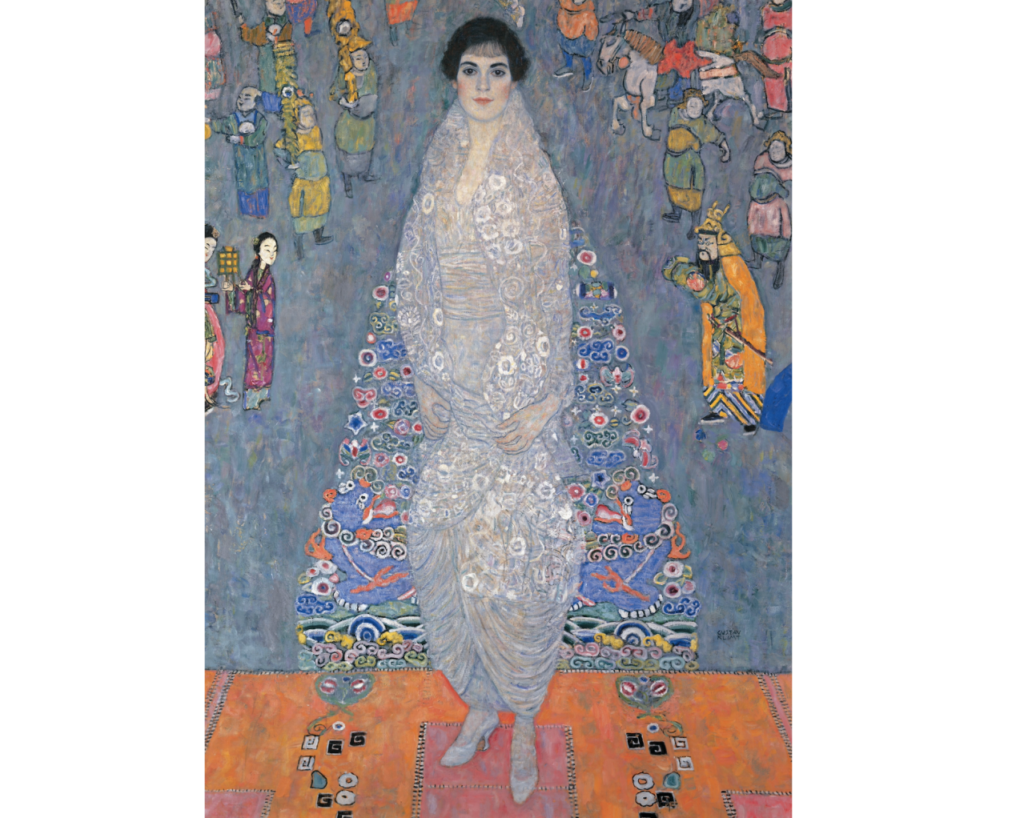
There are portraits that document a person, and then there are portraits that seem to transform them into legend. Portrait of Elisabeth Lederer belongs unmistakably to the second category. Painted between 1914 and 1916, the work radiates the opulence that made Gustav Klimt one of the most seductive painters of the early twentieth century: shimmering textures, elaborate patterns, and a figure that appears suspended somewhere between reality and ornament.
When the painting sold at Sotheby’s in 2025 for more than $236 million, it instantly became one of the most expensive artworks ever sold at auction. But unlike many record-breaking sales driven purely by market spectacle, this painting carried an extraordinary historical weight long before the bidding began.
Elisabeth Lederer belonged to one of Vienna’s influential cultural families, part of the wealthy Jewish elite who supported Klimt during the height of his career. The portrait emerged during the final years of the Austro-Hungarian Empire, a period marked by elegance on the surface and instability underneath. That atmosphere lingers inside the painting itself. Klimt surrounds his subject with dazzling decorative detail, yet there is also a quiet emotional distance in her gaze, as though the glamour cannot entirely conceal the uncertainty of the era closing in around her.
The work’s journey through history only deepened its significance. Like many masterpieces connected to prominent Jewish families in Europe, the painting became entangled in the devastation of the Second World War and questions surrounding ownership, confiscation, and restitution. By the time it arrived at auction decades later, it represented not just artistic brilliance but survival, a work that had passed through some of the darkest chapters of the twentieth century before reemerging onto the global stage.
And then there is Klimt himself. Few artists have mastered luxury quite the way he did. Gold leaf, intricate surfaces, and sensual compositions made his paintings feel almost jewel-like, objects designed to mesmerize viewers entirely. Yet beneath that beauty lies something more fragile: a portrait of a disappearing world standing at the edge of collapse.
Perhaps that is why the auction result felt so monumental. Buyers were not simply competing for another masterpiece. They were competing for a painting that embodies wealth, history, tragedy, and glamour all at once, the very qualities that continue to make Klimt’s work feel timeless more than a century later.
1. Salvator Mundi by Leonardo da Vinci
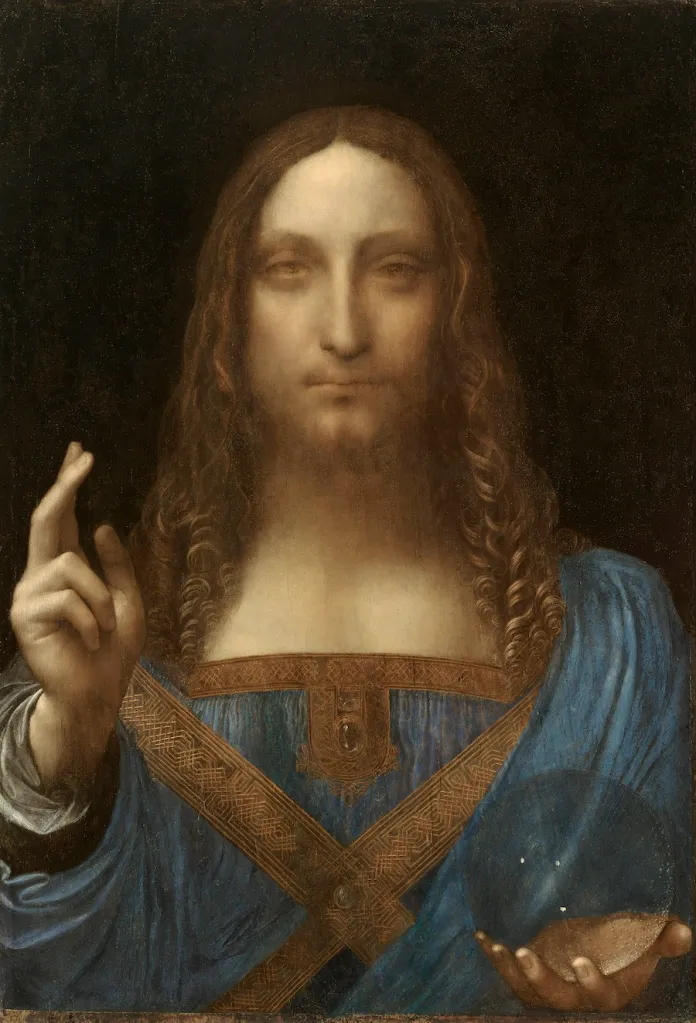
No artwork on this list carries more mystery, controversy, or mythology than Salvator Mundi. Even before it shattered every auction record in history, the painting already felt like a legend, a lost masterpiece rediscovered, endlessly debated, and transformed into one of the art world’s most polarizing obsessions.
When the painting sold at Christie’s New York in 2017 for an astonishing $450 million, the auction instantly became cultural history. The bidding unfolded over nearly twenty minutes inside a packed salesroom as spectators watched the numbers climb into territory previously unimaginable for a single artwork. Applause reportedly erupted once the bids crossed $200 million, and by the end of the night, the sale had completely rewritten expectations about what art could be worth.
But unlike many masterpieces celebrated without question, Salvator Mundi arrived at auction wrapped in uncertainty. The painting depicts Christ holding a crystal orb, rendered with the delicate softness associated with Leonardo da Vinci. Yet ever since the work resurfaced in the early 2000s, experts have fiercely debated how much of it was truly painted by Leonardo himself. Some scholars consider it an authentic masterpiece; others believe large portions were heavily restored or executed by assistants.
That ambiguity only intensified public fascination. The painting had once sold for barely over a thousand dollars in 2005 after being attributed to a follower of Leonardo. Years later, after restoration and reattribution, it reentered the art world transformed into the ultimate cultural trophy. Few stories capture the strange machinery of the modern art market more perfectly than that leap, from overlooked object to nearly half-a-billion-dollar icon.
Christie’s understood the spectacle completely. Instead of marketing the work like an Old Master painting, the auction house promoted it almost like a global entertainment event, sending it on an international tour and presenting it as “the last Leonardo.” The strategy worked brilliantly. Collectors were no longer simply bidding on Renaissance artwork; they were bidding on rarity, mystery, status, and the possibility of owning a piece of art history itself.
And perhaps that is why Salvator Mundi continues to dominate conversations years later. Its true power lies not only in the painting, but in the questions surrounding it. Is it genuinely a Leonardo? Does authorship matter once mythology takes over? At what point does an artwork stop being an object and become a symbol?
In many ways, Salvator Mundi represents the modern auction world perfectly: part masterpiece, part spectacle, part mystery, and impossible to ignore.
For all the spectacle surrounding billion-dollar auctions, the fascination with these artworks ultimately goes far beyond money. Yes, the numbers are staggering. They dominate headlines, fuel debates, and turn auction houses into arenas of global attention. But what keeps these works alive decades, and sometimes centuries, later is not simply what they sold for. It is what they continue to make people feel.
The paintings on this list are wildly different from one another. The Scream captures anxiety so vividly it still feels modern. Shot Sage Blue Marilyn transforms celebrity into something haunting and eternal. Number 7A, 1948 turns chaos into movement, while Empire of Light quietly unsettles reality itself. Some works scandalized society when they first appeared. Others sparked fierce debates about authenticity, ownership, or cultural power. Yet every painting here managed to cross the invisible line between artwork and myth.
That transformation is what auctions truly reveal. These sales are not just financial transactions, they are moments where culture, status, obsession, history, and spectacle collide in public view. Wealthy collectors may compete for ownership, but the artworks themselves already belong to something much larger: collective imagination.
And perhaps that is the strangest part of all. The higher the prices climb, the more these works seem to escape money entirely. A painting can sell for hundreds of millions, yet its real value still remains impossible to calculate. How do you price an image that changed visual culture forever? A sculpture that captured postwar loneliness? A portrait that became a symbol of celebrity itself?
Maybe that is why the world keeps watching these auctions with such fascination. Beneath the glamour and excess lies a deeper question, one that has followed art for centuries: why do certain images continue to hold such extraordinary power over us?
And judging by these record-breaking sales, that power shows no sign of fading anytime soon. If you could own one artwork from this list, which would you choose?
If you enjoyed exploring these record-breaking auction sales, you might also like Million-Dollar Mistakes of the Art World.