


10 Must-See Exhibitions to See in May 2026
From Brussels to London, these are the exhibitions shaping the art world this month.
Every month brings an overwhelming number of exhibitions, openings, and art world moments competing for attention. But every now and then, a handful of shows emerge that feel impossible to ignore, not necessarily because they are the biggest, but because they stay with you long after you’ve seen them.
The best Exhibitions to See in May 2026 are exploring memory, migration, materiality, identity, surveillance, and emotional space through installations, photography, painting, sculpture, and film. Across galleries and institutions worldwide, the exhibitions unfolding right now feel quieter, stranger, and more psychologically charged in ways that feel especially compelling.
From Delcy Morelos’s monumental earthwork installation in London to Sheida Soleimani’s layered photographic worlds in Brussels, these are the exhibitions we think are worth paying attention to this month.
Delcy Morelos: origo
Barbican Sculpture Court, London
May 15 – July 31, 2026
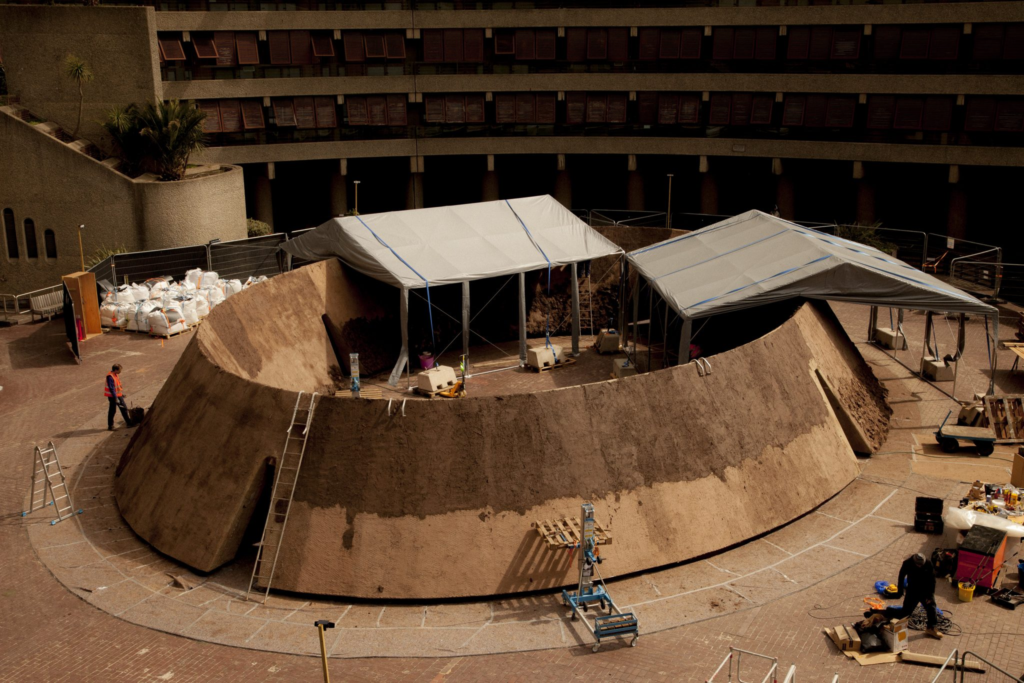
For the first time in nearly a decade, the Barbican Sculpture Court has been transformed into an immersive installation, this time by Colombian artist Delcy Morelos, whose large-scale earthworks have steadily become some of the most quietly powerful installations in contemporary art today.
Titled origo, the work is constructed almost entirely from natural materials: clay, soil, hay, seeds, and aromatic spices layered into a monumental architectural form that visitors physically move through. Rather than presenting sculpture as something static or distant, Morelos creates an environment that surrounds the body completely. The experience unfolds slowly. As viewers walk through the structure’s tunnel-like openings, smell, texture, silence, and scale become just as important as what is visually seen.
There’s a stillness to the installation that feels unusually grounding, especially within the concrete geometry of the Barbican itself. Morelos’s practice often draws from Indigenous understandings of land, memory, spirituality, and the body, and those ideas quietly shape the atmosphere of origo without becoming overly explanatory.
What makes the exhibition especially compelling is how physical it feels. The earth doesn’t simply become material here, it becomes architecture, shelter, memory, and presence all at once.
At a moment when immersive exhibitions often lean heavily on spectacle, origo feels refreshingly restrained. It asks viewers not to consume the work quickly, but to slow down long enough to sit inside it.
Sheida Soleimani: Flyways
Harlan Levey Projects, Brussels
Through June 27, 2026
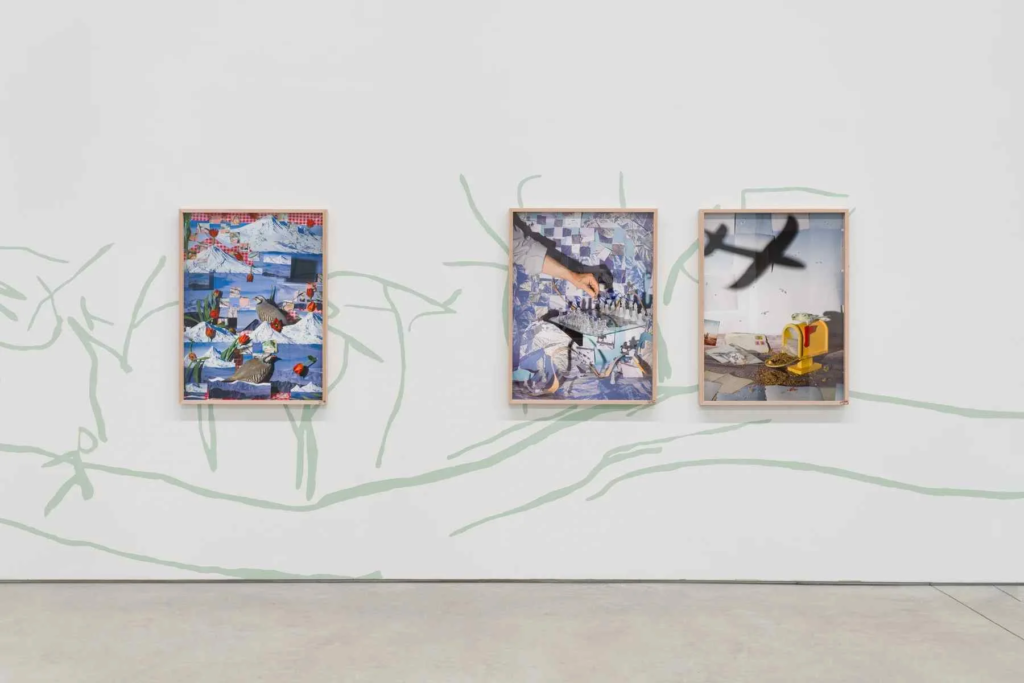
In Flyways, Sheida Soleimani continues to blur the boundaries between activism, family history, and staged photography through a body of work that feels both deeply personal and politically urgent.
Presented at Harlan Levey Projects, the exhibition brings together works from Soleimani’s ongoing “Ghostwriter” and “Flyways” series, alongside a new film titled Wave (2025). Across the photographs, carefully constructed sets unfold through layered symbolism, vibrant color, taxidermy references, archival imagery, hand-drawn elements, and recurring appearances by migratory birds, creatures that become central metaphors for displacement, survival, and resilience.
Soleimani’s practice has long been informed by her parents’ exile from Iran, and that history continues to shape the emotional core of the work. Yet what makes these images especially compelling is the way they expand beyond autobiography. The photographs never feel purely documentary or purely surreal. Instead, they exist somewhere in between, balancing political critique with emotional intimacy.
Bird rescue and rehabilitation, which has become an important part of Soleimani’s life outside the studio, also quietly informs the exhibition’s atmosphere. Acts of care become forms of resistance. Healing becomes political.
Despite the density of the imagery, the exhibition never feels visually overwhelming. Each composition rewards slow looking, allowing details, textures, and symbols to emerge gradually over time.
In Flyways, survival is never presented as passive. It becomes something active, fragile, and fiercely sustained.
K. T. Kobel: Hand, Body, Object, Sin
Kutlesa, Switzerland
Through May 29, 2026
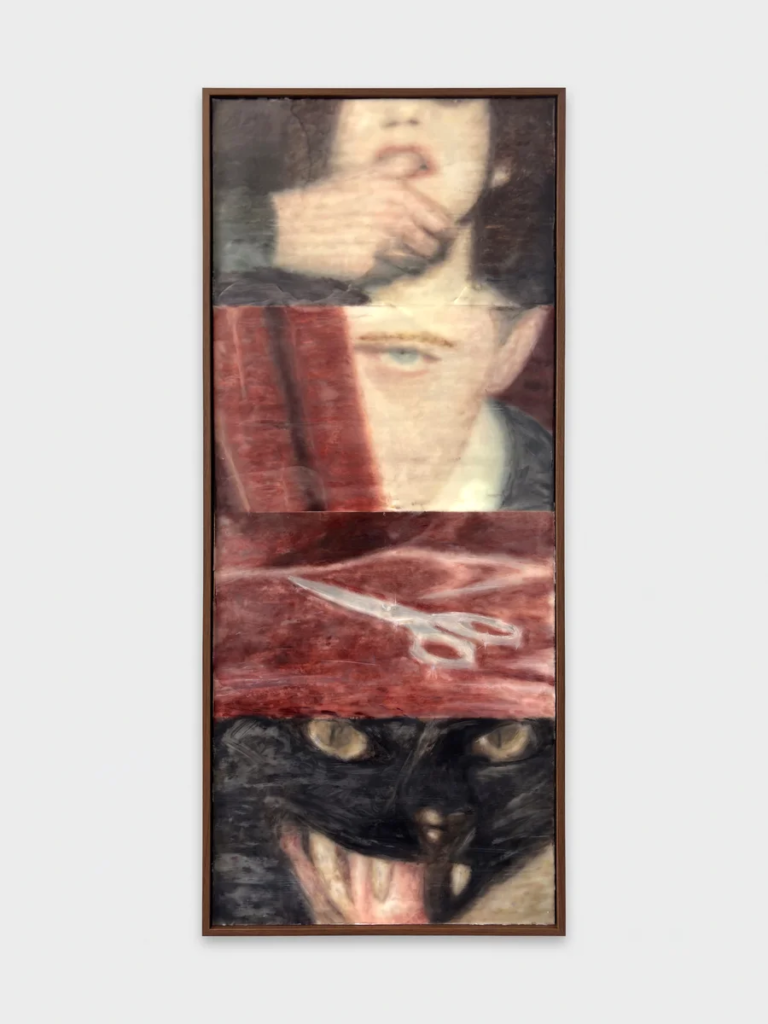
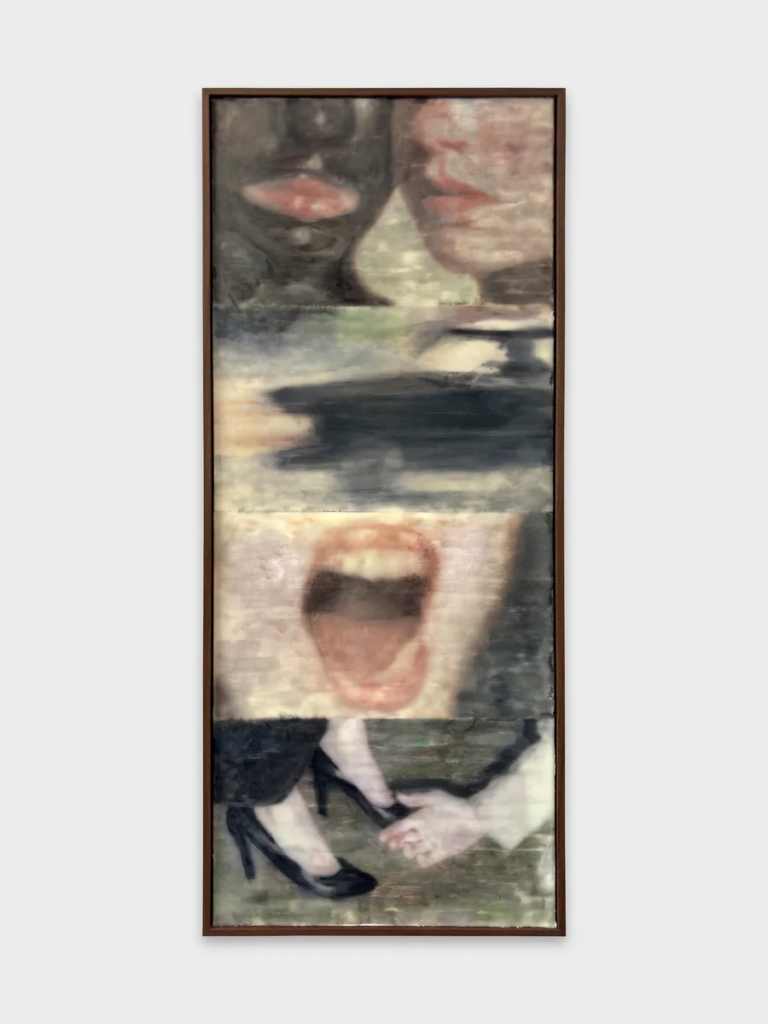
There’s something undeniably cinematic about the paintings of K. T. Kobel, though the narratives they suggest never fully reveal themselves.
In Hand, Body, Object, Sin, presented at Kutlesa, Kobel constructs fragmented visual sequences that feel suspended somewhere between horror cinema, memory, and dream logic. Each work is divided into stacked scenes contained within a single wooden frame, allowing disconnected moments to unfold vertically like frames from an unfinished film.
A hissing black cat appears in one painting. Elsewhere, latex-clad figures, empty interiors, screaming mouths, and shadowed gestures emerge through hazy surfaces rendered in pigment transfer, acrylic, and encaustic. The imagery references the visual language of cult horror and Spaghetti Slashers, yet the paintings resist becoming straightforward cinematic homage.
Instead, ambiguity becomes central to the work.
Kobel’s compositions never fully explain themselves, and that unresolved tension is precisely what gives them their psychological charge. The viewer is left constructing relationships between fragments, searching for narrative where none is entirely fixed.
What makes the exhibition especially compelling is its atmosphere. The paintings feel unsettling without becoming theatrical, balancing seduction and discomfort with remarkable restraint. Even the quieter moments within the works carry a strange emotional pressure.
At a time when so much contemporary imagery demands instant readability, Kobel’s paintings ask for something slower. They invite viewers to sit with uncertainty, allowing meaning to emerge gradually rather than all at once.
Audie Murray: soul meets body
April April, Pittsburgh
May 9 – June 27, 2026
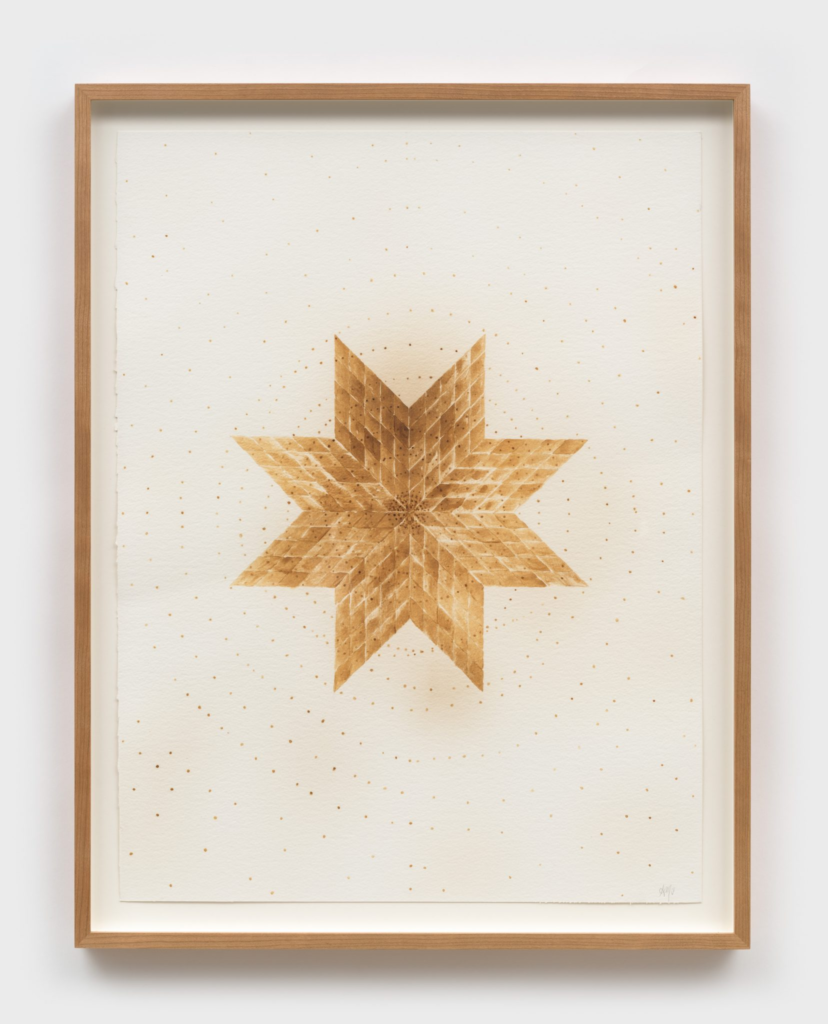
One of the most intimate exhibitions this month comes from Audie Murray, whose practice consistently moves between sculpture, beadwork, installation, and material storytelling with remarkable emotional precision.
Presented in April, soul meets body brings together works made from deeply personal materials including hair, breast milk, worn garments, copper wire, textiles, and glass beads. Across the exhibition, ordinary objects are transformed into vessels carrying memory, protection, ancestry, and spiritual significance.
Several works draw from Cree creation stories, particularly recurring spiderweb motifs that appear woven throughout the beadwork and sculptural forms. These references quietly shape the exhibition’s atmosphere without becoming overly illustrative. Murray allows symbolism to emerge slowly through material and gesture rather than direct explanation.
What makes the exhibition especially affecting is the way vulnerability exists alongside strength. The works feel delicate, but never fragile. Even the smallest details carry weight, a stretched fabric surface, a strand of hair threaded through beads, a worn garment preserved as both object and trace.
There’s also a strong sense of care running throughout the exhibition. Care for the body, for inherited knowledge, for memory, and for the histories materials themselves can hold.
Rather than separating personal experience from larger cultural narratives, Murray allows them to exist together seamlessly. The result is an exhibition that feels deeply grounded, emotionally resonant, and quietly unforgettable.
Global Positioning System
Jameel Arts Centre, Dubai & Hayy Jameel, Jeddah
May – October 2026
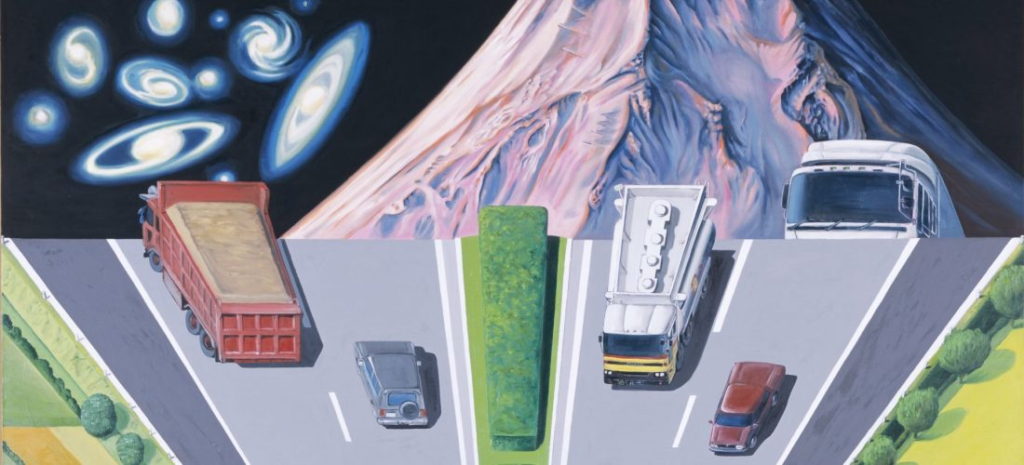
Spread across both Jameel Arts Centre and Hayy Jameel, Global Positioning System examines movement, surveillance, navigation, borders, and uncertainty through the work of international contemporary artists responding to an increasingly monitored world.
The exhibition takes its title from the technology designed to orient us, but the works gathered here are far more interested in moments of disorientation. Through installation, video, sculpture, photography, and conceptual interventions, the artists question how geography, territory, and identity are constructed, tracked, and controlled.
Several works focus directly on systems of mapping and migration. Others approach navigation more psychologically, exploring what it means to move through spaces shaped by surveillance, conflict, and political instability. Across the exhibition, borders appear less fixed and more fragile than they initially seem.
What makes the Global Positioning System especially compelling is the way it balances large geopolitical themes with quieter emotional tensions. The exhibition never feels overly didactic despite the urgency of its subject matter. Instead, it creates an atmosphere of uncertainty where viewers are asked to sit with interruption, displacement, and instability rather than resolve them neatly.
At a moment when conversations around migration, territory, and surveillance continue to dominate global politics, the exhibition feels especially timely. Yet it also resists becoming purely reactive.
Instead, the Global Positioning System asks larger questions about orientation itself, how we locate ourselves physically, emotionally, and politically within systems that are constantly shifting around us.
Sara Cwynar: Baby Blue Benzo Beta
MOCA Toronto
May 15 – August 16, 2026
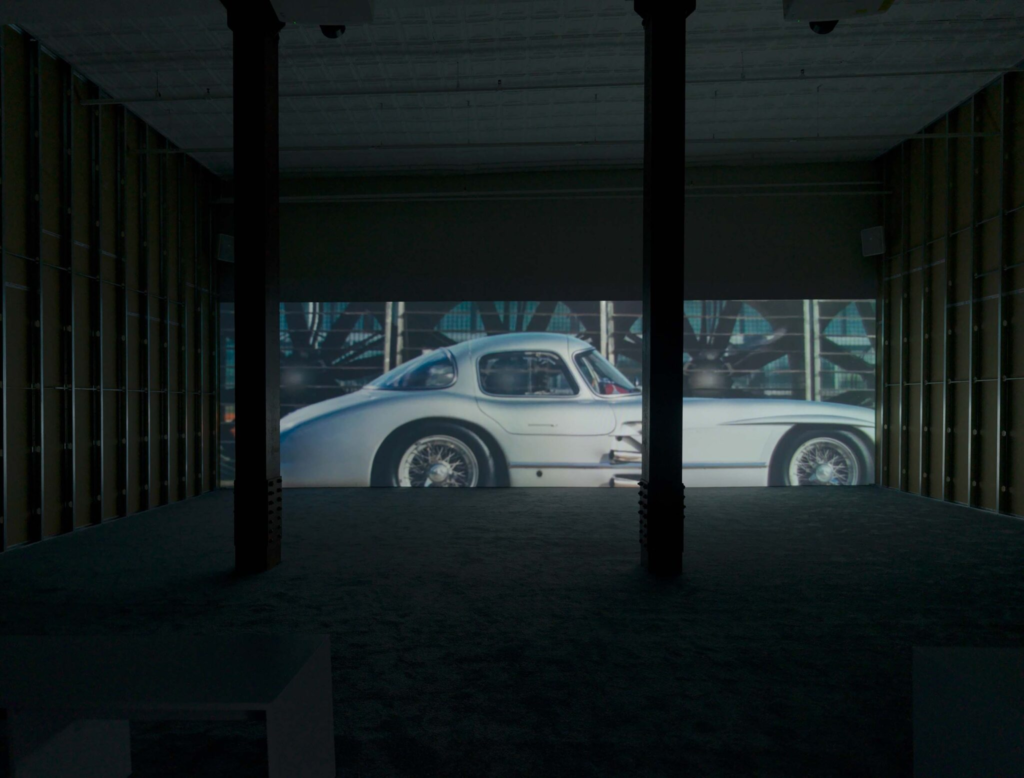
Over the past few years, Sara Cwynar has become one of the most compelling artists examining the visual overload of contemporary life. Through photography, film, collage, and installation, her work consistently dissects the systems shaping consumer desire, internet culture, advertising, and the endless circulation of images online.
In Baby Blue Benzo Beta, presented at Museum of Contemporary Art Toronto, Cwynar transforms the gallery into something between a showroom, film set, archive, and digital collage. At the center of the exhibition is Baby Blue Benzo (2024), a research-driven film connecting luxury branding, pharmaceutical aesthetics, online imagery, and systems of value through layered visual associations that unfold rapidly across the screen.
Around it, modular installations and sculptural elements extend the film’s atmosphere into physical space. Familiar objects, fragmented imagery, product references, and carefully staged arrangements blur distinctions between commercial display and artistic construction.
What makes Cwynar’s work especially sharp is the way it captures how contemporary desire is manufactured visually. Her installations feel seductive and overwhelming at the same time, mirroring the experience of constantly moving through image-saturated digital environments.
Despite the density of references, the exhibition never feels inaccessible. Instead, viewers are invited to notice how images quietly shape memory, aspiration, beauty, status, and emotional response without us fully realizing it.
Baby Blue Benzo Beta doesn’t simply critique image culture from a distance. It places viewers directly inside its mechanisms, exposing how deeply these systems have become embedded into everyday life.
John Vitale: TIME ISN’T AFTER US
Court Tree Collective, New York
May 2 – June 6, 2026
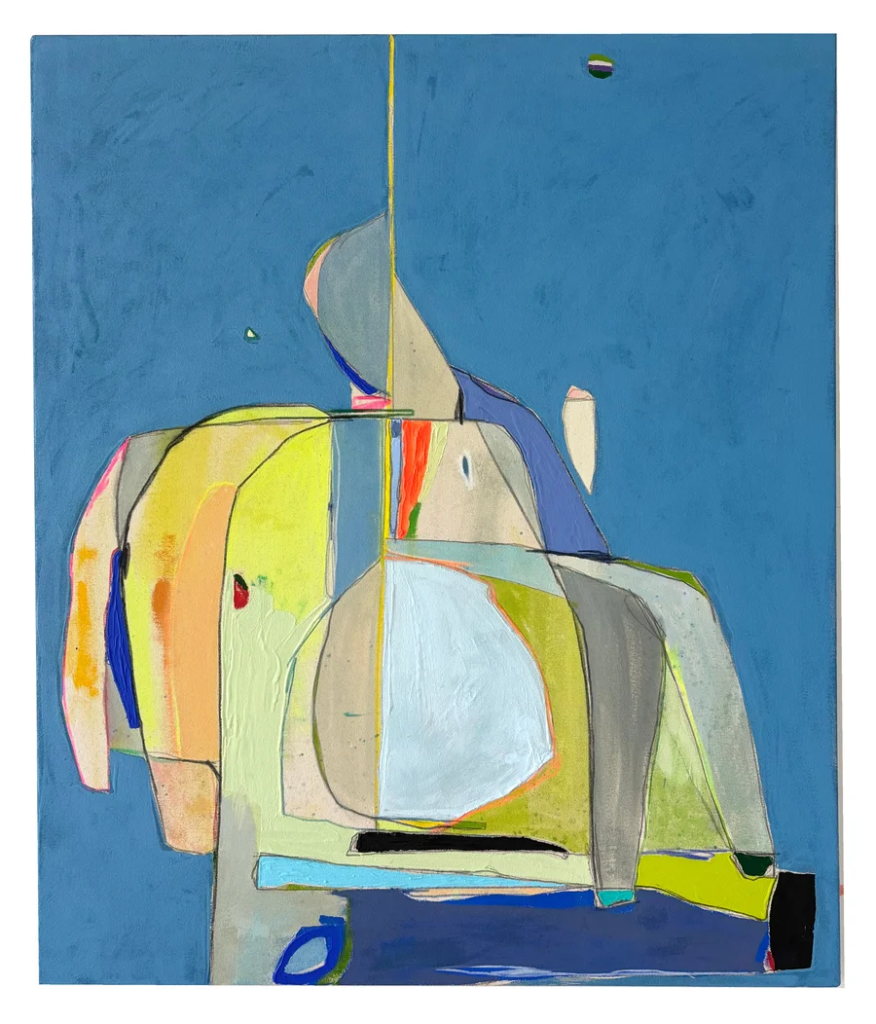
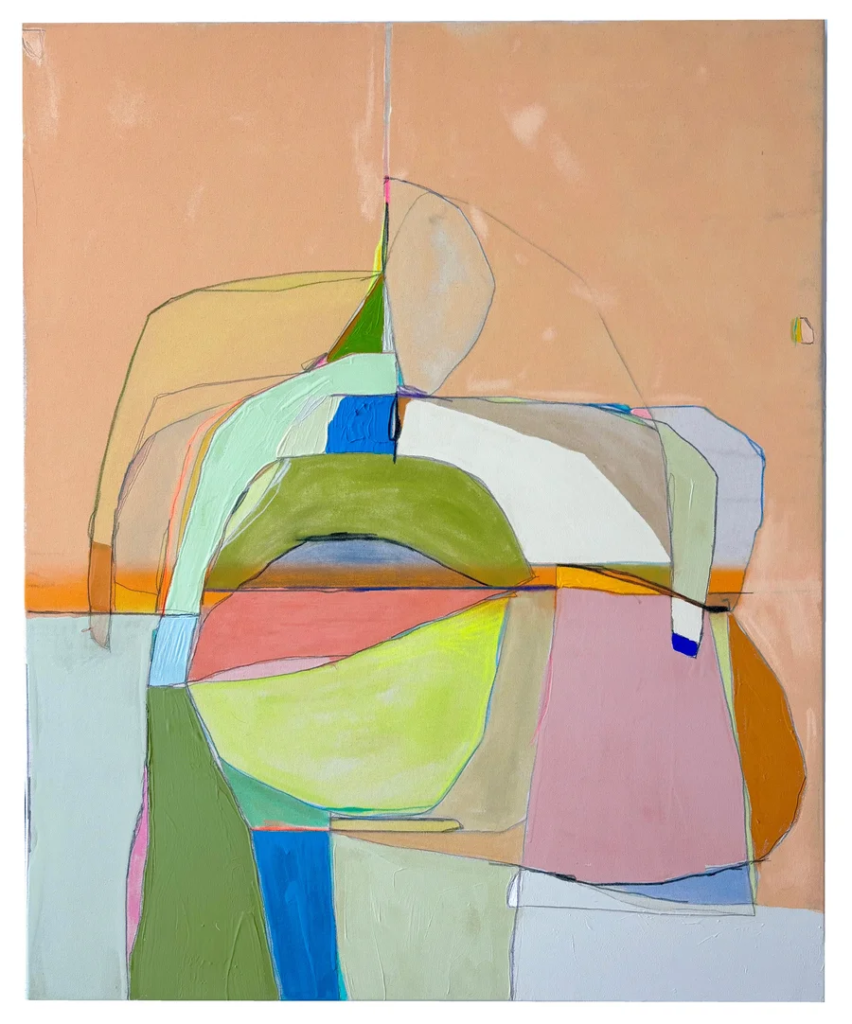
There’s an ease to the paintings in John Vitale’s latest exhibition, though beneath their softness sits something slightly stranger and more emotionally unsettled.
Presented at Court Tree Collective, TIME ISN’T AFTER US brings together a new body of abstract works balancing gesture, rhythm, and improvisation through layered surfaces of acrylic, spray paint, house paint, pencil, and china marker on raw canvas.
Pastel forms drift across dark voids while circular portals, loose geometric structures, and energetic marks create compositions that feel almost musical in movement. Critics have often compared Vitale’s paintings to rhythm or sound, and the comparison makes sense here. The works seem to move through pauses, repetitions, interruptions, and bursts of momentum rather than fixed visual systems.
At the same time, small surreal details quietly disrupt the calmness of the paintings. Forms appear playful one moment and vaguely unsettling the next. That instability keeps the work from becoming purely meditative abstraction.
What makes the exhibition especially engaging is how physical Vitale’s hand remains throughout the paintings. Despite their openness and fluidity, the surfaces retain evidence of revision, pressure, layering, and movement. Nothing feels overly polished or controlled.
There’s also a surprising warmth to the exhibition. Even in its darker moments, the work never feels distant from the viewer.
Instead, TIME ISN’T AFTER US creates a space where abstraction becomes less about formal perfection and more about emotional atmosphere, intuition, and the strange unpredictability of perception itself.
Terra Incognita (Unknown Land) – Part II
Al-Tiba9 Gallery, Barcelona
May 14 – July 25, 2026
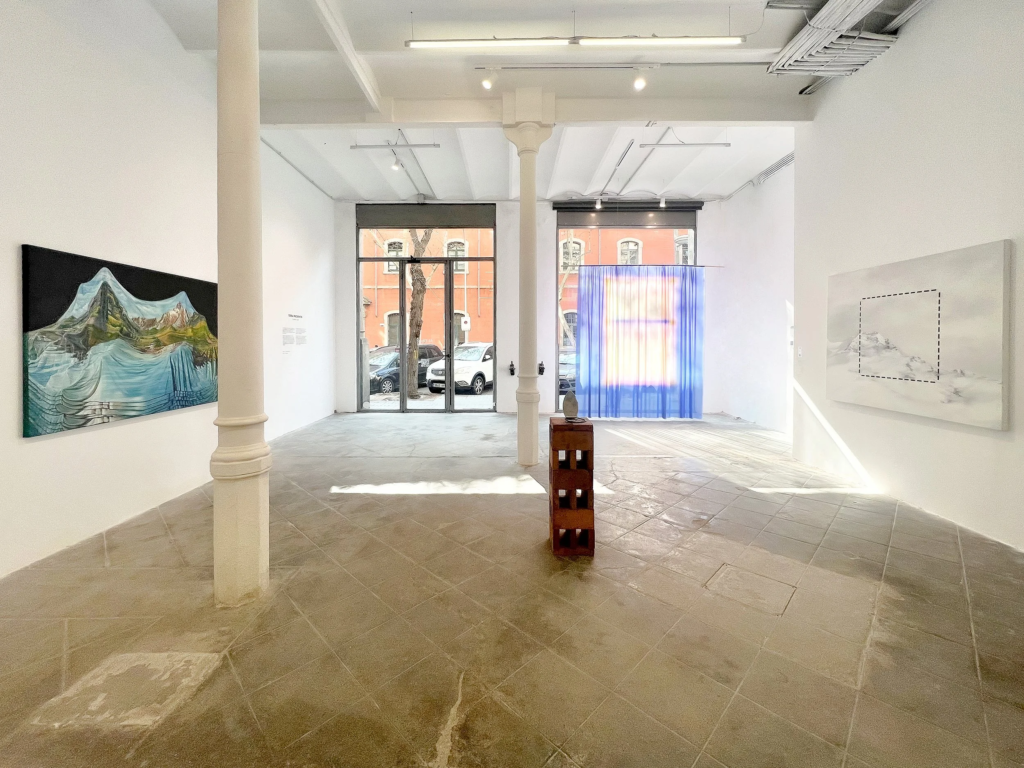
Following the success of its first edition last year, Al-Tiba9 Gallery returns with Terra Incognita (Unknown Land) – Part II, a group exhibition bringing together international artists exploring humanity’s evolving relationship with landscape, ecology, ritual, and constructed environments.
The exhibition unfolds through sculpture, installation, film, painting, and mixed media works that approach nature not as something stable or romanticized, but as something increasingly negotiated and uncertain. Across the gallery, natural materials appear alongside industrial structures, recycled objects, suspended forms, and speculative environments that blur distinctions between organic and artificial worlds.
Among the standout works are Taiwanese artist Ching-ke Lin’s swirling bamboo sculptures, which transform an ancient material into something unexpectedly futuristic, and Dongbay’s suspended installations made from recycled textiles and animal materials that extend the artist’s urban interventions into gallery space. Elsewhere, film and sculptural works investigate themes of identity, displacement, ritual, and domesticity through fragmented spatial experiences.
What makes the exhibition especially compelling is the way each artist approaches the idea of “unknown land” differently. For some, it becomes ecological. For others, psychological, political, or deeply personal.
Rather than offering a singular curatorial statement, the exhibition allows multiple tensions to coexist: nature and industry, belonging and displacement, intimacy and alienation, permanence and instability.
At a moment when conversations around environment and territory often feel oversimplified, Terra Incognita embraces complexity instead, allowing uncertainty itself to become part of the experience.
Patrick Puckett: Daze of Our Lives
Wally Workman Gallery, Austin
May 9 – May 31, 2026
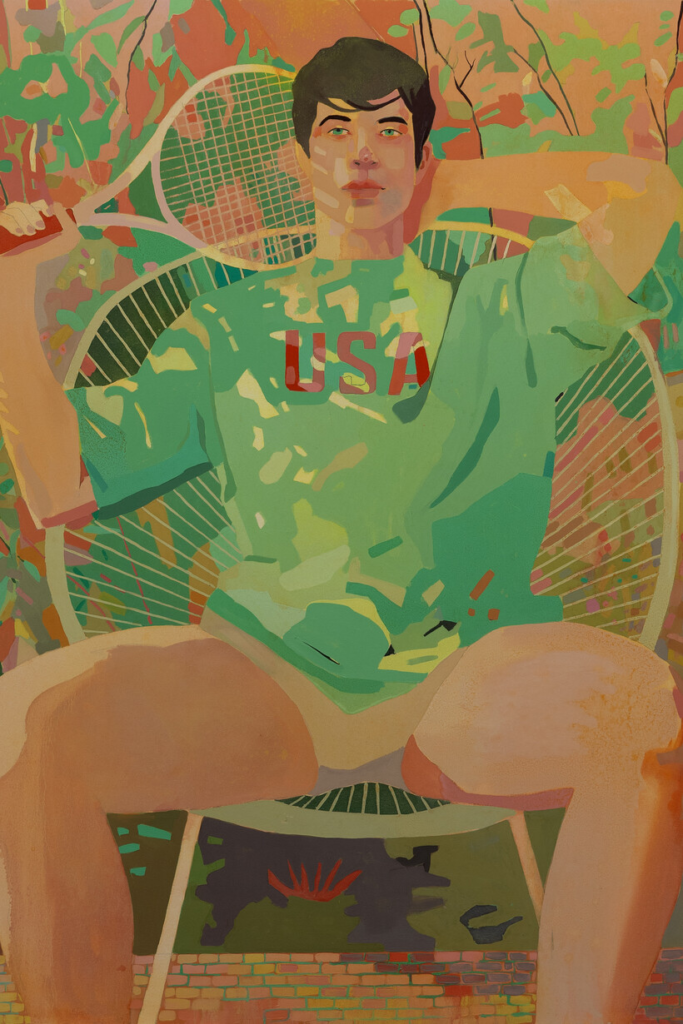
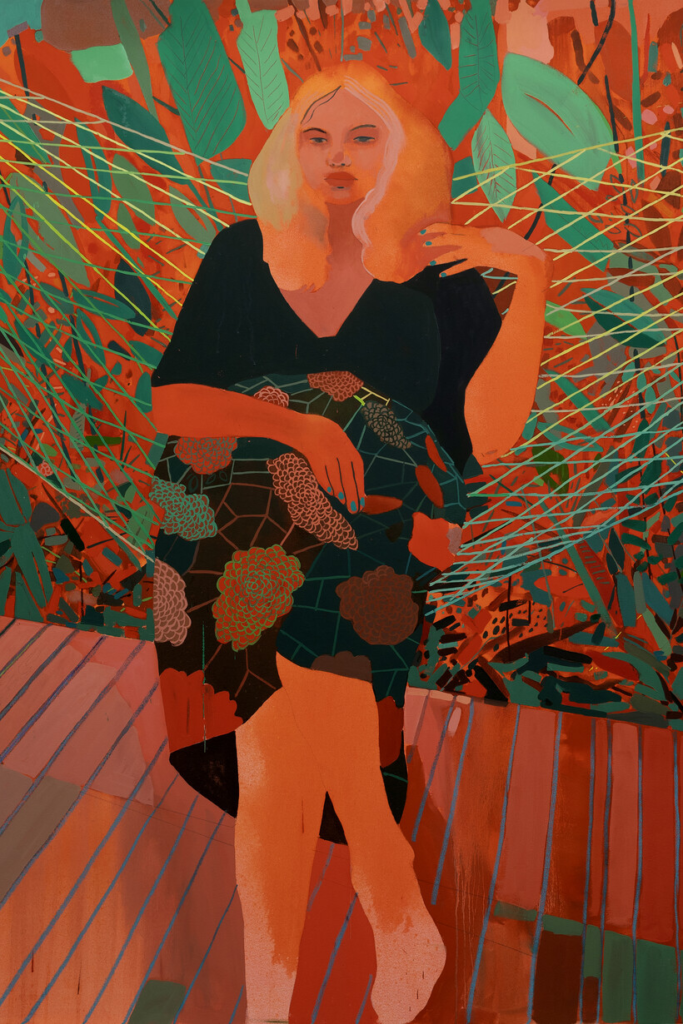
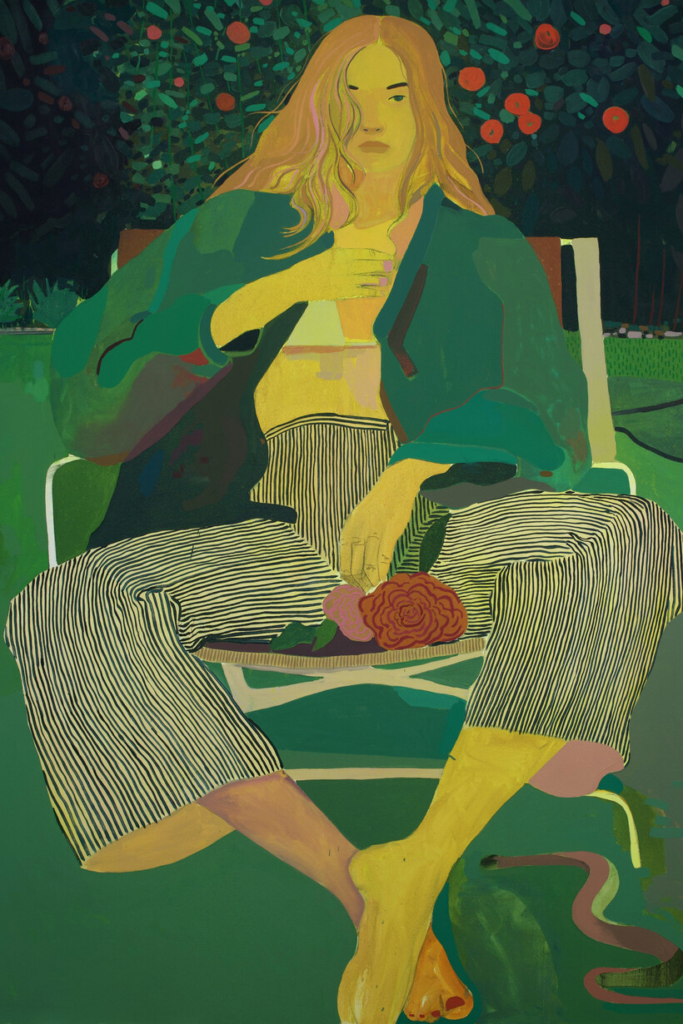
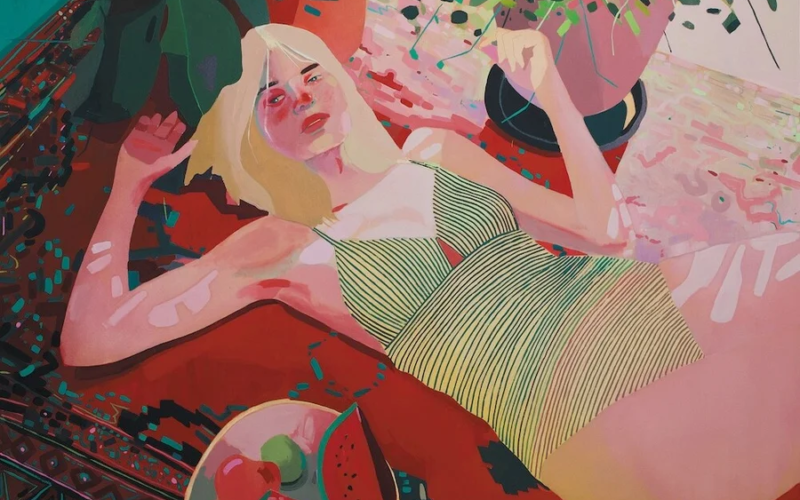
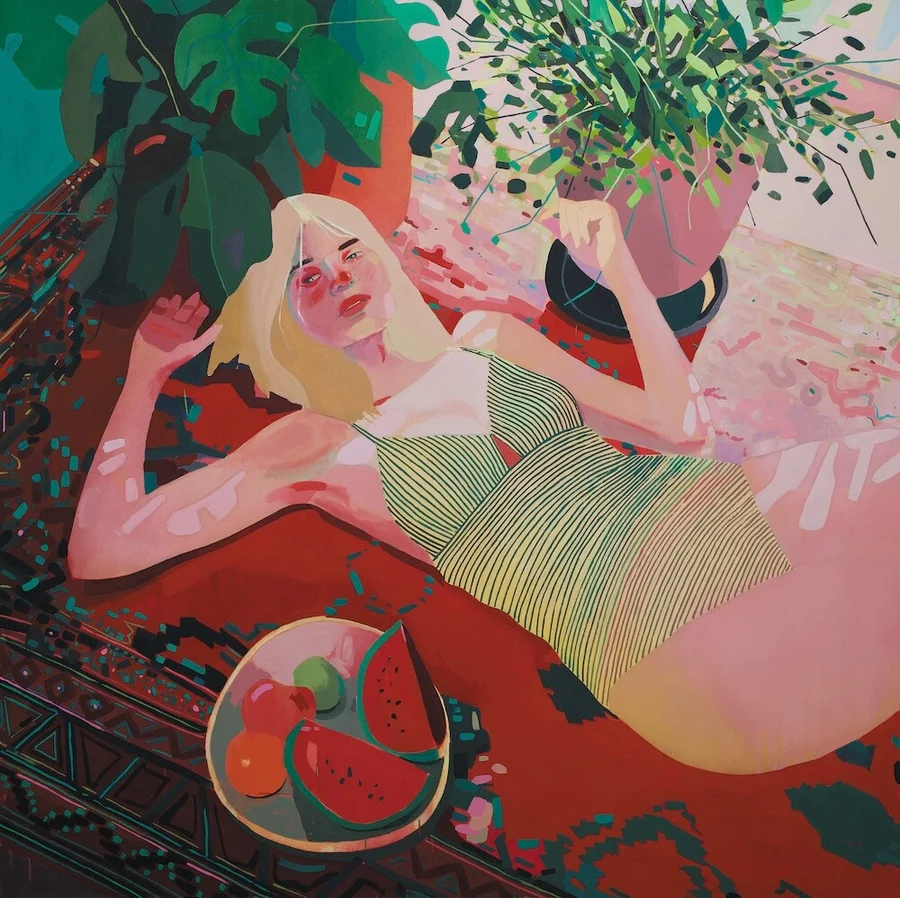
The paintings in Patrick Puckett’s Daze of Our Lives immediately command attention through their electric palettes, exaggerated contrasts, and larger-than-life figures, but beneath the visual intensity lies something far quieter and more emotionally layered.
Presented at Wally Workman Gallery, the exhibition continues Puckett’s ongoing exploration of what he has previously described as “Hillbilly Baroque” — a visual language balancing Southern Gothic storytelling, psychological portraiture, humor, and theatricality. Across the paintings, figures lounge, smoke, stare into the distance, or remain suspended in moments that feel oddly cinematic and emotionally unresolved.
There’s a looseness to the compositions despite their precision. Ping pong paddles, bouquets, watermelon slices, lawn chairs, and fragmented interiors appear repeatedly throughout the works, creating subtle visual echoes across the exhibition. These recurring objects give the paintings a dreamlike continuity, as though viewers are moving through different scenes from the same emotionally charged world.
What makes the exhibition especially compelling is the tension between seduction and vulnerability. Puckett’s figures are glamorous, exaggerated, and highly stylized, yet they never feel entirely performative. Moments of exhaustion, loneliness, and self-awareness quietly emerge beneath the saturated surfaces.
Even at their most playful, the paintings carry emotional weight.
Rather than presenting idealized characters, Daze of Our Lives captures people suspended somewhere between intimacy and performance, caught in the quieter psychological moments that exist just outside the center of attention.
Bold Tendencies 20th Anniversary Season
Peckham, London
May 15 – September 12, 2026
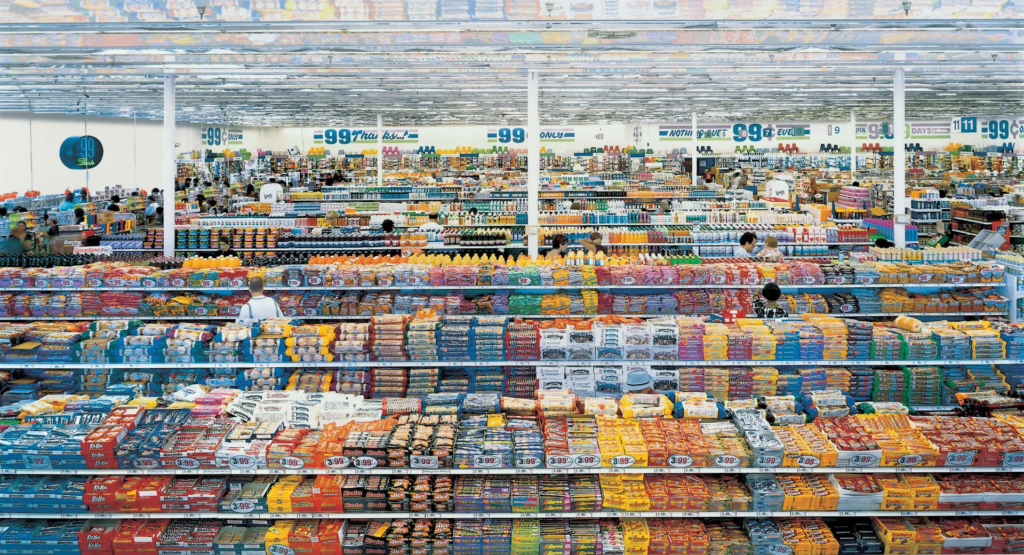
Over the past two decades, Bold Tendencies has transformed the top level of a multi-storey Peckham car park into one of London’s most recognizable cultural spaces, redefining how contemporary art can exist outside traditional institutions.
For its twentieth anniversary season, the organization returns with an expansive multidisciplinary program spanning sculpture, architecture, photography, music, performance, dance, and public art. Titled Euphoria, this year’s edition brings together artists, musicians, writers, and designers across a series of site-specific commissions and live events unfolding throughout the summer.
The program includes contributions from artists such as Andreas Gursky, Emma Hart, and Tarek Lakhrissi, alongside performances by the Multi-Story Orchestra and a wider schedule of readings, installations, and collaborative projects. As always, the setting itself remains central to the experience. The open-air rooftop structure, overlooking South London’s skyline, continues to shape the atmosphere of the work as much as the exhibitions themselves.
What has always made Bold Tendencies especially significant is its ability to make contemporary art feel socially embedded rather than isolated within institutional walls. The space moves fluidly between a public gathering place, performance venue, architectural landmark, and exhibition platform.
Even twenty years later, it still feels remarkably experimental.
At a time when many art spaces are becoming increasingly standardized, Bold Tendencies continues to prove how alternative models can shape some of the most dynamic cultural conversations happening today.
What makes this month’s exhibitions especially memorable is not simply their scale or visibility, but the different ways they invite viewers to slow down and experience contemporary art more attentively.
Across painting, installation, photography, sculpture, and film, many of these artists are engaging with emotional atmosphere as much as visual form. Questions around migration, memory, ecology, identity, surveillance, spirituality, and care appear repeatedly throughout the month, though rarely in overly direct ways. Instead, these themes emerge gradually through material, texture, fragmentation, symbolism, and space.
There’s also a noticeable shift away from spectacle for spectacle’s sake. Even the largest installations this month feel grounded in intimacy rather than excess. Whether through Delcy Morelos’s earthen environments, Sheida Soleimani’s layered political imagery, or Audie Murray’s deeply personal material language, these exhibitions create experiences that linger quietly rather than demand immediate reaction.
At the same time, many of the strongest shows this month are happening within smaller galleries and alternative spaces, reaffirming how some of the most compelling conversations in contemporary art continue to emerge outside traditional institutional frameworks.
From London and Brussels to Toronto, Barcelona, Pittsburgh, Dubai, Austin, and New York, May’s exhibitions reflect an art world increasingly interested in ambiguity, emotional complexity, and slower forms of looking.
And perhaps that’s exactly what makes these exhibitions worth returning to.Which of these exhibitions would you want to experience first?
If you’ve been thinking about how exhibitions shape emotional experience, you may also enjoy reading The Art You Hang Is Affecting You More Than You Realize, where we explore how art quietly influences mood, memory, and the spaces we live in.