




The Most Mysterious Goddesses in Art History

Throughout art history, goddesses have appeared as far more than mythological figures. They became symbols of desire, fear, grief, seduction, wisdom, destruction, and power, reflecting the emotions humans have struggled to understand for centuries. Some ruled oceans and forests. Others walked through darkness, carried magic in their hands, or descended into the underworld itself. Yet no matter how different they were, artists continued returning to them again and again.
What makes these goddesses so haunting is not simply their beauty or divinity, but the way they embody contradiction. They are nurturing and dangerous. Worshipped and feared. Gentle one moment and merciless the next. In paintings, sculptures, and ancient artifacts, they rarely appear passive. Instead, they seem to watch the viewer back, carrying secrets larger than the worlds they belonged to.
Across civilizations, from ancient Greece and Mesopotamia to Egypt, India, and the Norse world, artists used these divine women to explore the deepest parts of human experience. Love became a force powerful enough to destroy kingdoms. Wisdom appeared armored and untouchable. Beauty transformed into temptation. Darkness became sacred. Through these figures, mythology turned into psychology, and art became a mirror for humanity’s obsessions, anxieties, and desires.
Even today, these goddesses continue to captivate contemporary artists and audiences alike. Their stories survive because they still feel strangely familiar. They represent the parts of ourselves that remain difficult to explain: transformation, rage, longing, intuition, survival, and the mysterious power of femininity itself.
Here are some of the most mysterious goddesses in art history, and the reasons artists could never stop painting them.
Persephone: The Goddess Who Belonged to Two Worlds
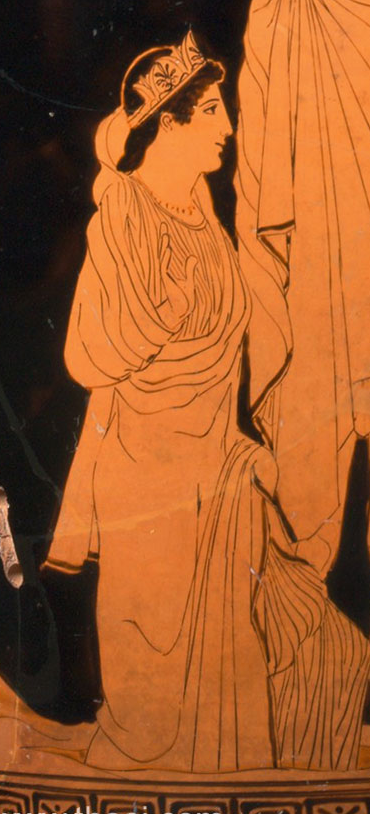
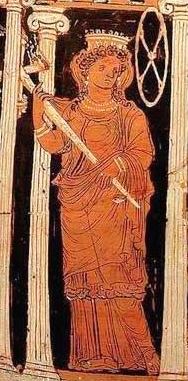
Few figures in mythology have haunted art history quite like Persephone. Neither fully innocent nor entirely feared, she exists in a space between worlds: the goddess of spring above ground and the queen of the underworld below it. That contradiction is exactly what made artists return to her again and again. Persephone was never simply painted as a goddess. She became a symbol of transformation itself.
In Greek mythology, Persephone was the daughter of Demeter, goddess of harvest and fertility. Her story changes forever when Hades abducts her into the underworld, making her his queen. But mythology never leaves her entirely trapped there. For part of the year, she returns to earth, bringing spring with her. Then she descends again into darkness. Life and death. Bloom and decay. Innocence and power. Persephone carried both.
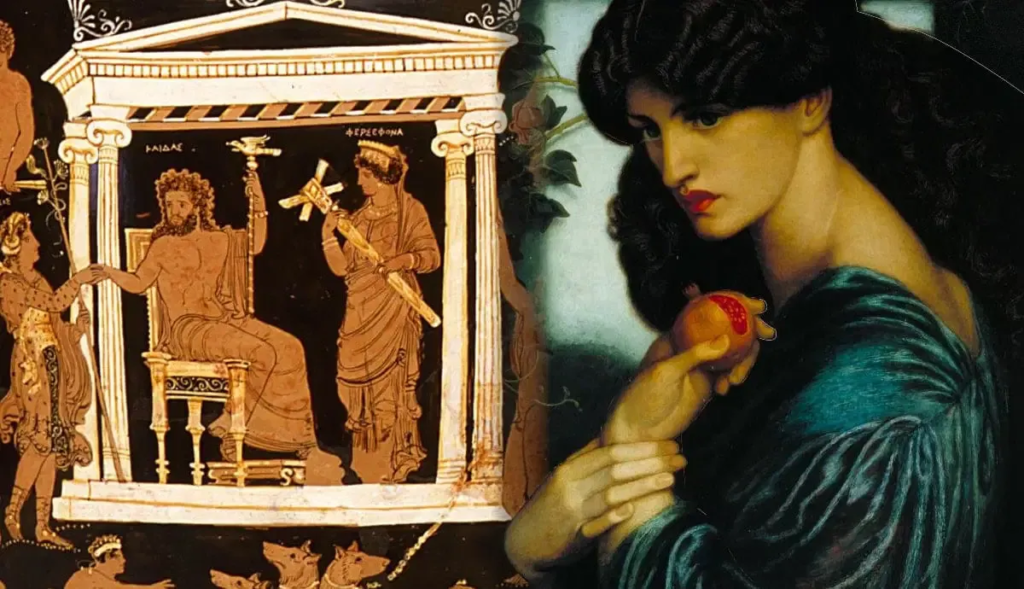
Artists were deeply fascinated by this duality. In paintings and sculptures, she often appears caught between vulnerability and authority. Some artists portray her as a luminous young woman surrounded by flowers, moments before her descent into the underworld. Others paint her after the transformation, calm, distant, almost untouchable. Over time, Persephone became less of a tragic figure and more of an archetype for rebirth, feminine awakening, and emotional survival.
The mystery surrounding Persephone lies in the fact that she never fully returns unchanged. Unlike many mythological women who remain frozen in one role, Persephone evolves. Art history repeatedly treats her not as someone rescued from darkness, but as someone who learned to rule within it.
That may be why contemporary artists still gravitate toward her. Persephone represents a version of femininity that is soft without being powerless and wounded without being broken. In art, she reminds us that transformation is rarely beautiful while it is happening. But it can still become sacred.
Hecate: The Goddess of Shadows and Crossroads
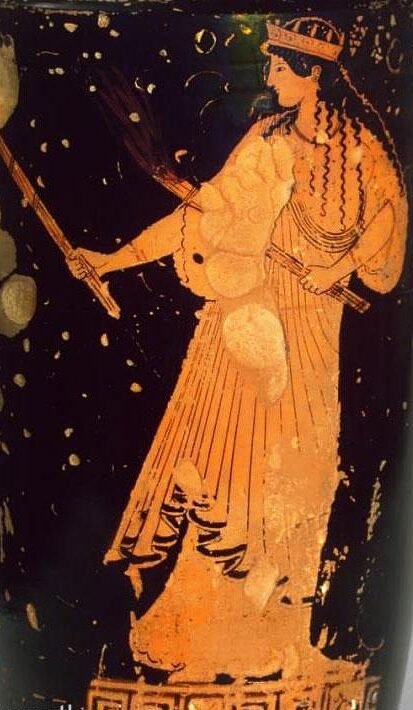
Long before witches became one of art history’s most enduring obsessions, there was Hecate. She was the goddess of crossroads, night, ghosts, magic, and the unseen world, a figure so mysterious that even ancient mythology struggled to define her completely. Artists did not paint Hecate as a comforting divinity. They painted her as a presence. The kind that lingers in darkness long after the viewer looks away.
Unlike many Greek goddesses associated with beauty or romance, Hecate ruled over uncertainty. She was believed to stand at the threshold between worlds: life and death, human and divine, safety and danger. In mythology, she often carried torches to guide souls through darkness, accompanied by howling dogs and moonlit shadows. Over centuries, these symbols became irresistible to artists drawn to themes of fear, femininity, and forbidden knowledge.
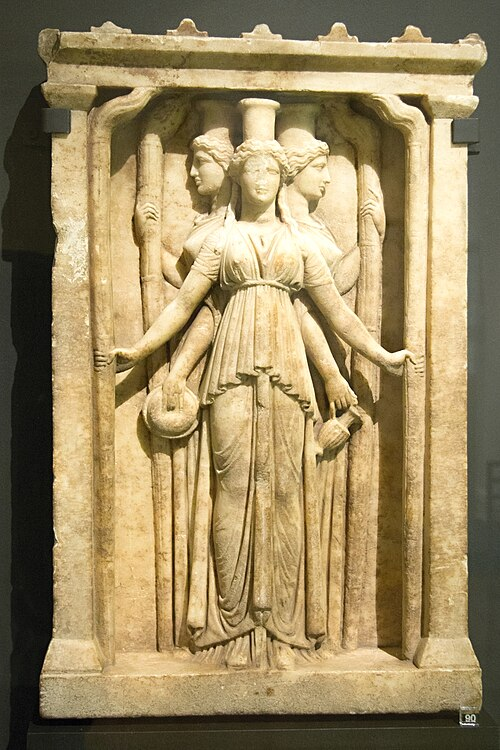
In classical depictions, Hecate sometimes appears as a triple-bodied figure, facing different directions at once. The imagery feels unsettling even now. She becomes impossible to fully read or predict. That ambiguity is precisely what made her powerful. Artists used her image not merely to portray witchcraft, but to explore feminine mystery itself, something feared, misunderstood, and often deliberately hidden.
During the Romantic and Symbolist periods, fascination with Hecate intensified. Painters increasingly connected her with the occult, the subconscious, and the growing cultural obsession with dark feminine archetypes. She began appearing not just as a mythological figure, but as a symbol of intuition, rebellion, and dangerous wisdom. In many artworks, moonlight surrounds her not softly, but ominously, as though nature itself bends around her presence.
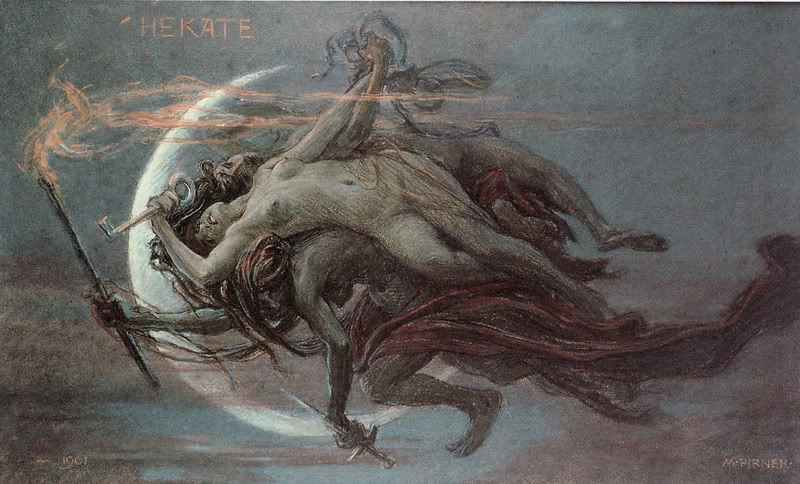
Even today, Hecate remains one of mythology’s most haunting figures. Contemporary artists continue to reinterpret her through gothic imagery, surrealism, and feminist symbolism. She represents a kind of power that refuses clarity, the power of standing at the crossroads and knowing there is no returning unchanged.
Kali: The Goddess Artists Feared and Revered
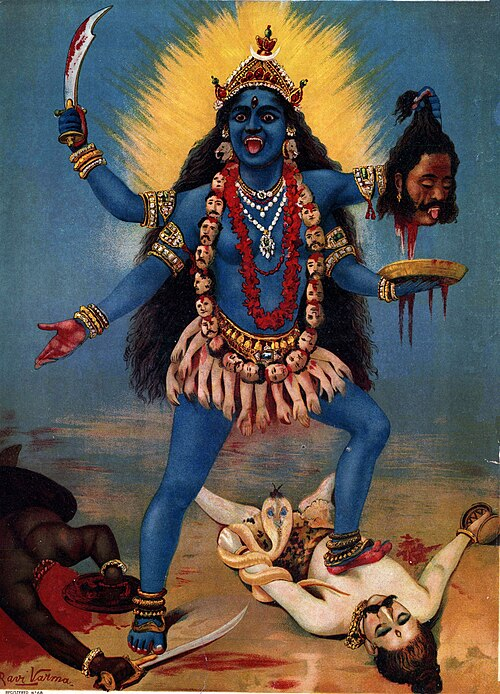
Few goddesses in art history carry the same terrifying intensity as Kali. With her dark skin, blood-red tongue, necklace of severed heads, and fierce gaze, Kali was never meant to appear gentle. She emerged in art as something far more unsettling: a divine force of destruction, transformation, and raw cosmic power. For centuries, artists painted her not as a goddess humans could control, but as one they could barely comprehend.
In Hindu mythology, Kali is often associated with death, time, chaos, and liberation. According to legend, she was born from the fury of the goddess Durga during a battle against demons. Once unleashed, her rage became unstoppable. Many traditional depictions show her standing atop the god Shiva, a moment symbolizing the terrifying magnitude of her power. Yet despite her violent imagery, Kali is not considered evil. She destroys illusion, ego, and corruption. Her destruction is meant to clear the way for rebirth.
That contradiction fascinated artists across centuries. In paintings, sculptures, and devotional imagery, Kali appears both horrifying and protective at once. Her expression can feel wild, almost supernatural, but beneath the violence lies something strangely maternal. Many artists emphasized this duality, portraying her as a goddess capable of immense destruction while also embodying freedom and spiritual awakening.
Unlike many Western depictions of femininity in art history, Kali was never softened to appear acceptable. She was allowed to remain overwhelming. Her body became symbolic not of passive beauty, but of uncontrollable energy. In many artworks, the darkness surrounding her feels alive, as though she is emerging from something ancient and unknowable.
Contemporary artists continue returning to Kali because her symbolism still feels urgent. She represents anger without apology, transformation through destruction, and feminine power unconcerned with approval. In art, Kali reminds viewers that creation and destruction are often inseparable, and that some forms of power are too vast to ever appear comforting.
Medusa: The Woman Art Turned Into a Monster
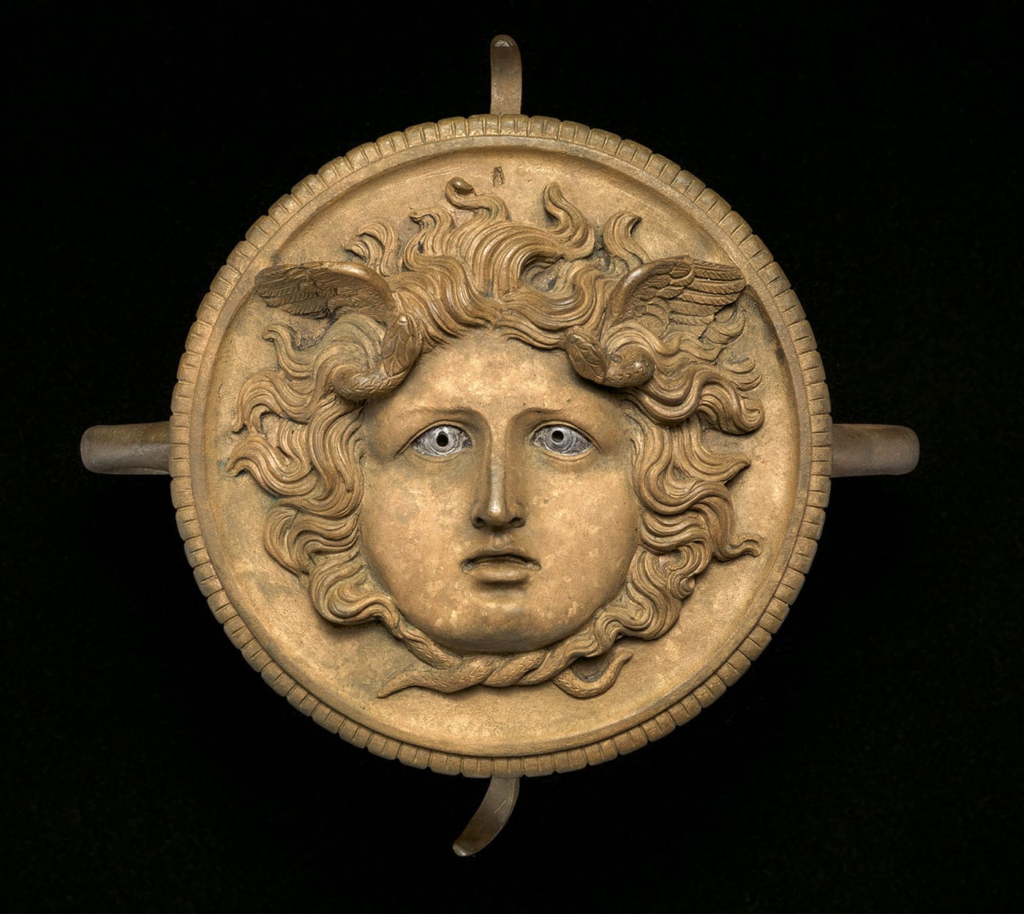
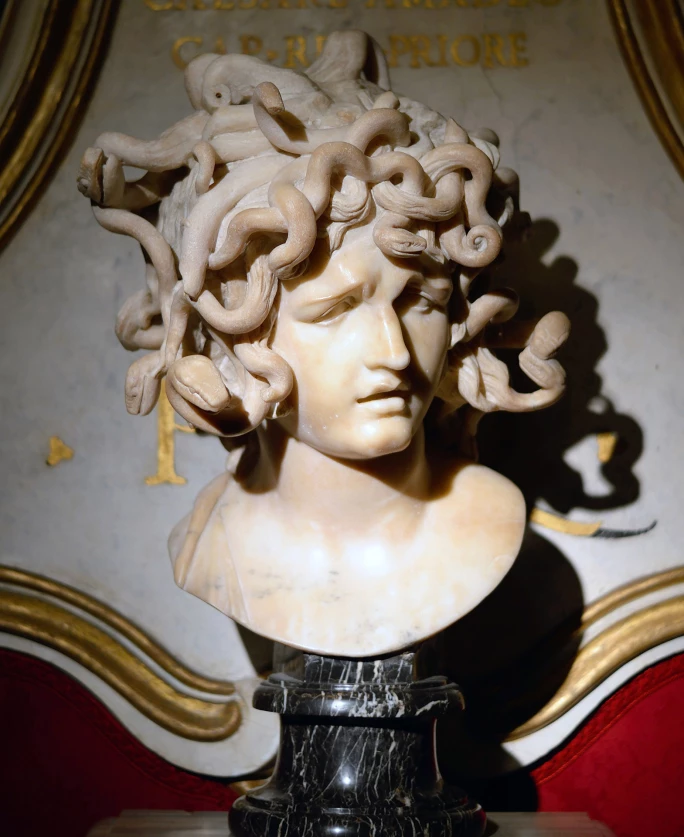
No mythological woman in art history has been reimagined more dramatically than Medusa. Once feared as a monstrous creature with snakes for hair and a gaze that turned people to stone, Medusa has transformed over centuries into something far more complicated. Artists did not simply paint her as a villain. They painted her as terror, beauty, rage, punishment, and fascination all at once.
In Greek mythology, Medusa was one of the Gorgons, cursed after an encounter with Poseidon in Athena’s temple. Ancient stories often focused on her monstrosity, ending with her beheading at the hands of Perseus. Yet art history never seemed fully satisfied with that version of her. Again and again, artists returned to Medusa not just because she was frightening, but because she was impossible to look away from.
Classical depictions emphasized horror: writhing snakes, petrifying eyes, severed heads. But during the Renaissance and later periods, something changed. Artists began making Medusa beautiful. In works like Medusa, her expression becomes tragic rather than purely monstrous. Fear mixes with vulnerability. Violence mixes with sorrow. The viewer is left uncertain whether Medusa should be feared or mourned.
That ambiguity is exactly what made her endure. Medusa became symbolic of society’s fear of female power, female anger, and female autonomy. Her gaze, once treated as a weapon, began to feel confrontational in another way, as if she were staring back at the viewer after centuries of being reduced to a monster in someone else’s story.
Contemporary artists and feminist reinterpretations have pushed this even further. Today, Medusa often appears not as a villain, but as a survivor and symbol of resistance. Her snakes have become emblems of transformation rather than corruption. In modern art, she is no longer merely the creature slain by a hero. She is the figure audiences return to long after the hero himself has faded into the background.
That may be Medusa’s greatest mystery of all: art history tried to turn her into a warning, but instead, she became unforgettable.
Athena: The Goddess Who Watched Everything
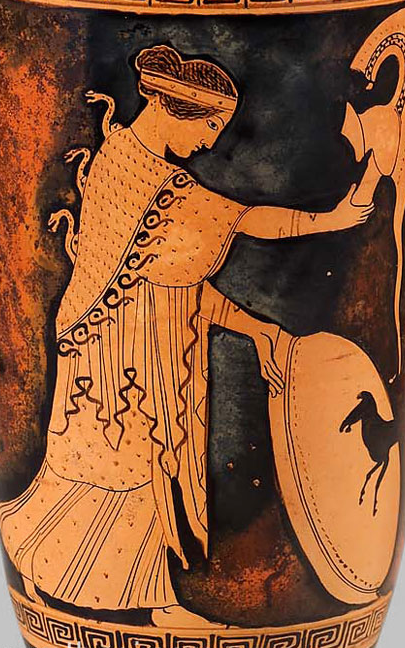
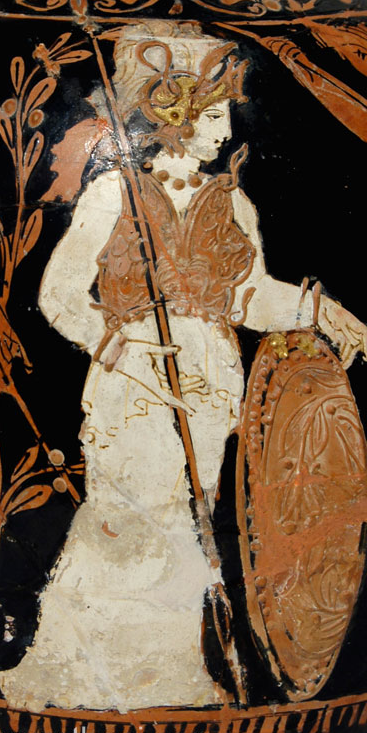
Among the many women painted throughout art history, Athena stands apart for one reason: she rarely appears vulnerable. While other goddesses were romanticized as muses, lovers, or symbols of beauty, Athena emerged in art as something colder and more intimidating. She was the goddess of wisdom and warfare, but artists often portrayed her less as a protector and more as an untouchable force of intelligence and control.
In Greek mythology, Athena was born fully armed from the head of Zeus, a detail artists repeatedly emphasized to reinforce her supernatural authority. She represented strategy rather than chaos, discipline rather than emotion. Yet despite being associated with wisdom, Athena’s presence in art often feels psychologically complex. Painters surrounded her with armor, spears, owls, and shadows, creating figures that seemed constantly alert, as though nothing escaped their attention.
One of the most striking reinterpretations appears in Pallas Athena, where Athena becomes almost unsettling in her intensity. Klimt transforms the ancient goddess into a symbol of female authority that feels both seductive and dangerous. Her stare is unwavering. She does not invite admiration so much as command it. In many ways, this version of Athena reflects a larger fascination within art history: the fear of intelligent women who cannot be controlled.
Artists repeatedly used Athena to symbolize more than wisdom alone. She became associated with political power, moral judgment, and emotional restraint. Unlike Aphrodite, whose beauty softened her presence, Athena’s power often came from distance. She was admired precisely because she seemed unreachable.
Over time, Athena also evolved into a symbol for women navigating systems traditionally dominated by men. Contemporary artists frequently reinterpret her through feminist perspectives, emphasizing her strategic mind rather than her mythological perfection. She appears not as a fantasy, but as an archetype of resilience and authority.
That is what makes Athena mysterious in art history. She does not reveal much of herself. Even in the most detailed paintings, there is always a sense that she knows more than the viewer ever will.
Aphrodite: The Goddess Who Made Beauty Dangerous

For centuries, artists painted Aphrodite as the embodiment of beauty. But beneath the softness, pearls, and flowing hair, there was always something more unsettling about her presence. Aphrodite was not simply the goddess of love. She represented desire powerful enough to disrupt kingdoms, ruin lives, and reshape myths. In art history, beauty rarely appears innocent when Aphrodite is involved.
According to Greek mythology, Aphrodite was born from sea foam, emerging fully formed from the ocean. Artists became obsessed with this image. Paintings often depict her arriving weightlessly on shells, surrounded by light, flowers, and adoring figures. The most famous example remains The Birth of Venus, where beauty itself feels almost supernatural. Yet even in works like these, Aphrodite’s power extends far beyond aesthetics. She was capable of inspiring obsession, jealousy, conflict, and destruction.
That tension fascinated artists throughout history. Aphrodite became a way to explore the dangerous side of attraction, the idea that beauty can seduce, manipulate, or destabilize. In many Renaissance paintings, her gaze appears calm and distant, as though she is fully aware of the effect she has on those around her. She is admired endlessly, but rarely portrayed as emotionally accessible.
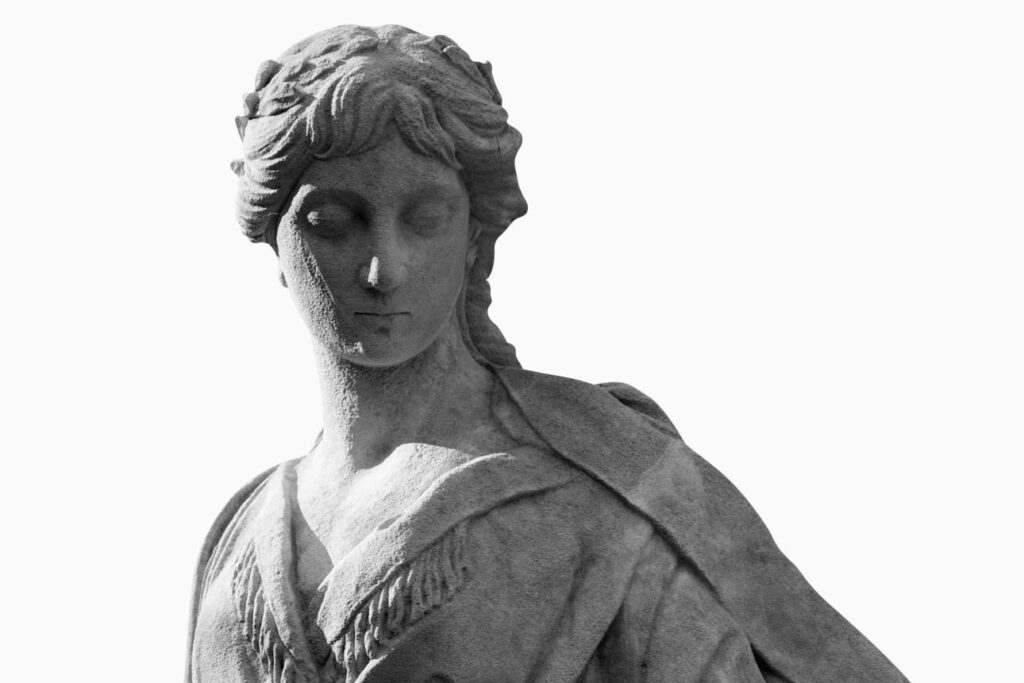
Over time, Aphrodite also became deeply tied to the male gaze in art history. Artists projected fantasies, ideals, and anxieties onto her image, turning her into one of the most repeatedly painted female figures in Western art. Yet contemporary reinterpretations often challenge this tradition. Modern artists increasingly portray Aphrodite not as a passive symbol of perfection, but as a figure conscious of her own influence and agency.
What makes Aphrodite mysterious is the way she blurs the line between beauty and power. She reminds viewers that attraction is never entirely harmless. In art, love does not appear gentle around her. It appears consuming, transformative, and impossible to resist.
Artemis: The Goddess Who Refused to Be Tamed
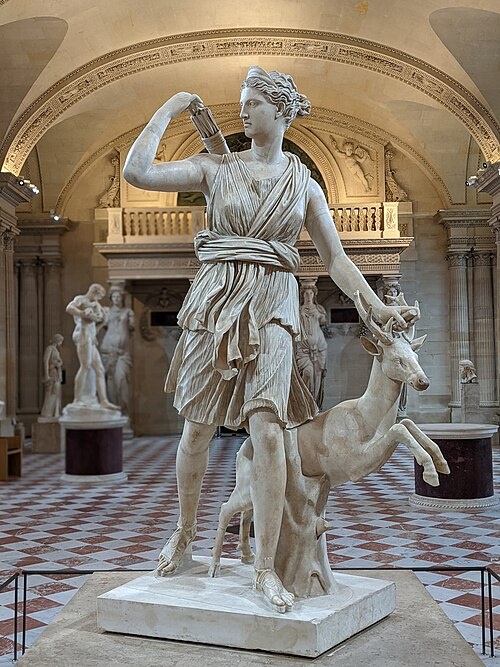
While many goddesses in art history were painted within palaces, oceans, or heavenly realms, Artemis belonged to the wilderness. She moved through forests with a bow in her hand, surrounded by moonlight, animals, and silence. Artists portrayed her not as approachable or romantic, but as fiercely independent, a goddess untouched by the expectations placed upon other women in mythology.
Known as the Greek goddess of the hunt, wilderness, and the moon, Artemis was often associated with protection as much as danger. In mythology, she guarded young women and wild creatures, yet her anger could be swift and merciless. Those who crossed her boundaries rarely escaped punishment. This duality fascinated artists for centuries. Artemis represented purity and violence at once, softness and severity existing within the same figure.
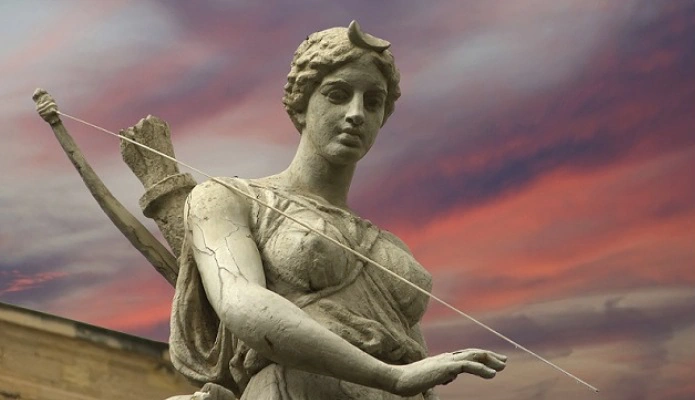
In paintings inspired by classical mythology, Artemis frequently appears in motion: running through forests, drawing arrows, or standing among deer beneath dim skies. One of the most enduring artistic interpretations emerged through the Roman equivalent Diana, especially in works like Diana and Actaeon. In this haunting scene, the hunter Actaeon accidentally sees the goddess bathing, violating a sacred boundary. Artemis responds not with forgiveness, but transformation, turning him into a stag before he is torn apart by his own hounds.
That story became symbolic in art history. Artemis represented the consequences of intrusion and the power of feminine privacy. Unlike many mythological women painted for admiration, Artemis seemed resistant to being observed altogether. Even when artists rendered her beauty in exquisite detail, there remained an emotional distance around her, as though she belonged more to nature than to humanity.
Contemporary artists continue to reinterpret Artemis as a symbol of autonomy, solitude, and untamed femininity. She embodies a kind of freedom rarely granted to women in classical narratives: the freedom to remain independent, unreachable, and entirely self-possessed.
That may be why Artemis still feels mysterious today. She does not seek worship, attention, or approval. She simply disappears back into the forest, leaving only silence behind her.
Ishtar: The Goddess of Desire and Destruction
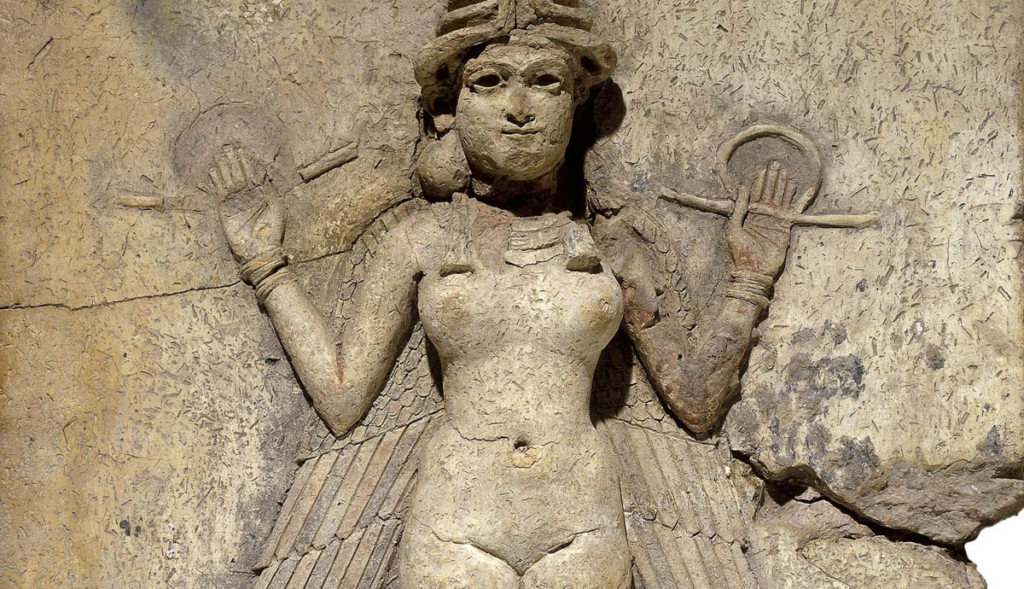
Long before the goddesses of Greek mythology dominated Western art, there was Ishtar, one of the most powerful and enigmatic female divinities of the ancient world. Worshipped in Mesopotamia thousands of years ago, Ishtar ruled over love, fertility, sex, beauty, and war, a combination so volatile that artists and civilizations alike seemed unable to look away from her. She embodied creation and destruction at the same time.
Ancient depictions of Ishtar carry a very different energy from the softness often associated with later European portrayals of femininity. In reliefs and carvings, she appears commanding and almost supernatural, often winged, adorned with symbols of lions, stars, and celestial power. One of the most haunting works connected to her remains Queen of the Night, where a winged female figure stands exposed yet untouchable, radiating authority rather than vulnerability. Even today, the image feels eerie and strangely modern.
What fascinated artists and historians about Ishtar was her refusal to fit into a single role. She could inspire passion and annihilation with equal force. Ancient myths describe her descending into the underworld, confronting death itself, and unleashing chaos when rejected. Unlike later depictions of idealized femininity, Ishtar’s power was never passive. It was disruptive, emotional, and cosmic in scale.
That intensity gave her a lasting presence in art history. She became symbolic of humanity’s complicated relationship with desire, how attraction can feel both life-giving and dangerous. Artists repeatedly returned to her imagery because she represented emotions too overwhelming to fully control: lust, ambition, grief, jealousy, and fury.
Contemporary artists continue to reinterpret Ishtar through themes of feminine rage, sexuality, and divine authority. In modern works, she often appears less as an ancient goddess and more as an enduring archetype of female complexity itself.
What makes Ishtar mysterious is not merely her mythology, but the feeling surrounding her image. She does not seem distant like many ancient figures. She feels immediate, almost confrontational, as though the emotions she represents never truly disappeared from human nature at all.
Isis: The Goddess Who Mastered Life, Death, and Magic
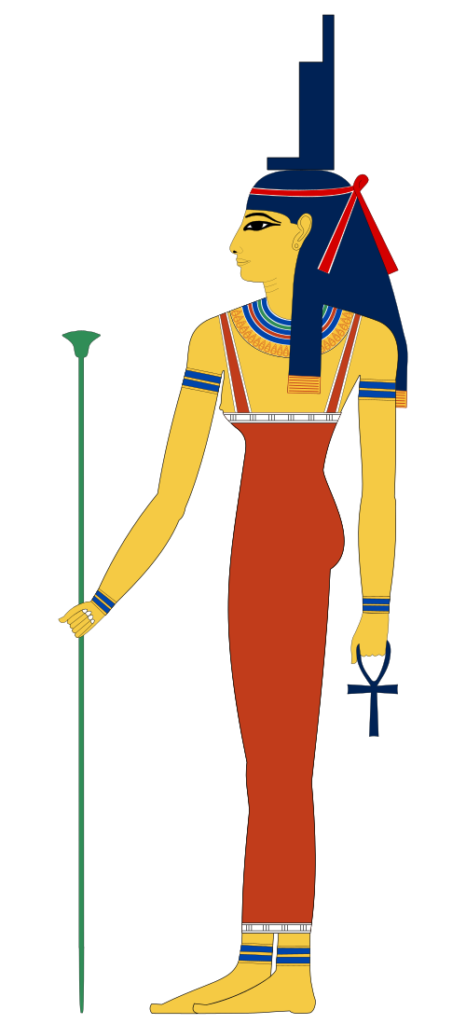
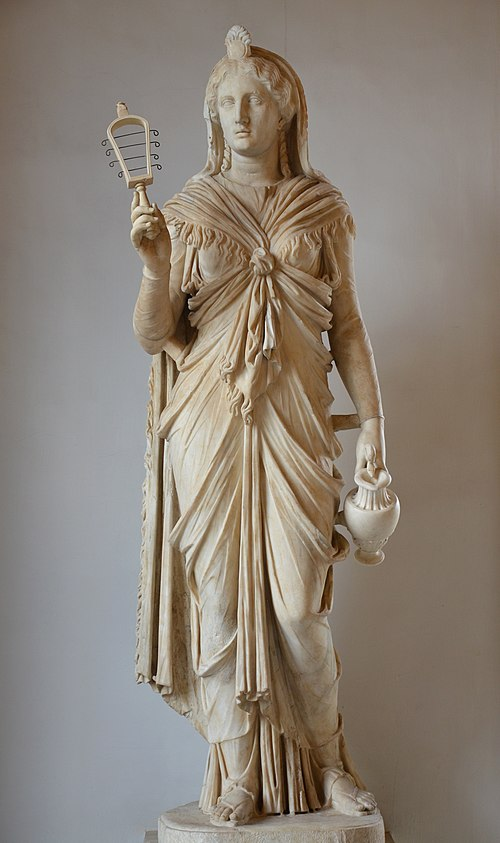
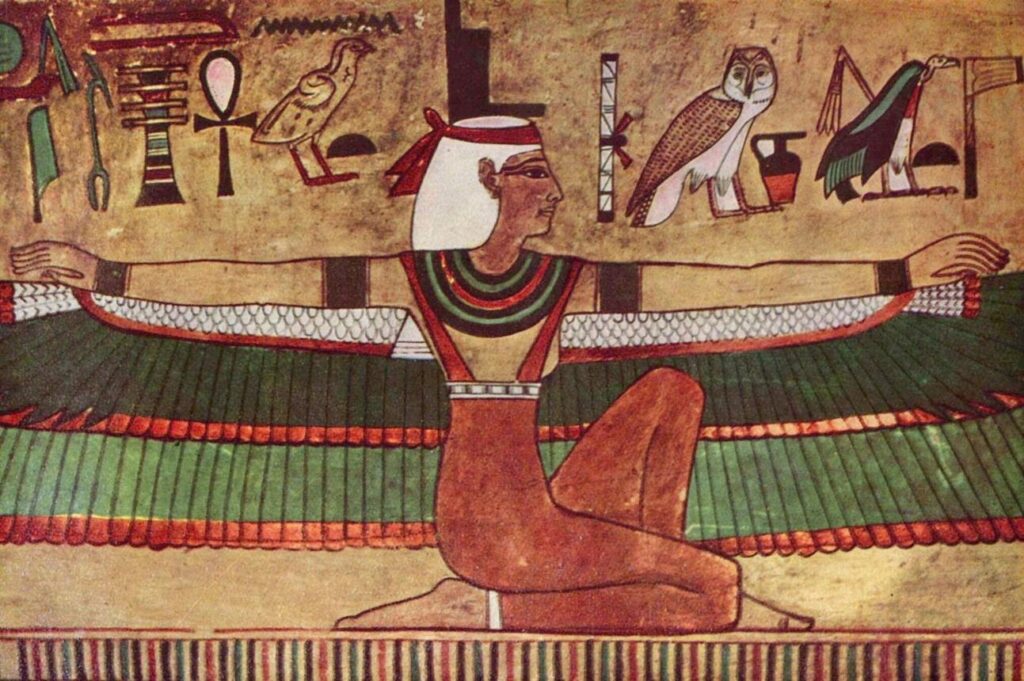
Among the many divine women immortalized throughout art history, Isis carries one of the most enduring auras of mystery. Revered in ancient Egypt as the goddess of magic, healing, motherhood, and resurrection, Isis was not simply worshipped, she was believed to possess knowledge powerful enough to alter fate itself. Artists portrayed her less as a distant celestial figure and more as a force quietly holding the universe together.
In Egyptian mythology, Isis is most famously associated with the story of Osiris. After her husband is murdered and dismembered, Isis searches tirelessly for the scattered pieces of his body, using her magical abilities to resurrect him. Across centuries of Egyptian art, this story transformed her into a symbol of devotion, grief, rebirth, and supernatural power. She often appears crowned with a throne-shaped headdress or holding her son Horus, embodying both maternal tenderness and divine authority.
What makes Isis especially fascinating in art history is the balance artists maintained between serenity and power. Unlike goddesses associated with visible violence or seduction, Isis radiates quiet control. Ancient sculptures and paintings frequently depict her with calm, symmetrical features, yet there is an unmistakable sense that she possesses knowledge hidden from the mortal world. Her stillness itself feels powerful.
As Egyptian influence spread through the ancient Mediterranean, Isis became one of the most widely worshipped goddesses beyond Egypt as well. Greek and Roman artists reinterpreted her image, blending Egyptian symbolism with classical aesthetics. Over time, she evolved into a broader symbol of feminine wisdom, spiritual protection, and mystical transformation.
Contemporary artists continue to revisit Isis because her mythology speaks to something deeply human: the desire to heal what has been broken. In modern reinterpretations, she often appears as an archetype of resilience and sacred femininity, someone capable of carrying immense sorrow without losing her power.
That is what makes Isis mysterious in art history. She does not dominate through fear or spectacle. Instead, she represents a quieter kind of divinity, the unsettling idea that true power may belong not to those who destroy, but to those who know how to restore.
Freyja: The Goddess of Beauty, Battle, and the Unknow
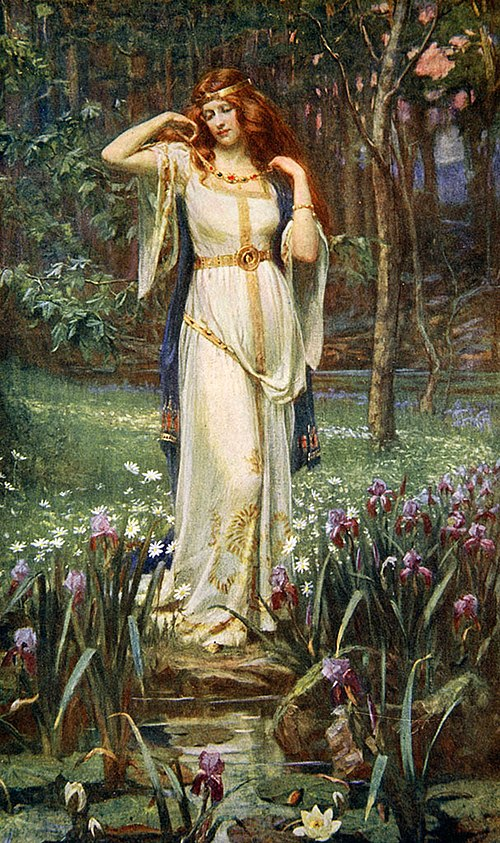
Wrapped in gold, surrounded by falcons, and tied to both love and death, Freyja remains one of the most elusive goddesses in mythology and art. Unlike the polished figures of classical Greek paintings, Freyja belongs to colder, darker landscapes, worlds shaped by prophecy, war, magic, and fate. Artists were drawn to her not because she appeared predictable, but because she seemed impossible to fully define.
In Norse mythology, Freyja ruled over love, beauty, fertility, and desire, yet she was also deeply connected to battle and death. According to legend, she received half of the warriors slain in combat, bringing them to her hall while Odin claimed the other half. This contradiction gave Freyja a haunting complexity. She could represent tenderness one moment and devastation the next. In art, that duality made her mesmerizing.
Unlike many mythological women who were softened into passive symbols of beauty, Freyja retained a sense of mystery and independence. Artists often depict her draped in rich fabrics or traveling in a chariot pulled by cats, but there is usually an emotional distance surrounding her. Even in romanticized interpretations, she feels closer to mythic nature than human vulnerability. Her beauty appears ancient, almost untouchable.
Freyja was also associated with seiðr, a form of Norse magic linked to prophecy and spiritual power. This connection to mysticism fascinated later artists, especially during the Romantic era when Northern mythology became increasingly popular in European art and literature. Painters and illustrators portrayed her as a figure suspended between enchantment and danger, often surrounded by stormy skies, ravens, forests, or battlefields.
Today, contemporary artists continue to reinterpret Freyja through themes of feminine strength, independence, and mysticism. She has become symbolic of a femininity that does not separate beauty from power or softness from ferocity. Like many of the most mysterious goddesses in art history, Freyja refuses simplification.
That may be why she still lingers so strongly in visual culture. Freyja represents the unknown parts of femininity, the parts connected to intuition, desire, grief, and survival. In art, she never feels entirely earthly. She feels like something glimpsed briefly through fog before disappearing again.
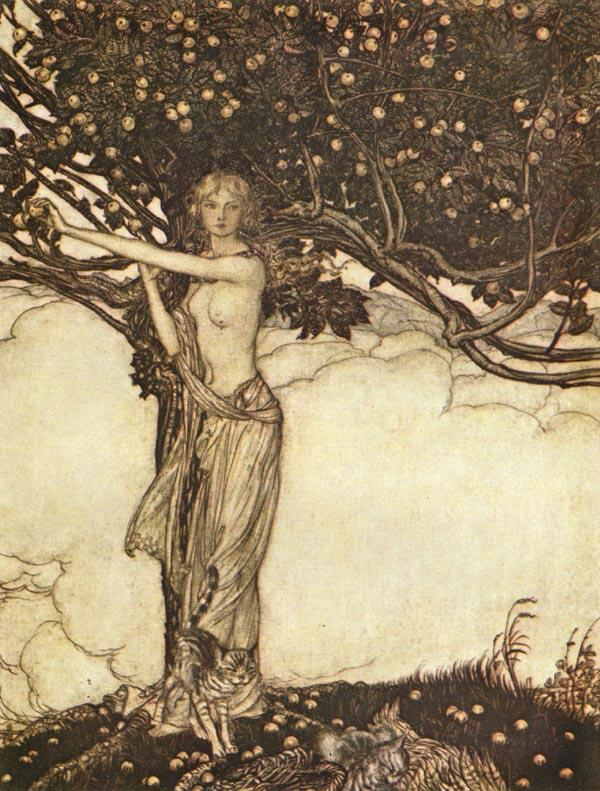
The goddesses of art history were never merely decorative figures frozen inside mythology. They became vessels for humanity’s deepest fascinations: beauty powerful enough to consume, wisdom that intimidates, grief that transforms, and darkness that refuses to disappear. Across centuries of art, these divine women evolved into something larger than religion or legend. They became archetypes.
What makes them endure is their complexity. None of them fit neatly into a single role. Persephone belonged to both life and death. Kali turned destruction into transformation. Medusa transformed from monster into symbol. And Hecate remained suspended between fear and fascination. Artists were drawn to them precisely because they resisted simplicity.
Perhaps that is why these figures still feel so powerful today. Modern audiences continue to see themselves in these goddesses, not as distant mythical beings, but as reflections of emotion, identity, survival, and change. Their stories remind us that mystery has always been central to art. The most unforgettable figures are rarely the easiest to explain.
Centuries later, these goddesses still linger across canvases, sculptures, and visual culture like echoes from another world, watching silently from the shadows of art history, refusing to be forgotten.
Which of these goddesses fascinates you the most?
If you’re fascinated by the darker, mystical side of feminine symbolism in art, you may also enjoy exploring how witchcraft shaped visual culture throughout history in our article on witchcraft in art history.