
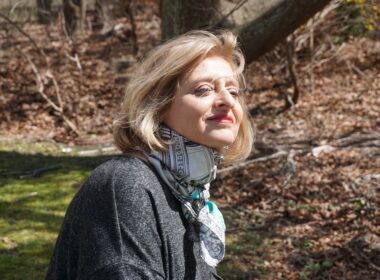
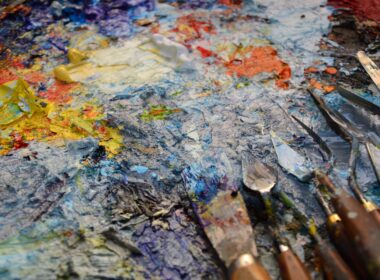

Linda Ganus on why she switched from portraits to painting the environments around figures

At Arts to Hearts Project, our 101 Artbook Landscape Edition brings together artists who understand that a landscape painting is never just about a view. It is always carrying something else underneath it.
With most artists that something else is memory or emotion or a connection to a place they love. With Linda Ganus it is music. And once you know that about her, you hear it in every painting she makes.
She is one of our selected artists in this edition. And we are really glad she is because her work does something to you that is hard to put into words but very easy to feel.
Linda grew up in the Midwest playing flute in orchestra and band while simultaneously filling every notebook and loose piece of paper she could find with drawings. Both things ran side by side from the very beginning and she never thought of them as separate.
When she played music she would see images forming in her mind. And now when she paints she can hear the colours the way a musician hears chord changes. It is not something she puts on or performs. It is genuinely how her brain works. The two things fused together somewhere early on and never came apart.
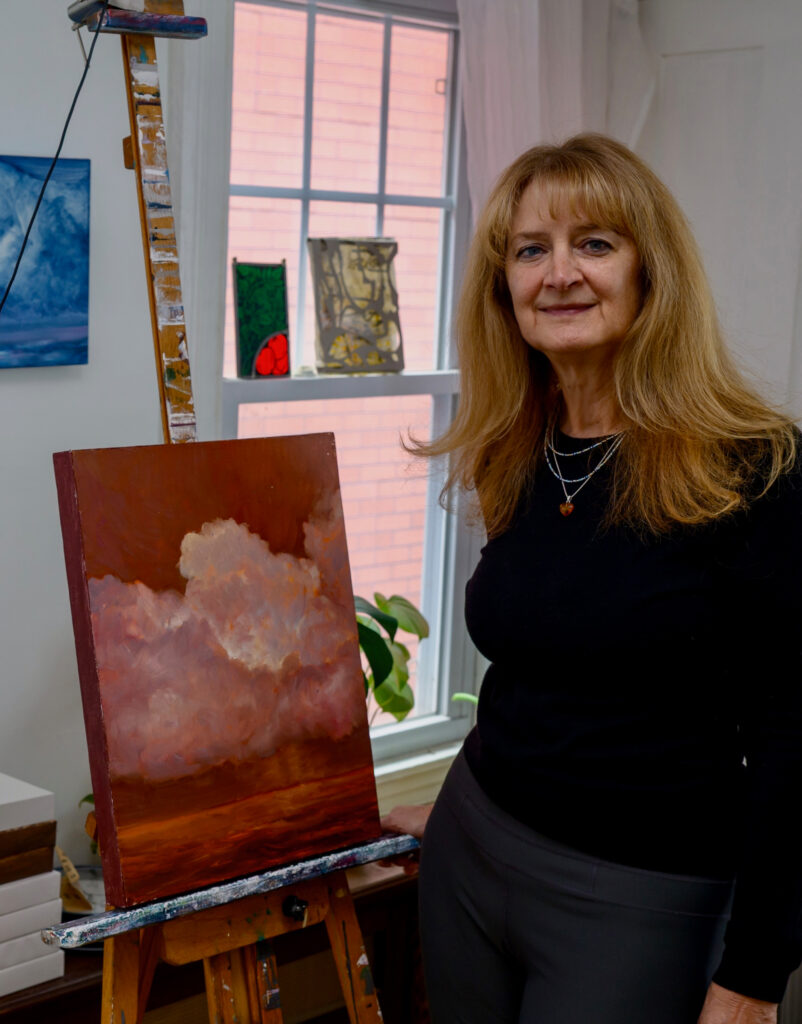
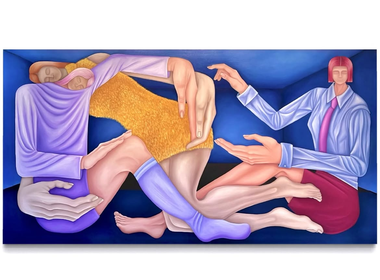
She spent years painting portraits and figurative work, friends she knew from the music world and people she found interesting. She was drawn to capturing something specific about whoever was in front of her.
But gradually the environments she was building around those figures started becoming more important to her than the figures themselves. The sky started mattering more than the face. The light started pulling her attention away from the body. And eventually she just followed that pull and let the landscapes take over completely.
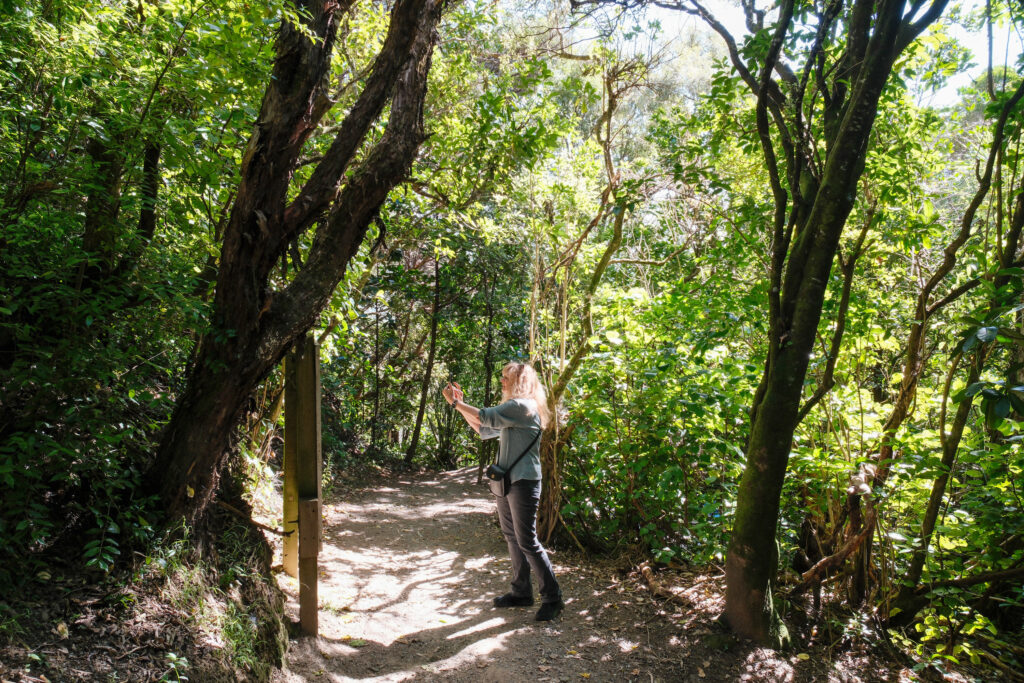
The landscapes she paints now are not places you can find on a map. They are built from memory and imagination and from the physical sensation of standing somewhere so overwhelmingly beautiful that it knocked the breath out of her. She takes photographs in nature but she uses them as rough starting points, not as things to copy. What ends up on the canvas comes from inside her, from what the place felt like rather than what it looked like.
She works mostly in oils because the slow drying time lets her go back in and push the paint around and wipe things out and add glazes over what was already there. She does not follow a rigid plan when she paints.
She responds to what is happening on the surface the way a good jazz musician responds to what is happening in the room, adjusting and following and trusting that the painting will find its way if she stays open to it.
And the way she thinks about colour is where her musical training really shows up. She approaches colour relationships the way a jazz musician approaches chord progressions, thinking about where the tension lives and where the resolution comes and where the silence is that says more than any colour could. You do not need to know anything about music theory to feel that in her paintings. Your body picks it up on its own.
Let’s get to know Linda more through our conversation with her about music, memory, colour, and what a landscape can hold when you stop trying to copy it and start trying to feel it.
Q1. Could you share how your early background led you to combine music, memory, and landscape?
As a girl growing up in the Midwest, I enjoyed both playing my flute in orchestra and band as well as constantly drawing in notebooks and any spare loose paper around the house. While I knew I had to practice my musical instrument to improve in the same way an athlete practices, I thought of making art as a pleasure, and probably “practiced” looking and drawing as many hours as I did music. They always seemed intertwined to me, and I often thought of expressing an ephemeral image or scene as I played music. I would often draw or paint portraits of my musical friends, and made portraiture and figurative work for many years. It wasn’t until fairly recently that I turned to a more intense involvement in creating the environments for the figures. These places eventually became the most important thing to me to paint themselves, places charged with memories brought by the imagination of the viewer as well as myself.
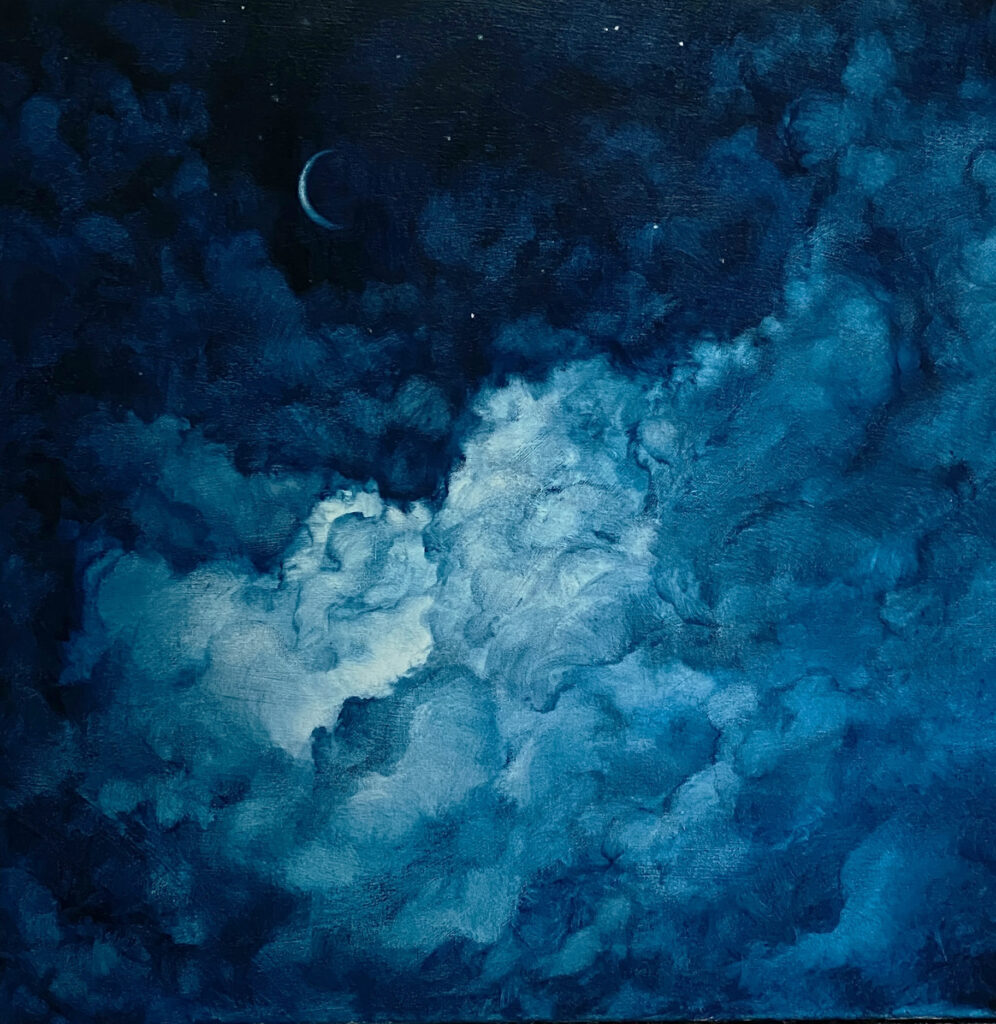
Q2. Many of your works act as “chromatic keys” to unlock memory and emotion. Can you tell us how you cultivate colour relationships that feel evocative rather than purely descriptive?
I think that while responding to a memory or other stimulus like a piece of music, I try to tap into a kind of synesthetic response that my emotions evoke, and to translate those into images, colors, and forms in space. In addition, I feel that much of our relationships to the world can be expressed in relationships that certain colors have with each other…the tensions and harmonies. The clouds in a sky are players in a scene, and the sky itself in a relationship with the ground plane, which can be earth or water. All of these players bring their own emotional weight and tone which translate to color and form. At the same time, I am using forms and colors which really occur in Nature as my vocabulary and metaphysical scenic design.
Q3. You describe a synesthetic relationship between music and your art. How does your musical background especially jazz and harmonic movement inform your use of colour and gesture?
One of my favorite things about playing and listening to music is following the harmonic progressions that tell the musical stories…the tensions and resolutions of a time-based work. I think that jazz has developed a whole additional layer of sophisticated harmonic chord subsitutions (as well as silences) that can function in the same way as poetic metaphors can describe a narrative moment or story in a different way than a journalist would describe a scene.
While creating a painting is a time-based process, often a viewer is in a hurry and tempted to read a painting quickly just for a simple large image and then move on to what’s next on the wall. I hope to slow this viewer down and invite them to linger and cook a bit with the feelings and sensations that I want to express and share visually with them. Maybe they will subconsciously experience the overtones of the music as well.
Q4. Your art is described as engaging with both the sublime and the uncanny. How do you navigate that tension in the forms and spaces you paint?
I always have been drawn to work that engages a strong sense of wonder; sometimes that wonder manifests itself as imagery that is mysterious, or that provokes a slight frisson of otherworldliness accompanying a breathtaking natural image. I try to be very intentional with the scale of particular images, as well as the spatial and color relationships between objects and forms within my painting arena, to provoke a visceral response in a viewer.
I spend a lot of time in nature, and am continually amazed and humbled by the overwhelming power of the natural world. It takes my breath away. It is both awe-inspiringly beautiful and often intimidating and sometimes disturbing. I don’t think we can really comprehend the mystery and power of the world, and I think we often shelter ourselves against this roughness.
Sadly, our hungry attention and curiosity is then often taken up by more trivial things. So I try with my art to attempt to capture small pieces of breathtaking sensation of the mystery and power of Nature. I take many photographs in Nature for inspiration, but mainly use them as springboards for new images I create from my imagination.
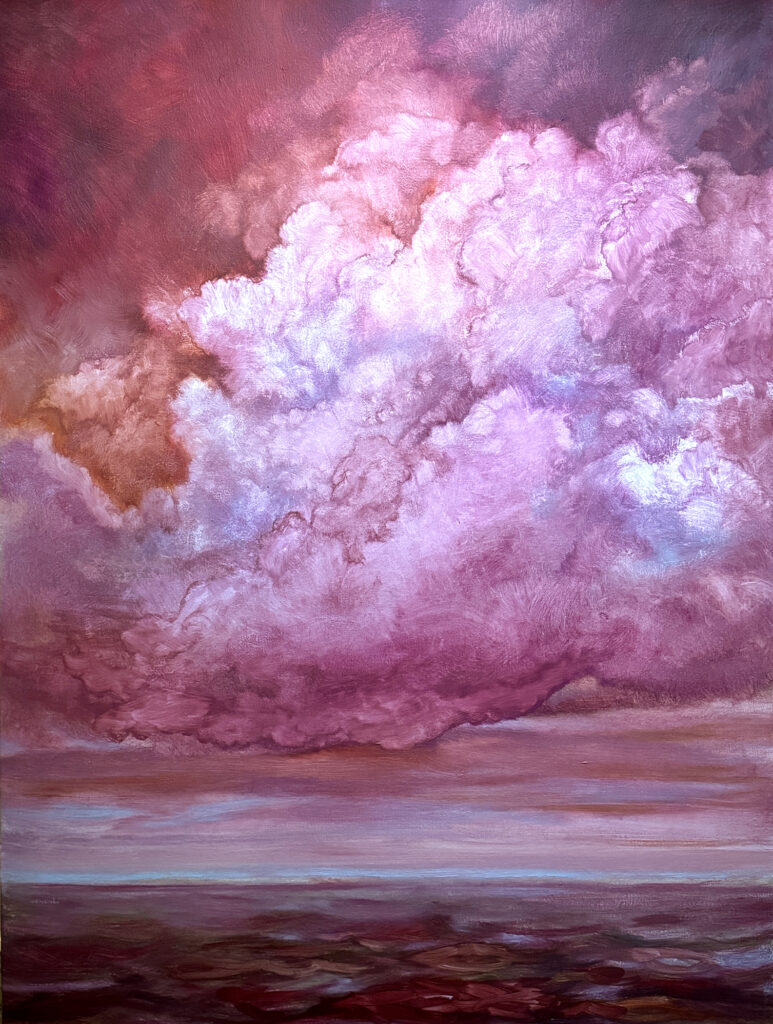
Q5. Your recent cloudscapes series blends oil and acrylic on canvas and panel. How do you decide which material supports a given mood or idea?
I mostly work in oils because of the mutability and changeable nature of the medium…the slow drying allows for more working back into the paint. I like a combination of reductive techniques (wiping out the paint) along with adding more layers and glazing. Sometimes what I imagine needs to be tweaked when the paint hits the support, and a slow-drying media is a plus for that.
The drawbacks come from the same slow drying quality…wet work is often more delicate to transport and handle if working onsite or in plein air without smudging, so sometimes quicker-drying acrylics work better under other painting conditions.
Q6. As an artist and educator involved in interdisciplinary practice, how do you think about the role of cross-disciplinary thinking in contemporary art?
I think that no kind of artistic work–writing, music, visual art– is made in a vacuum. Even if one may say of one’s work, “it’s not political…I’m only interested in beauty…” that is a choice and a response in itself. I think that artists have a job to do with their tools and media, and it is to express how they are experiencing their world and the particular conditions around them.
This includes their experiences and responses to other creative artists…what inspires them. I think it’s exciting to share with others the ways in which they respond to their worlds…it can hopefully lead to increased empathy and understanding, of which we need much more.
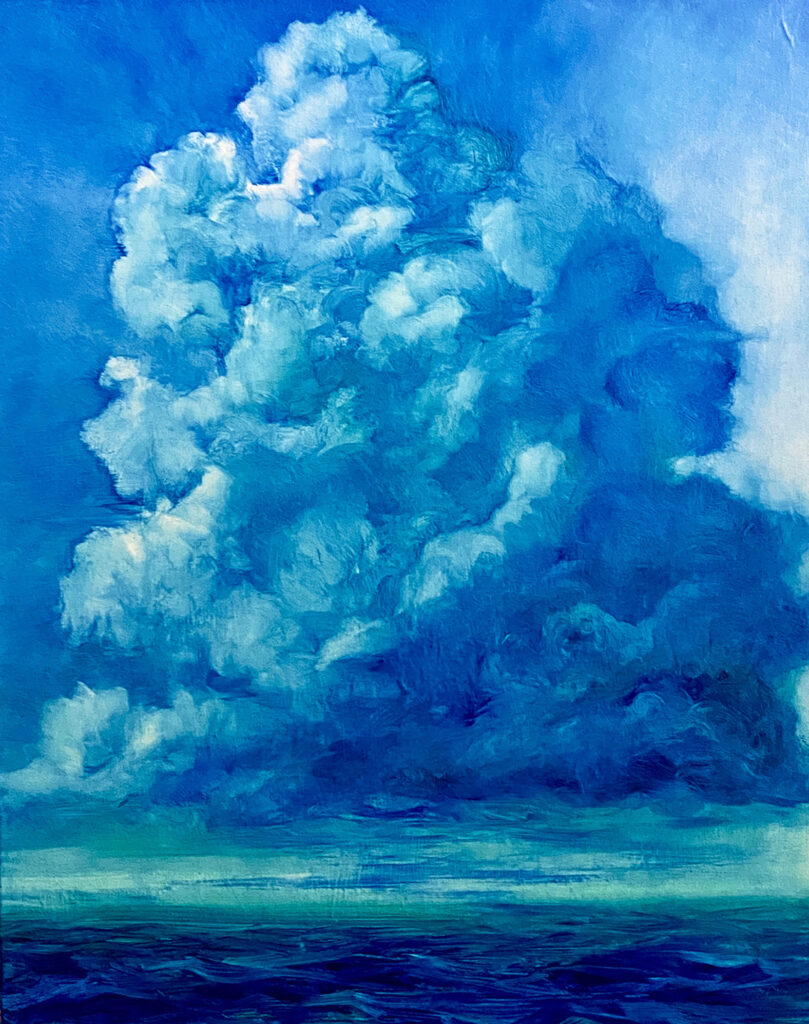
Q7. How do you hope someone’s perception or memory shifts when they spend time with your work, especially pieces that evoke both memory and feeling?1 response
I hope that when sitting with my work for a while, viewers open their senses to aspects of each work including the impact of scale, the tenderness of details, sensitivity to particular color notes, the physicality of the brushwork, and how the afterimage of a certain skyscape might linger in their memory.
I hope some of the work reminds them of feelings that they have, how they might either treasure a sweet memory, or wonder about melancholy that they might feel. I hope to make people stop for a moment, look, and wonder.
Q8. How do you approach translating one sensory experience into another in your work?
I often carry a notebook or make quick notes on my phone app when listening to a musical performance or seeing an exhibit …you never know when a compelling image or haunting melody will conjure up some unexpected connections, and you want to capture those resonances before they evaporate.
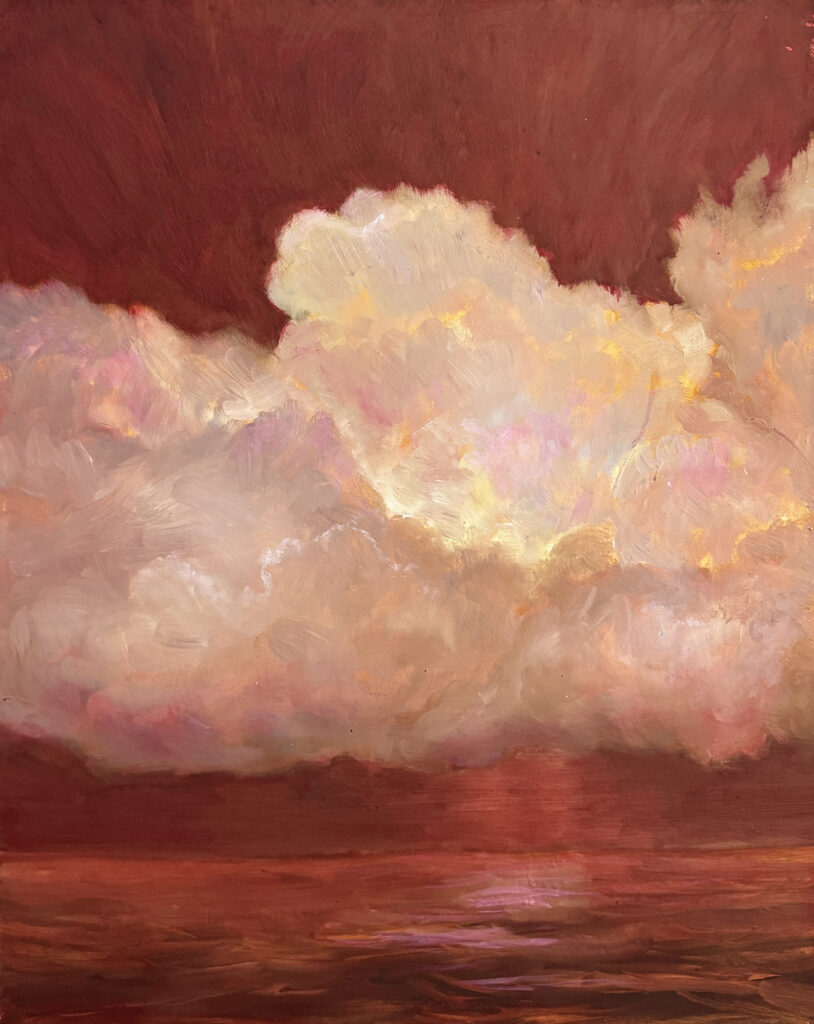
As far as pushing further to expand one’s openness to multisensory experiences…I’ve always thought the people that get to pick names for new perfumes must have delightful and poetic jobs, to think of how to translate one kind of sensory experience into words that trigger a special memory of time and place.
Q9. What advice would you offer to artists hoping to create work rooted in memory and colour, while navigating the challenges of working with soft pastels?
To all artists who want to express a key emotional note that a personal memory evokes, I would say to try to go with your gut and instinct when choosing your color harmonies…pick colors, forms, and marks that are meaningful to your experience. I find that people respond to paintings that come from strong feelings, and the more authentically and truthfully you express your particular feelings about your own memories, the emotions will be more recognizable to other people in your paintings.
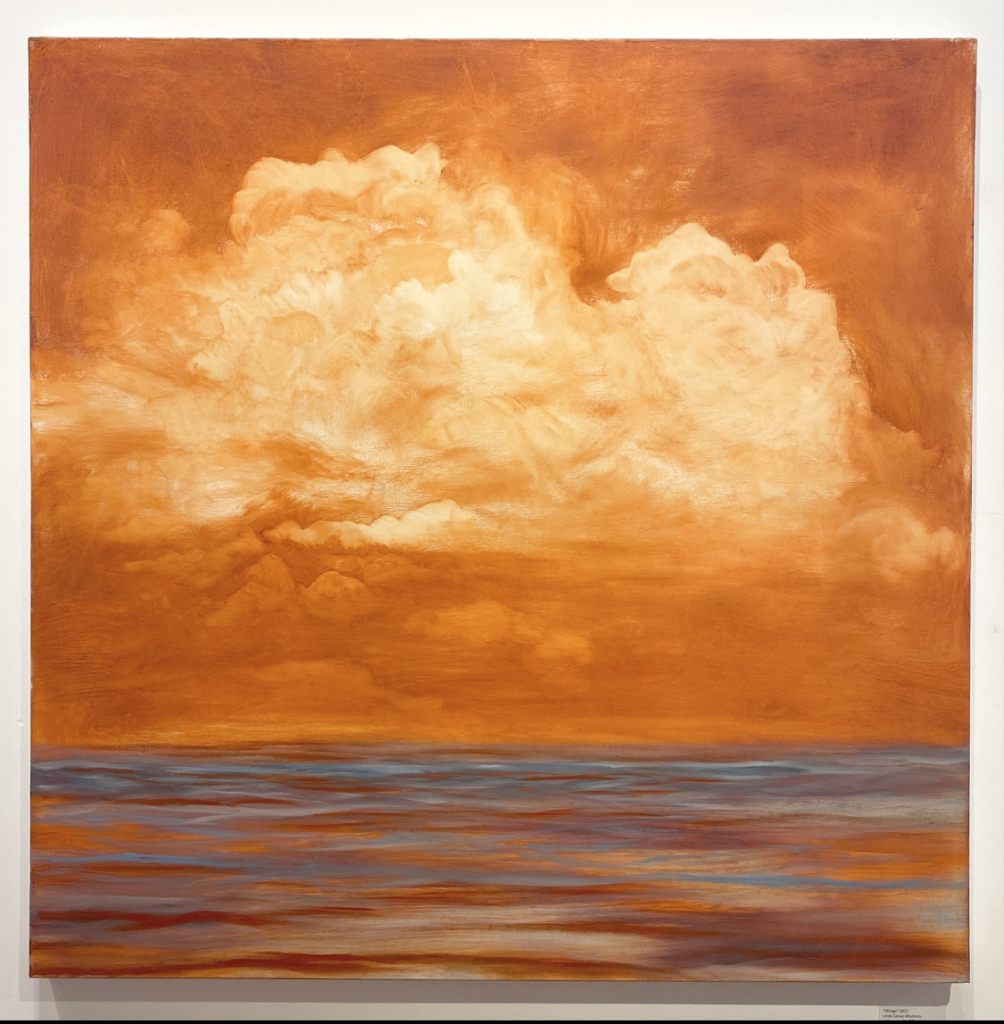
As our conversation with Linda came to a close, we sat there for a minute just thinking about what she is doing. And honestly we think she is doing something that not many landscape painters are doing right now.
Most landscape paintings ask you to admire them. Linda’s ask you to feel them. There is a difference. Admiring is quick. You look, you appreciate, you move on. Feeling takes time. It asks you to stay.
To let the painting work on you the way a song works on you when you stop doing other things and just listen. Linda’s work does that. It slows you down. And in a world where everything is fast and loud and competing for two seconds of your attention, we think an artist who can slow someone down is doing something important.
We also kept thinking about her relationship to music. Because it is not a gimmick. It is not a marketing angle. It is genuinely how she experiences the world. She hears colour. She sees sound. And that crossover gives her paintings a quality that is hard to find in other landscape work.
There is a rhythm in them. A harmonic structure. You feel movement even though nothing on the canvas is actually moving. And just like a good jazz record, the best parts are sometimes in the pauses. The spaces she leaves. The colours she holds back. The places where the painting breathes.
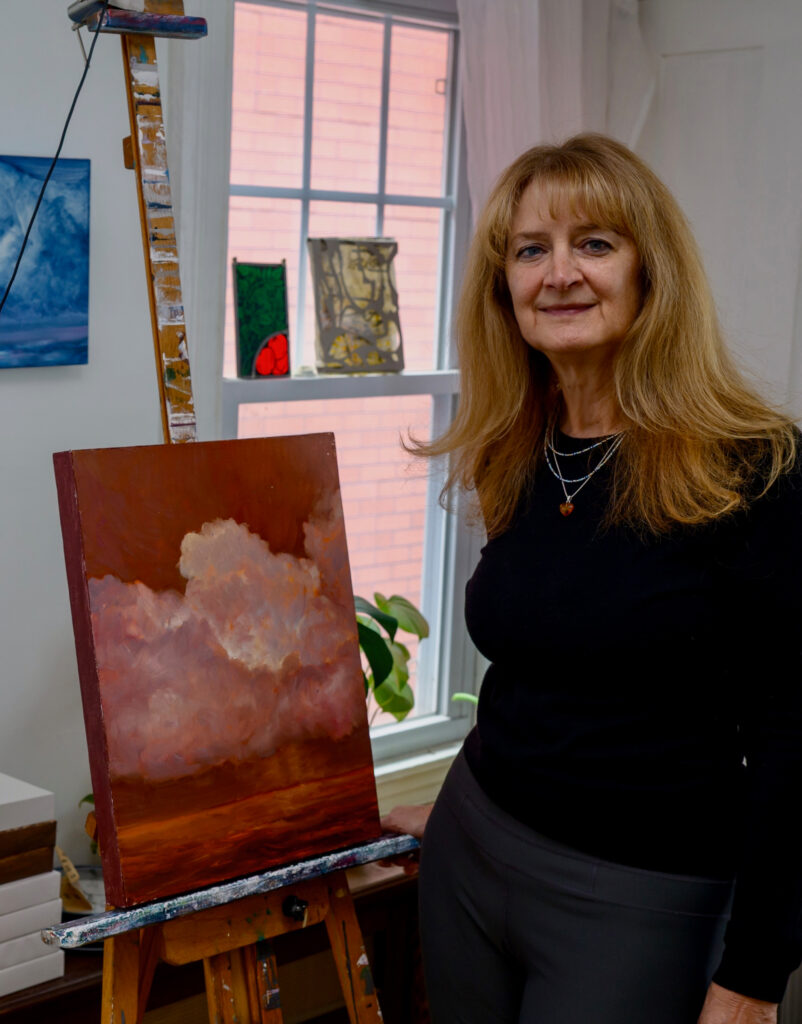
We think Linda is one of those artists who is easy to underestimate if you look too quickly. You might see a cloudscape and think okay, clouds, sky, nice. But if you stay with it, and we mean really stay with it, something starts happening. The colours start talking to each other. The scale starts doing something to your body.
The atmosphere starts feeling personal, like it is connected to a memory of yours that you did not even know you were carrying. That is not an accident. That is decades of practice and sensitivity and a mind that has been trained by both music and painting to understand how feeling moves through form.
And honestly we think she should be talked about more. Her work has the kind of depth that rewards serious attention and it holds up under it. It does not fall apart when you look closely. It opens up.
For anyone looking to collect landscape work that goes beyond the decorative, Linda is an artist we would genuinely recommend spending time with. Her paintings are not the kind that look great in a photo and then disappoint in person. They are the opposite. In person they do things that a screen cannot capture.
The scale matters. The brushwork matters. The way oil paint catches light at different times of day matters. These are paintings that live and change on your wall. They are different in the morning than they are at night. They are different when you are calm than when you are carrying something heavy. They meet you wherever you are. And they give back more the longer you live with them. That is the kind of art that is worth investing in. Not because of market trends. Because it will still be moving you ten years from now.
Follow Linda Ganus through the links below and give yourself permission to slow down and really look.