
Five Artists on What They Are Excited to Mess Around in 2027
At Arts to Hearts Project, the most interesting thing about an emerging artist is rarely what they have already made. It is what they are about to try. The material they keep picking up in the shop and putting back. The technique they watched someone else use once and have been rehearsing in their head ever since. Most of these plans never make it into an artist statement, but they are usually the clearest sign of where a practice is going.
That is the spirit of 100 Emerging Artworks, our annual hardcover book. It began in 2023 to document new creative voices from around the world, and each year our global call for art brings in thousands of submissions.
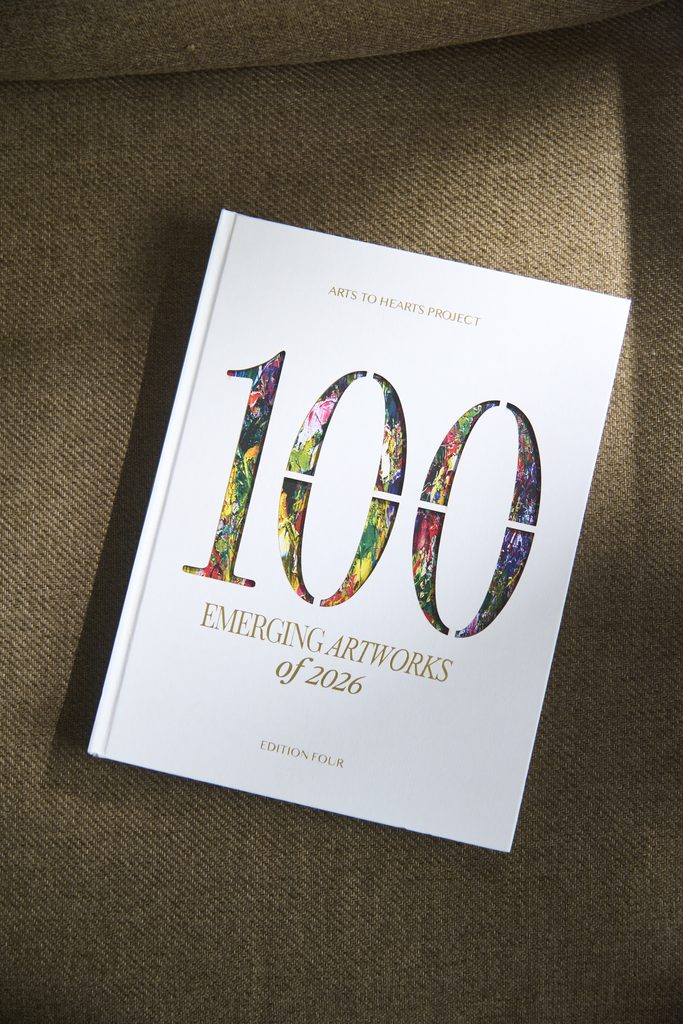
From that pool, 100 artworks are selected, and every artist receives a full two-page spread for their work and the story behind it. Painting, sculpture, photography, mixed media, digital art, the range is wide and so are the perspectives. These are artists who are experimenting, questioning, and reimagining what art can be, and our goal is to give their work a place where it can be seen and remembered.
So we asked the featured artists what they want to try next. Is there a material, technique, or approach they are curious about exploring? We wanted to know what is sitting on their studio shelves and what they are quietly planning.
Here is what some of them told us.
Some experiments begin with a pile of materials and a question about how they might work together
Most studios have a material that sits on the shelf for months before anyone touches it. It is not forgotten. It is waiting for the right idea, or the right nerve. A lot of experiments begin exactly there, with a pile of things on a table and a quiet “what if.”
Kukka-Maaria Kärki @kukkamaariakarki already has her pile ready. She tells us:
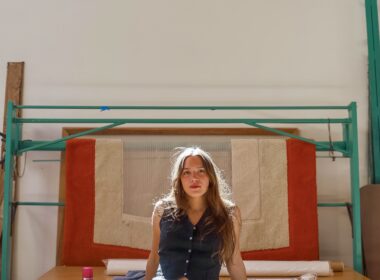
“I’m curious to explore combining different techniques and materials, such as rya, sewn textiles as a painting surface, recycled textiles, and monotype on plate and/or paper. I’m interested in how these methods can interact, overlap, and create new visual and tactile possibilities.”
Kukka-Maaria Kärki
Kukka-Maaria is not after one new technique. She wants to see what happens when several of them meet. Rya, a traditional knotted textile from the Nordic countries. Fabric stitched together to become the surface she paints on. Recycled textiles. Monotype on plate or paper. Each of these could fill a whole practice by itself, and she is curious about what they do when they overlap. The word she chose is tactile, so she is thinking about how the work will feel to touch as well as how it will look. It is a plan built around a question, and she seems happy to find the answer slowly.
Some artists spend years painting people, then wonder if a shape could do the same.
Anyone who has painted the figure knows how much it can do on its own. A tilted head, a hand resting on a knee, a look that goes slightly past the viewer, and the feeling is already there. So it is a big question to ask whether a shape with no face and no body could carry the same weight. Some artists get curious about it after years of working with people, and once the question is in their head, it does not go away.
Dragan Marković Markus @markusdr.art in his own words:
“I am increasingly interested in exploring abstract forms that possess an expressive power of their own. I have already begun this research, searching for forms that can communicate with the same emotional intensity as the human figure.”
Dragan Marković Markus
Dragan does not say he is giving up on the figure. He says he wants to find forms that can do what the figure does, which is a more interesting thing to want. His interest is growing, and he has already begun the research, so this is something he is working on now, not a wish for someday. The bar he has set is high, because a human figure carries feeling almost without trying. We are curious to see what he finds.
Paint on top of paint on top of paint. Some surfaces take years to build
Anyone who has worked in oil knows the waiting. You put down a layer, then you leave it alone for days. When you come back the colour looks different, so the next layer has to answer to it. Do that enough times and the surface gets a depth that cannot be hurried. The painting you finally see is built on a lot of time nobody watched.
Tehmina Tasadduq @a.r.t.by.t has a few things she wants to try next. She shares:
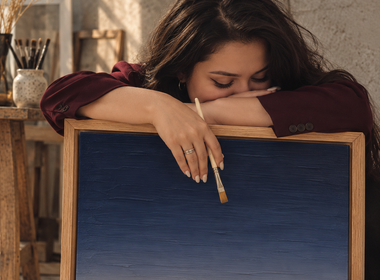
“I really wanna explore larger-scale paintings and pushing the possibilities of texture and layering within oil painting. I’m also curious about combining traditional painting with mixed media and natural materials to create more immersive, tactile surfaces. Conceptually, I want to continue exploring themes of identity, transformation, memory, and emotional experiences.”
Tehmina Tasadduq
Tehmina wants to go bigger, and she wants to push oil paint further than she has before, with more texture and more layers. She is also curious about mixing in other materials, including natural ones, so that the surface feels like somewhere you could step into. What she wants to say stays the same: identity, transformation, memory, and emotional experience. It is the way of saying it that keeps growing, with more space, more built-up layers, and more to touch.
Years of painting what the eye sees can lead to a wish to paint what the heart feels
Learning to paint what is in front of you takes a long time. The proportions, the light, the way a shadow falls across a table. Most artists put years into it, and it is real skill. But somewhere along the way a different thought can creep in. What if the painting did not have to look like the scene, as long as it felt like the moment? That wish rarely arrives overnight. It grows quietly, usually in people who have become very good at the thing they are about to move away from.
Sana Alsaad @by_sana.a has a new direction in mind. She says:
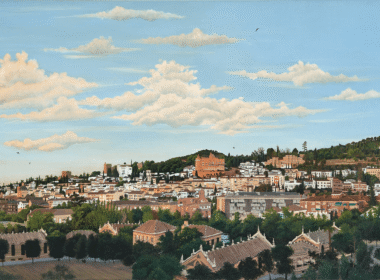
“Until now, I have focused on painting scenes as faithfully to reality as possible. What I’d like to explore next is moving beyond reality and painting more from my heart, expressing and conveying feelings, emotions, and experiences rather than simply reproducing what my eyes see.”
Sana Alsaad
Sana is not after a new material or a new technique. The approach is what she wants to change. She has built her skill on getting things right, and now she wants to see what happens when feelings and experiences lead the painting instead of the scene in front of her. She is not leaving that skill behind. She is pointing it at something harder to measure. She would rather convey what she feels than simply reproduce what her eyes see, and we are curious to see how that looks on canvas.
Sometimes the best way to grow is to give up the size you are comfortable with
Every artist has a size they are comfortable with. The size is rarely random. It settles around how they work, how much detail they put in, and how much time each piece is worth to them. Staying inside it feels natural. Stepping outside means rethinking almost every habit, which is exactly why some artists decide to try it.
Jonathan Darko @_21yrs has a challenge in mind. He tells us:
“I’d like to challenge myself to create super large works because mostly my art pieces are small to medium in size due to the amount of detail…”
Jonathan Darko
Jonathan makes small to medium pieces because of how much detail goes into them, and he is not asking to give that up. He wants to find out whether the same care can survive at a much larger scale. Nobody set this challenge for him. He chose it himself. Going from small to super large means planning differently and keeping every detail alive across far more space, and he seems ready to try it.
Not one of these artists named a destination. They named a direction.
Put a few techniques side by side and see what the overlap does. Look for a shape that can feel as alive as a face. Go bigger, build up the layers, bring in something from outside the studio. Paint what the heart feels instead of what the eye sees. Take the detail that has always kept the work small and see if it survives at a much larger scale.
None of these plans come with a guarantee, and that is part of why they are exciting. Each one starts with an artist who is willing to be a beginner again at something. The next thing an artist wants to try is rarely the thing they are already good at, and we think that says a lot about a practice that is still alive.
That energy runs through 100 Emerging Artworks, our annual hardcover book where every artist gets a full two-page spread for their work and the story behind it. If you want to see where these artists are today, the book is at the link below.
And if your own work has a garden in it, we have something for you. Submissions are now open for 101 Art Book: Garden Edition, a premium hardcover featuring 101 artists from around the world. If you have been waiting for a reason to send your work in, this is it.