

The Art Business — Part 08: How To Build An Artist Portfolio
As artists, we spend so much time making our work that presenting it to the world can sometimes feel like an entirely different challenge. You might have a collection of beautiful paintings, a series of photographs you are proud of, or years of experimentation behind you, but when someone asks to see your portfolio, you suddenly find yourself wondering where to begin.
What should you include? How many artworks are enough? Do you need a website? And what if you are still early in your career and do not have exhibitions or awards to show?
Building an artist portfolio does not have to be complicated or expensive. At its heart, a portfolio is simply a thoughtful presentation of your work. It helps galleries, curators, collectors, and potential clients understand what you create and gives them a reason to learn more about your practice. Here is how to build one that feels professional, personal, and genuinely representative of you as an artist.
Start By Understanding Your Purpose
Before selecting artwork or opening a design tool, think about what you want your portfolio to achieve. Are you preparing to apply for exhibitions? Do you want to approach galleries, attract commissions, apply for residencies, or simply establish an online presence for your work?
Your answer will influence how you put everything together. For example, a portfolio for a gallery might focus on a cohesive body of work that demonstrates your artistic direction. A portfolio for a commission-based practice might include examples of previous commissions, different sizes, and the materials you work with.
If you are applying for an open call, always read the requirements first. Some opportunities request a specific number of images, while others ask for an artist statement, biography, CV, or work samples from a particular series.
You do not need to create a completely new portfolio for every opportunity. Instead, prepare a strong general portfolio that you can adapt when necessary.
Choose Your Strongest Artwork
This is where many artists get stuck. When you have spent hours, days, or even months creating a piece, it can be difficult to decide whether it belongs in your portfolio.
The important thing to remember is that your portfolio does not need to include everything you have ever made. It should represent your practice in a way that feels clear and intentional. Start by gathering images of the work you are most proud of. Look at the collection as a whole and consider whether the pieces communicate something about your interests, materials, techniques, or artistic direction.
A selection of around 10 to 20 artworks can be a useful starting point for a general portfolio, although the right number depends on your practice and the requirements of the person or organization viewing it.
If you work across several mediums, you do not necessarily have to limit yourself to one. However, consider how those different bodies of work relate to one another. If they feel entirely separate, organizing them into individual sections may help.
And do not feel obligated to include an older piece simply because it received attention or took a great deal of effort to complete. Your portfolio should reflect the artist you are today, not just the artist you were when you began.
Organize Your Work Thoughtfully
Once you have selected your artwork, think about the order in which someone will encounter it. The first few images are particularly important because they establish an impression of your practice. Begin with work that is strong, representative, and relevant to your portfolio’s purpose.
From there, consider how the remaining pieces work together. You might group them by series, subject, medium, or a recurring idea. If your work explores a particular theme, a thoughtful arrangement can help viewers recognize those connections without requiring a lengthy explanation.
Avoid arranging everything randomly simply because you like each piece individually. A portfolio is not just a folder of attractive images. It is an opportunity to show how your work fits together.
At the same time, you do not need to force every artwork into a single visual style. Artists evolve, experiment, and change direction. The goal is to make those different aspects of your practice understandable rather than hiding them.
Photograph Your Artwork Clearly
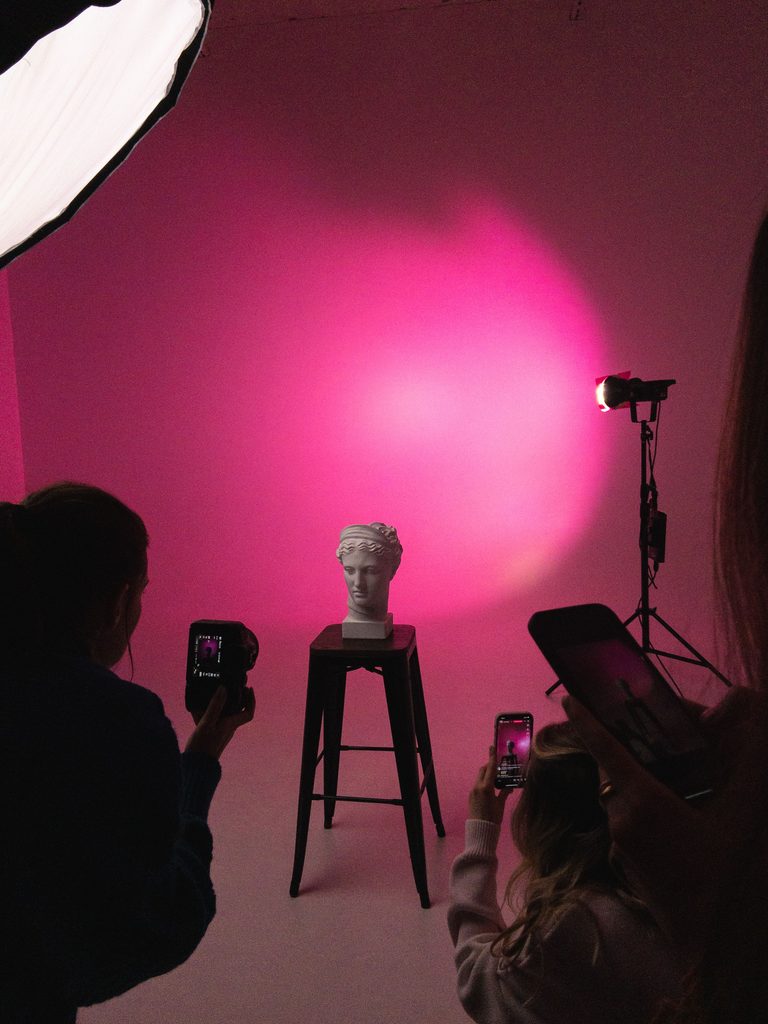
You can create an incredible piece of art and still struggle to communicate its quality through a poor photograph. Blurry images, incorrect colors, distracting backgrounds, and harsh reflections can make your work difficult to appreciate. Since many galleries, curators, and collectors encounter artwork digitally before seeing it in person, good documentation matters.
You do not necessarily need a professional camera. A smartphone can produce useful results when you pay attention to lighting and positioning.
Here are a few things to remember:
- Use soft, natural light. Photograph your work near a window, avoiding harsh sunlight and strong shadows.
- Keep the camera straight. For paintings and drawings, position your camera parallel to the artwork to prevent distortion.
- Check the colors. Make sure the photograph looks as close to the original as possible. Avoid filters that significantly alter the artwork.
- Keep the background simple. Remove unnecessary objects and distractions from the frame.
- Include details when necessary. If texture, brushwork, stitching, or intricate materials are important to the piece, add close-up photographs.
For three-dimensional work, include different angles when they help viewers understand the form. For installations, contextual photographs can show how the work interacts with its surroundings.
Always keep high-resolution versions of your images and save them in an organized folder. You will appreciate having them ready when an application deadline appears unexpectedly.
Include The Essential Artwork Details
Every artwork should be accompanied by accurate information. This helps people identify the work and gives your portfolio a more professional finish.
For each piece, include:
- Artwork title
- Year of completion
- Medium and materials
- Dimensions
For example:
Quiet Hours, 2026
Oil and graphite on linen, 60 × 80 cm.
If a piece belongs to a particular series, you can mention that as well. For digital work, photography, sculpture, or installation, adjust the details to suit the medium. Be consistent throughout your portfolio. If you list dimensions in centimeters for one painting, avoid switching between centimeters and inches without a clear reason. Make sure the titles and dates match the information on your website and application forms. These details might seem small, but they make it easier for someone to discuss, exhibit, or potentially acquire your work.
Write A Simple Artist Statement

Writing about your own art can feel surprisingly difficult. You know why you make certain things, but translating those thoughts into words is not always easy. An artist statement gives viewers a little context about your practice. It can explain the subjects you explore, the materials you use, the questions that interest you, or the experiences that influence your work.
You do not need to make it sound complicated to make it meaningful.
Start by asking yourself:
- What ideas or subjects do I return to in my work?
- Why am I drawn to these particular materials or processes?
- What am I trying to explore or understand through my practice?
Write your answers in your own words before shaping them into a short statement. For example, if you paint domestic spaces because they remind you of your childhood home, explain that connection. If you work with discarded materials because you are interested in transformation and reuse, describe what draws you to that process.
Specific details are often more engaging than broad statements about creativity, identity, or the human experience. Keep your statement concise and honest. It should help people understand your work, not tell them exactly what they must feel when looking at it. If your practice changes over time, allow your statement to change with it.
Add Your Artist Bio And CV
Your artist statement explains your work, while your biography and CV provide information about your background and professional experience. An artist biography is a short introduction that may include where you are based, your artistic background, the mediums you work with, and relevant information about your practice.
Your CV records your professional activities. Depending on your experience, this might include exhibitions, awards, residencies, publications, relevant education, and other artistic opportunities. If you are just starting out, you may not have much to include yet, and that is completely fine.
You do not need a long exhibition history to create a worthwhile portfolio. Include the experience you genuinely have and keep the information relevant to your artistic practice. Never feel pressured to exaggerate your achievements to make yourself appear more established.
As your career develops, update your CV with new exhibitions, collaborations, and other relevant accomplishments. It is also useful to maintain a longer version of your CV that you can shorten for applications with specific requirements.
Choose The Right Format For Your Portfolio
You do not need an expensive website to begin presenting your work professionally. There are several ways to create an accessible portfolio, and you can choose the one that suits your current needs.
A PDF portfolio
A PDF is often the easiest place to start. You can organize your images, artwork details, artist statement, and biography into one document using presentation or design software.
Keep the layout clean, use readable text, and avoid unnecessary decorative elements. Your artwork should remain the main focus.
A PDF is particularly useful for applications and direct emails because it gives the recipient a complete presentation in one file. Keep the file size manageable and follow any submission instructions regarding format and image limits.
A personal website
A website gives your work a dedicated online home. You can organize artwork into different series, share your biography and CV, provide contact details, and update your portfolio as your practice develops.
It can be a valuable long-term investment, but you do not need to rush into paying for a domain or website subscription before you are ready.
An online portfolio platform
An established portfolio platform can also help you present your work online without building an entire website yourself. Choose a platform that suits your medium, offers a clear viewing experience, and allows you to share your work easily.
Social media can support your visibility, but try not to rely on it as your only portfolio. A dedicated PDF or portfolio page makes it easier for someone to review your work without scrolling through unrelated posts.
Whatever format you choose, make sure your portfolio is easy to open, navigate, and share.
Make It Easy To Contact You
Imagine a curator discovers your work, likes what they see, and wants to discuss an exhibition. They open your portfolio but cannot find an email address or a way to reach you.
It is a small problem, but one that can create unnecessary friction. Include a professional email address and, where relevant, a link to your website or online portfolio. If you accept commissions or sell work directly, provide the appropriate contact information or shop link.
You do not need to share personal information you would rather keep private. Simply make it clear how professional inquiries should reach you. When sending your portfolio to a gallery, curator, or potential client, write a short, thoughtful email explaining who you are and why you are getting in touch. Follow their submission preferences and avoid sending large attachments if they request links instead.
Your portfolio is there to help people discover your work. Make the next step easy for them.
Keep Your Portfolio Updated
A portfolio should grow alongside your practice. The work that represented you two years ago may no longer reflect your interests today. You might have developed a new series, experimented with unfamiliar materials, or discovered a direction you want to pursue further.
Review your portfolio every few months. Remove work that no longer represents your practice, add new pieces when they strengthen the selection, and check that your artwork details, biography, CV, and contact information are current.
It is also helpful to maintain a folder containing high-quality artwork images, captions, dimensions, and professional records. Keeping these materials organized will save time when you want to apply for an exhibition, residency, or open call.
Most importantly, read the requirements for each opportunity carefully. A beautifully prepared portfolio can still be overlooked if it does not follow the requested image count, file format, or submission instructions.
You can maintain one main portfolio and prepare smaller, tailored selections whenever an opportunity calls for something specific.
Give Your Work The Presentation It Deserves
Building an artist portfolio is an important step in sharing your practice with the world. It asks you to look at your work with fresh eyes, decide what represents you best, and find a way to communicate your ideas to people who may be encountering them for the first time.
You do not have to wait until you have a long list of exhibitions, a perfect website, or years of professional experience. Start with the work you have, document it carefully, include the essential information, and put everything together in a way that feels clear and considered.
Your first portfolio might be a simple PDF with ten artworks and a short artist statement. Over time, it can develop into a more comprehensive presentation of your practice. The goal is not to make your career look bigger than it is. It is to help people see what you create, understand what matters to you as an artist, and discover the work you are continuing to make. And sometimes, that first step is simply giving your work a place where it can speak for itself.
Editor’s Note:
Our Open Call for our latest 101 Art Book: Texture Edition is coming to a close. If you have been thinking of submitting, this is your sign to go and submit your art to the open call before it ends. The Book is being curated by Rachel Burke, and the deadline is October 22, 2026.