
The Hours No One Sees but Every Artist Lives
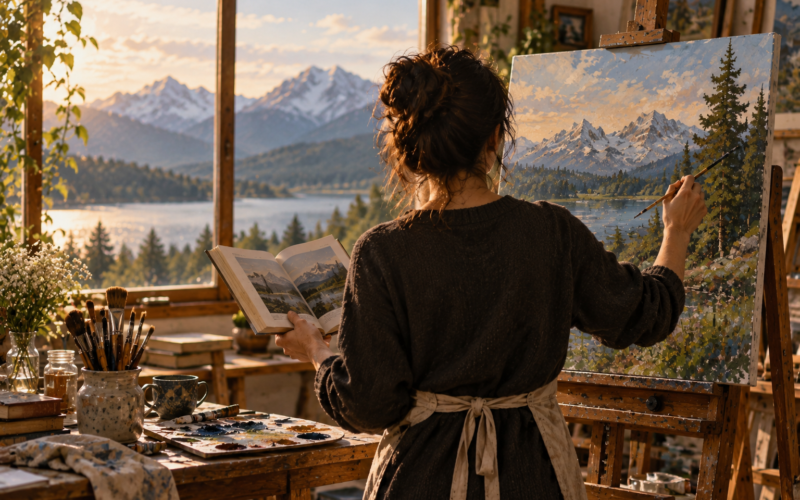
At Arts to Hearts Project, we believe that behind every finished piece of art there is a day that nobody saw. A morning routine, a ritual, a way of getting from waking up to actually making something. The coffee that has to be finished first. The sketchbook that has to be opened. The walk that has to happen before anything else can. That part rarely makes it into the conversation. We think it should.
Women Artists on the Rise Edition 4 features 100 exceptional women artists from around the world in a beautifully crafted 232-page hardcover collector’s book. Wrapped in a gold-foiled die-cut jacket and filled with exclusive interviews, award-winning artworks, and contemporary practices across painting, sculpture, photography, mixed media, and more.
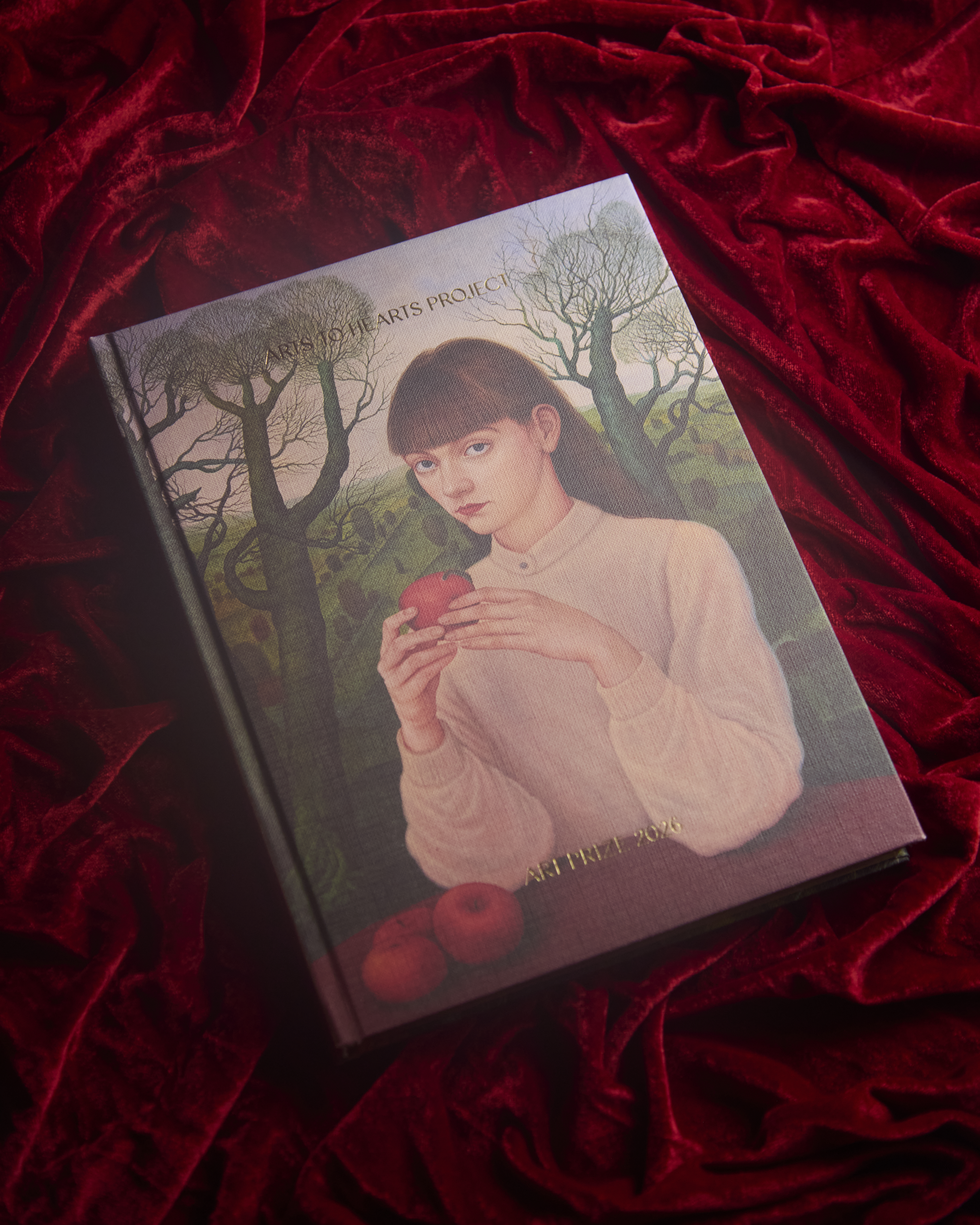
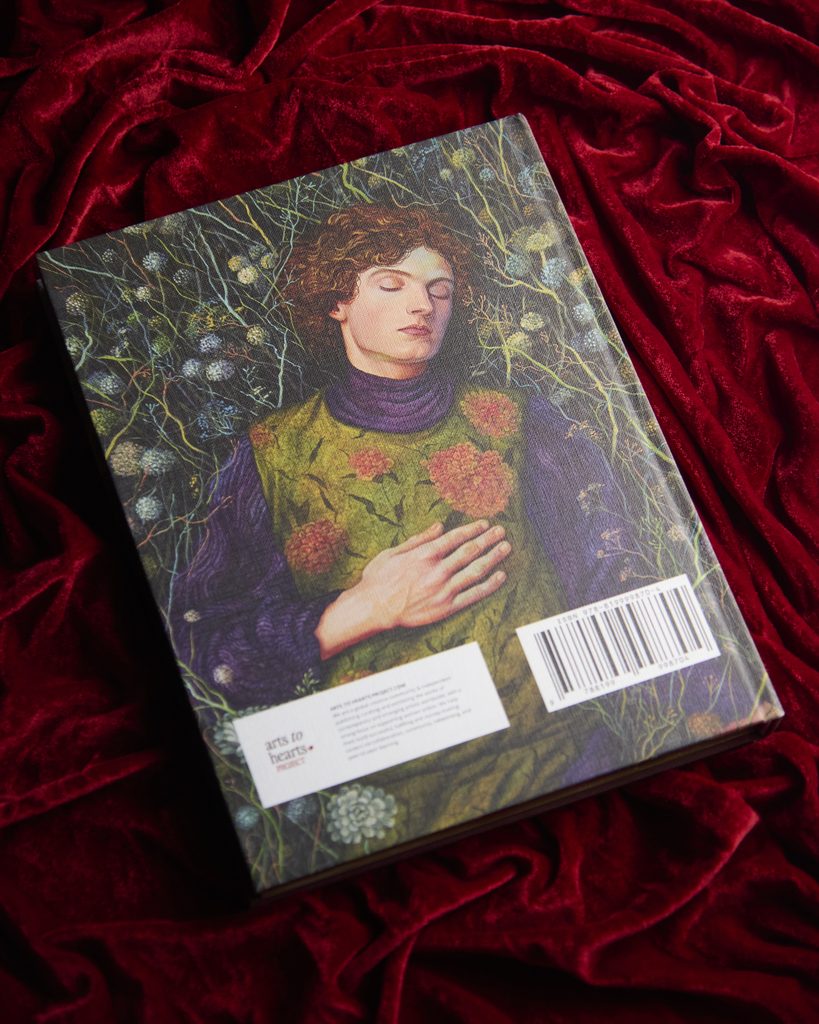
It is a book built to celebrate not just what these women make but how they make it. The practice behind the piece. The day behind the work.
A few weeks ago we asked some of the featured artists one simple question. What does your creative process look like on a typical day? The answers that came back were honest, varied, and more human than we expected. We shared some of them. And the responses stayed with us.
So we went back. Because there were more worth sharing. Today we are bringing you another set. More artists. More practices. More ways of showing up for the work every single day.
Some days start with a book. Some start with a feeling. The most interesting ones start with both.
There is a version of the creative process that is entirely instinctive. You show up, you feel something, and you make. And there is another version that begins in books and ideas and questions that take weeks to fully form. Both are valid. But the practices that produce the most layered and alive work are often the ones that refuse to choose between the two. That move fluidly between the intellectual and the emotional until neither is distinguishable from the other.
Christina Ivette Jimenez @christina_ivette describes her process this way:
“My process combines both study and intuition. I’m constantly researching psychology, embodiment, memory, and identity, and those ideas eventually move into the work through gesture, abstraction, and layered materials. Most days involve a balance between observation, experimentation, and emotional release”
Christina Ivette Jimenez
Observation, experimentation, emotional release. Three things that sound like they belong to three different kinds of artists. Christina holds all of them in a single day. The research feeds the thinking. The thinking feeds the gesture. And the gesture becomes the release. Each one necessary. Each one incomplete without the others. A practice built on the understanding that what you study and what you feel are not separate streams. They are the same river moving toward the same place.
The work that comes from struggle is often the work that means the most.
Not all art begins with inspiration. Some begins with necessity. With the feeling that something in the world is wrong and that staying quiet about it is no longer an option. That the communities you belong to, the people you fight alongside, the stories that have been overlooked and dismissed for too long, deserve to be seen. And that art might be the most honest way to make that happen.
Jennaya Dunlap @golisang creates from exactly that place:
“My creative process is tied to my work for social justice, because my art is an expression of the work I do in my community, whether that be through dismantling the identity of whiteness, or uplifting the struggles of Native, Black and Brown, immigrant, or queer communities.”
Jennaya Dunlap
The art and the activism are not two separate things for Jennaya. They are the same practice expressed in different forms. What she does in her community shapes what she makes in her studio. And what she makes in her studio goes back out into the community. A continuous loop of witnessing, responding, and refusing to let the stories of people on the margins go untold. That is not just a creative process. That is a way of being in the world.
The reality of being a working artist is that the work never looks like just one thing.
The glamorous version of the artist’s life looks like uninterrupted hours in a beautiful studio, making things from morning until the light fades. And then there is the version most working artists actually live. Where the making is real but so is the invoicing. Where the creative work and the business work share the same day and neither one gets to wait for the other to finish first. Most people who dream about being a full time artist have not quite pictured this part yet. The artists living it know it is just part of the deal.
In Anna Kovacs’ @fineartbyannak own words:
“The reality of being an artist with an art business is that I mix it up. I focus for a period of time on the creation of a current work and potential new works, blended with the everyday details of the business side of art.”
Anna Kovacs
Mix it up. Two words that contain a whole complicated reality. The creative work and the business work woven together throughout the day, each one demanding attention, neither one fully separate from the other. Anna does not fight that reality. She has found a way to move between both without losing either. And we think that kind of flexibility is its own form of creative skill. One that nobody teaches but every working artist eventually has to learn.
When the studio is also the kitchen, the living room, and the inspiration archive.
Not every artist has a dedicated studio. A separate space with a door that closes and a floor that can get paint on it and shelves built specifically for the work. Most artists make do with what they have. And what they have is often a home that has slowly, inevitably, become something else entirely. Where the kitchen table doubles as the work surface and the living room holds years of collected magazines and the inspiration is stacked in every corner waiting to become something.
Ingunn Kogstad @mai.vjuu embraces it completely:
“Living in a flat, it contains all of my life. It is my atelier, and I have stored years of papers and magazines of inspiration for collage. Enjoying different medias, I have tools and medias ready in my messy home. My creative process is organized chaos, yet I love it.”
Ingunn Kogstad
Organized chaos. And she loves it. That last part is the thing. Because Ingunn is not apologising for the mess or waiting until she has a better space or wishing things were different. She has built a practice inside the life she actually has. The flat is the studio. The chaos is the system. And the years of collected papers and magazines and tools within reach are not clutter. They are the whole creative infrastructure. Already there. Already ready. Already hers.
Looking, really looking, is one of the most underrated parts of making art.
We talk a lot about making. About technique and process and the hours spent at the easel. But before any of that there is something simpler and harder and more essential than most artists give it credit for. Seeing. Not glancing. Not scrolling past. Actually stopping and looking at the world around you with the kind of attention that most people reserve for screens. The artists who do this well never run out of things to paint. Because the world keeps giving them more than they could ever make.
Amy Laskin @amylaskin has built her practice around exactly that:
“Although my studio is a complete unorganised mess, my studio practice involves a lot of looking, observing my surroundings on any given day. I walk the neighbourhood, go on hikes and study the vegetation around me.”
Amy Laskin
The studio is a mess. And it does not matter. Because the real work is happening outside of it. On the walk. On the trail. In the quiet act of stopping in front of a piece of vegetation and actually studying it. Learning its shape and its light and the way it exists in the world. That kind of looking is not preparation for the work. For Amy it is the work. Everything that happens in the studio afterward is just the response.
What we noticed reading through all of these was not how different the practices were. It was how completely each artist had made peace with the practice that was theirs.
A flat that became an atelier. A neighborhood that became a studio. A day split between creation and invoicing. A process that moves between research and intuition and emotional release. An art that begins not in the studio but in the community. None of these look the same. And every single one of them works. Because the best creative practice is not the most organized one or the most disciplined one. It is the one that is honest to who you actually are and how you actually live.
Women Artists on the Rise Edition 4 is full of artists exactly like this. One hundred women. One hundred practices. One hundred ways of showing up for the work. The book is available now at the link below.
And before you go, we have good news. The deadline for The Big Book of Mixed Media Artists 2026 has been extended. If you were thinking about submitting and ran out of time, you now have another chance. This is a curated international collection celebrating artists who work across mediums, experiment with materials, and create in ways that cannot be neatly defined. If that is your practice, do not let this extended deadline pass you by.