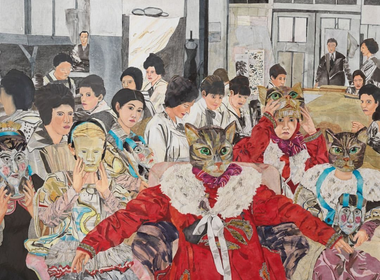

Casandra Smith Combines Oil & Charcoal to Express Different Sides of Human Emotion
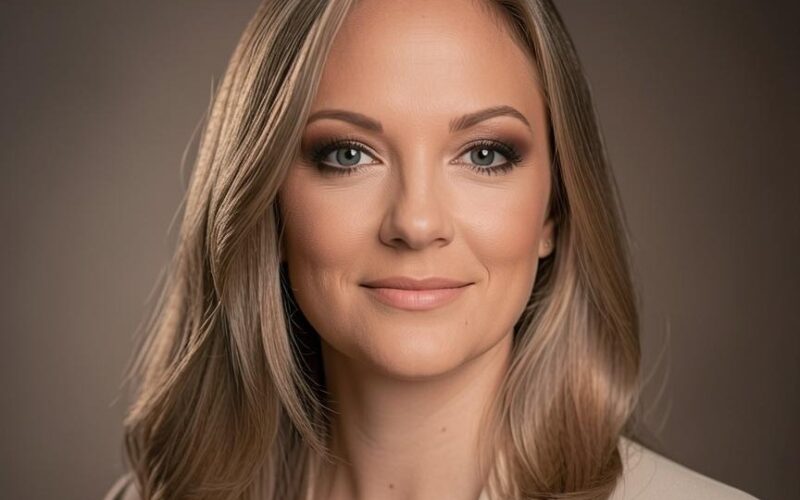
At Arts to Hearts Project, the theme for this issue of our magazine was “The Things We Hold Onto,” and the work people sent in truly moved us. Everyone understood the theme in their own way. For one artist it was a memory, for another a person, a place, a belief, or a small hope they cling to when life turns hard. Every response carried its own kind of feeling.
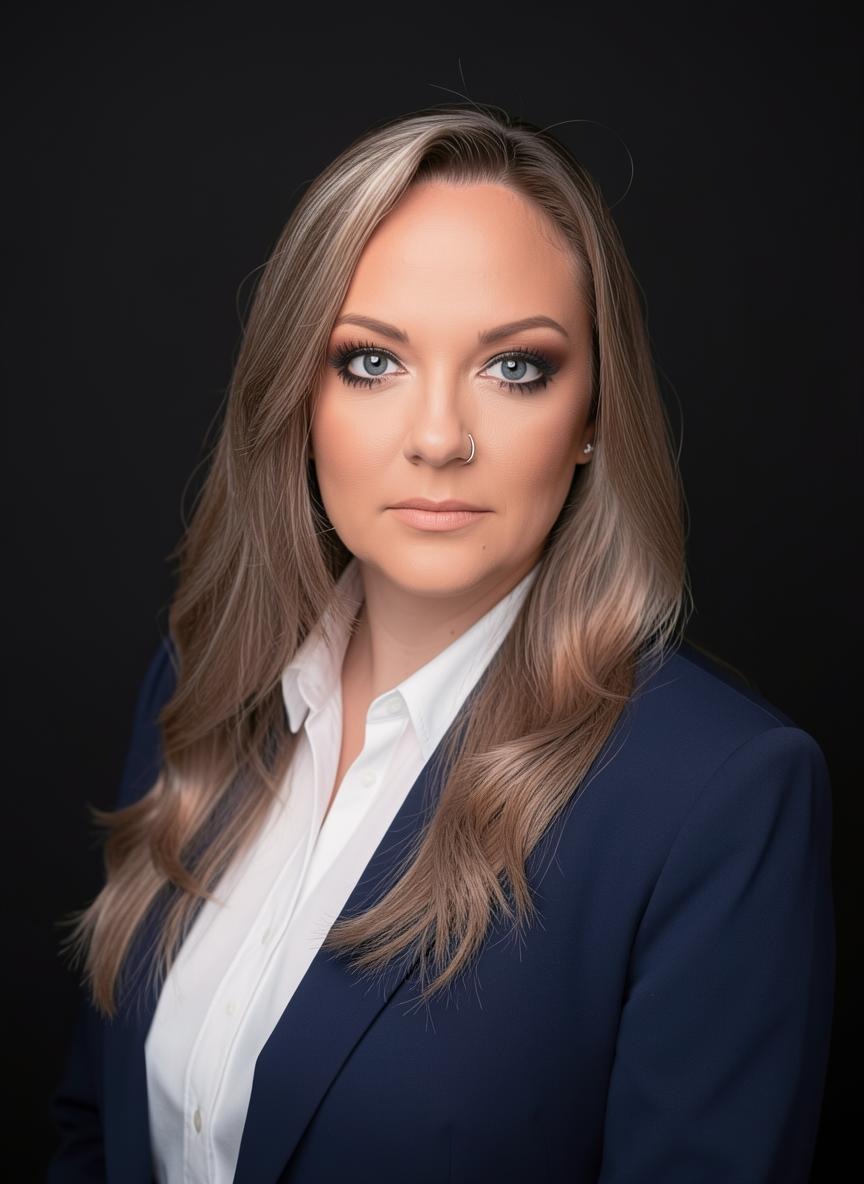
Casandra Smith was one of the artists we chose, and hers landed the moment we read it, because the thing she has held onto, through everything, is art itself. It is what carried her through her darkest days.
Casandra grew up with two creative parents, in a home where art was never really a hobby, it was simply part of the air. For her family, making things was just how they understood the world. But over time, art came to mean something much deeper to her.
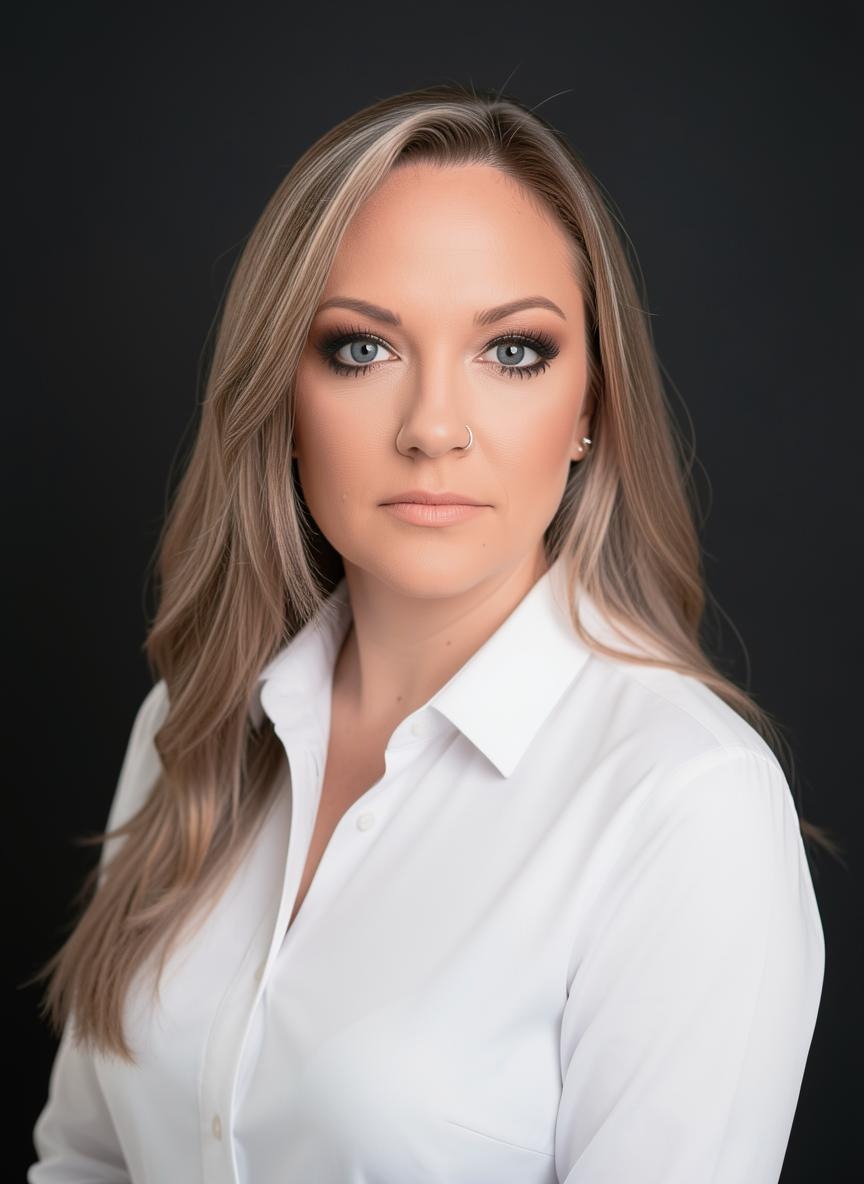
In her heaviest seasons, when what she was feeling was too much to carry, creating became her safe place, a way to give shape to pain she couldn’t put into words, to quiet her mind, and to slowly make sense of things. As she says herself, art stopped being something she did and became the way she survived and healed.
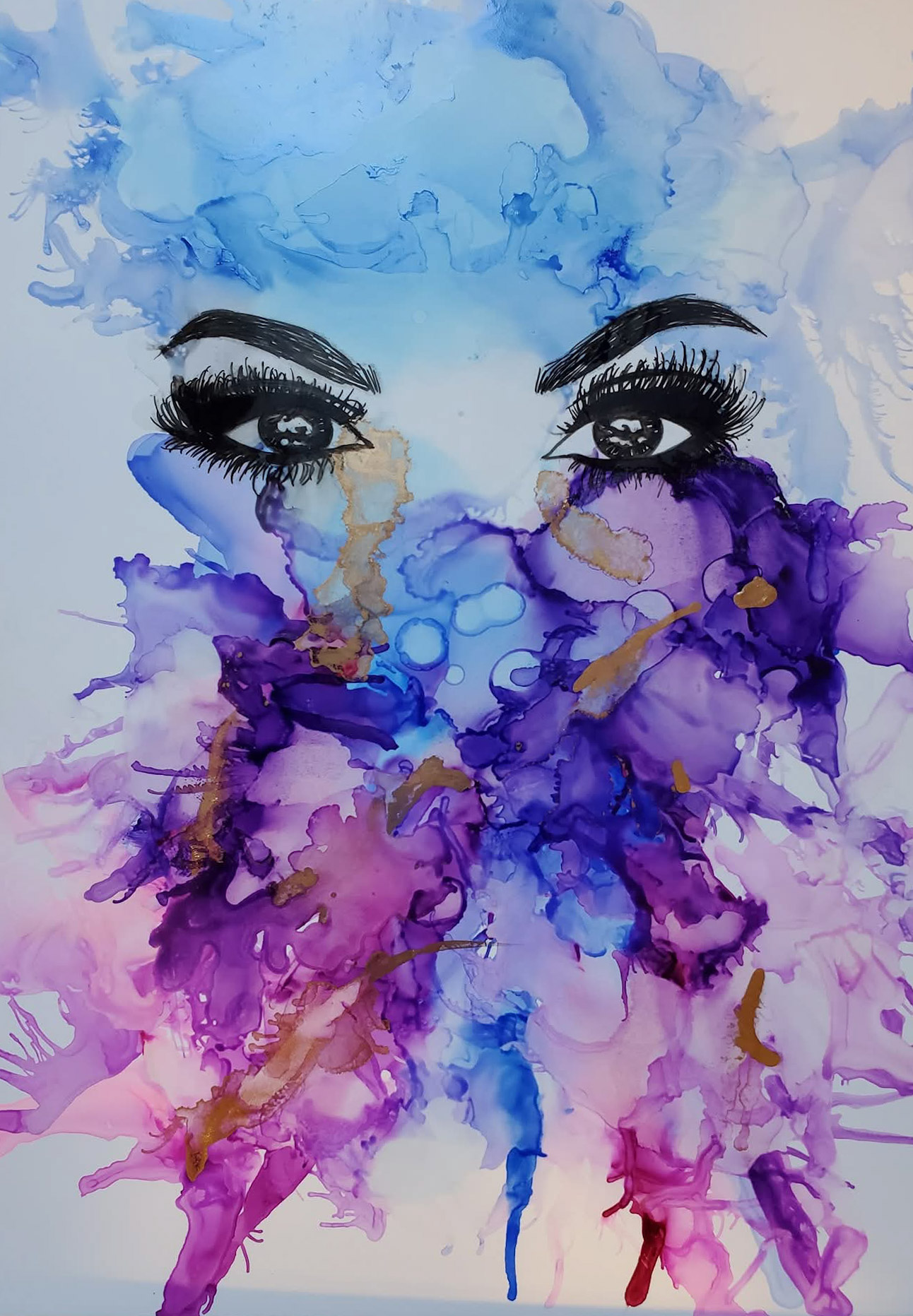
She moves easily between oil, charcoal, watercolour, coloured pencil, and alcohol ink, choosing each one a little like choosing the right voice for a feeling. Every medium carries its own mood. Charcoal gives her a raw, honest intimacy, stripped down to light and shadow, while oil brings warmth, richness, and a sense of life and breath. Her work is realistic and clearly skilled, but she’ll be the first to say the skill isn’t the point. Feeling leads the way. Realism is simply how she gets there.
A lot of what she makes is portraiture, and she always starts with the mood rather than the likeness, setting the atmosphere and emotional tone before she touches a single detail. For her, a portrait is so much more than a face. It’s a feeling you can see.
Her portraits feel so direct because she chases the quiet, unguarded moments most portraits skip past, treating the eyes as a kind of open door, the place where the person in the painting and the person looking at it truly meet.
Underneath all of it are struggle and resilience. Casandra also has a background in psychology, and she sees art and healing as two sides of the same coin. Psychology helps us name what we feel, and art gives those feelings a shape we can actually see and hold.
Her paintings can carry two opposite things at once, broken and strong, sad and hopeful, right there on the same canvas, and that honesty is exactly the point. She wants anyone quietly struggling to feel seen, and to know they don’t have to face their inner world alone.
Lately, her work has been shifting toward brighter colours and ideas of renewal. Her art has always swung between light and dark depending on what she’s living through, and right now she’s choosing to turn toward the light, a celebration of fresh starts and the hope that arrives after the darker seasons. In its own quiet way, that hope is one more thing she has learned to hold onto.
Now let’s hear from Casandra about the art that helped her survive, why feeling matters more than perfection, how creating became a kind of healing, and what it means to turn your own pain into something others can hold onto too.
Q1. Could you tell us about the moment when creating art became more than just an interest for you?
Art shifted from a favorite pastime to a deep necessity the moment I realized it was keeping me grounded.
During my darkest seasons, when emotional and mental struggles felt too heavy to carry, creating became my sanctuary. A way to translate nonverbal pain, quiet the noise, and process what words couldn’t reach. It stopped being just something I did and became how I survived, healed, and made sense of my world.
Q2. Growing up with two creative parents, creativity was always around you. How did that environment shape your relationship with art from an early age?
Growing up in a household powered by two creative parents meant that art was never an isolated subject or a distant hobby. It was the very atmosphere I breathed. From my earliest memories, creativity was modeled not just as a technique, but as a dynamic way of seeing, listening, and processing the world.
Surrounding me were ongoing projects, fresh ideas, and a shared language of expression, which taught me to view raw materials and blank spaces not with intimidation, but with infinite possibility. That immersive environment normalized artistic curiosity, instilling a deep-seated confidence to experiment, embrace the process over perfection, and treat visual art as an intuitive, essential extension of my inner voice.
Q3. You work across oil, charcoal, watercolor, colored pencil, and alcohol ink. How do you decide which medium is the right fit for a particular idea?
Choosing the right medium for a piece is an intuitive dialogue between the subject and my emotional landscape. Working across oil, charcoal, watercolor, colored pencil, and alcohol ink allows me to approach every idea without boundaries, letting my feelings dictate which tool best honors the concept.
I choose my medium based entirely on how I want to express the soul of the work and the specific mood I aim to evoke.
Q4. Your work often balances technical realism with emotional depth. Which of those feels more important to you when you begin a new piece?
When I sit down to start a new piece, emotional depth acts as my compass, while technical realism is simply the language I use to map the journey. Realism demands precision, discipline, and patient observation, but technical mechanics alone can never decide what truly deserves to be captured.
The spark to create rarely springs from a desire to show off technical skill. It comes from a visceral connection to a feeling, a mood, or an unspoken human truth that needs form.
Q5. You describe art as a therapeutic outlet. Does creating a painting bring you clarity, or do the answers usually come after the work is finished?
Creating a painting serves as a grounding visual meditation.
A sanctuary where nonverbal emotion transitions into tangible form. As brush strokes meet the canvas, the quiet, repetitive rhythm calms mental chatter, filtering raw thought into focus and intention. Working through color, light, and texture creates space to process unspoken feelings without the constraint of words. What begins as an internal tangle of ideas gradually resolves into order, offering a quiet perspective and a restored sense of inner clarity with every completed layer.
Q6. When creating a portrait, what do you focus on first, the expression, the composition, or the overall mood?
When creating a portrait, my primary focus is capturing the overall mood right from the start. Before refining specific features or fine-tuning details, I establish the atmosphere, light, and emotional tone that will guide the entire piece. A portrait is far more than just a physical likeness. It is a visual expression of feeling, and establishing that core mood first ensures every line and shade serves a deeper emotional narrative.
Q7. Charcoal and oil create very different moods. What draws you to moving between those materials instead of working with just one?
Working between charcoal and oil allows me to capture the distinct emotional spectrum of a subject, rather than forcing every narrative into the same visual language. Charcoal offers a raw, immediate intimacy. A dialogue of light and shadow reduced to its purest form, perfect for subjects that call for stark honesty, high drama, or quiet restraint.
Oil, by contrast, brings a luminous fluidity and depth, allowing complex layers, subtle skin tones, and rich colors to build over time when a subject demands breath, vitality, and emotional warmth. Deciding which medium to pick up always depends on the subject itself and what story it needs to tell, switching between the stark purity of dry carbon and the enduring richness of paint keeps my connection to each piece honest, adaptable, and alive.
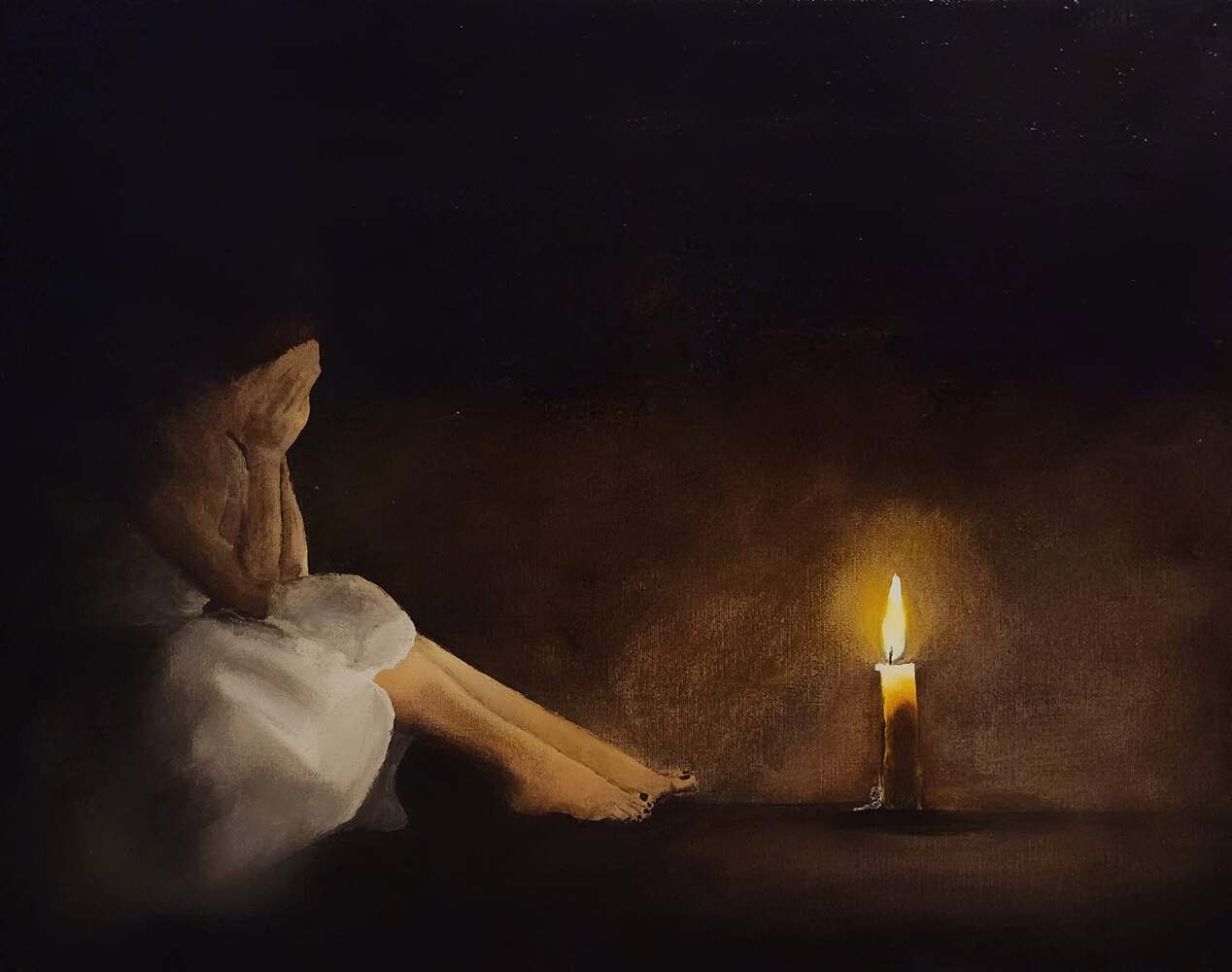
Q8. Cast into Outer Darkness explores a darker emotional space. What ideas were you hoping to explore through this painting?
Cast into Outer Darkness is an exploration of betrayal, severe emotional dislocation, and the raw vulnerability of misplaced faith. It delves into the profound desolation that occurs when you surrender your heart, trust, and spirit to another human being only to be discarded as though that devotion meant nothing.
Q9. Transcendence suggests moving beyond something difficult. What inspired this piece, and what does transcendence mean to you personally?
Transcendence was born from an intimate exploration of human resilience. The moments when heavy emotional weight begins to yield to quiet strength. Inspired by the raw, complex emotions we carry through seasons of loss, transition, and internal struggle, this piece captures the visual shift from feeling bound by adversity to rising above it. To me, transcendence isn’t about erasing hardship or pretending the struggle never existed. It is about transformation.
It is the conscious decision to honor where we have been while allowing ourselves to evolve beyond it. True transcendence lives in that delicate space where vulnerability turns into sovereignty, showing that even when life reshapes us, we hold the power to craft light out of the shadows. Through Transcendence, I wanted to create a visual sanctuary. A reminder that moving beyond something difficult is not an escape, but a powerful act of becoming.
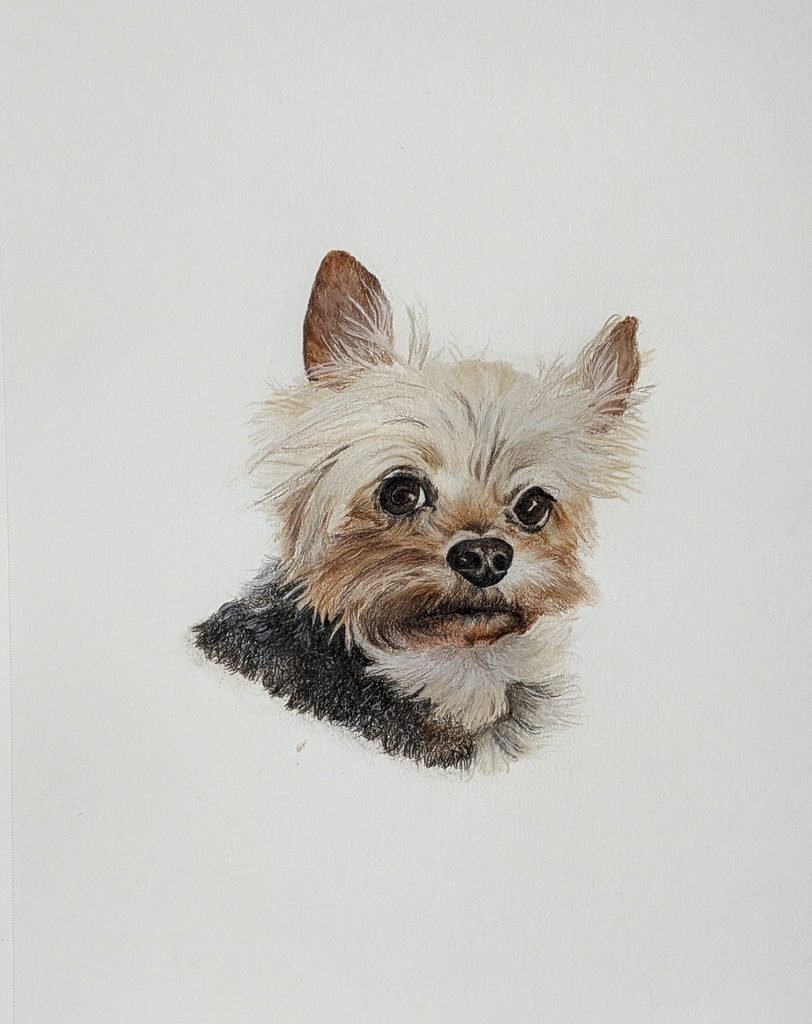
Q10. Max feels different from some of your more symbolic works. What made you want to create this portrait, and what does it represent for you?
While much of my work explores concepts and emotional symbolism, creating this portrait of Max was a return to pure, quiet reverence for connection. Every pet carries a presence that becomes deeply woven into the fabric of a home, and capturing Max was about far more than matching likeness to paper. It was about honoring a companion who brought grounding warmth, loyalty, and unconditional love into daily life.
Q11. Across your work, themes of struggle and resilience appear repeatedly. Why do these ideas continue to be important in your practice?
Struggle and resilience are not merely recurring motifs in my practice. They are the fundamental coordinates through which I examine the human experience. Life is not always pretty. It is often demanding, fragmented, and heavy with unspoken burdens. Yet throughout history, art has remained a sanctuary. A vital channel through which we articulate our deepest complexities and find peace, healing, and understanding through the noise.
By capturing both the weight of adversity and the quiet fortitude required to carry it, my work creates space for viewers to recognize their own stories within the image. Art bridges the gap between raw emotion and quiet reconciliation, offering a visual proof that resilience is not the absence of struggle, but the capacity to transform it into meaning, clarity, and grace.
Q12. Many of your portraits feel emotionally direct. How do you create that connection between the subject and the viewer?
Creating an emotionally direct portrait begins long before the first mark meets the surface. It starts with identifying the quiet, unscripted moments that traditional portraiture often glosses over. The connection between subject and viewer relies on an unfiltered gaze, where the eyes serve not just as a focal point, but as an open doorway to a shared human experience. By focusing on subtle expressions the work strips away pretense to establish an undeniable intimacy.
Q13. Mental health has become a more open conversation in contemporary art. How do you hope your work contributes to that discussion?
Art has a rare ability to give form to emotional realities that words often fail to capture. As contemporary art increasingly dismantles the taboos around mental health, my work seeks to serve as a bridge between internal isolation and shared human experience.
Through expressive portraiture and figurative exploration, I focus on the authentic, uncensored spectrum of human emotion capturing quiet vulnerability, psychological weight, and the subtle shifts toward healing and resilience. Rather than presenting idealized or polished surfaces, the work leans into the complexity of internal states, bringing intimate, often silent struggles into clear visual focus.
My hope is that my artwork contributes to the broader conversation by offering a space for reflection, empathy, and validation. By visualizing the unseen weight so many carry, my work aims to reduce the stigma around vulnerability, inviting viewers to feel seen and reminding them that no internal landscape has to be navigated entirely alone.
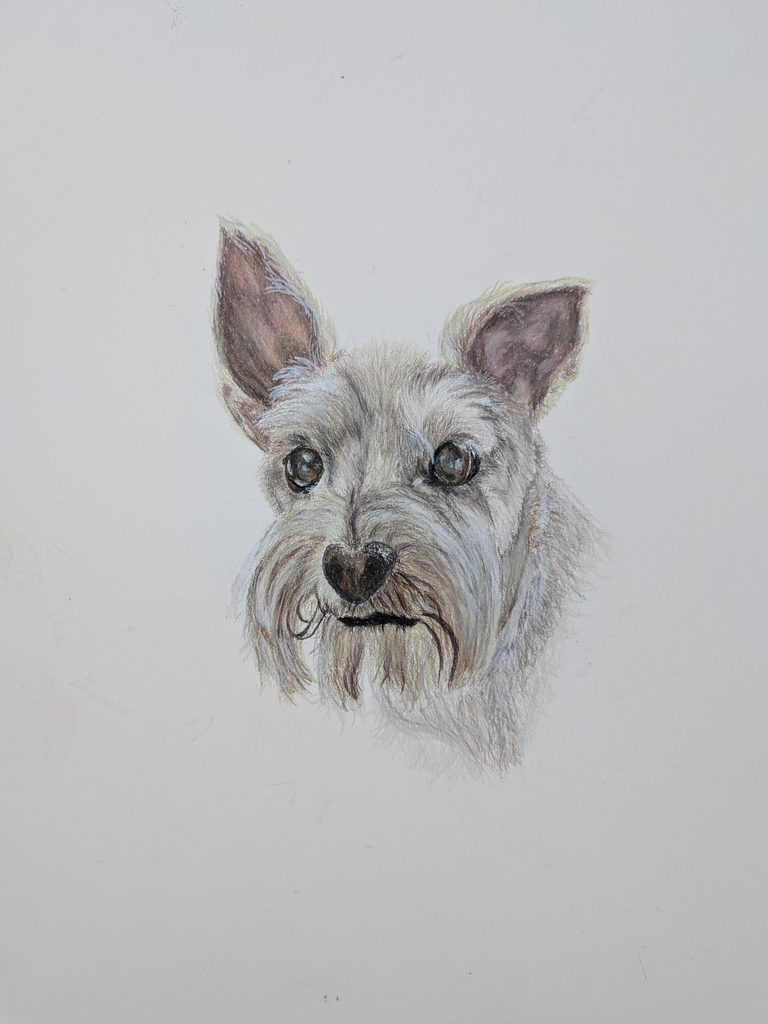
Q14. As both an artist and someone with a background in psychology, how do you see the relationship between creativity and healing?
Creativity and healing go hand in hand because both are about making sense of what we feel inside.
Psychology helps us name and understand our emotions, but art gives those feelings a physical form. It gives us a safe way to take heavy, complicated thoughts out of our heads and put them into something we can see, touch, and work through. When we create, whether we are painting, drawing, writing, or making music, we get past our everyday defenses and connect directly with our inner world.
Art allows us to hold conflicting feelings at the exact same time. You can feel broken and strong, sad and hopeful, all on the same canvas. Ultimately, healing is about taking back control of your own story. When life feels chaotic or overwhelming, the simple act of making something new takes those messy pieces and turns them into something meaningful. Art reminds us that even when we feel scattered, we still have the power to put ourselves back together.
Q15. Your recent work is beginning to move toward brighter colours and themes of renewal. What inspired that shift in your practice?
My recent work is moving toward brighter colors and themes of renewal, reflecting a meaningful change in both my life and my art. My artwork has always gone back and forth between light and dark depending on what I am going through at the time.
Right now, I am choosing to look toward the brighter side of life. This shift to a lighter, more vibrant palette is a celebration of new beginnings, hope, and the positivity that comes after darker seasons.
Q16. Success often arrives in unexpected ways. Has there been an experience that made you feel, “This is why I became an artist”?
Art has a way of finding people right when they need it most, often in moments we never could have planned. For me, that ultimate validation doesn’t come from awards or accolades, but from hearing how a piece has quietly reached into someone’s world. Listening to people share that my work captured an emotion they thought they carried alone, or offered them a sense of comfort, healing, and shared joy during their own struggles and triumphs, makes every hour spent creating meaningful.
Knowing that what began as a personal expression in the studio became a source of strength, connection, and understanding for someone else is the true heart of my journey.
Q17. What advice would you give artists who want to create work based on personal experiences?
Creating art rooted in personal experience requires balancing raw truth with deliberate expression. The goal isn’t just to record what happened, but to capture how it felt, transforming an individual memory into a shared human experience. To bring personal stories into your work effectively, lead with emotional honesty rather than literal detail. Focus on translating the core feeling rather than feeling obligated to explain every detail of your life.
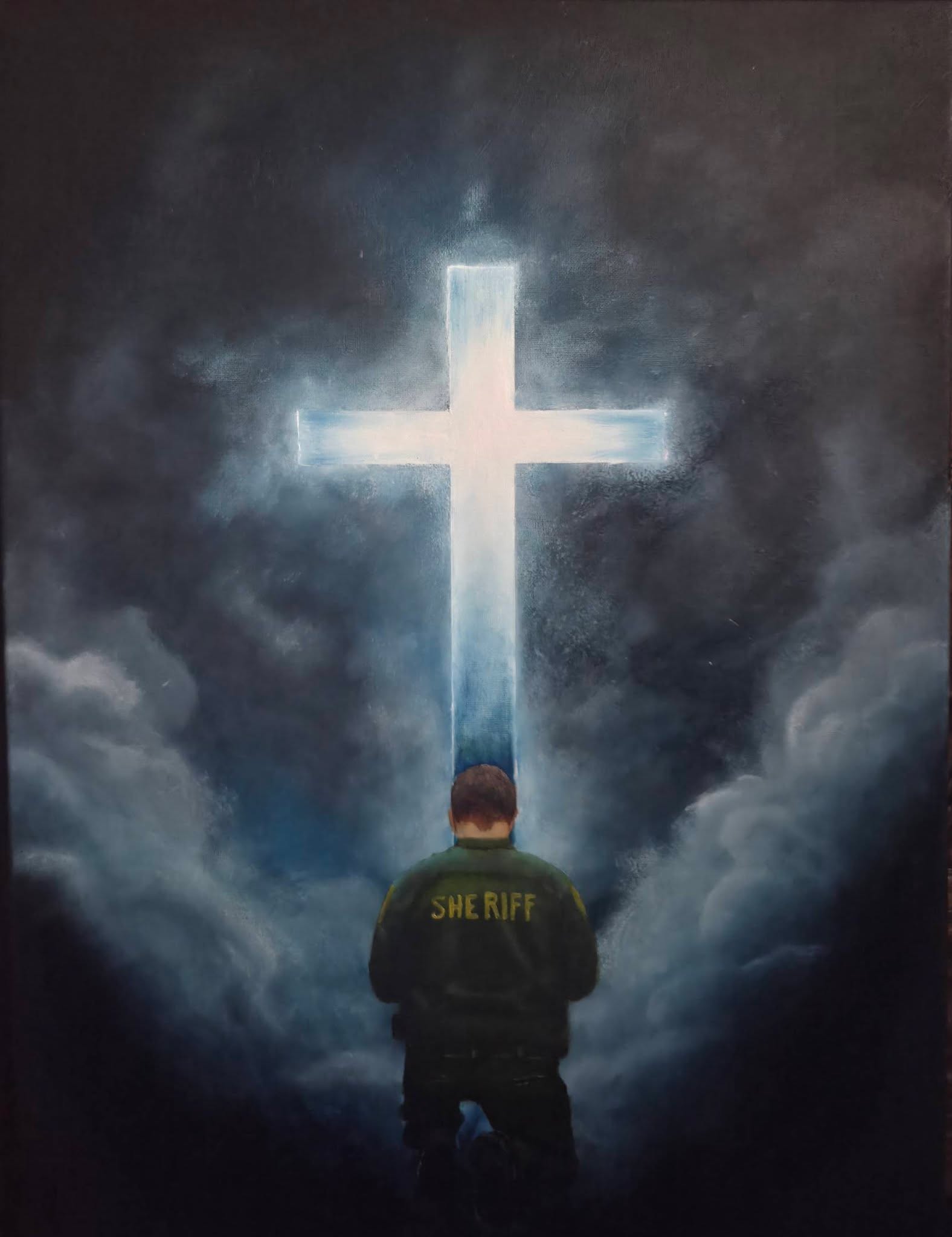
Ground these abstract feelings in specific visual elements, expressing internal states through concrete choices like a precise color palette, tactile textures, or symbolic lighting. Most importantly, create freely before considering the audience. Self-censorship ruins authentic expression, so give yourself permission to make vulnerable work without worrying about how it will be judged. When you speak your truth sincerely through your medium, viewers will naturally see their own stories reflected in yours.
As our conversation with Casandra came to an end, we found ourselves thinking about the quiet things people hold onto when life gets heavy, and how often no one else can see them.
So many people are carrying something hard beneath the surface, and carrying it silently. For Casandra, art became the thing she held onto through those seasons, not a way to escape the pain, but a way to face it, give it shape, and slowly move through it.
What moves us most is that she then turns something so private into something others can hold onto too. Her paintings can carry two opposite feelings at once, broken and strong, sad and hopeful, and in doing that, they quietly tell anyone who is struggling that they are not alone. In a world that so often asks us to hide the hard parts, that kind of honesty is a real gift.
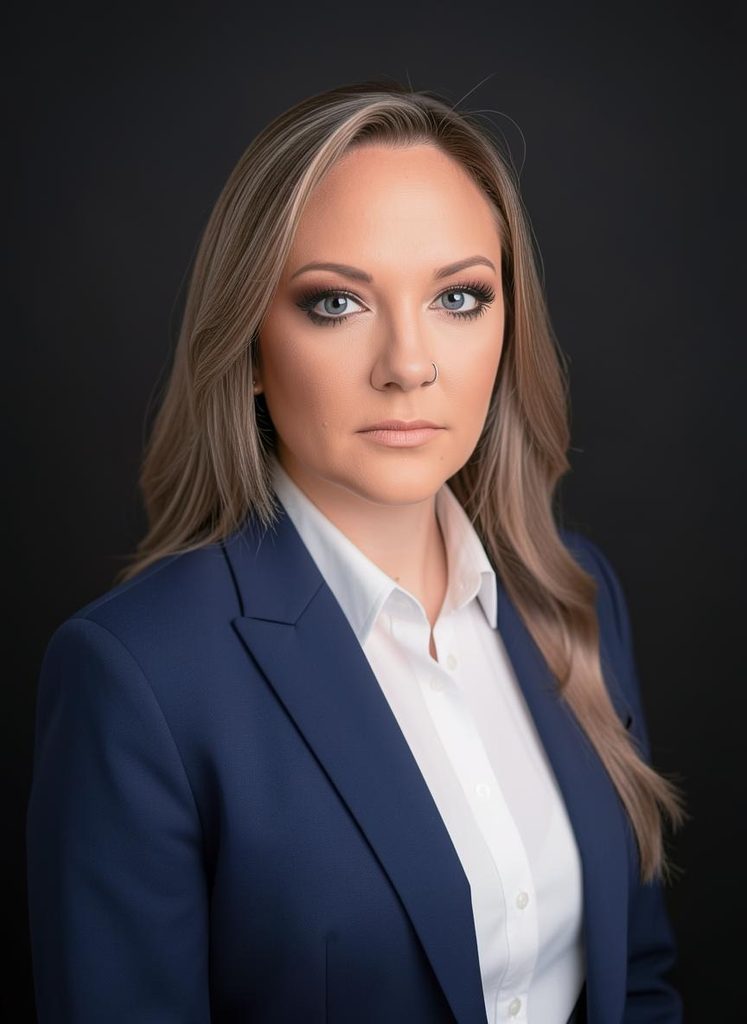
There is something here for other artists, too, especially anyone who wants to make work from their own life. Lead with the feeling, not the facts, she says. You do not have to explain every detail of what happened, only capture how it felt.
And create freely first, before you ever start worrying about what people will think, because self-censorship is what kills honest work. When you speak your truth sincerely, other people will find their own stories inside yours.
For art lovers and collectors, Casandra’s work brings a rare emotional honesty into a room. Portraits and figures that meet your eyes directly and hold real feeling, the weight of what we carry and the quiet strength it takes to carry it. People often see their own experience reflected back in them. To live with one of her pieces is to keep a reminder close by that resilience is not about never breaking, but about finding a way to put yourself back together.
Follow Casandra Smith through the links below and see her work for yourself.
Good news, the deadline has been extended by 5 days. There is still a little more time to submit to our Big Book of Mixed Media Artists 2026, and we are looking for artists who treat their materials as partners, not just tools, layering and combining until the surface itself becomes part of the story.
If you pour, collage, stitch, scratch, combine, or push materials in ways nobody else would think to, and if your work says something only mixed media can, we want to see what you are doing. The materials do not matter. Geography does not matter. Career stage does not matter. What matters is that something real is happening between the layers.
These final days are yours to take. The only artists we never feature are the ones who never submit, so don’t let that be you.