

5 Healthy Boundaries Every Artist Needs to Protect Their Creativity

Creative work is deeply personal, and so are the relationships that often come with it. Whether it’s clients, collectors, collaborators, or even the people closest to you, it can feel uncomfortable to say, “This doesn’t work for me,” or “I need to do things differently.” Many artists worry that expressing their needs will make them seem difficult, ungrateful, or less approachable, so they stay silent instead.
But every time your limits are overlooked, your creative process quietly pays the price. Constant interruptions, blurred expectations, and the pressure to always be available doesn’t just affect your schedule, they chip away at the focus, energy, and mental space that meaningful creative work depends on. Over time, that can lead to frustration, burnout, and a growing disconnect from the joy of making art in the first place.
The good news is that boundaries don’t have to sound harsh, rigid, or confrontational. In many cases, they’re simply clear, respectful conversations about what helps you do your best work. Communicating your needs doesn’t make you less kind, less collaborative, or less professional, it helps create healthier relationships with the people who value your work while protecting the space your creativity needs to flourish.
If you’ve ever struggled to express where your limits are, these five gentle boundaries are a good place to begin. They can help protect your time, your peace, and your creative flow, because caring for your creativity starts with caring for the conditions that allow it to thrive.
1. Protecting Your Creative Hours From Everyday Interruptions
Every artist knows that creativity doesn’t always arrive the moment you sit down to work. Sometimes it takes time to settle into the process, to make a few rough sketches, test colors, rearrange your workspace, or simply sit with an idea before it begins to take shape. Once you’re in that flow, it’s incredibly valuable. And unlike a task you can pause and resume at any moment, creative momentum is often fragile. One interruption can pull you out of it, and finding your way back isn’t always easy.
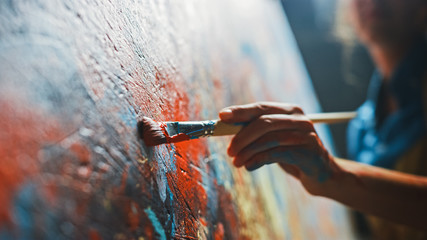
The challenge is that creative work doesn’t always look like work to other people. If you work from home or have flexible hours, friends and family may assume you’re free simply because you’re physically present. Clients may expect immediate replies because they know you’re active online. Even people with the best intentions might not realize they’re interrupting the most important part of your day.
It often sounds like…
- “You’re home anyway, can you quickly help me with something?”
- “Can we just have a quick call? It’ll only take a few minutes.”
- “I know you’re working, but this won’t take long.”
- “Can you reply today? I just need a quick answer.”
None of these requests are unreasonable on their own. The problem is when they become a daily pattern. Before long, your studio hours are filled with small interruptions, and your own work becomes something you squeeze into the gaps that remain.
This is where a boundary becomes less about protecting your schedule and more about protecting your creative process. Your studio hours deserve to be treated with the same respect as any other professional commitment. After all, if someone were in a meeting, teaching a class, or seeing a client, most people would naturally wait. Artistic work deserves that same understanding, even if it happens in a spare room, at your dining table, or in a corner of your home.
Gentle ways to communicate this boundary
You don’t have to sound defensive or unavailable. Often, a simple and respectful response is enough.
- “I’m in the middle of my studio hours. Can we catch up later this afternoon?”
- “I’d love to help once I’ve finished working.”
- “I usually keep mornings for creating, but I’m free after that.”
- “I’ll reply to your email tomorrow during my work hours.”
There’s another side to this boundary that artists don’t talk about enough: the interruptions we create ourselves.
It’s easy to convince yourself you’ll just check Instagram for a minute, answer one email, package one order, or fold the laundry before getting back to your canvas. But creative focus rarely survives constant task-switching. Sometimes the most important boundary isn’t the one you set with other people, it’s the one you set with yourself.
Protecting your creative hours isn’t about being unavailable or shutting people out. It’s about recognizing that your ideas need uninterrupted space to develop. Every artist deserves time where they’re not answering messages, running errands, or feeling guilty for focusing on their work.
What this boundary protects
✓ Your creative momentum
✓ Your ability to focus deeply
✓ The quality of your work
✓ The peace that allows new ideas to emerge
When you begin treating your creative hours as real working hours, other people gradually do the same. And perhaps more importantly, you send yourself a quiet but powerful message: my art deserves my full attention.
2. Knowing When a Commission Has Gone Beyond the Original Scope
You finish a commission and send the preview to your client. They’re delighted, but they have one small request.
“Could we make the sky a little warmer?”
Of course.
A day later, another message arrives.
“Would it be possible to make the flowers slightly bigger?”
Then another.
“Actually, could we remove the vase altogether?”
Individually, none of these requests seem too much. In fact, many artists are happy to make adjustments that help a client feel connected to the final piece. The problem begins when “just one more change” becomes five, and the artwork you’re creating is no longer the one you originally agreed to make.
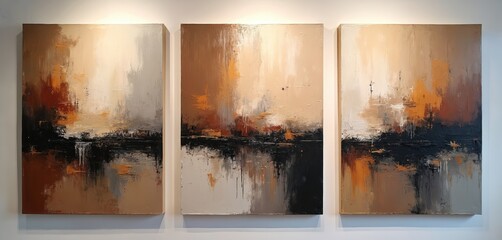
This is one of the most common boundary challenges artists face, especially when they’re still building confidence with commissions. Saying yes feels easier than risking disappointment. You don’t want to seem inflexible, difficult, or ungrateful for the opportunity. But every additional revision requires more time, more decision-making, and more emotional investment, often without additional compensation or a conversation about expectations.
A commission may have gone beyond the original agreement when…
- New elements are being added instead of existing ones being refined.
- The client asks for multiple rounds of revisions after approving earlier versions.
- The deadline stays the same, but the amount of work keeps increasing.
- The final piece begins looking completely different from the brief you initially accepted.
None of this necessarily means your client is being unreasonable. Many simply don’t realize how much time each “small” change requires. They’re looking at the finished piece, while you’re thinking about repainting, rebalancing the composition, adjusting colors, and making sure everything still works together.
This is why clear communication protects both the artist and the client. Rather than agreeing to every request at the moment, it’s perfectly professional to pause and explain what the change involves.
Gentle ways to respond
- “I’d be happy to make that adjustment. Since it’s outside the original brief, I’ll treat it as an additional revision.”
- “That’s definitely possible. Let me update the timeline to make sure I can give it the attention it deserves.”
- “This changes the scope of the commission slightly, so I’ll send over an updated quote before I continue.”
- “Let’s talk through the changes together so we’re both clear on the final direction.”
Notice that none of these responses are confrontational. They’re collaborative. They acknowledge the client’s request while also acknowledging the value of your time and expertise.
At its heart, this boundary isn’t about refusing feedback. Feedback is an important part of commissioned work. It’s about recognizing the difference between refining an agreed-upon vision and continuously expanding it. Once you learn to distinguish between the two, you’ll find it easier to protect not only your time, but also your enthusiasm for accepting commissions in the future.
3. Creating Beyond the Pressure of the Algorithm
Most artists don’t set out to create algorithms.
They begin by sharing finished paintings, studio moments, or works in progress because they genuinely enjoy connecting with others. Then, almost without noticing, the questions start to change.
“Will this make a good Reel?”
“Should I paint something brighter? Those always get more likes.”
“Maybe I shouldn’t post this. It probably won’t perform well.”
Before long, social media is no longer just documenting your creative journey, it’s quietly influencing it.
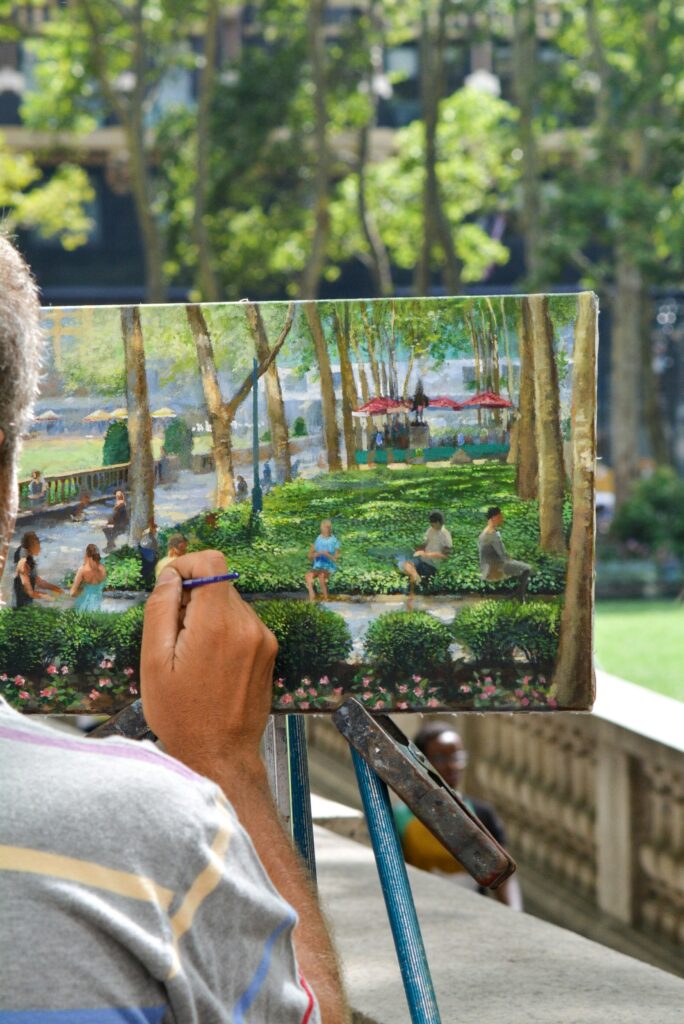
There’s nothing wrong with wanting your work to reach more people. Platforms like Instagram and TikTok have opened incredible opportunities for artists to find collectors, connect with galleries, and build communities across the world. The problem arises when visibility starts carrying more weight than creativity. Instead of asking “What do I want to make?” you begin asking “What will perform well?”
You might notice this boundary slipping when…
- You hesitate to experiment because you’re worried the work won’t get enough engagement.
- You spend more time planning how to film your process than enjoying the process itself.
- A painting feels unsuccessful simply because it received fewer likes than the last one.
- You catch yourself checking your phone for likes and comments more often than your sketchbook during a studio session.
All these thoughts are understandable in a world where artists are often told that consistent online visibility is essential for building a career. But creativity and content creation aren’t the same thing, and treating them as though they are can slowly change your relationship with your work.
Creating beyond the pressure of the algorithm doesn’t mean abandoning social media or pretending it isn’t an important part of today’s art world. For many artists, it’s an essential way to build a community, connect with collectors, and create opportunities that may never have been possible otherwise. The goal isn’t to post less, it’s to make sure your creative decisions aren’t being made by an algorithm.
Use social media as a tool to support your art, not your art as a tool to support social media.
There’s an important difference. One helps your work reach the right audience; the other slowly encourages you to reshape your work around trends, engagement, and what performs best online. Your art deserves to begin with curiosity and intention, not with the question of whether it’ll make a good post.
Start practicing this boundary like this:
Rather than setting rules that feel restrictive, try giving yourself small permissions.
- Create first. Photograph or film later.
- Finish the artwork before deciding whether it needs to be shared.
- Take a break from posting without feeling guilty if you need time to reconnect with your creativity.
- Remember that not every sketch, experiment, or unfinished idea has to become content.
You don’t have to announce these boundaries to anyone. Sometimes they’re quiet promises you make to yourself.
A question worth asking
The next time you begin a new piece, pause for a moment and ask yourself:
If nobody were going to see this online, would I still want to make it?
If the answer is yes, you’re creating from a place that’s true to your artistic voice. If the answer is no, it may be worth asking whether outside validation has started taking up more space in your creative process than you intended.
Social media can be one of the most valuable tools an artist has, but it should remain just that: a tool. Your best work is rarely born from chasing trends or trying to satisfy an algorithm. It’s born from curiosity, experimentation, and the freedom to explore ideas that matter to you. The more you protect that freedom, the more authentic your work becomes, and authenticity is something no algorithm can ever replace.
4. Evaluating Opportunities Before Saying Yes
For many artists, opportunities don’t come with obvious warning signs. They arrive as exciting emails, kind invitations, or enthusiastic messages that begin with, “We’d love to feature your work.” After spending months, or even years, trying to get your art noticed, it’s natural to want to say yes. Every exhibition, collaboration, commission, residency, market, or interview can feel like a step forward.
One of the easiest traps to fall into as an artist is believing that every invitation must be accepted because another one might not come along. This scarcity mindset often leads artists to overcommit, stretch themselves too thin, or agree to projects that don’t genuinely align with their goals. Before long, your calendar is full, but your energy isn’t.
Many artists confuse being busy with making progress. It’s an easy mistake to make because saying yes feels productive. But filling your schedule isn’t the same as building a sustainable career. Every commitment requires time, creative energy, and mental space, three resources that are far more limited than they seem.
Before accepting your next invitation, try asking yourself a few simple questions:
• Does this opportunity align with the kind of artist I want to become?
• Will I still feel excited about this project a month from now?
• Am I saying yes because I genuinely want to, or because I’m afraid to say no?
• What will I have to give up in order to make time for this?
Sometimes those questions provide more clarity than the opportunity itself.
Simple ways to communicate this boundary
You don’t have to respond immediately, and you don’t have to feel guilty for taking time to decide.
You could say:
• “Thank you so much for thinking of me. I’d like a little time to consider it before I commit.”
• “I really appreciate the invitation, but my schedule won’t allow me to give this project the attention it deserves.”
• “I’d love to stay connected and hopefully collaborate at another time.”
These responses leave the door open while still honoring your own priorities.
It’s also worth remembering that every “yes” quietly becomes a “no” to something else. Accepting another exhibition might mean delaying a personal series you’ve been excited about. Agreeing to one more commission could leave little room for experimenting with new ideas. Even opportunities that look impressive on paper can pull you away from the work that matters most to you.
The artists who build lasting careers aren’t necessarily the ones who accept the most invitations. They’re often the ones who become intentional about where they invest their time and creative energy. They understand that opportunities should support their artistic practice, not consume it.
5. Separating the Price of Your Art From the Need to Explain It
One of the most uncomfortable moments for many artists isn’t creating the work, it’s talking about its price.
You finally share a piece you’re proud of, and almost immediately, the questions begin.
“Why does it cost this much?”, “It’s just a small painting.”, “Can you give me a better price?”
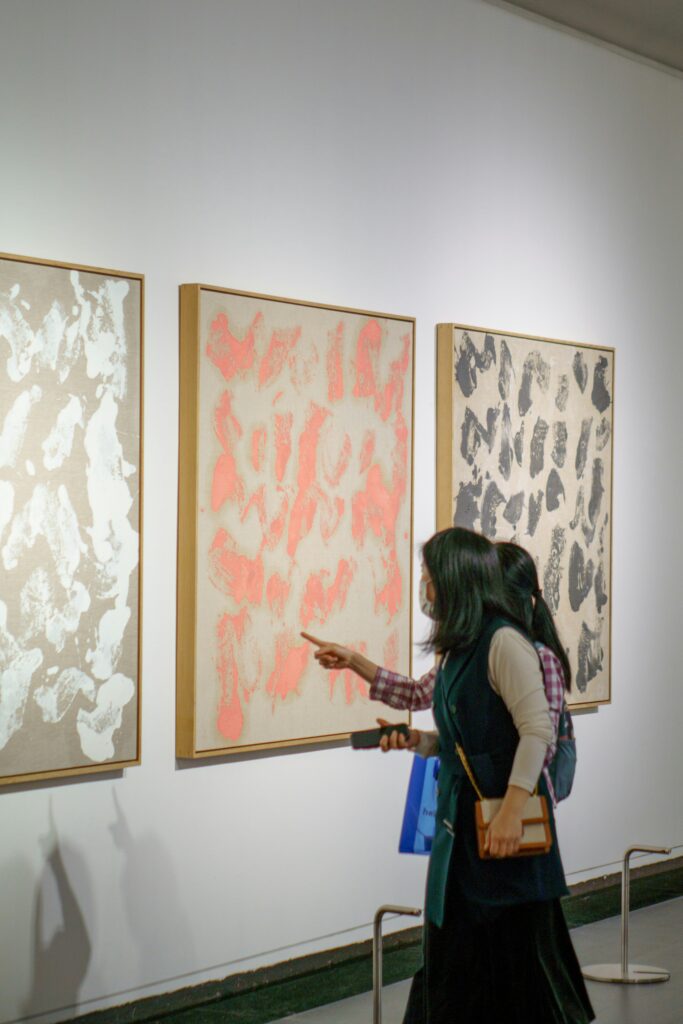
Whether these comments come from potential buyers, friends, or even family members, they can make artists feel as though they’re expected to defend every dollar attached to their work. Before long, what should be a simple pricing conversation turns into a detailed explanation of hours spent, materials used, shipping costs, years of experience, and everything else that went into creating the piece.
While educating collectors about your process can be valuable, feeling obligated to justify your prices every time someone questions them is a different story.
Pricing reflects far more than the hours spent making a single piece. It represents years of developing your skills, investing in materials, maintaining a studio, experimenting, making mistakes, and building a body of work. Most buyers who genuinely appreciate your art understand this. Those who only see the price tag may simply not be your ideal collectors.
How to navigate pricing conversations
You don’t have to become defensive, and you don’t have to convince everyone.
Instead, try responses like:
- “The price reflects the time, materials, and years of experience behind the work.”
- “I completely understand if it’s outside your budget.”
- “Thank you for your interest. If this piece isn’t the right fit, I’d be happy to show you other available works.”
These responses acknowledge the conversation without placing you in the position of defending your value.
It’s also worth remembering that not every inquiry has to become a sale. Sometimes artists continue negotiating simply because they don’t want to lose a potential collector. But lowering your price out of discomfort can leave you feeling frustrated long after the artwork has left your studio.
A healthier boundary is recognizing that your price isn’t a personal apology. It’s a professional decision based on your practice, experience, and the value you place on your work. Some people will happily invest in it. Others won’t. Both outcomes are perfectly normal.
When you separate the price of your art from the need to constantly explain it, pricing conversations become less emotionally draining. You stop seeing every question as a challenge to your worth and start treating it as a simple part of doing business. That shift doesn’t just make selling your work easier, it allows you to return your energy to the place it belongs: creating the next piece.
The Kindest Thing You Can Do for Your Creative Self
Many artists believe that setting boundaries will make them seem less approachable, less generous, or harder to work with. In reality, healthy boundaries do the opposite. They create clearer communication, healthier collaborations, and relationships built on mutual respect rather than unspoken expectations.
Every boundary in this article comes down to one simple idea: protecting the conditions your creativity needs to thrive. Whether it’s uninterrupted studio time, clear commission expectations, a healthier relationship with social media, the confidence to decline opportunities that aren’t right for you, or trusting the value of your work without constantly defending it, each boundary creates a little more room for what matters most, making art.
You don’t have to transform your habits overnight. Start with one conversation, one gentle “no,” one clarified expectation, or one studio session that’s truly uninterrupted. Small boundaries, practiced consistently, often lead to the biggest changes in the way you work and how you feel about your practice.
After all, your creativity doesn’t just deserve your talent. It deserves your time, your attention, your peace, and your protection. Because when you protect those things, you’re not simply setting boundaries, you’re creating the space where your best work has the chance to exist.