
This artist lets her son paint on canvas then copies his strokes I Melissa Bohn

At Arts to Hearts Project, our 101 Artbook Landscape Edition keeps reminding us that the most moving landscape paintings are not always the ones with the most dramatic scenery. Sometimes it is the ones where you can feel what the artist was going through when they made it. Where the colours are not just colours but moods. Where the brushstrokes carry whatever, the artist was feeling that morning before she even knew what she was going to paint.
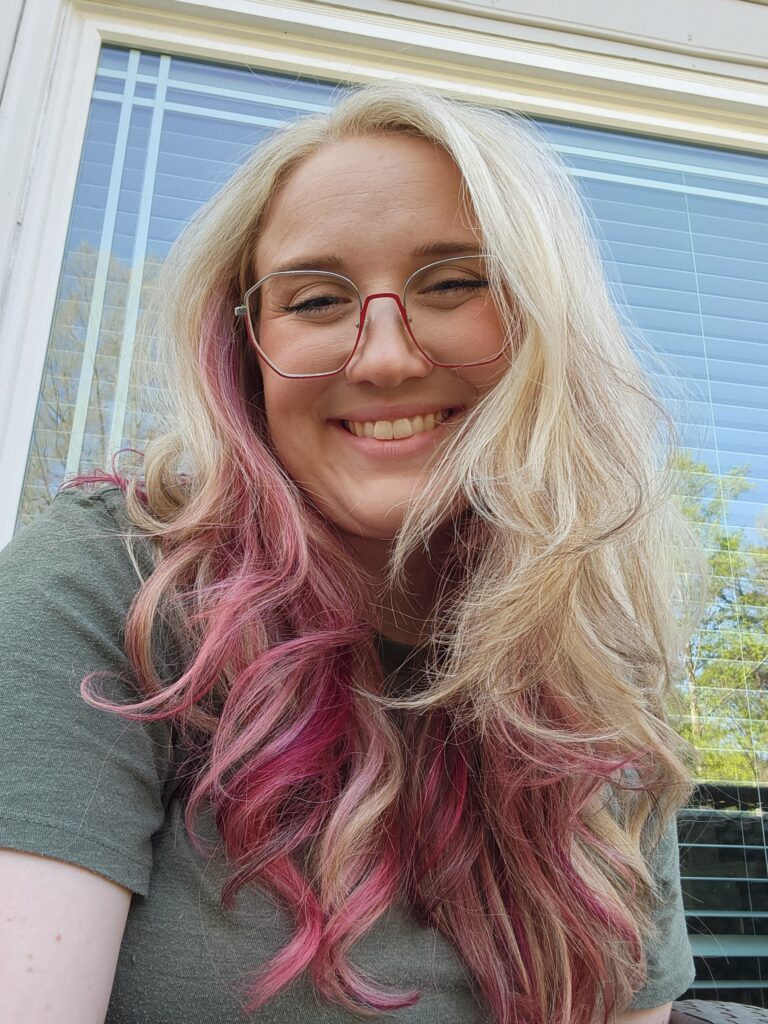
Melissa Bohn makes that kind of work. She is one of our selected artists in this edition.
Melissa grew up in Georgia surrounded by nature in the most everyday way possible. Hiking, swimming in creeks, exploring gardens. Nature was never something she had to search for. It was just where she lived. And it became the place she keeps returning to in her art because it is the place she returns to in life whenever things get heavy.
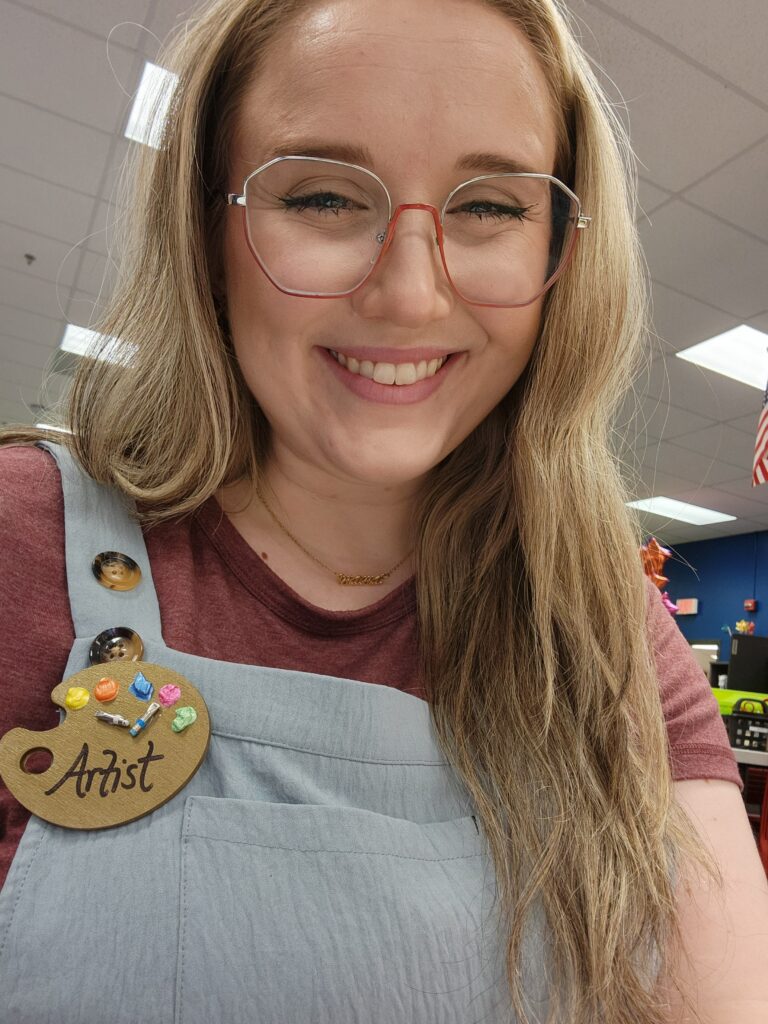
She is mostly self-taught. She painted for years before something shifted in her practice that completely changed how she approaches the canvas. What that shift was and how it happened is something you are going to want to hear her talk about because it is the kind of story that will make any artist who feels stuck right now feel a whole lot better about where they are.
She works in acrylic and oil and she uses them for very different emotional reasons. One gives her speed and energy and bold texture. The other gives her quiet and softness and stillness. She moves between them depending on where her head is that day. And that is the thing about Melissa that really drew us in.
Her emotional state does not just influence her paintings. It completely drives them. The colours, the energy, the brushwork, all of it comes from whatever she is feeling before she even picks up a tool. That kind of honesty is hard to fake and impossible to miss when you see her work.
She is also a mother now and that has changed her practice in ways she did not expect. How it changed things and what her son has brought into her creative process is one of the most genuinely sweet things we heard in any of our conversations for this edition.
Her style has evolved significantly over the years. From something structured and controlled to something much looser and more expressive. That shift was not gradual. There was a specific moment when it happened. And everything after that moment felt different.
Let’s get to know Melissa through our conversation with her about growing up surrounded by nature in Georgia, the moment everything changed in her practice, and what motherhood has brought into her art that she never saw coming.
Q1. Can you share your background and journey into art, how you went from drawing as a child in Georgia to building your own brand as a professional painter?
Just about my entire artistic journey has been through self-teaching and exploration. As a kid, I loved the challenge (and practice!) of trying to copy the poses and styles of Disney characters. That grew my confidence into trying my hand at more original drawings. It wasn’t until high school that I started painting and exploring other mediums. I took an art class there and it completely blew my mind to the world of possibilities of what I could do with art! Painting was a background hobby of mine until I attended a painting workshop in 2021.
It completely redefined how I approached painting and I found myself falling in love with the impressionistic painting styles we experimented with in the classes. And from the on, my professional art journey blossomed! I took that subsequent year to further develop my new style. I also attended more workshops – even one in France! Now, I have dedicated social pages and a website that I’ve built to showcase and sell my art works on. I also teach classes to many different ages and experience levels! It’s been such a fun and rewarding journey.
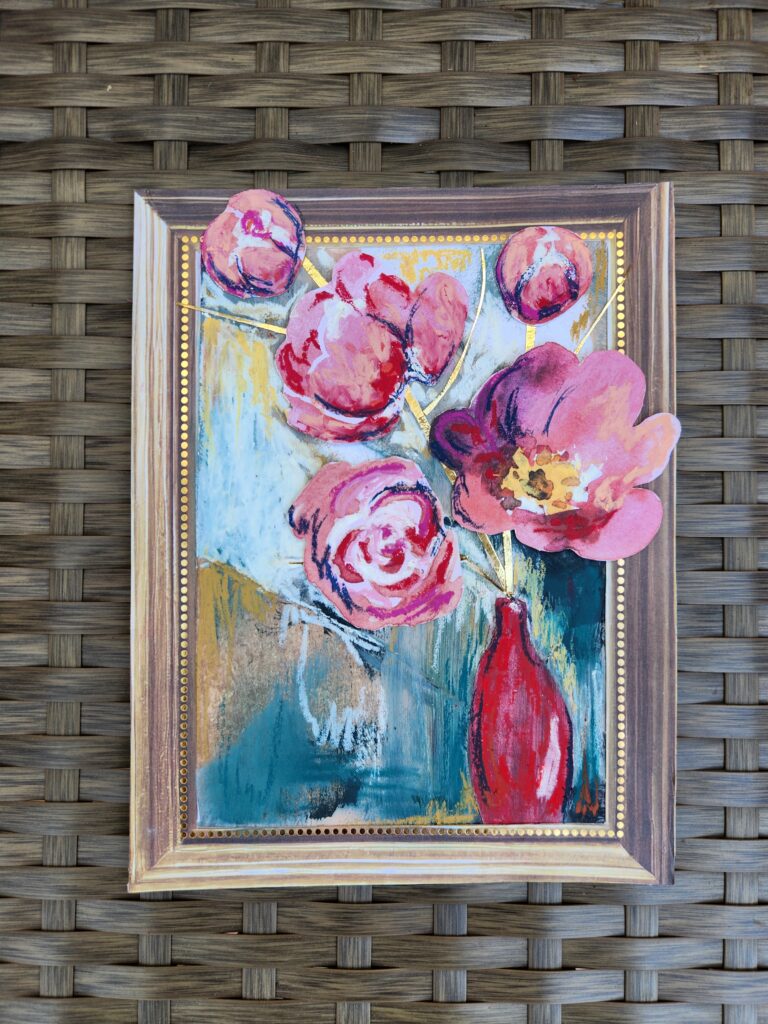
Q2. You work mainly with acrylic and oil paints. What draws you to these materials, and how do they help you express movement and atmosphere?
Acrylic paint, specifically, is very accommodating for my art style. I tend to work relatively fast with my work so the quick drying nature of acrylic is great for it. I love how easy it is to layer, express various brushstrokes, to use different paints and mediums on it – it really adds to the emotion and movement of a piece well.
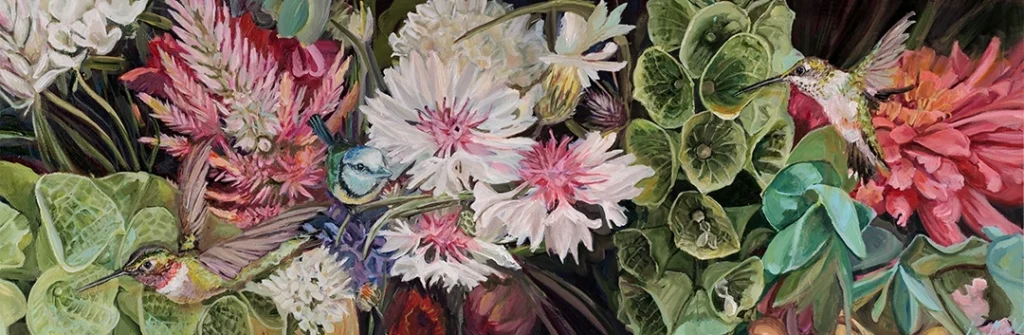
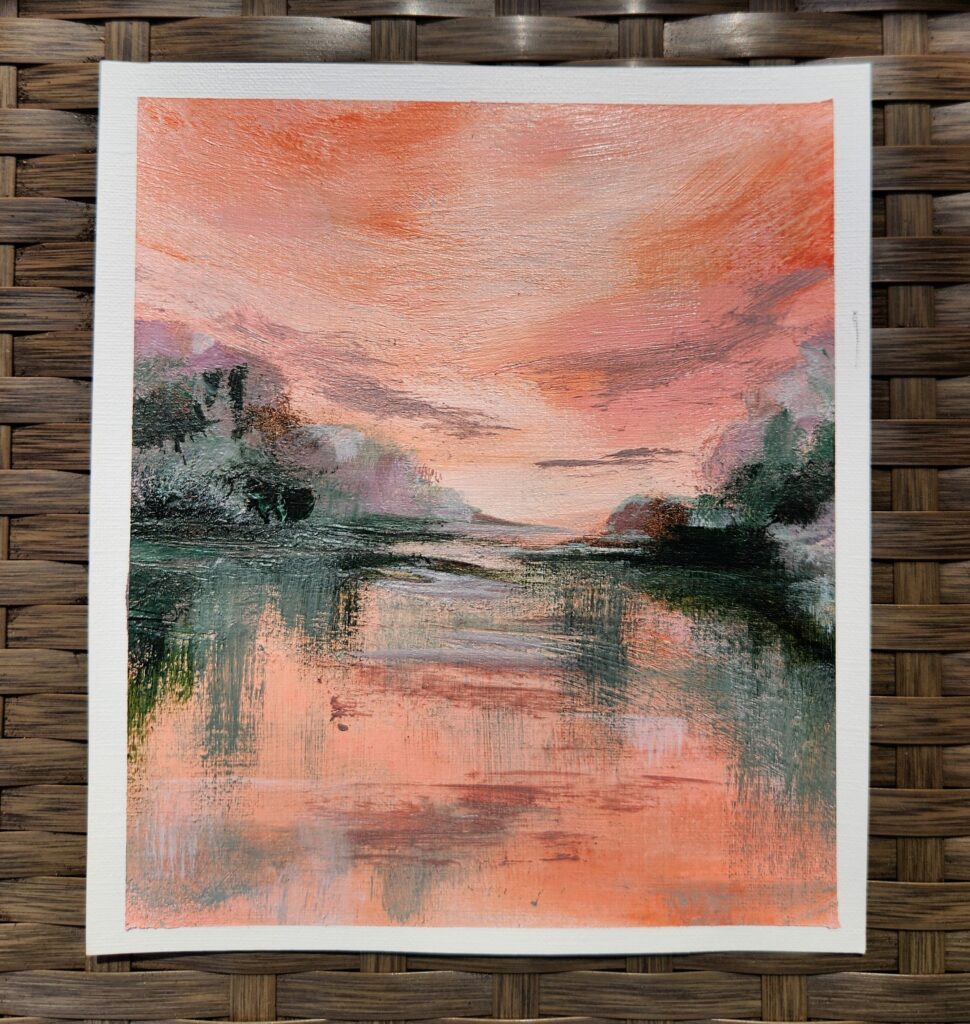
For oils, I use them primarily for very blended, timeless looking pieces. Timing and layering isn’t as straightforward with oils as it is with acrylics so I love to create softer, moody pieces with them – particularly landscapes. Acrylics give me movement and texture whereas oils give me quiet moments and stillness.
Q3. Nature appears often in your work, from landscapes to florals. What is it about nature that continues to draw you back into the studio?
Growing up in Georgia, I’ve lost count of how many times I’ve hiked, explored gardens, camped out, swam in a lake or a creek… Nature has always been a vital part of my environment and has quickly become a go-to source of comfort and healing for harder moments in life.
Even the tending to and caring for plants in and around my home is therapeutic and calming. Its a subject thats always top of mind when I find myself sitting down to paint, especially as my work is often influenced by emotion and color.
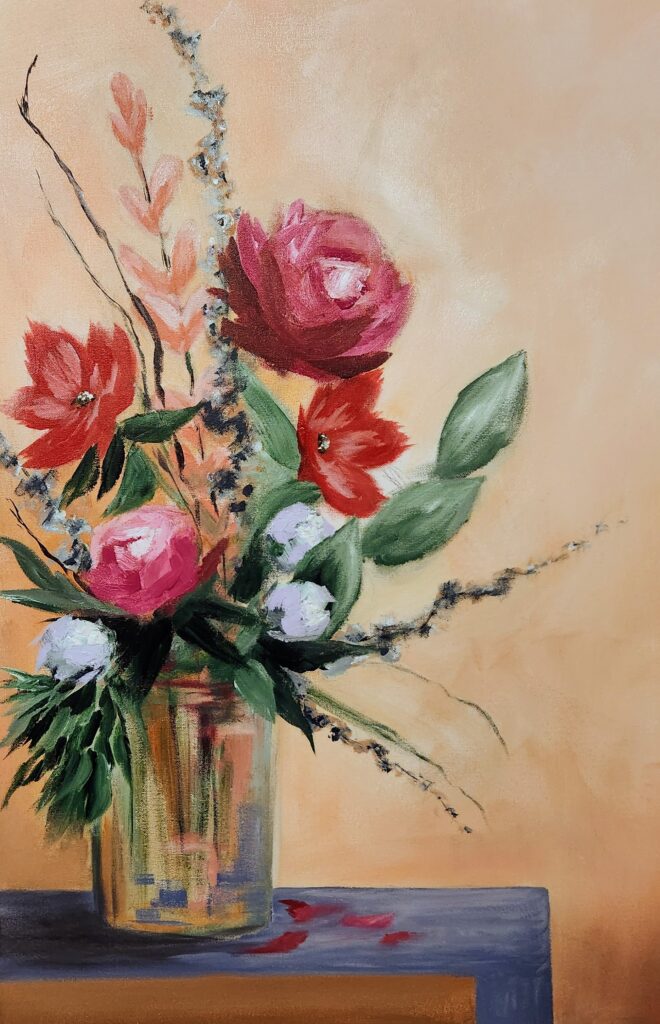
Q4. You describe your art as a reflection of your emotions and mental health. How do your feelings at the time influence the colors, movement, and energy in a piece?
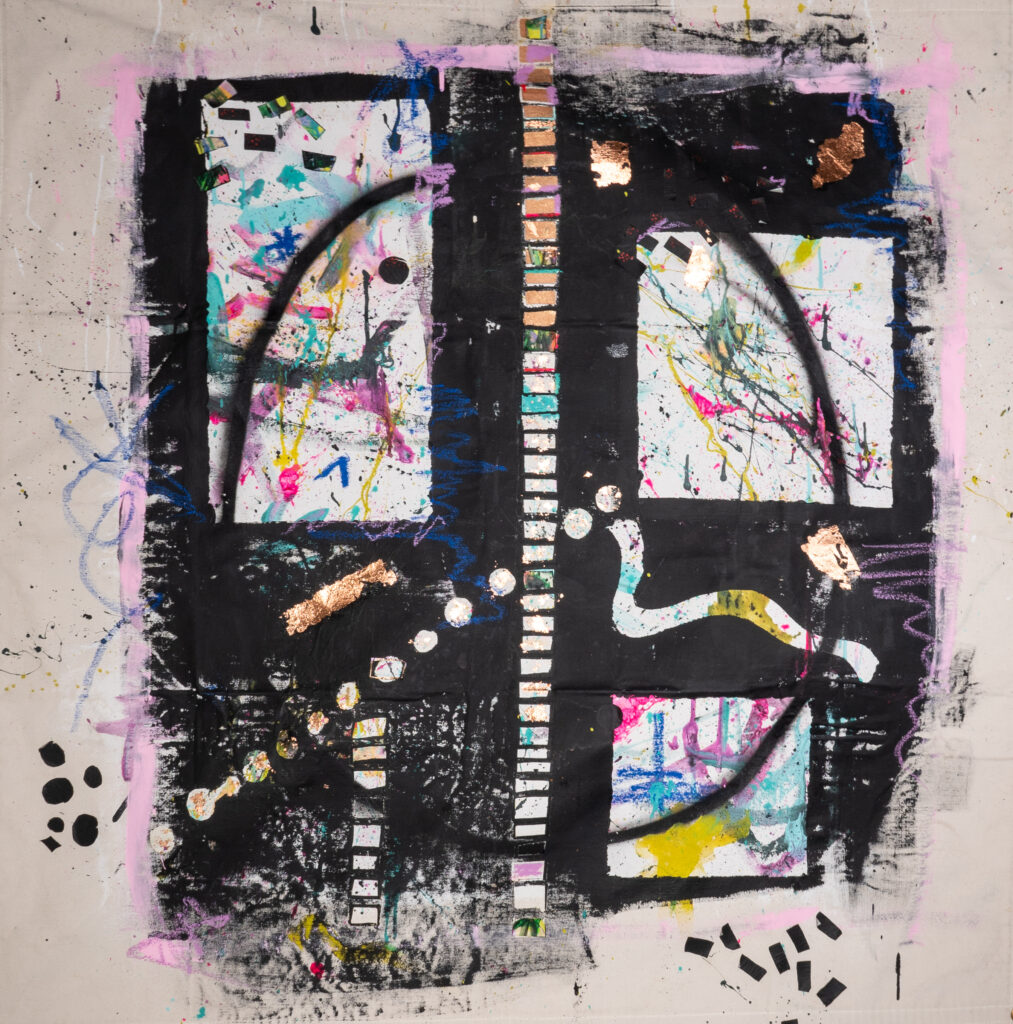
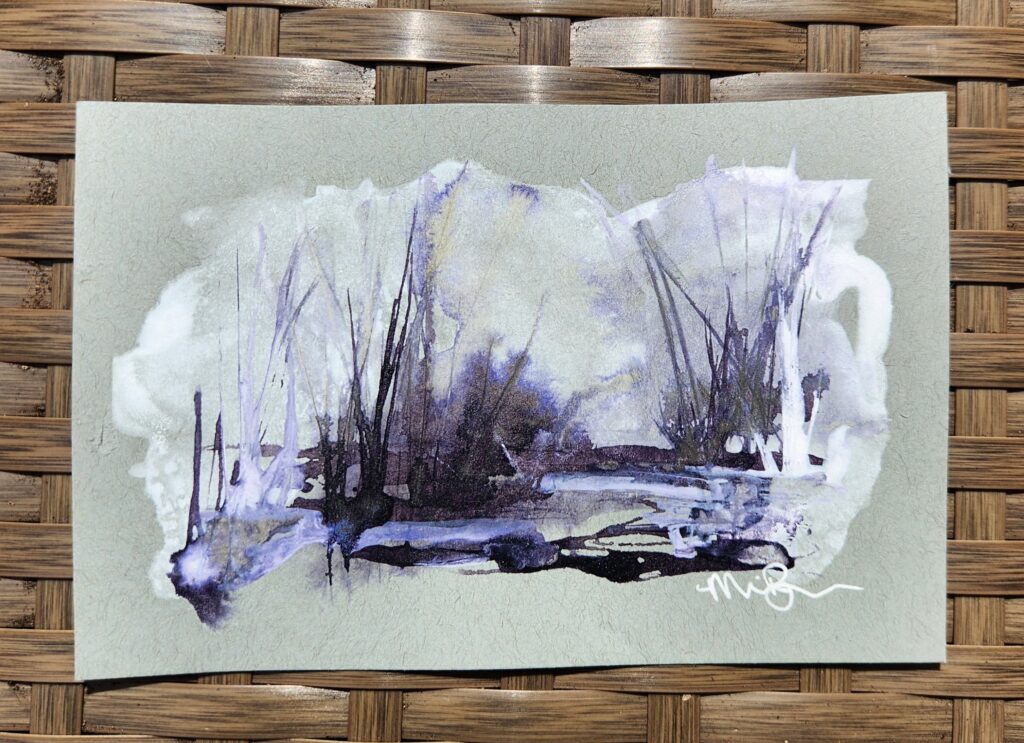
They completely dictate how the piece will turn out from the beginning to the end. In choosing colors that reflect how I am feeling currently, they determine the overall mood and emotion of the piece – colorful and vibrant paints for something more exciting and joyful or darker and subtle colors for times when my mind is troubled. I don’t always have a specific vision in mind for when I start painting so the color placement and layering really determine how a piece develops.
For days that my mental health is really struggling, I find myself using more dramatic strokes with a simpler subject matter. Its more about conveying emotion than painting a specific subject matter. For brighter and happier mental health days, Ibtend to experiment much more.
The colors are fun and sometimes experimental and movement is determined by a myriad of tools and brushes I use in the process.
Q5. Some of your abstract elements show bold brushwork and expressive strokes. How do you balance control and spontaneity in your surface and technique?
So much of this is honestly learned intuition. When I’m really vibing with the brushwork and colors, I continue going with what I feel it needs and what I’ve enjoyed doing throughout the process. And for pieces, or moments, that it doesn’t come as naturally, I take more time to reflect and step back to see what a piece needs.
Sometimes, its a matter of minutes to know what I want to change and adjust. But other times, it takes several days to sit on a piece and reflect on what I feel it might need.
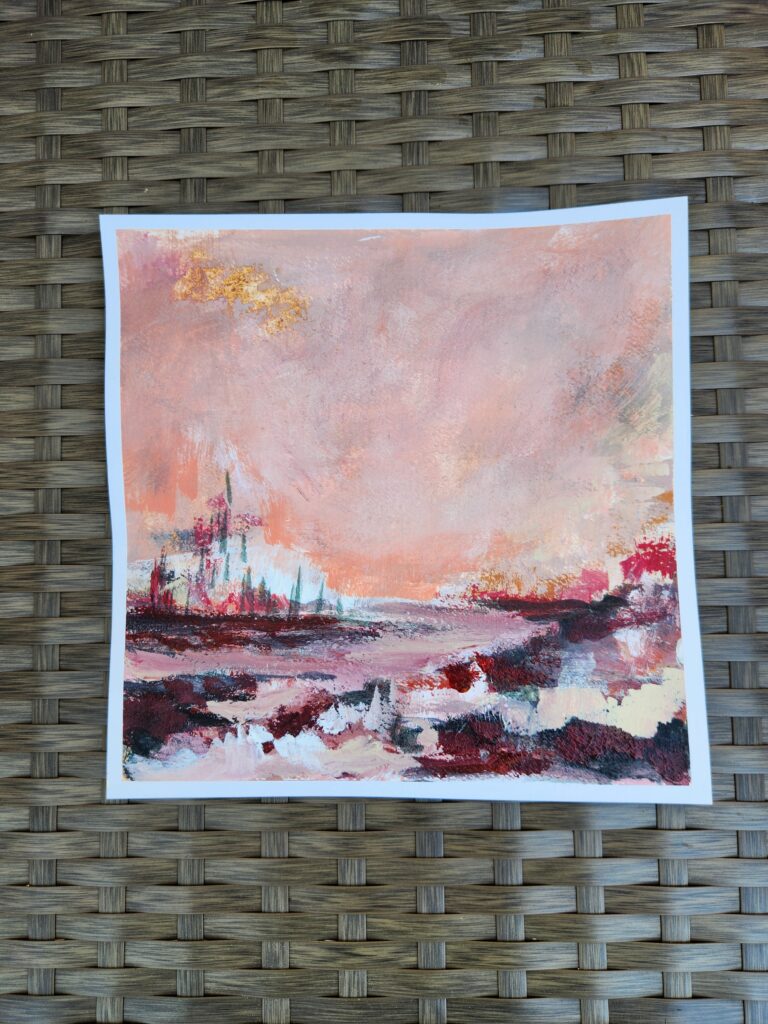
Q6. Your process can be impulsive, sometimes starting without a clear plan. When a painting “tells you what it needs,” can you describe how that conversation unfolds between you and the work?
In the very beginning, its just me placing color and paint where I feel I want to see it. From then on, the conversation begins. I look at where the contrast currently lies and what might need some lightening or darkening. I also look at the kinds of brushstrokes I make and see how it affects the movement and emotion to see if its achieving what I’m starting to envision.
I usually use a limited color palette to focus my colors and create a well rounded piece, but I’ll throw in a totally different color accent towards the end if the piece is needing a little more focus or interest in an area. In a more technical approach, many of these decisions are influenced by color theory and the recommended rules around composition structure.
Q7. Looking at a specific piece like Playtime in Blue (inspired by your son), how did emotion guide the evolution of that work from start to finish?
Oh goodness, this piece was so much fun! My son picked most of the colors (primarily blues) and I added a few contrasting colors to allow for more balance in color. I went into the piece wanting something that conveyed us both – florals for me and more erratic and impulsive motions for him.
Every time I went to work on the piece, I would play music from a playlist of songs he loves to keep his energy and influence top of mind. Sometimes, I would have him paint on it too and I would mimic those strokes into other parts of the canvas!
Q8.Do you want viewers to find their own meaning in your paintings, or do you hope your own emotions and intentions come through clearly?
I think it’s a little bit of both. I paint with my own intentions and emotions in mind, but I want my story of emotion, movement, and color to inspire others too. Each piece is different with that balance, too. There are works that convey more specific meaning that I want to come across and others that are looser for broader interpretations and meaning.
Q9. How has becoming a mother affected your perspective on life, emotion, and artistic expression in your work?
My perspective on life and on what I find meaning and fulfillment in has definitely changed. I find joy in the simplest of things but also experience greater anxiety about other things more than before. I also find I am much more intentional with my painting time as I don’t have as much time to paint during the week. In my works, I find myself experimenting more as I’ve watched my son explore and try different things. He’s a wonderful inspiration of creativity for me!
Q10. Your work has evolved a lot over the years. What changes in your approach, palette, or subject matter feel most significant to you now?
My overall painting style I would say has been the most significant change for me. It evolved from trying to be more exact, structured, and realistic to a much looser, impressionistic style. It completely changed how I approach composition and color palettes and allowed for much more expression and creativity in my process.
Q11. What advice would you give to artists who want to make work that is emotionally honest and technically expressive, especially those who are finding their voice later in life?
I would encourage them to continue trying different styles and colors as often as possible! So much of a style and skill set comes from regular practice and experimentation. If they’re able, attending a workshop or two with an instructor that has a wildly different style is super helpful too to force yourself out of your comfort zone and try something new.
As our conversation with Melissa came to a close, we kept sitting with something that feels really important right now. The idea that finding your voice as an artist does not have an expiration date.
Melissa painted for years before everything clicked. And when it did click it was not because she suddenly got more talented or worked harder. It was because she let herself try something unfamiliar.
She stepped outside what she already knew and gave herself permission to be a beginner again. And that one decision changed her entire practice. The work went from careful and controlled to loose and expressive and alive in a way it had never been before.
We think about how many artists are sitting right now in a version of their practice that works fine but does not feel like them yet. And they are afraid to break it because at least it works. Melissa broke it. On purpose. And what came after was better than anything she could have planned.
The other thing we walked away carrying is her honesty about mental health. She did not frame it as a concept or a theme she explores in her art. She just said it plainly. On the hard days the paintings are darker and heavier and simpler. On the good days they are brighter and more experimental.
The painting is a direct record of where she is emotionally and she does not edit that out or polish it into something more presentable. That rawness is what makes her work feel real. You look at one of her paintings and you are not just seeing colour on canvas. You are seeing a day in someone’s life. A mood. A state of mind. Held in paint.
And honestly the part about her son painting alongside her, picking colours, making marks that she wove into her own work, that image has not left us. Because it is a perfect example of what the best art actually is. Not precious. Not overthought.
Just showing up with whatever you have and whoever you are and putting it down and seeing what happens. Her son does that naturally because he is a child and children do not know any other way. Melissa is learning to do it again as an adult. And that learning is making her braver and freer and more herself on canvas than she has ever been.
For anyone looking to collect work that carries real emotional weight, Melissa’s paintings are the kind that change depending on when you look at them. Not because the paint changes. Because you change.
And the painting meets you wherever you are that day. A bright one will feel joyful when you are joyful and comforting when you are not. A darker one will feel heavy on a hard day and honest on a quiet one. That is what happens when art is made from genuine feeling instead of calculation. It stays alive on the wall because it was alive when it was made. And that kind of energy does not fade.
Follow Melissa Bohn through the links below and see what happens when someone paints exactly how they feel.