



PQHAÜS’s Uses Cinematic Composition to Explore the Stories We Rarely Tell
At Arts to Hearts Project, we have always believed that the most important thing art can do is make someone feel less alone. Not through grand gestures or obvious statements, but through the quiet, specific, completely honest act of showing someone something they have been carrying privately and could never quite find the words for. That is the kind of art we build this editorial to celebrate.
And today we are genuinely honoured and genuinely moved to introduce you to an artist whose entire practice is built around exactly that. When we came across his work, something shifted in the room. We sent it around to each other. We sat with it. And we knew immediately that this was someone our readers needed to encounter.
PQHAÜS is not just a name. It is a philosophy. A space built through painting where people are invited to pause, to feel something they might have been avoiding, and to recognise themselves in a moment they have never seen depicted quite so honestly before.
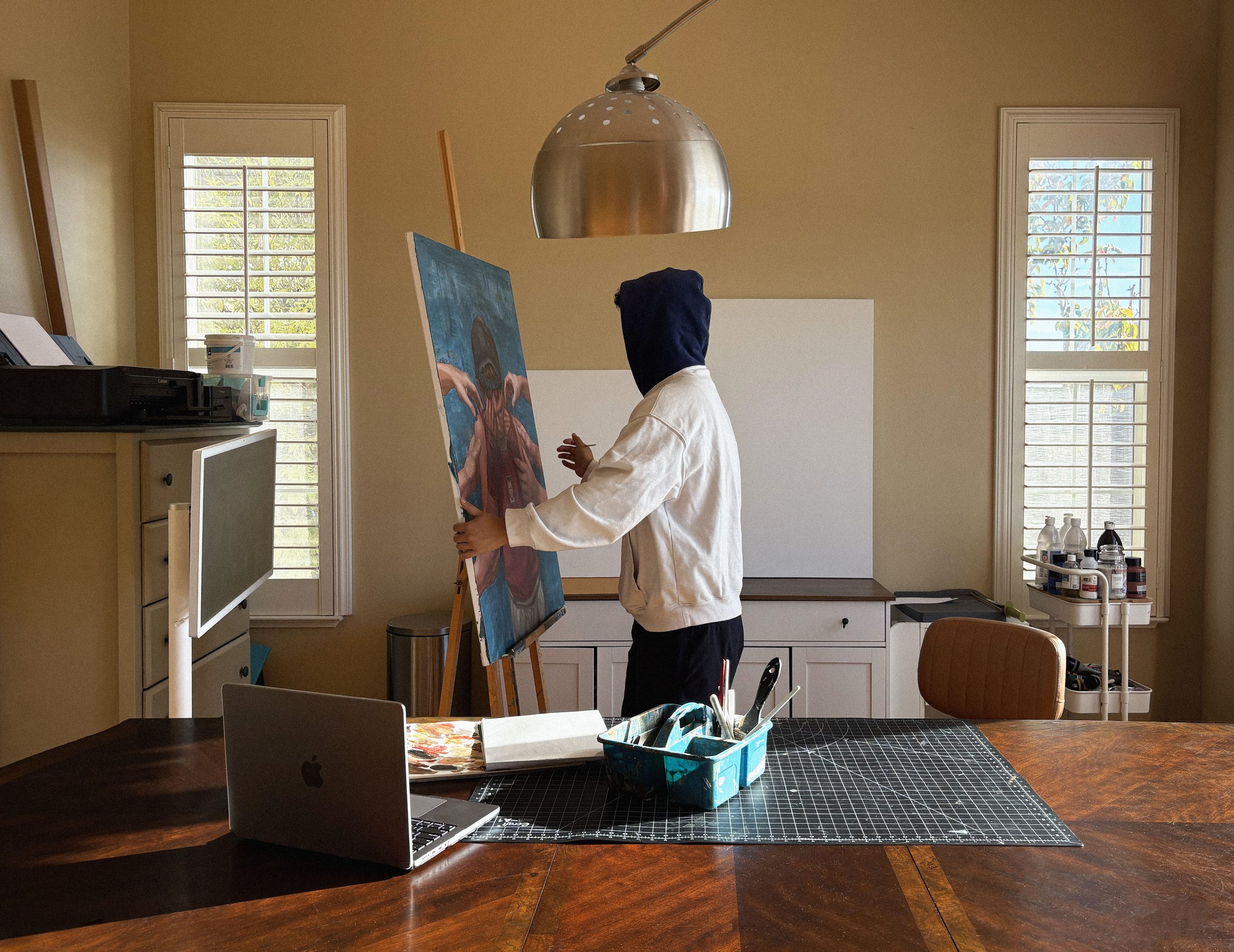
The artist behind it, PQ, is based in San Francisco Bay Area and describes growing up turning to music, visual art, and poetry because they made him feel less alone. Because sometimes someone he had never met could describe something he had not been able to explain to the people closest to him. That experience did not just shape who he is. It became the foundation of everything he makes.
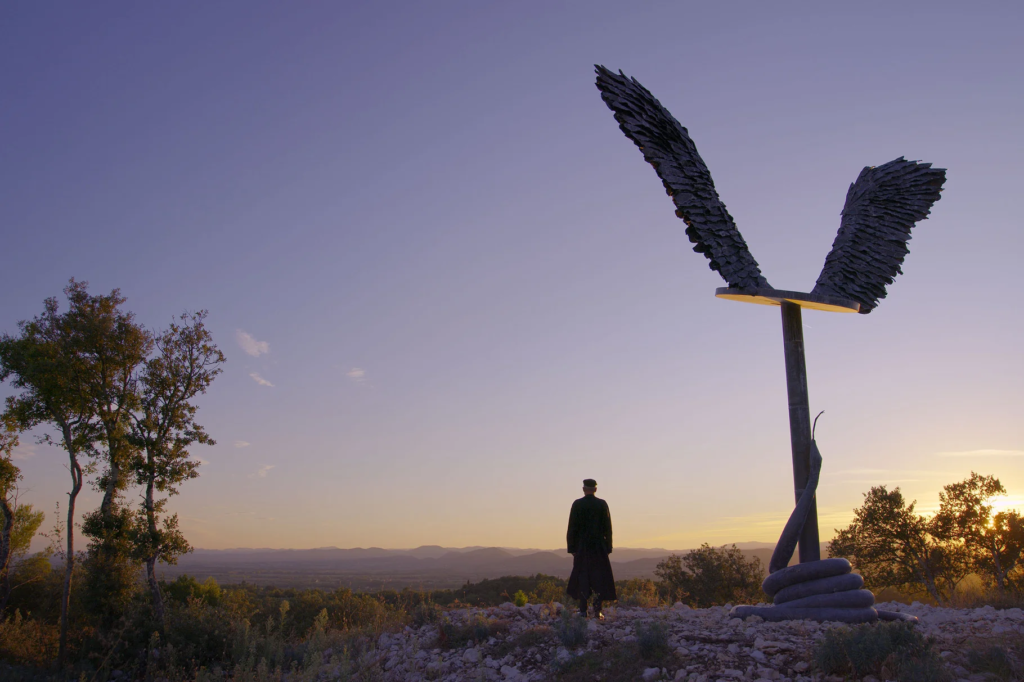
His paintings feel like stills from a film that you cannot stop thinking about. Carefully constructed scenes figures, settings, objects, light that together build an atmosphere rather than a narrative. And then there are the titles each one reading like the sentence someone finally admits out loud once they stop worrying about how it sounds, opening a door into the painting that the image alone could not have opened.
Together, the painting and the title create something greater than either could be separately. A complete emotional experience that lands somewhere specific and stays there.
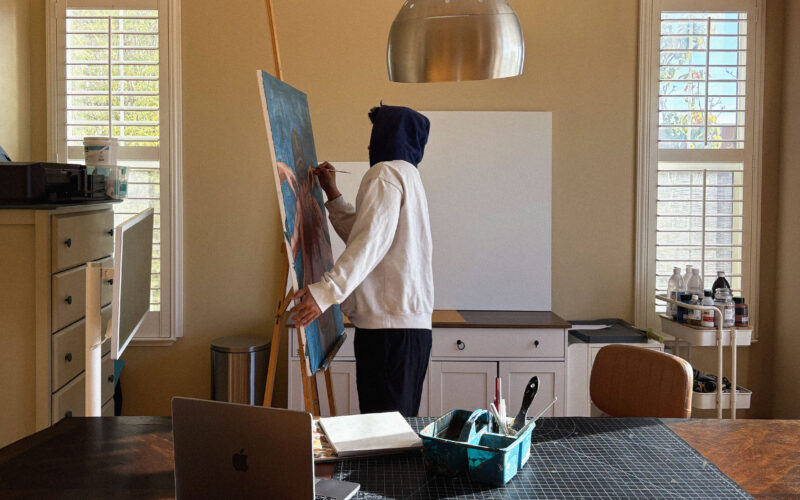
He builds his paintings with extraordinary intention. The process begins long before the canvas, sometimes with sketches, sometimes with digital collages built in Photoshop, a tool he taught himself since middle school and still uses to piece together visual references before bringing an image to life.
But by the time he is ready to paint, the image is usually already fully formed in his mind. His challenge is not imagining what to make. It is figuring out how to translate something that exists in complete clarity inside him into something another person can stand in front of and find themselves inside.
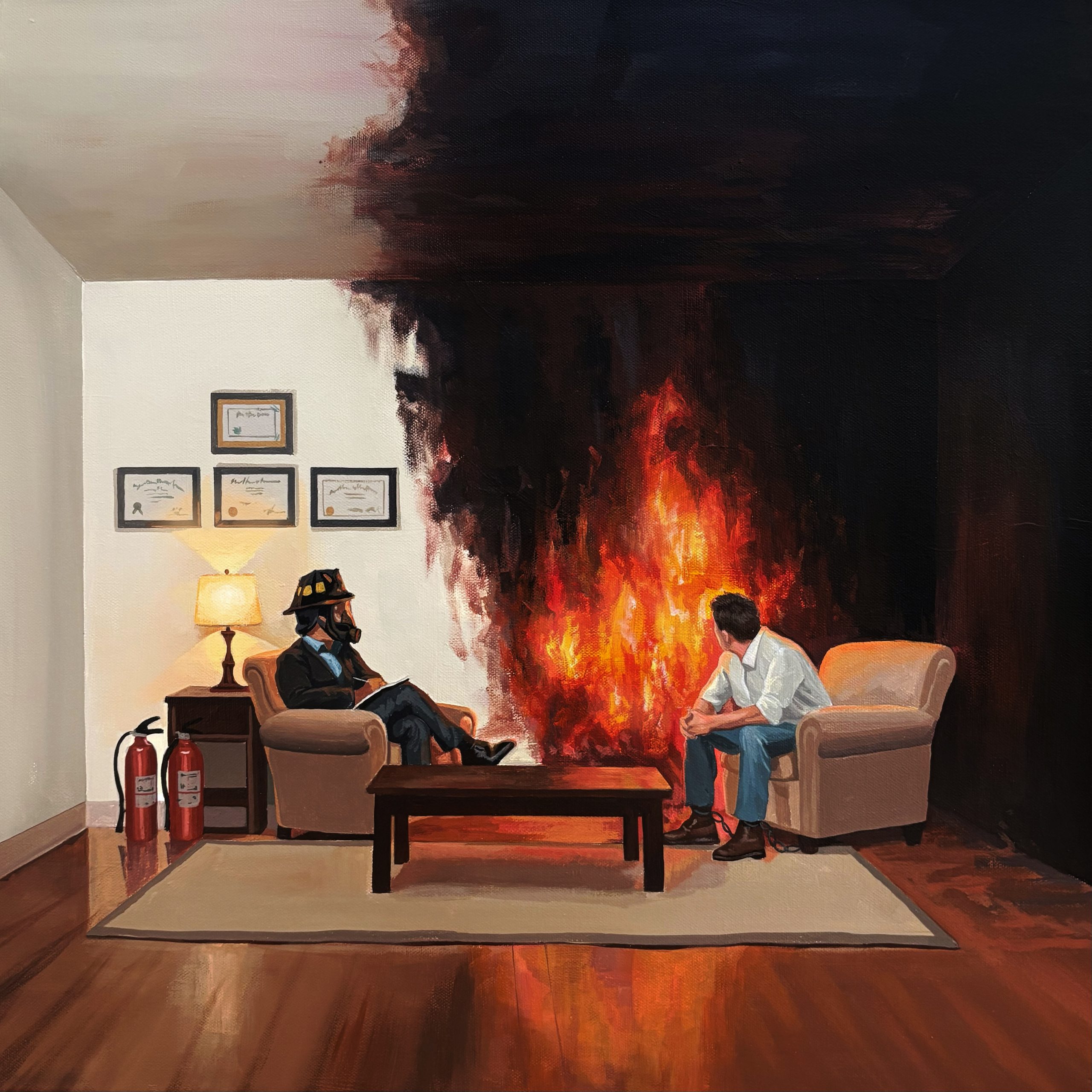
He works in acrylic on canvas a medium that suits the way he thinks. The quick drying time allows him to build layers, make changes, and keep moving when something does not feel right. His figures are developed through multiple sketches before they ever reach the canvas process he describes less as creating and more as collaborating, listening to who the figure is before solidifying it in paint.
And even then, things emerge that were never in the sketch. The work is always becoming something more than he initially imagined.
The recognition has been significant. In 2026 alone, his work has been selected for exhibitions at Viridian Artists in New York, Blue Mountain Gallery in New York, the Lawrence Arts Center in Kansas, the Sausalito Center for the Arts in California, and multiple national juried exhibitions across the United States. The art world is paying attention. And rightly so.
We are so genuinely honoured to share his work with you. And we think once you step inside it, you will understand exactly why.
Let’s get to know PQHAÜS through our conversation and find out what it looks like when an artist builds an entire world around the things people are afraid to say out loud.
Q1. For someone discovering your work for the first time, how would you introduce yourself and your creative practice?
I’m a person who loves art and has always needed it. Growing up, I turned to music, visual art, and poetry because they made me feel less alone. Sometimes someone I had never met could describe something I hadn’t been able to explain to the people closest to me. That shaped my understanding of what art can do. My practice comes from that experience.
I create paintings that feel like scenes from a larger story, often exploring things people recognize in themselves but rarely say out loud. The setting, figures, and titles give those feelings a form without explaining every part of them. I have something of my own to say, but I’m also interested in what the person looking recognizes in it. They bring a life I know nothing about, and that becomes part of how the work is understood.
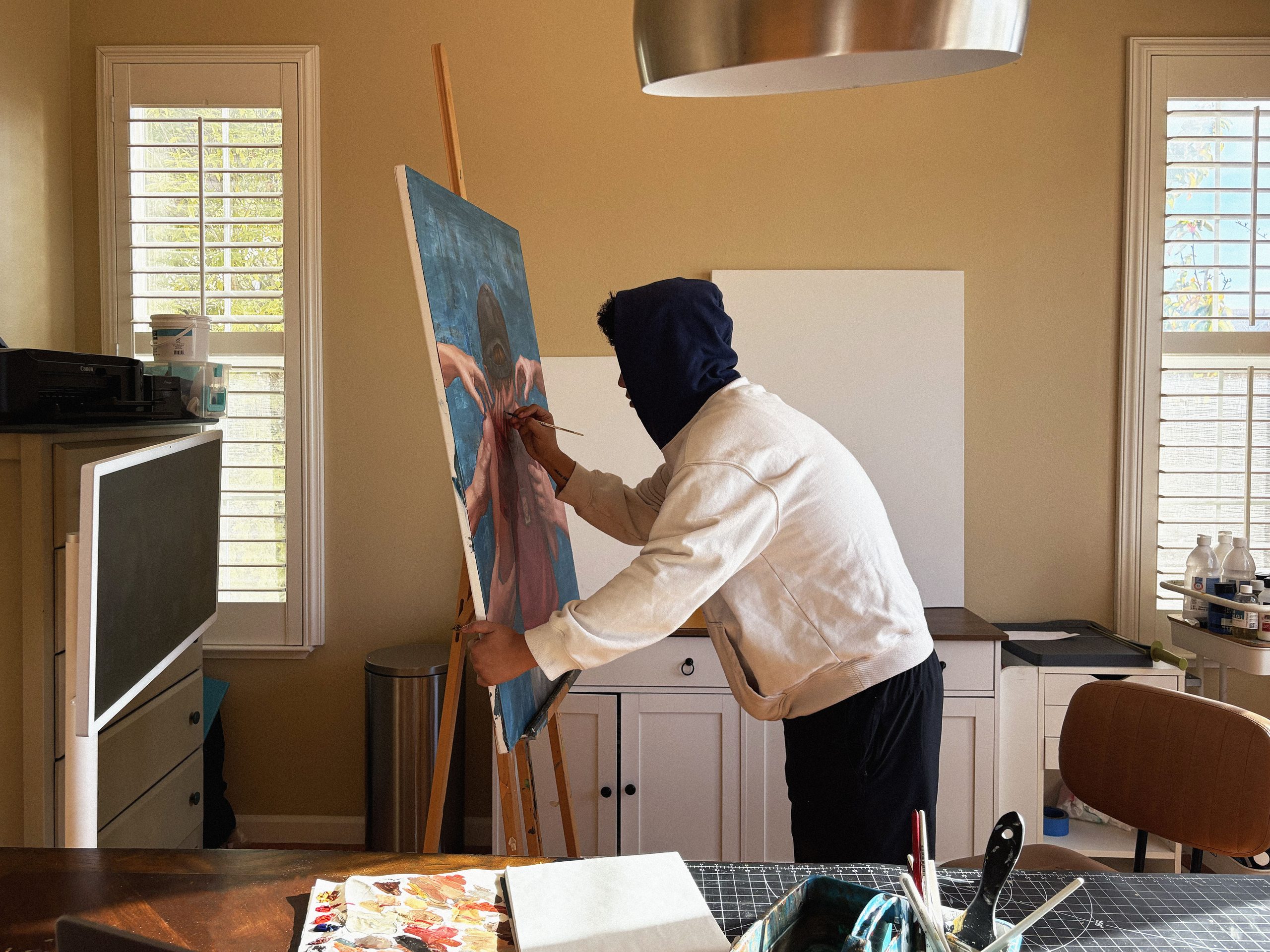
Q2. The name PQHAÜS is built around the idea of a space where people can pause and feel less alone. What led you to develop this concept?
I’ve been interested in Bauhaus since I was young, particularly its founding idea of bringing art, craft, and architecture together. Its connection to the Gesamtkunstwerk, or “total work of art,” interests me because different disciplines contribute to one complete experience.
That influenced how I imagined my own “haus.” In my paintings, the setting, figures, objects, and words work together to build a narrative that feels almost like a short film on canvas. The house also has a personal meaning.
I want people to enter my work and feel there is room for them, for their memories and their own interpretations. I built the space, but I don’t decide what each person finds there.
Q3. Your work explores stories people leave unspoken. How do you find those stories and decide which ones to tell?
I watch a lot of films and read across different subjects, so inspiration can come from almost anywhere. But most of the themes I explore begin in conversations with people. Sometimes a passing comment stays with me longer than the conversation itself. I find myself thinking about why someone said it, or why I recognized something of myself in it. That is usually how I choose what to explore. I need to understand what draws me to a story and what I can honestly bring to it.
My own experience gives me a starting point, but I try to notice when I’m projecting my feelings onto someone whose experience may be very different. Empathy and boundaries matter equally to me.
Connecting with someone’s story doesn’t mean every part of it is mine to tell. I can explore a feeling that a conversation brought up without exposing the private circumstances behind it. I want to give that feeling a form while respecting the person who helped me understand it.
Q4. You deliberately don’t resolve the feelings in your work. Why is leaving things unresolved so important to you?
I love films that leave me wondering how the characters’ lives continue. In high school, I wrote my own scenes after the endings of films like Little Miss Sunshine, The Perks of Being a Wallflower, and The Truman Show. They were just for myself. I wanted those people to stay in my life a little longer. T
hat experience shapes how I approach my paintings. I leave things unresolved so the viewer can imagine what happens beyond the moment I’ve painted. I’m interested in what happens when their interpretation takes them somewhere I couldn’t have planned.
Q5. Your scenes feel carefully constructed, almost like stills from a film. How do you develop a setting before you begin to paint?
I’ve been a Photoshop geek since middle school. I taught myself through years of making digital collages, and I still sometimes build references by piecing together individual visual elements. These days, though, I usually begin with my own sketch without using specific references.
By the time I decide to paint something, the image is usually already in my head in 4K. The challenge is figuring out how to make it exist outside my mind. That process is honestly the most enjoyable part for me.
Q6. Your titles often read like the beginnings of personal conversations. How do you find the language that accompanies your work?
Some titles come from conversations with friends or strangers. A sentence stays with me, and I find myself returning to it long after the conversation is over. I sometimes write it down, but the ones that affect me most tend to stay in my memory without any effort. Sometimes it takes a while to understand why those particular words mattered to me. Others take shape once I know what I want to explore.
The words may come first and give the painting its direction, or I may find them while writing through an idea. Writing helps me get specific about a feeling that initially seemed difficult to name. I want the title to have a reason to exist alongside the image.
It might suggest something the person in the painting cannot say, or introduce a thought that changes how you look at the scene. I’m drawn to language that feels like something someone might finally admit in a conversation, once they stop worrying about how it sounds.
Q7. Your paintings often leave viewers with questions rather than answers. Why is it important to make space for difficult feelings without resolving them?
Because even when we face the same issue, we don’t experience it in the same way. We bring different histories and circumstances to it, and what helps one person may mean very little to another. I want to acknowledge those differences rather than assume I have an answer for everyone.
I don’t want to decide what someone should take away from a painting before they’ve had a chance to respond to it. Their memories, feelings, and questions affect what they notice and what stays with them, including things I may never have intended. Leaving something unresolved is part of respecting that.
I want viewers to feel that some part of the painting belongs to them, without having to arrive at the same conclusion as me.
Q8. You work primarily with acrylic on canvas. What makes this medium right for the stories and emotions you explore?
I’ve worked with oil, watercolor, pencil, and charcoal, but acrylic suits the way I think and work. It dries quickly, which allows me to build layers, make changes, and see the painting progress without long interruptions.
I usually have a clear image in mind, so I value being able to respond immediately when something doesn’t feel right. I can paint over an area and keep working until the color, composition, and atmosphere match what I’m trying to express. That flexibility helps me stay involved in the scene as it develops.
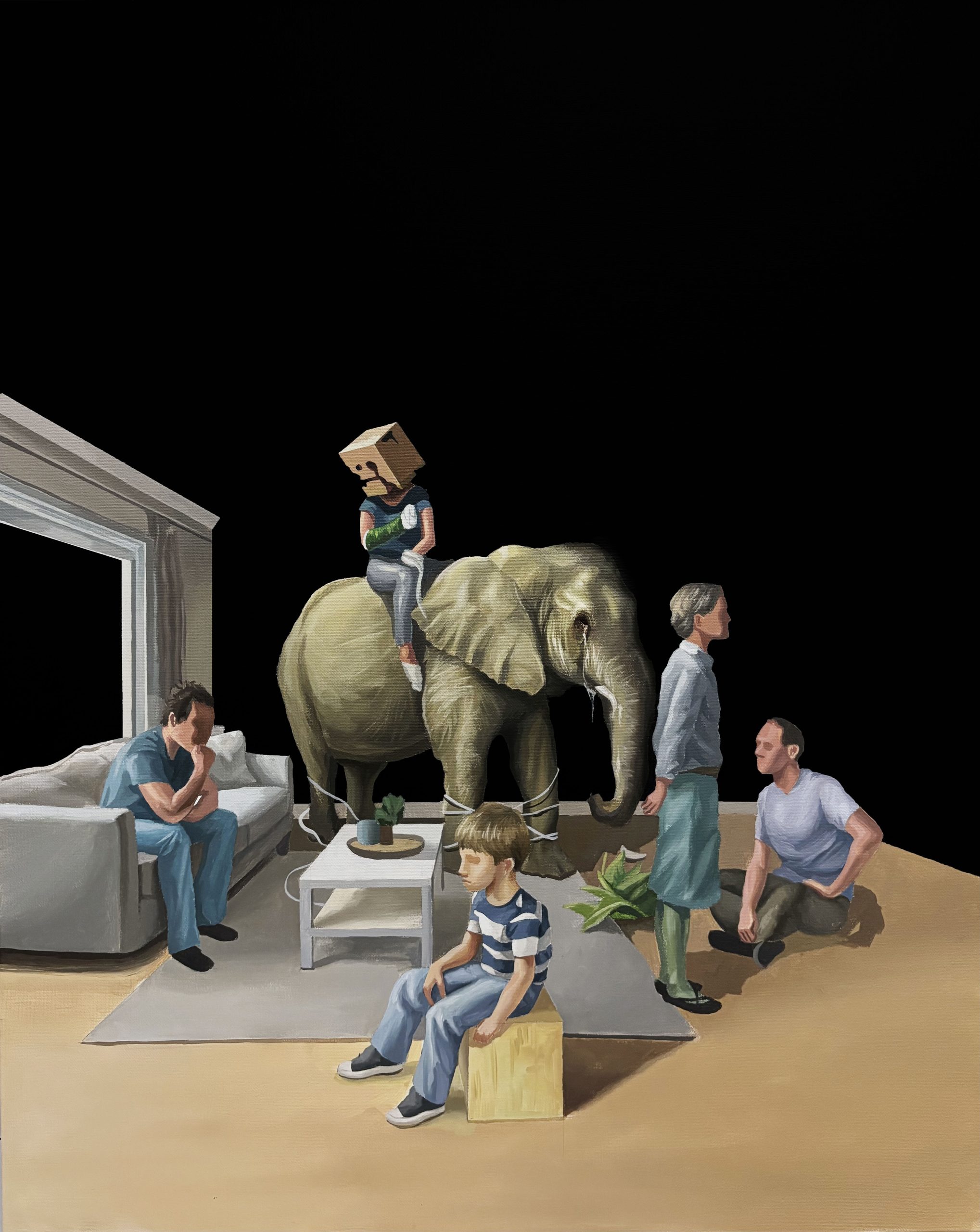
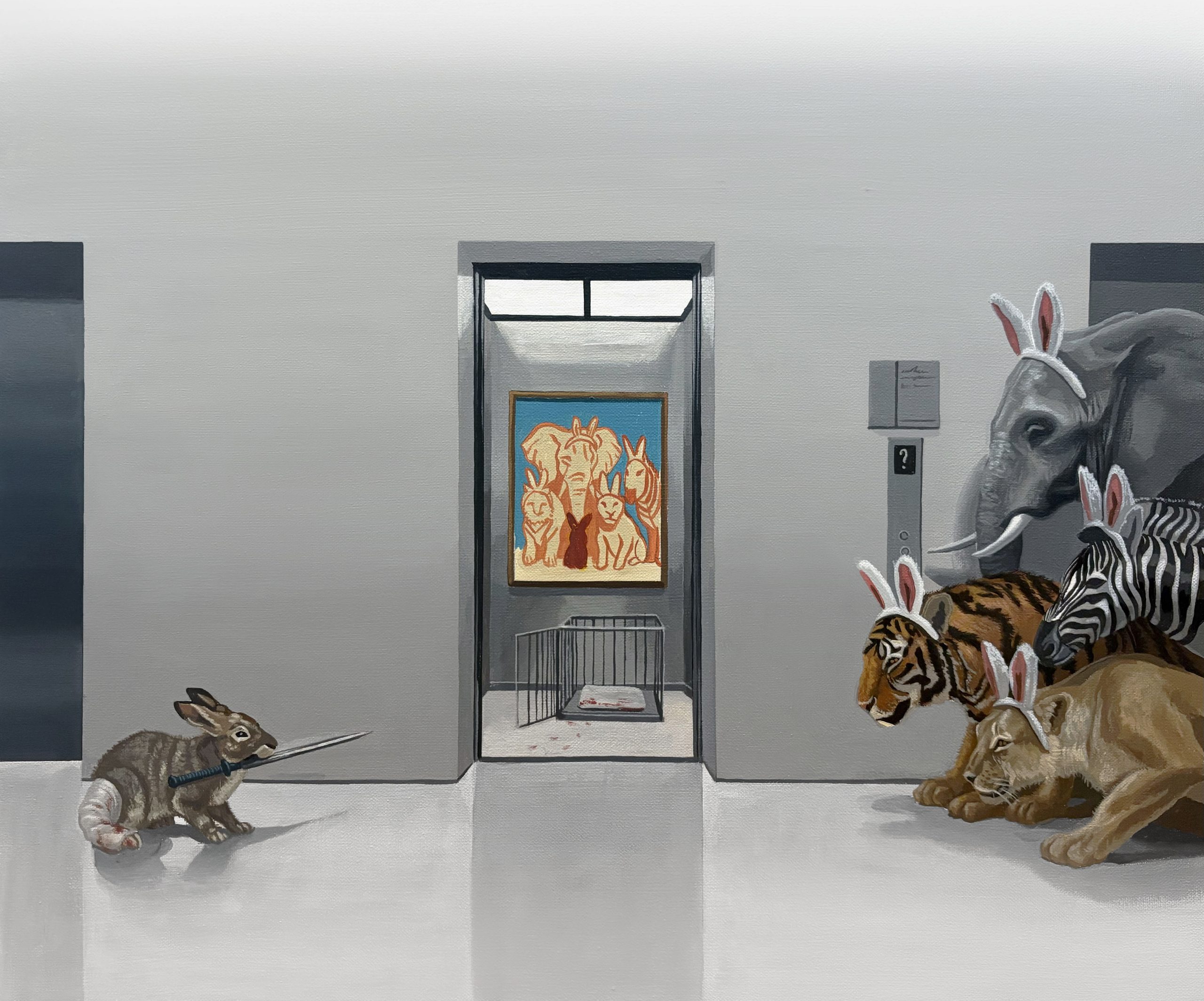
Q9. In We Are Always Here for You, you explore the gap between offering support and feeling supported. What inspired this idea?
The painting began with a friend I care about deeply. He is a good person, but surviving his circumstances sometimes asks him to become someone he never wanted to be. I think of it as forcing a cat to become a tiger just to survive the wilderness. His friends and I could see what he was going through. We wanted to listen and make sure he knew we were there.
But sometimes, our eagerness to help made him feel like a patient. At a time when he was beginning to feel better, our concern kept reminding him that we still saw someone who needed help. That stayed with me because the care was sincere, but it wasn’t always reaching him the way we intended.
I began to question how we offer support and whether we leave enough room for someone to tell us what they actually need. Sometimes you want to know that people will catch you if you fall. You don’t want every interaction to remind you that they’re expecting you to.
Q10. In The Summer We Barely Afforded, you reflect on memory and limited means. What makes difficult memories meaningful over time?
Because being able to look back means we made it beyond that point. There were times when I couldn’t see much past what I was going through. Now I can remember those days from a place I didn’t yet know I would reach. That matters to me. It doesn’t mean the hardship itself was good or that I would want to repeat it.
But over time, I can see more than what was missing. I can recognize the patience it took to keep going and the things I still managed to enjoy when I had very little. I return to those memories because they help me understand where I am now and where I want to go. Some of what feels ordinary today would have meant a great deal to me then.
Q11. Your work explores what often remains hidden behind polished appearances. How do you see your art responding to the way people relate to one another today?
I would rather someone dislike me for who I am than love a version of me I have to keep pretending to be. That carries into my work. I don’t want to make a feeling more presentable just because it will be easier for people to look at. Social media gives us a lot of control over how we appear, but that can make it difficult to admit anything that interrupts the image we’ve built.
My paintings give those feelings somewhere to exist. They can be uncomfortable, awkward, or even ugly. Those qualities are part of what I want to show.
I think people connect with my work because they recognize something they might hesitate to share themselves. There is beauty in that recognition, even when what we’re looking at isn’t necessarily beautiful.
Q12. Has exhibiting your work changed how you understand its ability to connect with people from different backgrounds?
Yes. Exhibiting has made me think more about what people can connect with beyond the image itself. In person, you can see the brushstrokes, the texture, and the small decisions that went into making the painting. To me, those are traces of the artist’s thinking. Someone stood in front of that canvas and worked through every part of it.
Online, a painting appears among countless other images. In an exhibition, there is more room to stay with it and notice something you might otherwise pass over. Its scale and physical presence become part of the story. People bring different backgrounds and experiences to that encounter.
They may notice something I barely thought about or interpret a scene differently from how I intended. I value that. The painting gives us something to meet around without requiring us to have lived the same life.
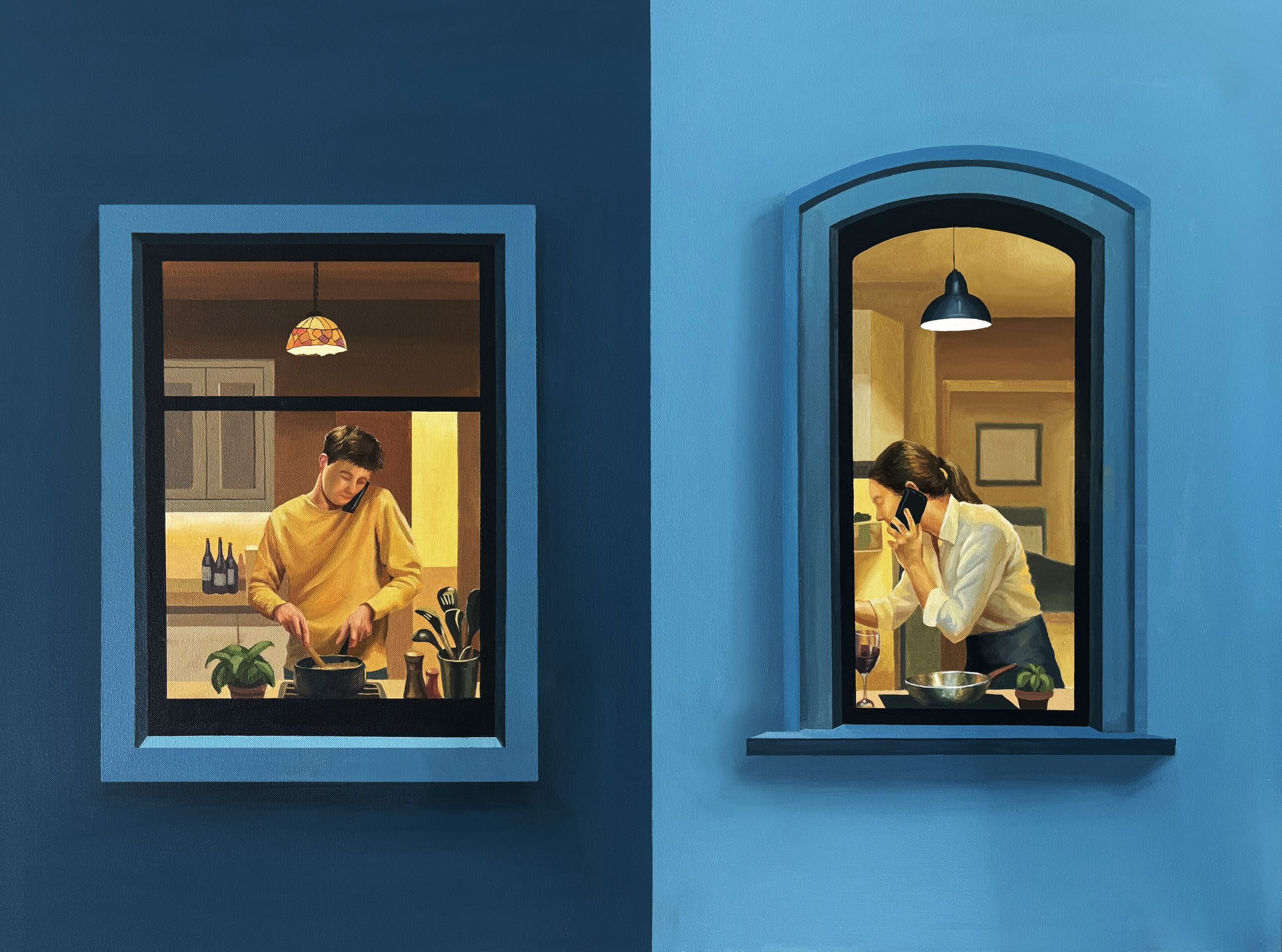
Q13. What do you hope viewers feel when they first encounter your work, and after they spend more time with it?
In the first few seconds, I want them to trust their own reaction. If they feel sad, find something funny, or even get angry, I want them to have that response without wondering whether it’s the correct one. If they stay, I hope they become curious about why they reacted that way.
What caught their attention? Did it remind them of something? Does the feeling change the longer they look? I have my own reasons for making a painting, but those don’t determine what someone else has to experience. We each see it through the life we’ve lived.
I’m interested in giving people enough space to follow their own perception, even when it takes them somewhere entirely different from me.
Q14. Has creating work around grief, vulnerability, and belonging changed how you understand these experiences in your own life?
Yes. My art practice has helped me understand how much we share and how privately we carry it. Grief and vulnerability are part of being human, yet we often keep them to ourselves because there is so much pressure to be happy or show that we’re doing well. I consider myself a happy person. I love being joyful, but I think I would be miserable if happiness were the only feeling I allowed myself. It would mean constantly editing my response to my own life. If I lost someone, felt disappointed, or was hurt by something,
I would have to pretend it didn’t affect me just to maintain that happiness. I don’t want to feel obligated to be okay with everything that happens to me. Sadness lets me acknowledge what matters to me, what I miss, and what I wish had been different. I need room to feel those things without treating them as a failure or something I have to immediately fix.
Otherwise, even happiness would begin to feel like a responsibility. Working with these feelings has also made me more attentive to other people. My own sadness helps me understand that there may be things happening in someone’s life that I cannot see. That is where empathy begins for me, and where belonging becomes possible. We don’t have to hide everything difficult about ourselves to be part of each other’s lives.
Q15. If someone encounters your work during a difficult time, what would you hope they take away from it?
I hope they feel they can acknowledge what they’re going through without having to make it sound better than it is. Sometimes something hurts, and accepting that it happened, that it cannot be undone, is the hardest part. I want my work to give people space to feel that and still remain curious about their lives. When you’re in pain, it can be difficult to imagine anything beyond it.
You don’t yet know what will make you laugh again, who you’ll meet, or what will become important to you. Life can be beautiful and ugly, sometimes within the same day. I don’t think we have to reconcile all of that before we can keep living. There is still something we haven’t experienced. I hope my work leaves someone willing to find out what that is.
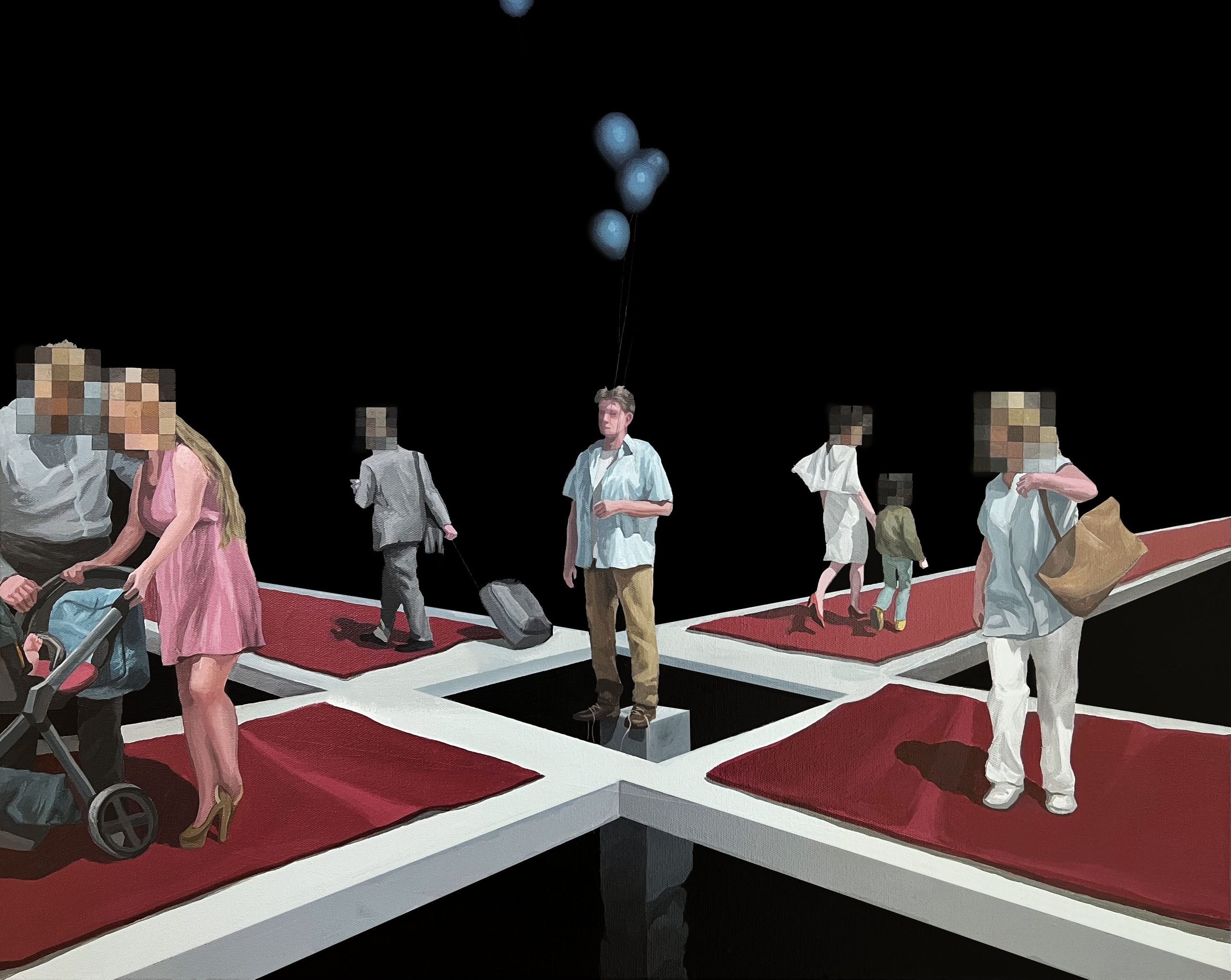
As our conversation with PQHAÜS drew to a close, one thing stayed with us more than anything else. He said that he would rather someone dislike him for who he is than love a version of him he has to keep pretending to be. And that carries directly into the work.
He does not make a feeling more presentable just because it will be easier to look at. He does not smooth the edges or resolve the discomfort or offer a tidy conclusion. He simply shows the thing as it is and trusts that the right person will recognise it.
That trust is rare. And it is the reason the work connects the way it does. Because what PQHAÜS is doing is not just making beautiful paintings about difficult feelings. He is making an argument quietly, through every canvas that those feelings deserve to exist.
That grief and vulnerability and the particular loneliness of modern life are not failures of character or weakness to be overcome. They are part of being human. And art that acknowledges that, without trying to fix it or explain it away, gives people something that very little else can the experience of being genuinely, completely met.
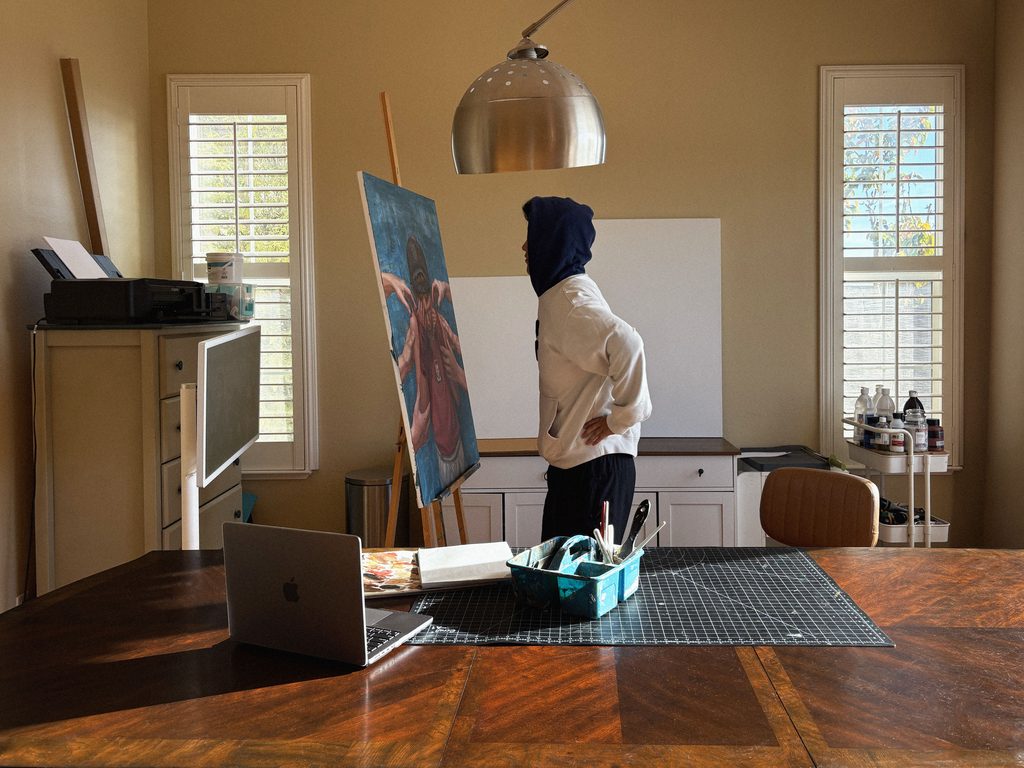
The contemporary art world is full of work that is visually impressive and emotionally safe. Work that looks good and asks nothing difficult of the person standing in front of it. PQHAÜS is doing the opposite. His paintings ask you to feel something you might have been avoiding.
They sit with you in the uncomfortable places. And they do it with such warmth and such care that the discomfort becomes something else entirely something closer to relief. The relief of finally seeing something that has been true for a long time.
For those who collect work that carries that kind of genuine emotional depth work that changes the feeling of a room not just visually but in the way only something honest can his paintings offer exactly that. The kind of work that finds the person who needs it. The kind that makes someone feel, perhaps for the first time in a long time, that they are not carrying it alone.
Follow PQHAÜS through the links below and see for yourself and find out if his work makes you feel a little less alone too.