

What’s Happening in the Art World? From Rare Artworks to New Cultural Spaces
What happens when a rock legend’s private painting resurfaces, a Pop Art icon lands on Gap clothing, and the man shaping AI is photographed like a figure from a 19th-century masterpiece? This week, the art world moves between unexpected places, bringing together auction rooms, fashion, technology, architecture, and the realities of making a living as an artist.
A rarely seen David Bowie self-portrait is heading to Sotheby’s, while Gap and the Whitney Museum are bringing Roy Lichtenstein’s unmistakable imagery into an everyday wardrobe. Elsewhere, a new Art Basel and UBS report challenges assumptions about younger art collectors, the Zaha Hadid Foundation prepares to open its archive and former headquarters to the public, and Annie Leibovitz turns to Caspar David Friedrich to frame OpenAI CEO Sam Altman in a striking Vanity Fair portrait.
There is news for working artists, too. New York City is doubling its individual artist grants to $10,000, putting financial support and the rising cost of sustaining a creative life back in the conversation.
From familiar images finding new audiences to institutions opening their doors and artists receiving greater support, these stories reveal an art world that continues to change how art is made, seen, collected, and lived with. Here are the developments worth knowing this week.
David Bowie’s Rare 1996 Self-Portrait Is Heading to Sotheby’s
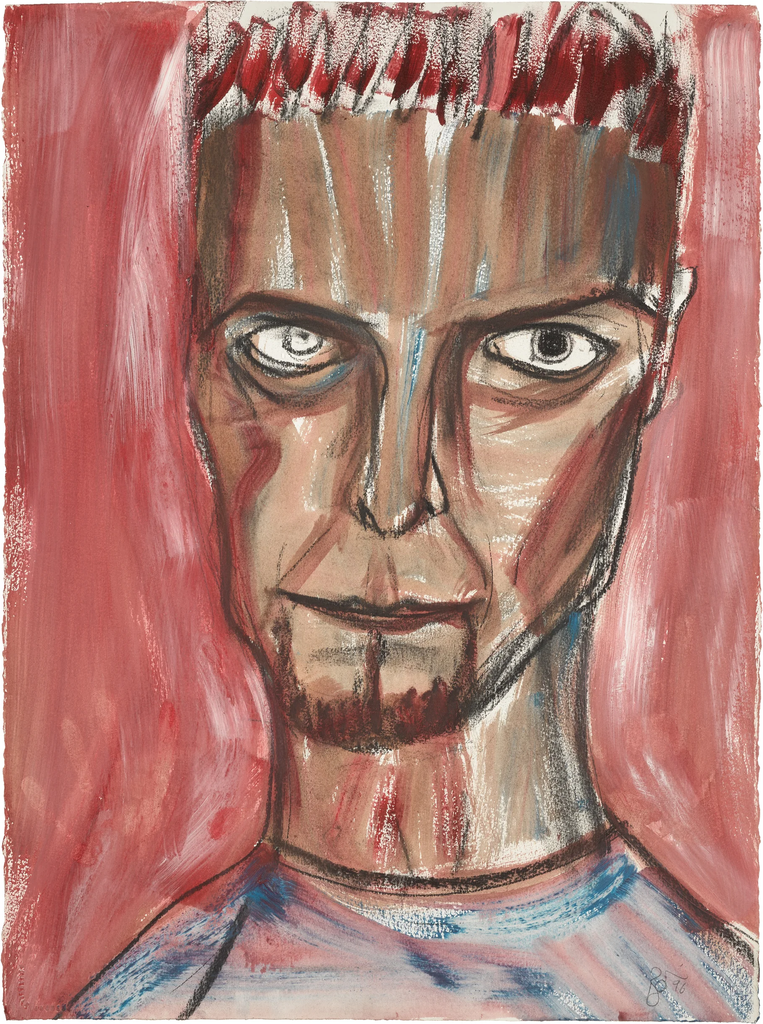
A self-portrait by David Bowie, unseen in public for nearly three decades, is set to appear at auction for the first time. Painted in 1996, the work will be offered at Sotheby’s Modern British and Irish Art Day Auction in London on October 15, with an estimate of £35,000–£55,000 (approximately $46,000–$72,500). The painting was recently put on public view ahead of the sale.
Made on paper, the portrait shows Bowie looking directly at the viewer, with his famously asymmetric eyes at the centre of the composition. Two handprints pressed into the lower corners make the work particularly personal. Bowie gave the painting to his gallerist in St Ives, Cornwall, who later sold it to a private collector. It has remained in that collection ever since.
The portrait belongs to a group of eight self-portraits Bowie created during a productive period of painting in the mid-1990s. Its vivid colours and expressive brushwork reflect his interest in German Expressionism, alongside his admiration for British painters Frank Auerbach and Leon Kossoff, whose works he collected. Although Bowie is best known for his music, his engagement with visual art was an important part of his creative life.
The upcoming sale also follows a decade after Sotheby’s landmark 2016 Bowie/Collector auction, which brought more than 350 works from his personal art collection to market, achieving £32.9 million. This time, the focus shifts from the art Bowie collected to a work he made himself, offering a rare glimpse of his practice as a visual artist.
Gap Brings Roy Lichtenstein’s Pop Art to a New Clothing Collection
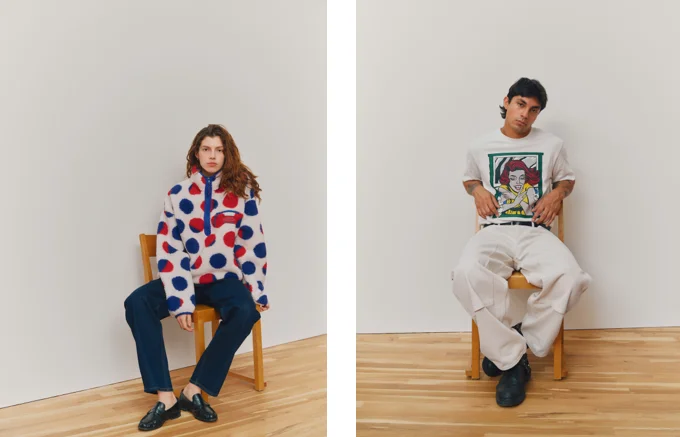
Roy Lichtenstein’s bold, comic-inspired imagery is moving from museum walls to everyday wardrobes through a new collaboration between Gap, the Whitney Museum of American Art, and the artist’s estate. Launched on October 7, the 18-piece collection coincides with the Whitney’s exhibition Roy Lichtenstein: Like New, which opens to the public on October 11. The range includes graphic T-shirts, hoodies, button-down shirts, a varsity jacket, hats, socks, a scarf, and a knitted throw, featuring imagery from works such as Crying Girl (1963), Standing Explosion (Black) (1965), and Cathedral #2 (1969).
The collaboration draws on an idea that runs through Lichtenstein’s work: how images are borrowed, reproduced, and transformed as they move through popular culture. Known for adapting the visual language of comic strips, advertising, and commercial printing, Lichtenstein made work that looked mechanically produced but was carefully constructed by hand. The Whitney’s exhibition explores this fascination with duplication and image-making across roughly 130 works spanning six decades of his career, from painting and drawing to sculpture, prints, and film.
The collection ranges from $28 socks inspired by Sock (1962) to a $138 varsity jacket featuring Standing Explosion. Three styles are exclusive to the Whitney Museum Shop, while the wider collection is available through select Gap stores, Gap’s website, and the museum’s online shop. In a statement reported by Artsy, the Whitney’s director of retail and licensing, Jack Sachs, described Lichtenstein’s connection to popular culture and reproduction as central to the partnership, asking what the artist’s work means within consumer culture today.
The Whitney has previously worked with fashion and design brands to connect its exhibitions with products beyond the gallery. This latest collaboration puts that approach in conversation with an artist whose work already examined the relationship between art, mass production, and everyday visual culture.
Gen Z Collectors Are Outspending Older Generations in the Art Market, Report Finds
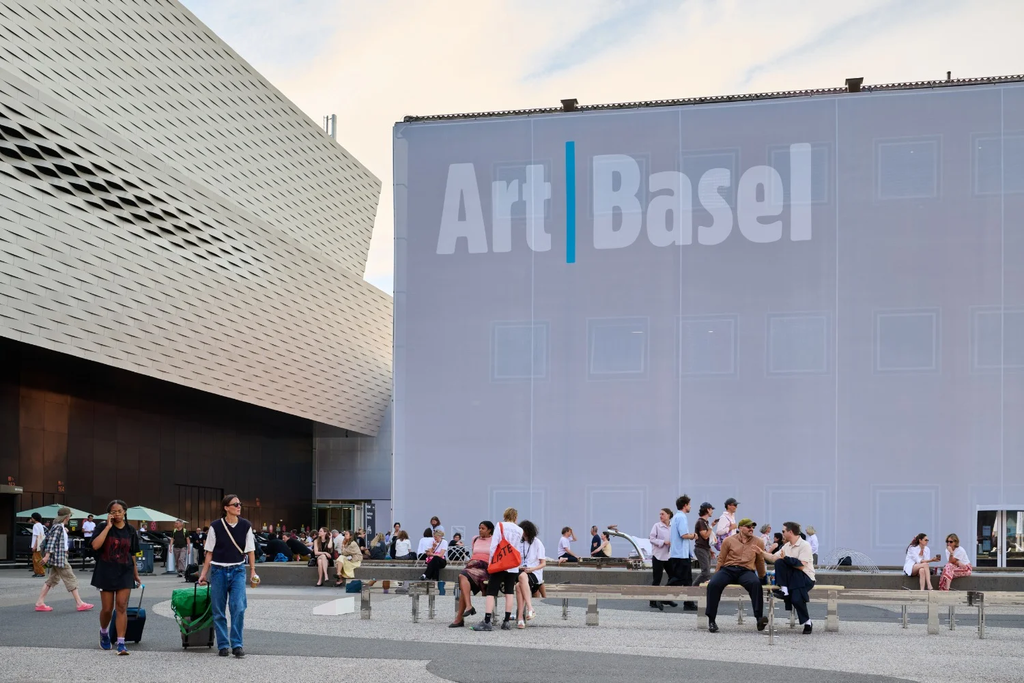
Gen Z collectors are spending more on fine art than older generations, according to the 2026 Art Basel and UBS Survey of Global Collecting. The report, authored by economist Dr. Clare McAndrew, surveyed approximately 3,100 high-net-worth collectors across 10 markets and found that Gen Z respondents spent an average of $347,460 on fine art in 2025, a 19% increase from the previous year. That figure was more than twice the average recorded for any older generation. Across all respondents, average fine-art expenditure rose 13% to $124,265.
The findings challenge the idea that younger collectors are necessarily cautious participants in the art market. According to the report, Gen Z accounted for nearly half of purchases priced above $1 million in 2025 and the first half of 2026. Family connections also played a significant role: 40% of Gen Z respondents said family influence was how they first entered collecting, compared with 28% across all generations. The report suggests that inheritance and intergenerational wealth transfers are part of the picture, with nearly 90% of Gen Z respondents who inherited artworks choosing to retain them.
Despite growing up in an era shaped by social media, younger collectors were also the most protective of their collections’ privacy. Thirty-nine percent limited in-person access to close family, friends, and household members, while collectors across all generations showed a broader preference for keeping ownership within private circles. The report also found that digital tools are becoming more influential in collecting: 22% of respondents used AI and digital tools for collecting advice in 2026, compared with just 4% in 2024.
Painting remains the most common starting point for new collectors, cited among the first three purchases by 43% of respondents. Sculpture followed at 25%, then photography at 17%. Looking ahead, 57% of collectors expected the fine-art market to grow during the remainder of 2026, rising to 60% when asked about the next decade. The findings point to a market in which younger buyers are becoming an increasingly important force, while family influence, traditional art forms, digital research, and privacy continue to shape how people collect.
Zaha Hadid Foundation Reopens London Headquarters as a Public Cultural Space
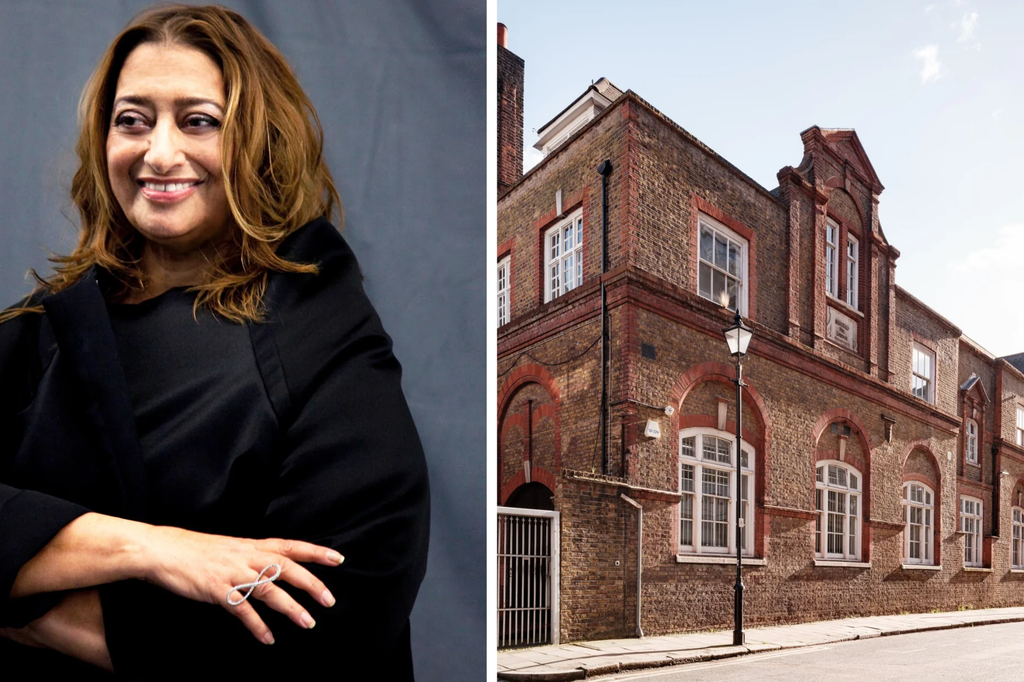
Ten years after the death of architect Zaha Hadid, the foundation established in her name is preparing to open her former London headquarters to the public as a space for architecture, design, and the wider arts. Located at 10 Bowling Green Lane, the refurbished building will welcome visitors from November 3, following a private preview on October 29. The reopening marks a new chapter for a building that served as Hadid’s architectural practice for more than three decades.
Originally built as a Victorian schoolhouse in the early 1870s, the building has been renovated by London-based Studio KA, led by Katherine Nolan and Alex Butterworth. The work preserves historic features while retaining details introduced by Hadid herself, including distinctive Z-shaped door handles and shard-like flooring insets. The redesigned ground floor will include gallery spaces, a learning area, a lecture hall, and displays from the foundation’s collection, alongside Zaha Hadid Design’s furniture and objects.
The opening exhibition, Zaha Hadid: Architecture of Performance, explores a less familiar aspect of Hadid’s practice: her work for dance, opera, theatre, and music. Curated by Catherine Howe and Libby Sellers, the show follows projects spanning from a 1989 collaboration with choreographer Rosemary Butcher to Hadid’s 2014 staging of Mozart’s Così fan tutte. A second gallery will present The Rebar Beneath, an 11-minute video commission by multidisciplinary artist LionHeart, developed through research in Hadid’s archive. The building will also feature a visual timeline of Hadid’s life and work by illustrator Mona Chalabi.
The reopening programme includes 89° of Zaha Hadid, a two-day symposium on October 30 and 31, organised with the Architectural Association and the Serpentine. The latter date coincides with Hadid’s birthday. Together, the exhibitions, archive displays, and public programme are intended to make her ideas and creative process more accessible, extending the foundation’s role beyond preserving her legacy to creating opportunities for people to engage with her work.
Annie Leibovitz Reimagines a Famous Romantic Painting for Sam Altman’s Vanity Fair Cover
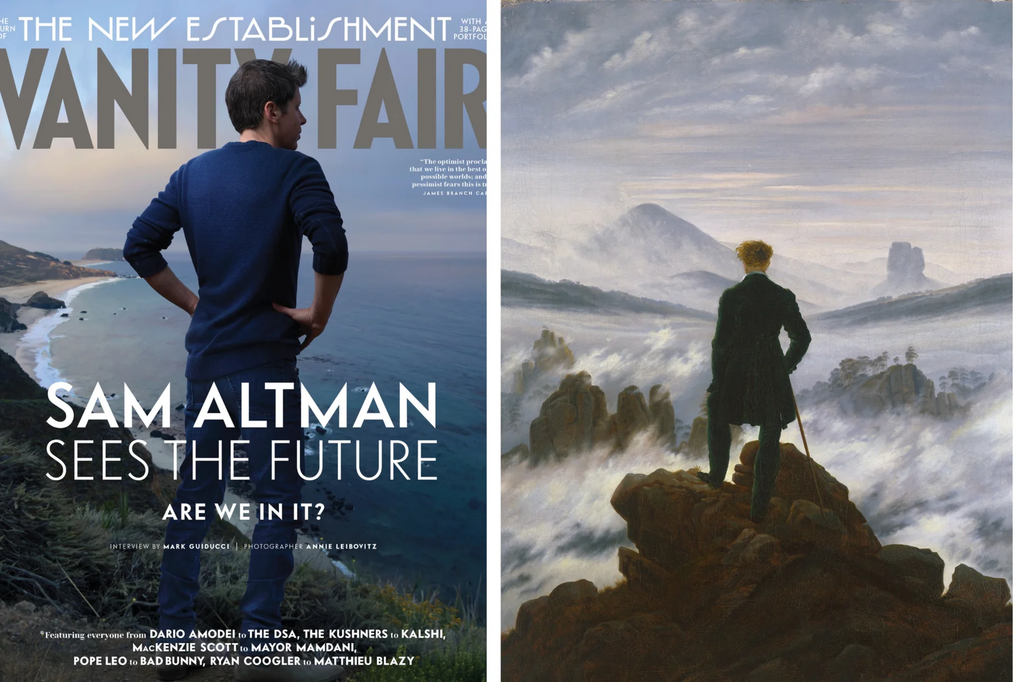
Photographer Annie Leibovitz has turned to art history for the October 2026 Vanity Fair cover featuring OpenAI CEO Sam Altman. The portrait shows Altman from behind, standing at the edge of a fog-covered coastline with his hands on his hips, looking out towards the horizon. Its composition recalls Caspar David Friedrich’s celebrated 1818 painting Wanderer above the Sea of Fog, in which a solitary figure gazes across a misty mountain landscape.
Friedrich’s painting is a defining example of the Rückenfigur, a figure seen from behind, inviting viewers to imagine themselves occupying the same position. Often associated with Romanticism’s fascination with nature, the sublime, and the limits of human understanding, the image leaves the viewer wondering what the wanderer sees beyond the fog. Leibovitz’s photograph relocates that visual idea to the California coastline, placing Altman in a pose that invites a contemporary reading: a technology leader looking towards an uncertain future shaped, in part, by artificial intelligence.
The cover’s accompanying question, “Sam Altman sees the future, are we in it?”, gives the historical reference a sharper edge. Where Friedrich’s wanderer confronts the vastness of the natural world, Altman’s portrait evokes the possibilities and uncertainties surrounding AI. The accompanying two-part interview addresses subjects including AI safety, government regulation, and Altman’s rivalry with Elon Musk.
Art-historical references have appeared throughout Leibovitz’s fashion and celebrity photography. Her earlier projects have reimagined famous paintings and artists through contemporary figures, including a 2013 Vogue shoot featuring Jessica Chastain in compositions inspired by works from art history, and a 2025 cover story styling Anne Hathaway in reference to John Singer Sargent’s Madame X. With Altman’s portrait, Leibovitz again uses a familiar visual image to frame a modern public figure, and the questions surrounding his influence.
Read more : Five Bookshops to Visit in Paris
New York City Doubles Grants for Individual Artists to $10,000
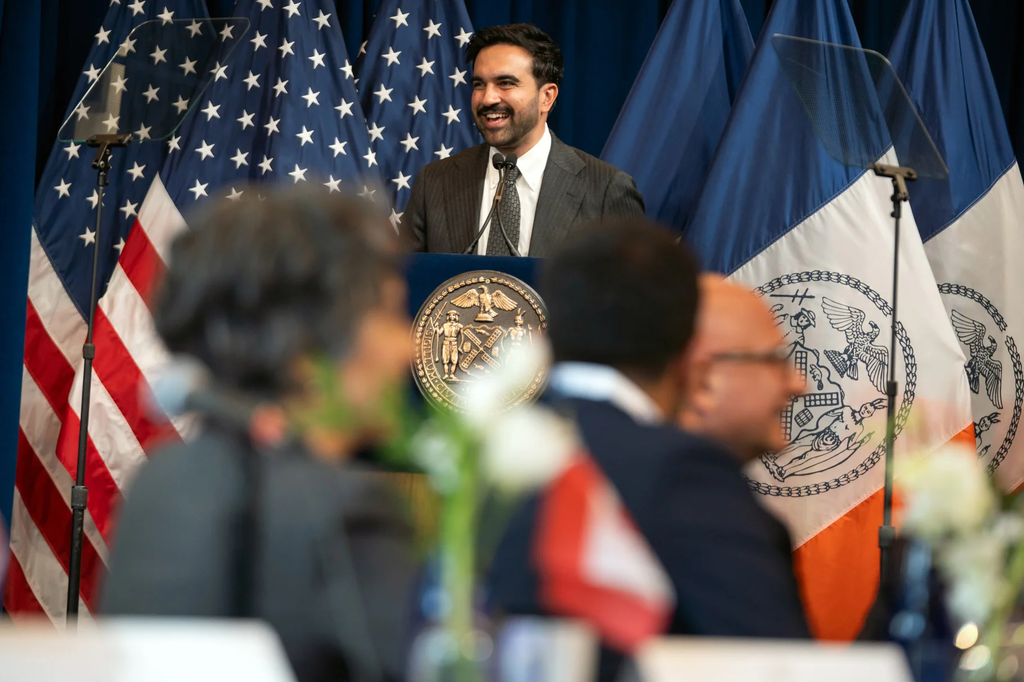
New York City is increasing its grants for individual artists and small nonprofits from $5,000 to $10,000, marking the first such increase in nearly 20 years. Announced by Mayor Zohran Mamdani alongside Deputy Mayor for Economic Justice Julie Su and Department of Cultural Affairs Commissioner Diya Vij, the move aims to provide greater financial support to artists working across disciplines, including painting, film, dance, and writing.
The grants are distributed through local partner organisations across the city’s five boroughs and are open to individual artists, collectives, and small nonprofits. According to the announcement reported by Artsy, applications have opened in Brooklyn, the Bronx, Manhattan, and Queens, with Staten Island’s application cycle scheduled to begin in November. The city is also adding a practical benefit for recipients: the Department of Cultural Affairs’ Materials for the Arts programme will introduce monthly shopping days, allowing grantees to access free art supplies.
Mamdani pointed to the rising cost of living as a key reason for the increase, arguing that artists face the same pressures around rent, groceries, and childcare as other New Yorkers, while their grant support has remained unchanged. Vij described the funding increase as an initial step towards more substantial support, following town halls with working artists across the city’s five boroughs.
The announcement comes amid wider concerns about the affordability of maintaining an artistic career in New York. A January report from the Center for an Urban Future found that the city’s resident artist population had fallen 4.4% since 2019. The city’s Fiscal Year 2027 budget also allocated $323.8 million to the Department of Cultural Affairs, according to Hyperallergic. Alongside the grant increase, Mamdani’s administration has announced other arts initiatives, including community murals and efforts to expand access to free and low-cost cultural performances.
Conclusion
This week’s stories show just how many forms an art-world conversation can take. A painting made by David Bowie decades ago is returning to public view, Roy Lichtenstein’s work is finding a place in fashion, and a historic Romantic image is being reimagined through the lens of artificial intelligence. At the same time, the reopening of Zaha Hadid’s former headquarters offers a new way to encounter an architect’s legacy, while the latest collecting data and New York’s increased artist grants bring attention to the people and economics shaping the field.
Art does not exist only in galleries or auction houses. It moves through popular culture, private collections, public institutions, and the everyday lives of the people who make it. This week, those connections were especially visible, and they offer plenty to keep watching as the art world moves into the weeks ahead.
Explore the current open calls and submit your work: apply.artstoheartsproject.com