
Lee Ghilain’s abstract art turns Cherokee Heritage into colorful compositions
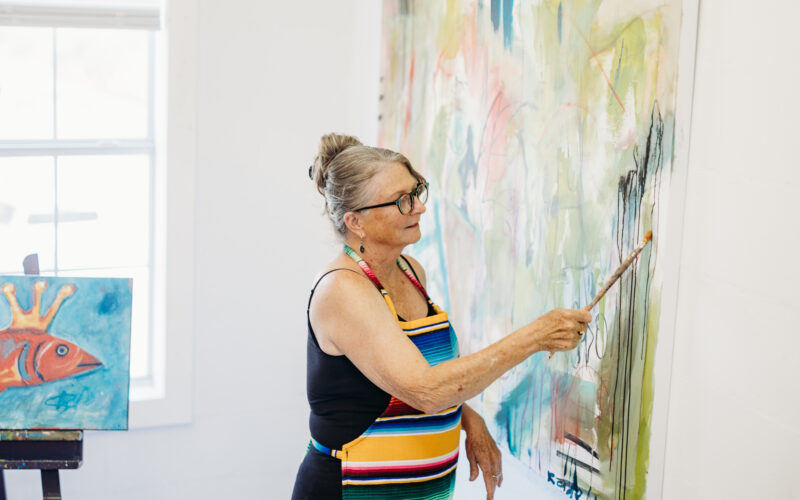
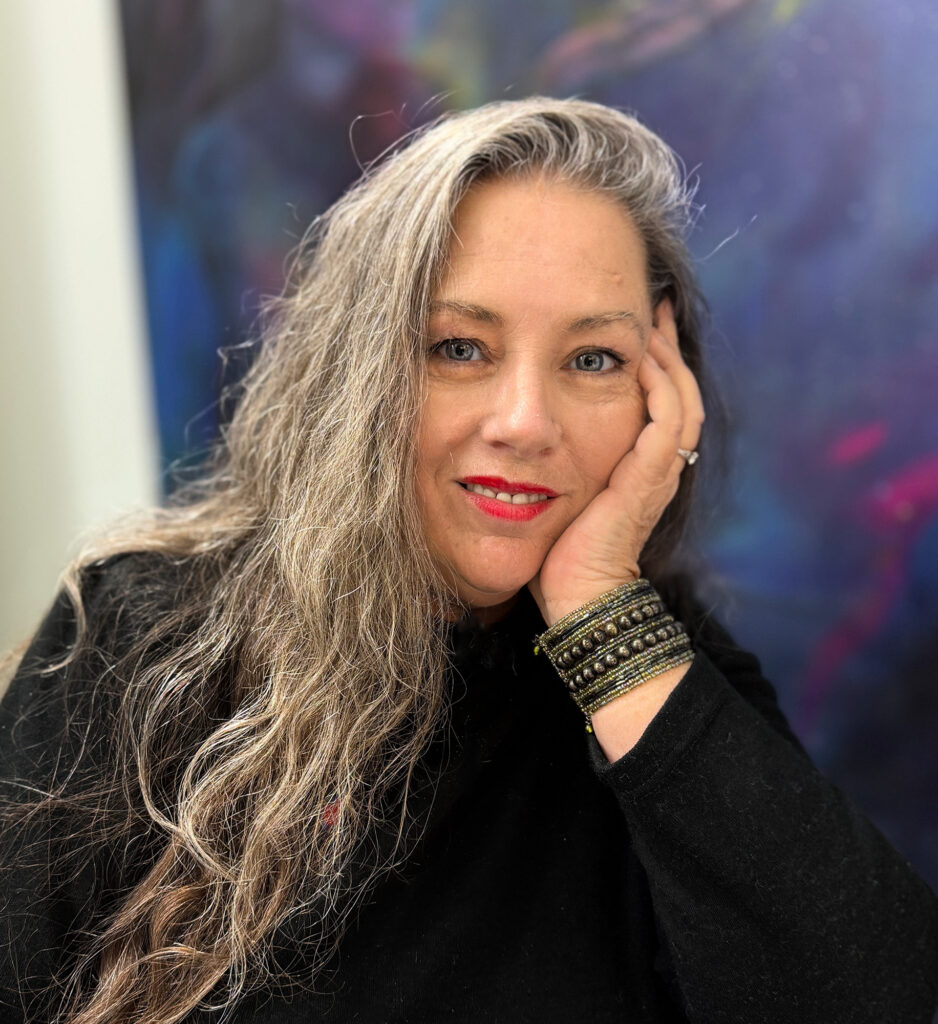
At Arts to Hearts Project, our 100 Emerging Artists of 2026 is full of artists whose practices carry something real underneath the surface. Lee Ghilain is one of our selected artists in this edition. And honestly her work moved us in a way we were not expecting.
Lee is an intuitive abstract painter of Cherokee Nation heritage, currently travelling across North America in an RV with her husband and two dogs. Her work is held in the permanent collection of the Cherokee Nation. She describes herself through a line that has not left us since we read it.
I paint to remember how to see.
And that line is not a metaphor. Lee lives with macular degeneration. Her vision has changed. And instead of that being the end of her painting life it became the beginning of a deeper one.
The paintings got more intuitive, more layered, more rooted in feeling than in perfect sight. How that shift happened and what it taught her is something she talks about during the interview with a grace and an honesty that is genuinely moving.
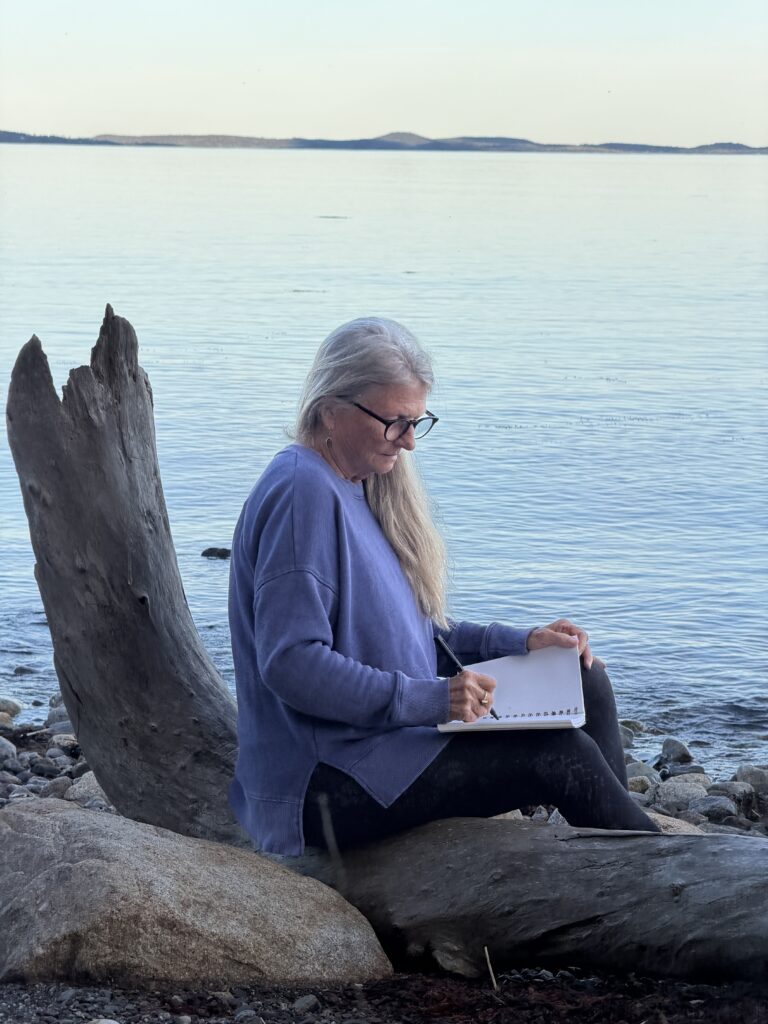
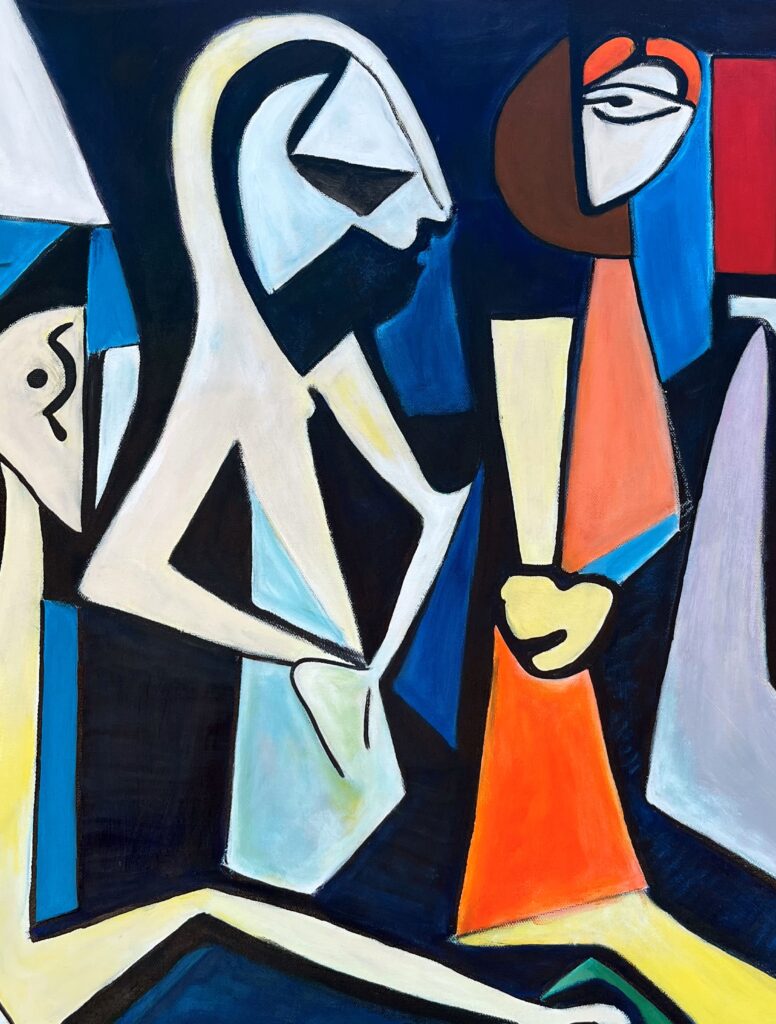
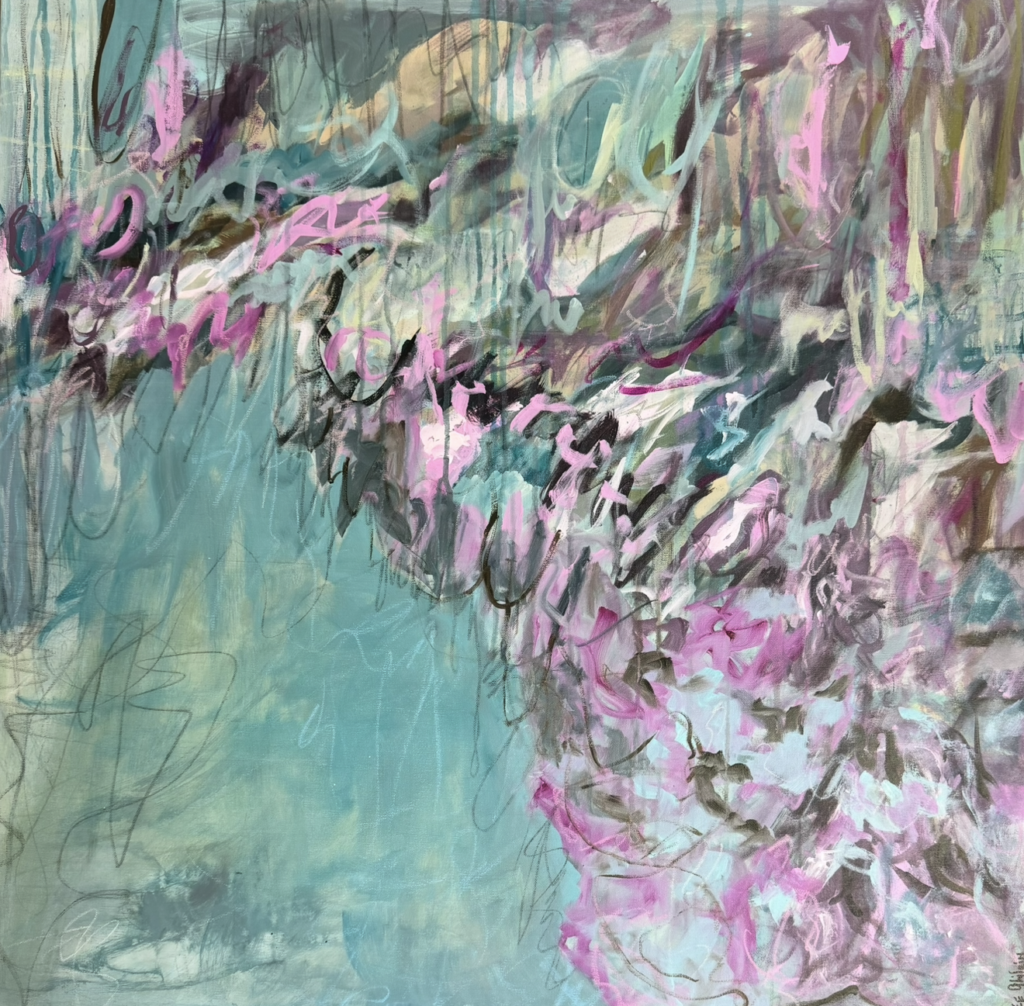
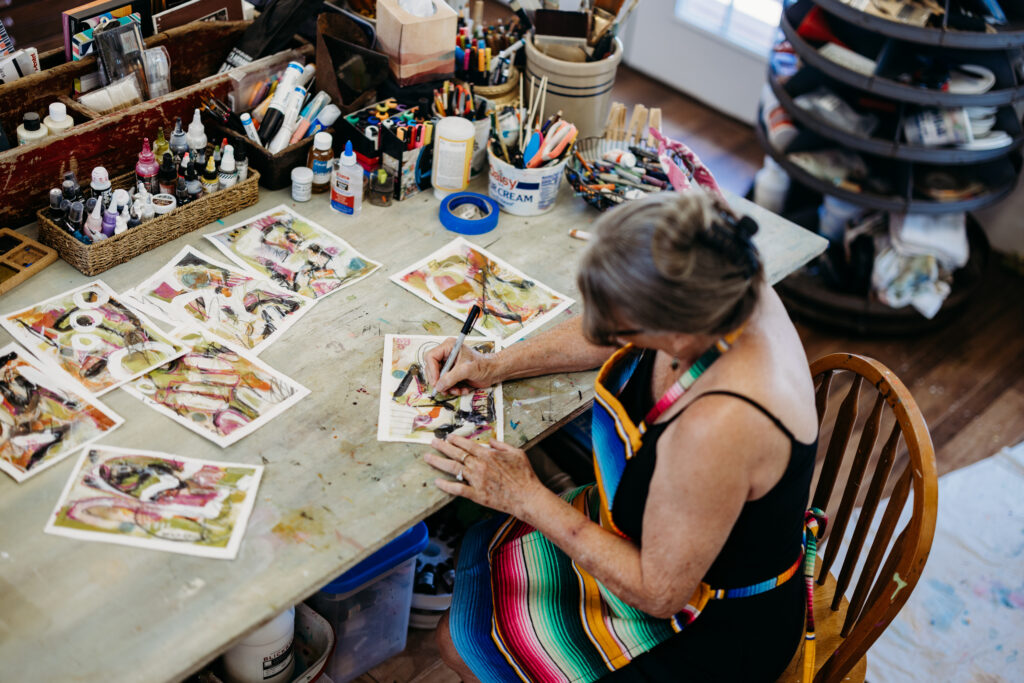
She works in acrylic and mixed media, building paintings through many layers of paint, charcoal, collage, and handwritten words. Before the painting begins she writes directly onto the canvas.
Prayers, gratitude, whatever is on her heart, sometimes things she cannot say out loud. Those words disappear under layers of paint but they never leave. They stay inside the work, shaping everything that comes after even though no one can see them anymore.
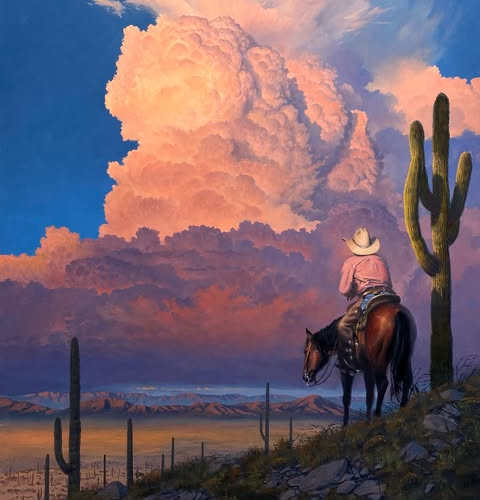
Her subjects are home, belonging, memory, faith, and the natural world. And hidden deer appear throughout her paintings as quiet visitors that most people do not notice on the first look.
As a Cherokee artist, deer carry deep meaning for her, gentleness, awareness, resilience, grace. That people discover them slowly over time is part of what she loves about the work. The more time you spend with her paintings the more they reveal.
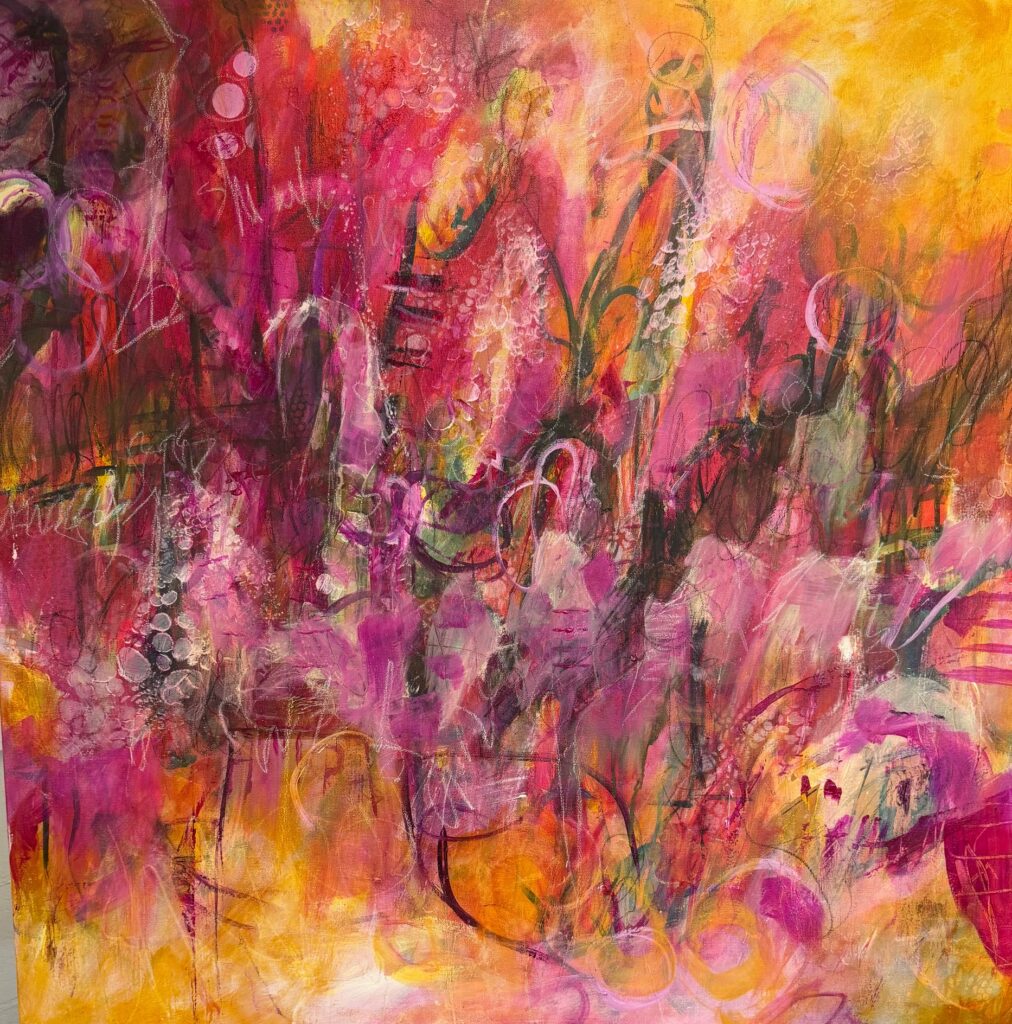
She grew up on South Padre Island, lived in Mexico, and now travels constantly. The landscapes she moves through do not sit as backdrops in her paintings. They become part of how she understands the world. Nature is not decoration in her work. It is a teacher and a participant and a reminder that we are part of something much larger than ourselves.
Her colours are bold and vibrant and full of joy but that joy is not naive. It sits alongside real loss and real difficulty and real uncertainty. The vibrancy in her paintings does not come from avoiding hard things. It comes from choosing hope in the middle of them.
Let’s get to know Lee through our conversation with her about painting with changing vision, why home is not a place but a way of seeing, what the hidden deer carry, and why she slaps fear with bright happy colours and keeps going.
Q1. Can you tell us about your journey into painting? When did it become central to your life?
Creativity has always been part of who I am. I grew up on South Padre Island, where the sea, wide skies, and changing light quietly shaped the way I see the world. Over the years I explored many creative paths, but painting eventually became the place where everything came together.
It wasn’t one dramatic moment that led me to painting—it was a gradual realization that this was how I made sense of life. Painting became my way of expressing joy, loss, gratitude, faith, and hope when words weren’t enough. Today I paint as an intuitive abstract artist, drawing from my Cherokee heritage, my travels across North America in our RV, and the landscapes that leave a mark on my heart.
Living with macular degeneration has changed the way I see, but it has also made my work more intuitive and more deeply rooted in feeling than in perfect vision. I often say, I paint to remember how to see, and that has become both my artistic practice and my way of living.
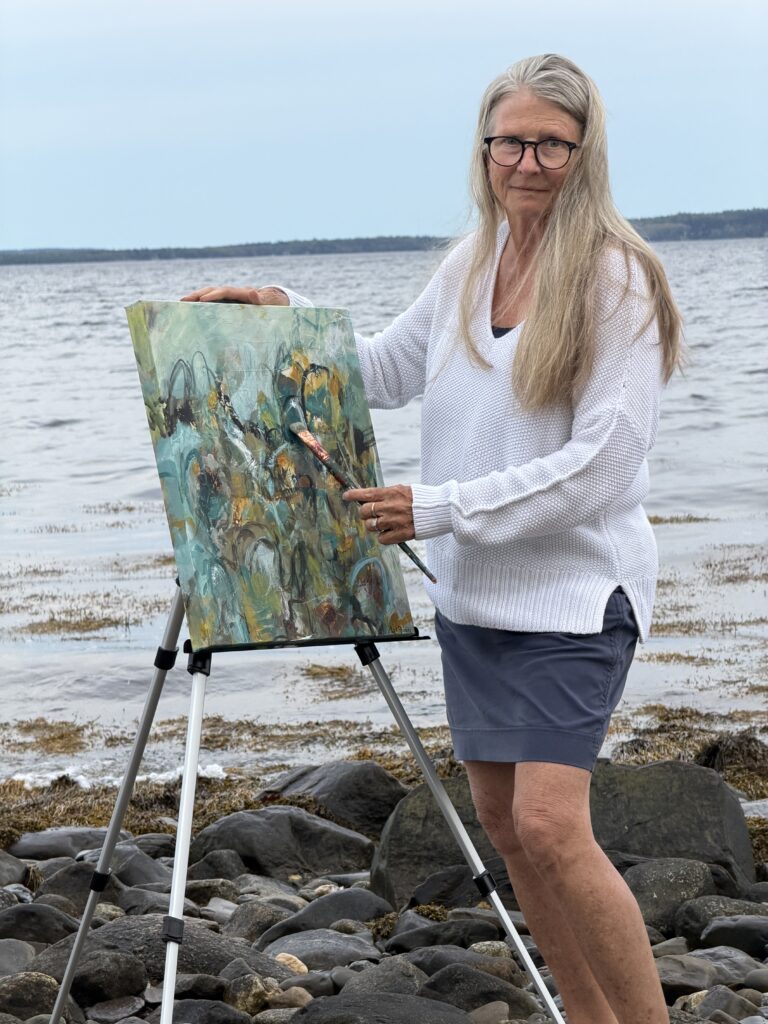
Q2. Your work explores home, belonging, and spirituality. Have these themes always been part of your practice?
Looking back, I think those themes were always there—they just took time to reveal themselves. I didn’t set out to paint “home.” I simply painted what felt true, and over time I realized that nearly every painting was searching for a place of belonging. Part of that comes from my own story.
Home has never been just a place. It’s a feeling of being held, of finding peace, of being connected—to God, to family, and to the land.My life has taken me to many beautiful places, but each season has taught me something different about what it means to belong. My paintings don’t try to describe a particular place. Instead, they invite viewers to remember their own. Somewhere along the way, I realized that home isn’t something I found. It’s something I learned to carry within me.
Q3. Hidden deer appear throughout your paintings. How did they become part of your visual language?
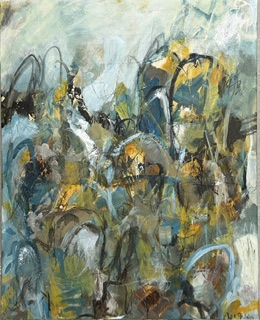
Deer have been part of my visual language for many years. Before I lost much of the vision in my left eye, I painted them more figuratively within abstract landscapes. As my sight changed, so did my work. My paintings became more intuitive, more layered, and less about describing what I saw than expressing what I felt. The deer became quieter—sometimes hidden, sometimes only suggested.
As a Cherokee artist, I feel a deep connection to the natural world. To me, deer represent gentleness, awareness, resilience, and grace. They invite us to slow down and pay attention. I love that people don’t always notice them at first. Discovering a hidden deer mirrors the experience I hope my paintings offer: the more time you spend with them, the more they reveal.
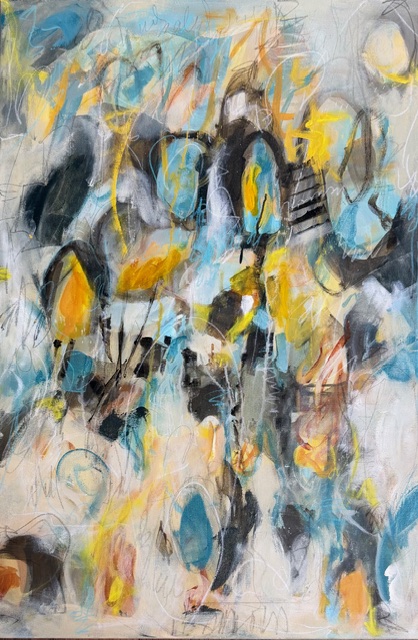
Q4. What draws you to working with acrylic and mixed media in layered compositions?
I love building a painting through layers because that’s how life feels to me. None of us are made in a single moment. We are shaped by joy, loss, faith, mistakes, gratitude, and countless experiences that leave their mark, even when they aren’t visible. My paintings grow the same way.
I add paint, charcoal, collage, and handwritten words, then decide what to reveal and what to leave beneath the surface. Before the painting really begins, I often write prayers, words of gratitude, or whatever is on my heart. Sometimes it’s something I can’t say out loud.
The canvas has become a place where I can be completely honest before the paint begins to cover those words. Whether those words remain visible or disappear beneath the paint, they become part of the work. I love knowing they’re still there, quietly shaping everything that comes after.
Q5. What do the hidden layers in your paintings add to the finished work?
I hope those hidden layers invite people to slow down and look a little longer. I don’t want to tell the whole story at once. I love the idea that someone might live with one of my paintings for years and continue discovering small details they hadn’t noticed before. In many ways, those hidden layers reflect life itself.
We all carry experiences, prayers, joy, grief, and hope that aren’t immediately visible, yet they shape who we become. My paintings hold that same quiet history. Even when those earlier marks can’t be seen, I believe they’re still present, giving the work its depth, its character, and, I hope, its soul.
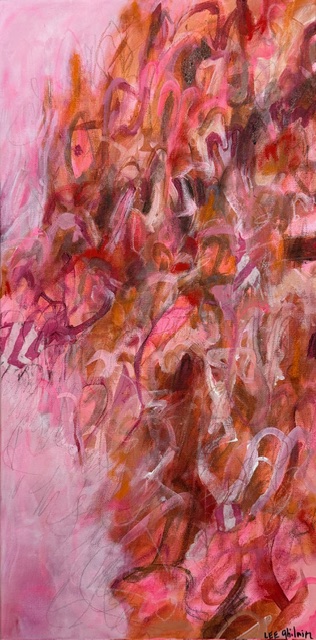
Q6. Your paintings feel both vibrant and emotionally rich. How do those qualities come together?
I don’t intentionally balance joy and emotional depth. They simply coexist because they’ve coexisted in my own life. Like everyone, I’ve known seasons of heartbreak, disappointment, and uncertainty, but I’ve also experienced God’s faithfulness through them.
I don’t paint to escape life’s difficulties. I paint because I still believe beauty, hope, and gratitude are worth choosing. Color has become my way of celebrating that belief. If my paintings feel vibrant, perhaps it’s because they reflect not the absence of struggle, but the presence of hope.
Q7. Many viewers find your work comforting or healing. Do you think about that while creating?
I don’t begin a painting trying to create something healing. I simply try to be honest. My paintings are born from gratitude, faith, questions, beauty, and the realities of life. I believe we all carry joy and heartbreak at the same time, and my work reflects that. If people experience comfort through my paintings, I receive that as a gift.
My faith has taught me that hope isn’t the absence of difficulty—it’s choosing to believe there is still light in the middle of it. I think that’s why my paintings are filled with color. They aren’t painted because life has always been easy. They’re painted because I believe beauty still matters. More than anything, I hope my paintings give people a place to pause, breathe, and feel welcomed.
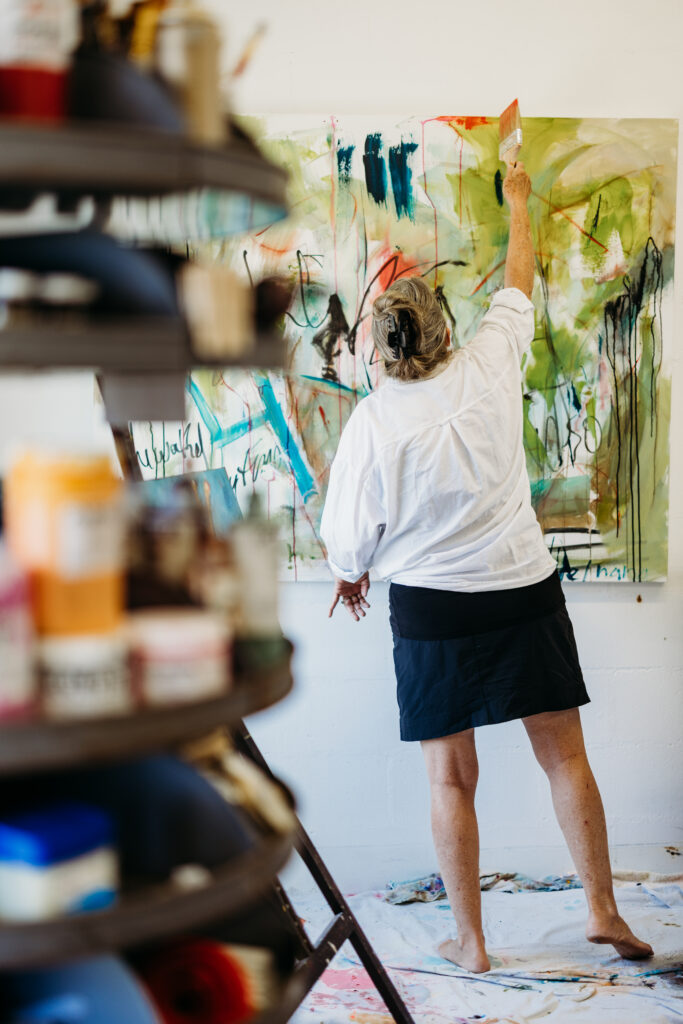
Q8. How has social media changed the way you connect with your audience?
Social media has allowed me to invite people into the journey, not just the finished painting. They see me painting in my RV, traveling across the country with my husband and our two dogs, celebrating exhibitions, wrestling with difficult paintings, and continuing to create while living with vision loss.
Those glimpses have created genuine relationships. Collectors and followers often feel like friends because they’ve watched the stories behind the work unfold over time. I still believe nothing replaces standing in front of an original painting, but social media has made the art world feel more personal. It reminds me that people don’t just connect with a painting—they connect with the person who created it.
Q9. Nature seems to inspire much of your work. What role does it play in your creative process?
Nature has always been one of my greatest teachers. I grew up by the sea on South Padre Island, lived for many years in Mexico, and now travel across North America in our RV. Those landscapes don’t simply inspire my paintings—they become part of how I understand the world.
As a Cherokee artist, my heritage has taught me to see the natural world as something to be respected, not simply observed. The changing light, water, trees, birds, and even the quiet presence of a deer remind me that we are connected to something much larger than ourselves. I don’t try to paint a particular place. Instead, I hope my paintings capture the feeling of being in nature—that moment when everything grows quiet and you remember that you’re part of creation, not separate from it.
Q10. Contemporary art often rewards novelty. How do you stay committed to exploring the same deeper questions year after year?
I don’t feel like I’m painting the same thing over and over. I’m asking the same questions, but life keeps changing the answers. I’m still exploring home, belonging, faith, beauty, and our relationship with the natural world because they are questions I’ll probably spend my whole life asking.
Every season, every journey, every joy and every disappointment teaches me something new. I don’t chase trends because trends come and go. I’d rather spend a lifetime exploring a few honest questions than a year chasing what’s fashionable. If my work continues to grow, I hope it’s because I’m growing too.
Q11. Looking back, has art helped you become the person you hoped to be, or surprised you along the way?
Both. When I was younger, I thought becoming an artist meant learning how to paint well. Over the years I’ve realized it’s really been about learning how to pay attention, trust, and let go. Art has made me more patient, more grateful, and more willing to embrace uncertainty. It has also taught me to see beauty in imperfection—both in my paintings and in myself.
Living with vision loss has only deepened that lesson. I may see differently now, but I haven’t stopped seeing. More than anything, art has drawn me closer to the person God created me to be. It continues to teach me that creating isn’t just about making beautiful things—it’s about becoming more honest, more compassionate, and more fully alive.
Q12. What advice would you give artists still searching for their creative voice and sense of belonging?
Don’t be in a hurry to find your style. Find your voice. Style changes and grows, but your voice becomes stronger every time you create honestly. Comparison is one of the quickest ways to lose your joy. Instead of trying to paint like someone else, pay attention to what keeps calling you back.
The subjects, colors, places, and questions that won’t leave you alone are often pointing you toward your truest work. And don’t wait until you feel fearless. Create anyway. Some of my greatest growth has come from painting through uncertainty, trusting that the next brushstroke will reveal what I couldn’t see before.
When fear or uncertainty shows up, I like to slap it with some bright, happy colors and keep going. We are all creators. The world doesn’t need another version of someone else. It needs the real you.
As our conversation with Lee drew to a close, we just kept thinking about vision. Not eyesight. Vision. The kind that has nothing to do with how well your eyes work and everything to do with how honestly you are willing to look at the world and at yourself.
Because here is what Lee taught us without trying to teach us anything. That seeing is not a physical ability. It is a practice. A choice. A discipline you build over years of paying attention to what actually matters instead of what is loudest or most obvious or most Instagram-worthy.
Lee’s eyesight changed and her vision got sharper. That sounds like a contradiction but it is not. When the details got blurry the feelings got clearer. When she could no longer rely on what her eyes were showing her she started trusting what her heart already knew. And the paintings that came from that trust are more alive and more connected and more genuinely beautiful than anything she made when she could see perfectly.
We sat with that for a while because it says something about all of us. About how much we rely on the surface of things instead of what is underneath. About how we confuse looking with seeing and information with understanding and perfection with truth. Lee writes prayers onto her canvas before she paints over them.
Nobody will ever read those words. But they are in there holding everything up. And honestly is that not how the most important parts of any life work? The things that hold us together are almost never the things that are visible to other people.
For art lovers and collectors, Lee’s paintings bring genuine warmth into a space. The kind you feel settling into the room over the first few weeks of living with one. The layered surfaces carry handwritten prayers and words underneath the paint that you will never see but will somehow always sense. And the hidden deer throughout her work give you small discoveries to keep finding for years. These are paintings that do not just decorate a home. They make it feel more like one.
Follow Lee Ghilain through the links below and see her work for yourself.