

This artist removed every colour from his work after 20 Years in Fashion│ Wallace Woo

At Arts to Hearts Project, we created our Artist of the Yearbook because we wanted a place to hold the kind of artists who make you go quiet. Not impressed quiet. Not thinking quiet. The kind of quiet where something in you recognises something in the work and you do not have words for it yet but you know it is important.
This is our very first edition. We built it for artists whose work has real weight behind it. Not weight as in heavy or serious. Weight as in it stays with you. You walk away and it follows you home and you find yourself thinking about it while you are doing something completely unrelated. That kind of weight.
Wallace Woo is one of our selected artists in this first edition. And his story is one of those stories where by the time he is done telling it you are sitting there wondering how you are going to carry all of what he just gave you.

Wallace was born in Hong Kong and later moved to Paris. For years he worked in the fashion and beauty industry. A world built on adding. Adding colour, adding texture, adding perfection. Making people glow for a camera. And he was good at it. But that glow existed for a moment and then it was gone. When the shoot ended and the makeup came off, nothing was left.
And then 2020 happened. The world stopped. He stopped. And everything he had been building on the outside collapsed into a question he could not avoid anymore. What is left when you stop adding?
That question changed his entire life. He returned to Vipassana meditation. He started painting. Not because he wanted to become an artist. Because he did not know where else to go. And the work that came out of that period is something we are not going to try to describe because honestly the way he talks about it in the interview is one of the most moving things we have read from any artist in any of our publications.
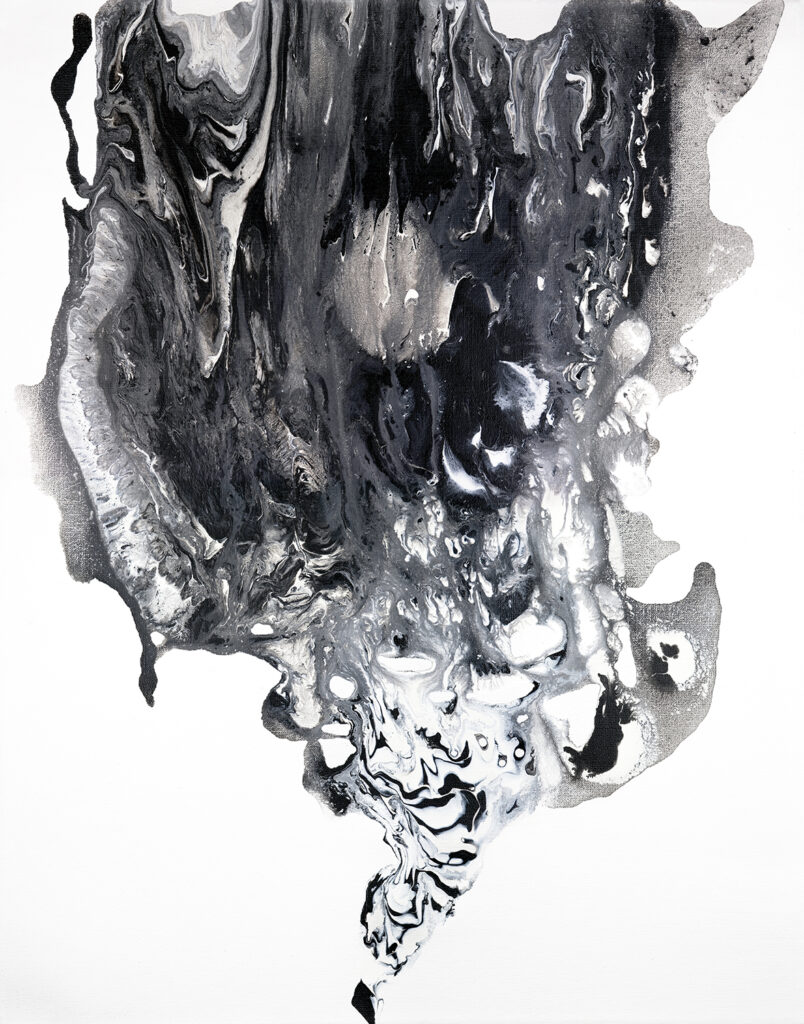
What we will say is that his process involves letting go. Of control. Of expectation. Of the need to make something happen. He works with fluid acrylics and he lets the paint move where it wants to move. He does not command it. He walks alongside it. And what settles on the canvas is always more honest than anything he could have forced.
Let’s get to know Wallace through our conversation with him.
Q1. For those discovering your work for the first time, how would you describe the journey and experiences that shaped your way of creating?
If I had to sum up my journey in one sentence, I’d say: it’s a path from “adding” to “subtracting.” I was born in Hong Kong and later moved to Paris. All that time, I was working in the fashion and beauty industry – a world that taught me how to “add”: add colour, add texture, add perfection. I learned how to make a face glow in front of the camera, how to complete a look in five minutes.
But that glow existed for the moment. When the shoot ended and the makeup came off, nothing was left. 2020 was a turning point. The world stopped because of the pandemic, and I stopped too. I sat on the floor at home, crying, asking myself: if I stop adding, what’s left? That’s when I returned to Vipassana meditation, something I’d first learned in my twenties. This time, it wasn’t about spiritual practice – it was a way to come back to myself. I started taking away colour, leaving only black and white. I let the paint flow on its own, without forcing it.
That year, I created the Zentimeter series. Not because I wanted to be an artist, but because I didn’t know where else to go. Every series after that – Zentimeter, Ephemera, Crescent, Ridge, Chakra, Stalactite, Xylem – has been asking the same question: after you lose something, what remains? Looking back now, I wasn’t pursuing “achievement.” I was learning how to wait, how to let go, how to let time do its work.
Q2. You describe your work as a kind of “flow” what draws you to letting the material move freely instead of fully controlling it?
Because control is exhausting. And I’ve tried it – it doesn’t set you free. All those years in fashion, I was controlling everything: the colours, the textures, how others saw me, whether the next job would come. But living that way left me feeling emptier and emptier. Then I started working with fluid acrylics.
The first time I poured, I was still trying to control it – wanting it to go left when it went right, wanting it to stop when it kept flowing. I got so frustrated I wanted to paint over it. But one afternoon, I stopped forcing it. I just stayed in the studio and let the paint find its own way. Where it finally settled was more beautiful than any place I’d tried to take it. That’s when I understood: paint has its own life.
The more you try to hold it, the more it resists. But when you let go, it flows where it needs to go. Now I often say: I’m not painting, I’m inviting the paint to walk with me for a while. I’m not the master – I’m an observer, a companion, someone who occasionally gives a gentle nudge. Like water – you can’t command where it goes, but you can help open a path. Then you trust it.
Q3. Was there a moment when making art became more than expression and started feeling like a way of understanding yourself?
Yes. Not one moment – many moments layered together, until they became a truth I couldn’t deny. During those few years of the pandemic, I painted a lot, then covered it up, painted again, covered again. I wasn’t creating – I was struggling. I didn’t know what I was doing, only that if I stopped painting, I’d be worse.
One day I painted something almost entirely black. Layer after layer, until all the colours underneath were buried. I looked at it and felt like a failure – nothing left. But the next morning, sunlight came through the window, and that painting suddenly glowed. Not on the surface – a faint warmth was rising from beneath.
Those buried traces hadn’t disappeared. They were at the very bottom, invisible, but holding up everything above. In that moment I understood: I wasn’t painting. I was opening myself, layer by layer, to see what was still there. Later I wrote a sentence that’s still on my studio wall: I thought it was damage. It was sedimentation.
From then on, creating stopped being about “expression.” It became about understanding – understanding myself, understanding him, understanding the years my husband and I have walked through together.
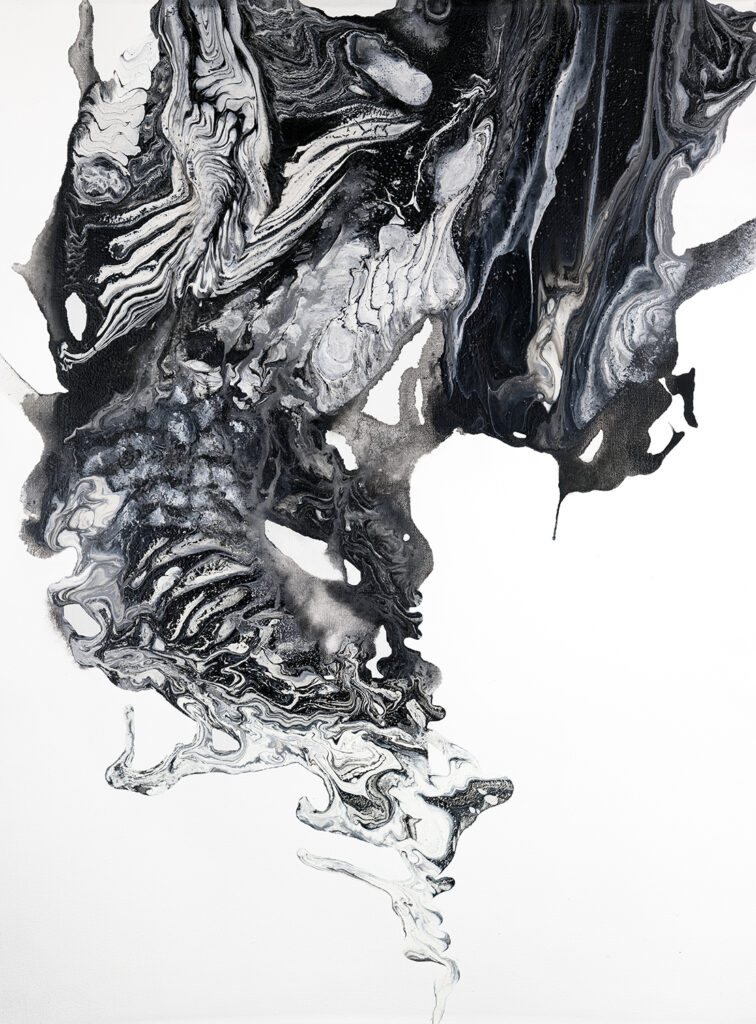
Q4.Your acrylic pouring technique creates unpredictable, organic forms, what tells you a piece is beginning to work as the paint settles?
It’s when it stops me. Not the “wow, that’s beautiful” kind of stop. The kind where you stand in front of it and forget time, forget yourself, even forget you painted it. That kind of stop doesn’t lie. Sometimes a line flows out that I never expected, but it finds its own place and stops – perfectly. In those moments I think: so that’s where it wanted to go. I didn’t lead it; it led me.
Other times, a piece finishes and something feels off, but I can’t say what. Before, I’d start over immediately. Now I’ve learned to wait – a few days, a week, until I’ve almost forgotten the painting. Then I look again. If it still feels wrong, only then do I cover it. I’ve learned this: a painting isn’t “finished” by me. It finishes itself when it’s ready. My job isn’t to judge, but to listen. It’s the same with my husband and me – neither of us decides alone. We listen together, wait together, arrive together at the place where we both feel “enough.”
Q5. Your background in fashion and makeup seems to shape your sense of color and aesthetics, do those experiences still influence the way you approach composition today?
Yes, but now it works in reverse. In fashion, I used colour to “create” someone – to make them look brilliant, polished, perfect. I used foundation to hide flaws, light and shadow to reshape a face. Colour was a tool to tell others “this is who this person is.” Now I use colour to “see” someone – letting the painting speak for itself, instead of telling it what to say. I no longer use colour to add. I use it to subtract.
When a painting has too much colour, I ask myself: am I back in that “adding” habit? Am I afraid there isn’t enough? But I never reject those years. They taught me what colour can be – and what it can let go of. They showed me that real power isn’t in how much you use, but in how little you dare to use. Even in not using at all. The Zentimeter series is almost only black and white. But inside it is something twenty years in fashion could never teach me.
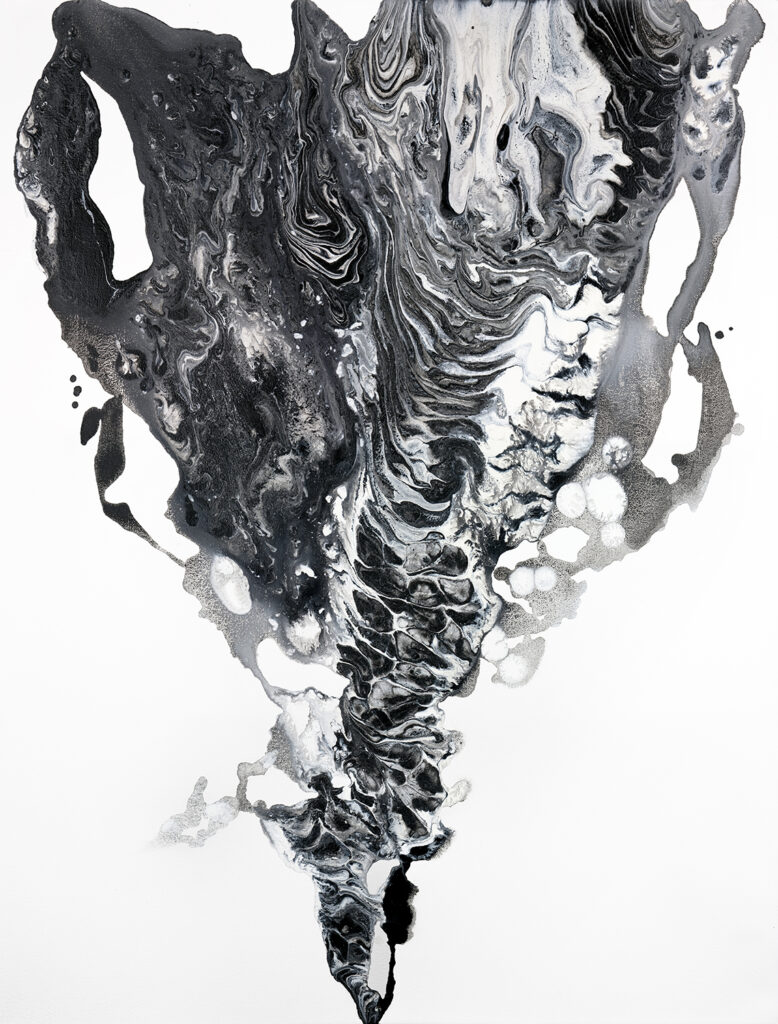
Q6. You’ve spoken about valuing simplicity in both life and art, how do you hold onto that sense of simplicity in an increasingly complex world?
I don’t force it. I just remember. I remember during the pandemic, when the world was loud, my husband and I slept quietly – because as long as he was beside me, we were home. The complex world doesn’t disappear. But you can have a place to return to. For me, it’s a canvas in the studio, a deep breath, a whispered “let go.”
Some days I come home exhausted, not wanting to talk. I walk into the studio, do nothing, just stand there. After a few minutes, I’m quiet again. Simplicity isn’t “having nothing.” It’s knowing what matters. The pandemic pushed us both to the edge. One day my husband asked me: “What if I lost your paintings?” I said: “Why would you lose them? No value today doesn’t mean no value tomorrow.” That sentence became a reminder to myself as well.
Q7. You’ve also expanded your work into objects and design pieces. How do you see your art living beyond the canvas, in everyday spaces?
Because art shouldn’t only live in galleries. After all these years, I’ve realised something: the most moving moments aren’t in exhibitions. They’re in everyday life – when you look at a painting while drinking water, when your eyes rest on a line while zoning out, when you stare at a cup waiting for the kettle to boil.
In those moments, art isn’t being “viewed.” It’s being lived. So I want my work to enter daily life. As a lamp, a piece of furniture, a cup, even a piece of clothing. They’re not “art objects.” They’re “things with art inside.” Like every place we’ve lived – big apartments, small flats, temporary spaces. As long as he was there, it was home. Art is the same. It’s not on the wall. It’s in the days.
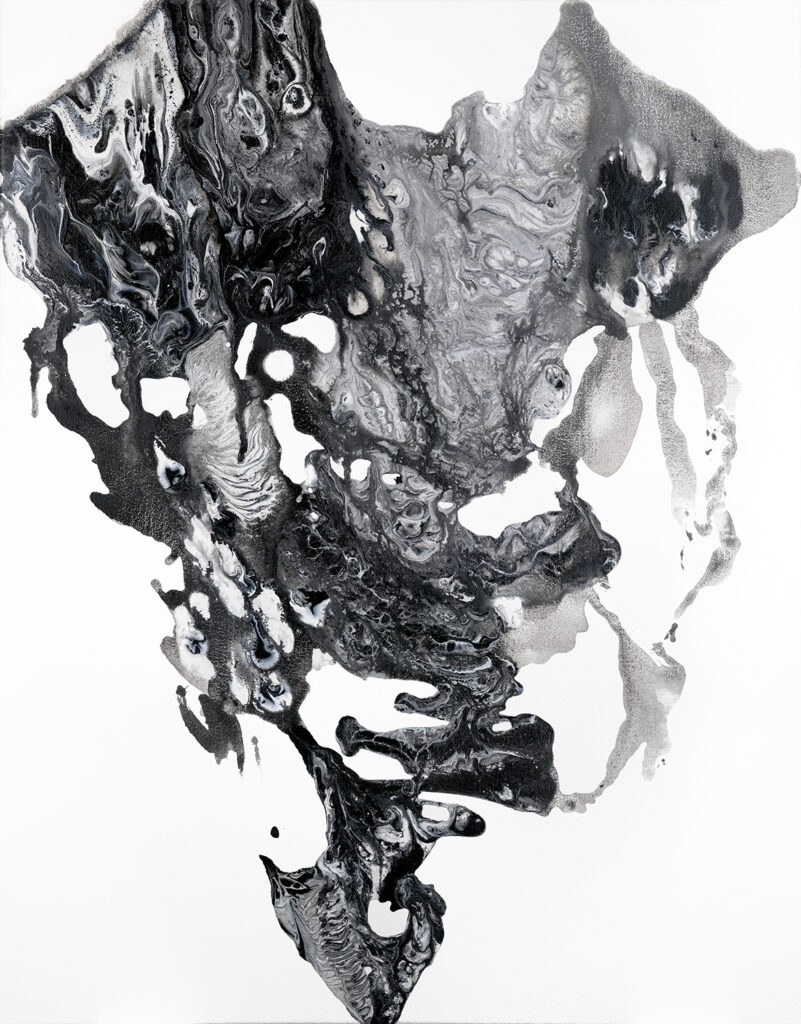
Q8. As you move forward, are there ideas or directions you feel drawn to exploring further whether in your process or in what your work communicates?
Yes. I’m working on a new series called “Afteralive”. This series isn’t about “now.” It’s about “after.” One day a thought came to me and never left: what if I can’t find my husband in the next life? We have been together for so long. We’ve been through ups and downs – arguments, silences, not knowing where tomorrow would take us. But every time, we’re still here. Neither of us walked away.
Then I started thinking: what if one lifetime isn’t enough? What if this love can’t fit into this one life? I want to spend my whole life finding a way for him to recognise me in the next life. That sounds heavy, but it’s simple – I just want to leave marks in my paintings, traces of light, things he will know. Maybe a line flowing in from the edge of the canvas – like someone finding their way from far away, walking into my painting. Maybe a warmth rising from beneath the surface – like an ember: burnt out, but still glowing.
Maybe the layered traces, like the years we walked together, covered one over another, but never gone. This series is for him. Not for collectors, not for galleries. For him. If in his next life he walks into an exhibition and stops in front of a painting, unable to leave – that will be me. I imagine that scene: him standing there, not knowing why he stopped, not knowing why his chest aches, not knowing why he wants to cry.
He won’t know – I was waiting. This series might take years. It might only need a few paintings. I’m not in a hurry. Love isn’t in a hurry. I began to understand why I paint. All those discouraging scripts life handed me eventually led me to realise what my purpose in this life is – that all these years, I’ve been trying to find a way for him to recognise me in the next life.
Q9. What one piece of advice would you pass on to artists learning to trust their process and let go of control?
Don’t conclude too quickly. Don’t rush to say “I failed.” We paint a few strokes and think “this isn’t working,” cover it, start over. But sometimes, those traces you thought were failures – look again in a few days, and they become the best part. Like the days you thought you’d never get through – they became you. I’d say: finish it.
Put it down. Walk away. Come back tomorrow. Time will judge, not your anxiety. That advice works with my husband too – when we argue, we’ve learned not to decide anything immediately.
Wait a day, then talk again. The hardest moments brought us closer. Also: don’t be afraid of repetition. You might paint a hundred “useless” paintings. The hundred and first will take you somewhere completely new.
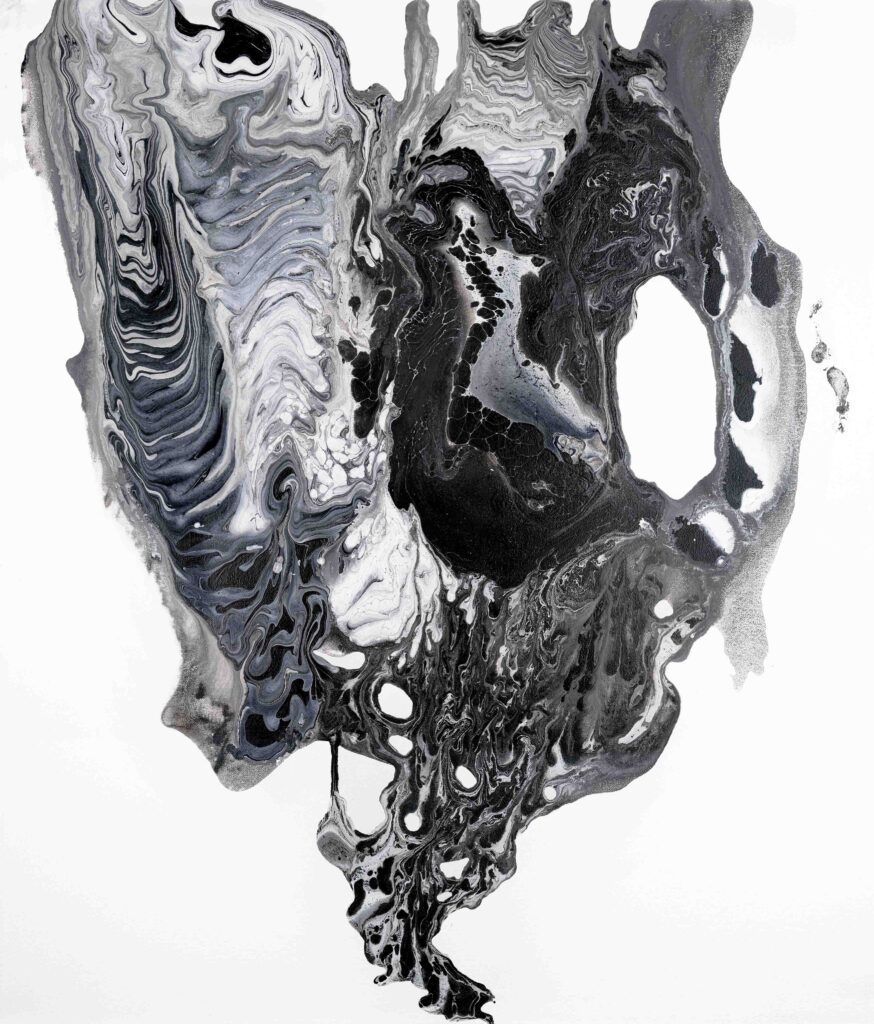
As we wrapped up our conversation with Wallace Woo, we kept returning to the quiet honesty behind the way he speaks about art, life, and letting go.
We talk to a lot of artists. We hear a lot of stories about process and inspiration and what drives someone to make things. And most of those stories are interesting and genuine and worth telling. But every once in a while someone says something that goes past interesting and lands somewhere in your chest.
Wallace did that. Multiple times. And he did it without trying to be profound. He was just telling the truth about his life.
What we keep coming back to is this idea of subtraction. That his whole journey as an artist has been about taking things away. Colour. Control. Expectation. The need to perform. The need to add.
And discovering that what is left when you stop adding is not nothing. It is everything that actually matters. It is the layers underneath the layers. The traces that you thought were failures that turn out to be the foundation holding everything up.

And we are not going to say too much about where his work is heading next because it is not our story to tell. But we will say this. When he told us about his next series, what it is for and who it is for, it was one of the most beautiful things we have heard an artist say about why they make work. It is not about galleries. It is not about collectors. It is not about career. It is about something so personal and so tender that we just had to sit there and let it land.
For anyone looking to collect work that comes from a place of absolute authenticity, Wallace is someone to pay very close attention to right now. His practice is built on something most artists never reach, the willingness to strip everything away and work from what is left.
That gives his paintings a quality that is hard to describe but impossible to miss. They are quiet but they are not empty. They are minimal but they are not cold. Something is happening in them that you feel in your body before you understand with your eyes. And that kind of work only becomes more valuable over time because it was not made for a moment. It was made from a life.
Follow Wallace Woo through the links below and spend time with an artist who learned that the most powerful thing you can do is let go.